Test Cable
CN → US| HS Code | Tariff Rate | Origin | Destination | Doc |
|---|---|---|---|---|
| 8543908885 | 85.0% | CN | US | Official Doc |
| 8543906800 | 35.0% | CN | US | Official Doc |
| 8544429090 | 87.6% | CN | US | Official Doc |
| 8544493080 | 40.3% | CN | US | Official Doc |
| 9033009000 | 39.4% | CN | US | Official Doc |
| 9033002000 | 35.0% | CN | US | Official Doc |
Product Images
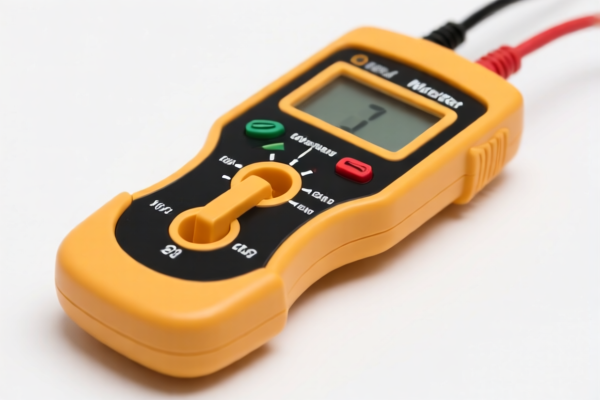
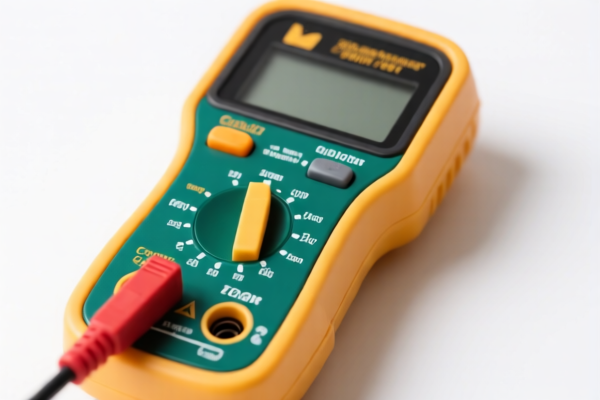
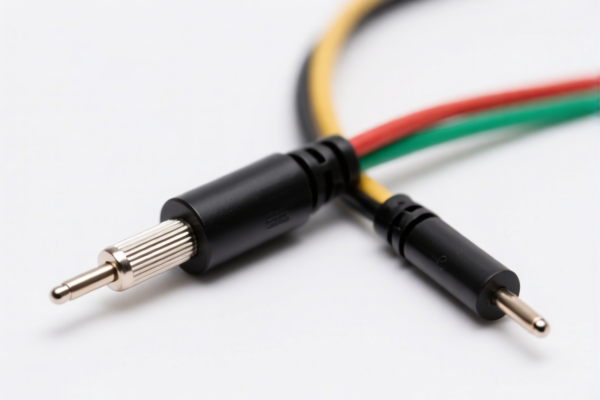
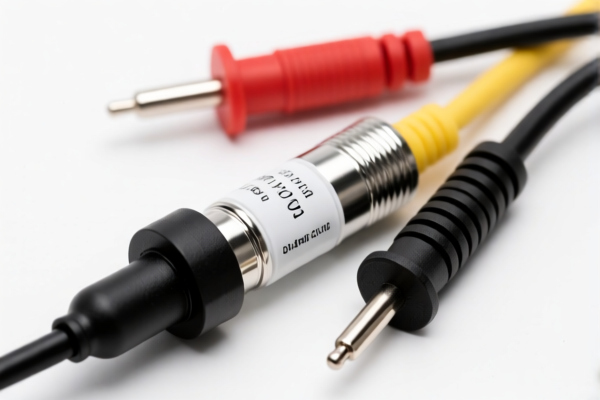
AI Analysis
🔌 Test Cable (Test Leads & Probes)
🌐 HS Code Reference & Customs Clearance Guide | 2026 Latest Tariff Analysis | Professional Strategy
📌 I. Product Definition & Classification: Do You Really Understand "Test Cables"?
In the high-tech and industrial sectors, "Test Cables" (often referring to test leads, probe cables, or instrumentation cables) are critical components for measuring, debugging, and monitoring electrical and electronic systems. However, in international trade, they are not a single unified category. They are split based on voltage, insulation, and whether they have connectors.
Key Distinction:
- Standard Wiring/Cabling: Simple insulated wires or cables without complex circuitry, typically for low-voltage transmission.
- Specialized Instrument Accessories: Parts for Chapter 90 instruments (e.g., multimeters, oscilloscopes) that are specific to measurement functions.
⚠️ Critical Classification Point:
- If the cable is insulated, has connectors, and is for ≤1,000V, it often falls under HS 8544.
- If it is a printed circuit assembly (PCA) or part of a specialized measuring device, it may fall under HS 8543.
- If it is a general accessory for Chapter 90 instruments (e.g., probes) not specified elsewhere, it may fall under HS 9033.
📦 II. HS Code Classification Details (2026 Latest Tariff Authority Alignment)
| HS Code | Product Description | Application Scenario | Key Features |
|---|---|---|---|
8544.42.90.90 |
Other electric conductors, ≤1,000V, fitted with connectors: Other | Shielded test cables, coaxial probes, high-frequency signal leads | ✅ Has connectors, insulated, ≤1kV |
8544.49.30.80 |
Other electric conductors, ≤1,000V: Of copper | Basic copper test leads, unshielded or simple insulated wires | ✅ Copper core, often no complex connectors or simple spades |
8543.90.88.85 |
Parts of electrical machines/apparatus (Chapter 85): Other | Specialized electronic test modules, active probe cables with signal processing | ✅ Active components, complex assemblies |
8543.90.68.00 |
Parts of Chapter 85: Printed Circuit Assemblies (PCAs) | Test cables with built-in logic boards, adapters, or active circuitry | ✅ Contains PCB/PCA |
9033.00.90.00 |
Parts/accessories for Chapter 90 instruments: Other | General parts for multimeters, oscilloscopes, or lab equipment | ❌ Not specified elsewhere, general instrument parts |
9033.00.20.00 |
Parts/accessories for Chapter 90: LED Backlight Modules | Specifically: LED backlights for LCDs (Note: Rarely applies to test cables, but included in data) | ✅ Only for LED backlights, not test leads |
🔍 Key Reminder:
-8544.42.90.90is the most common for connected, insulated test cables (e.g., BNC, SMA, Banana plug cables).
-8544.49.30.80applies to bare copper conductors with simple insulation, often used in basic testing.
-9033.00.90.00is for genuine instrument parts (like probe tips) that don’t fit into electrical conductors categories.
-8543.90.68.00is for cables with circuits (active cables).
💰 III. 2026 Latest Tariff Rate Breakdown (Including Surcharges & Policy Add-ons)
✅ Applicable Country: United States (US)
✅ Origin: China (CN)
✅ Effective Date: 2025/2026 (Current Trade Policy)
🎯 1. 8544.42.90.90 —— Insulated Conductors with Connectors (≤1,000V)
| Item | Content |
|---|---|
| Base Tariff | 2.6% (ad valorem) |
| Section 301 Surcharge | +25.0% (USITC Footnote) |
| Steel/Aluminum/Copper Surcharge | +50.0% (Specific to Copper Products) |
| Total Tariff Rate | 77.6% |
| Tax Calculation | CIF Value × 77.6% |
| De Minimis Exemption | ❌ Not Available |
| Legal Basis Path | USITC:8544.42.90.90 → Section 301: 25% → Copper Surcharge: 50% |
📌 Explanation:
- This is a high-risk HS Code. Because the cable contains copper and has connectors, it triggers both the standard 301 tariff and the additional 50% surcharge on copper products.
- Total tax is 77.6%, which is extremely high. Many importers avoid this code if possible.
🎯 2. 8544.49.30.80 —— Other Electric Conductors, Of Copper (≤1,000V)
| Item | Content |
|---|---|
| Base Tariff | 0.0% |
| Section 301 Surcharge | 0.0% |
| Steel/Aluminum/Copper Surcharge | 0.0% |
| Total Tariff Rate | 0.0% |
| Tax Calculation | CIF Value × 0% |
| De Minimis Exemption | ✅ Available (if under $800, subject to current policy) |
| Legal Basis Path | USITC:8544.49.30.80 → No 301 or Copper Surcharge |
📌 Explanation:
- This code offers zero tariff. It applies to copper conductors that are not fitted with connectors (or simple connectors that do not trigger the 8544.42 classification).
- Caution: If your test cable has plugs/connectors (e.g., BNC, USB, RJ45), it will likely be reclassified to 8544.42.90.90, triggering the 77.6% tax.
- Strategy: Use bare copper leads or unconnected wires for low-cost test applications to benefit from 0% duty.
🎯 3. 8543.90.88.85 —— Parts of Electrical Machines/Apparatus (Other)
| Item | Content |
|---|---|
| Base Tariff | 0.0% |
| Section 301 Surcharge | +25.0% |
| Steel/Aluminum/Copper Surcharge | +50.0% |
| Total Tariff Rate | 75.0% |
| Tax Calculation | CIF Value × 75.0% |
| De Minimis Exemption | ❌ Not Available |
| Legal Basis Path | USITC:8543.90.88.85 → Section 301: 25% → Copper Surcharge: 50% |
📌 Explanation:
- Applies to active test components or complex parts for Chapter 85 machines.
- Also triggers the 50% copper surcharge if copper is involved.
- Total tax is 75.0%, still very high.
🎯 4. 8543.90.68.00 —— Printed Circuit Assemblies (PCAs)
| Item | Content |
|---|---|
| Base Tariff | 0.0% |
| Section 301 Surcharge | +25.0% |
| Steel/Aluminum/Copper Surcharge | 0.0% |
| Total Tariff Rate | 25.0% |
| Tax Calculation | CIF Value × 25.0% |
| De Minimis Exemption | ❌ Not Available |
| Legal Basis Path | USITC:8543.90.68.00 → Section 301: 25% |
📌 Explanation:
- If your test cable includes a printed circuit board (PCB) or logic module, it may be classified here.
- No copper surcharge applies because it’s classified as a PCA, not just copper wiring.
- Total tax is 25.0%, significantly lower than 77.6%.
🎯 5. 9033.00.90.00 —— Parts for Chapter 90 Instruments (Other)
| Item | Content |
|---|---|
| Base Tariff | 4.4% |
| Section 301 Surcharge | +25.0% |
| Steel/Aluminum/Copper Surcharge | 0.0% |
| Total Tariff Rate | 29.4% |
| Tax Calculation | CIF Value × 29.4% |
| De Minimis Exemption | ❌ Not Available |
| Legal Basis Path | USITC:9033.00.90.00 → Section 301: 25% |
📌 Explanation:
- For general accessories of measurement instruments (e.g., probe tips, adapters).
- No copper surcharge if not classified as copper conductors.
- Total tax is 29.4%, moderate.
🛠️ IV. Customs Clearance Practical Advice (Battle-Tested Pitfall Avoidance)
✅ 1. Documentation Checklist (Essential for All)
| Document | Required | Explanation |
|---|---|---|
| ✅ Product Specification Sheet | ✔️ | Detail voltage, insulation type, connector type, material (copper/aluminum). |
| ✅ Circuit Diagram/Structure Photo | ✔️ | Critical to distinguish between 8544 (passive) and 8543 (active/PCA). |
| ✅ Product Photos (with Labels) | ✔️ | Show connectors, brand, model, input/output ratings. |
| ✅ Commercial Invoice | ✔️ | Clearly state "Test Cable" or "Instrument Accessory," not just "Wire." |
| ✅ Packing List | ✔️ | Detail quantity, weight, and packaging. |
✅ 2. Declaration Strategy (Key Rules of Thumb)
🔥 “Connectors Determine 8544, No Connectors 8544.49, PCBs 8543.90.68!”
| Scenario | Correct HS Code | Avoid |
|---|---|---|
| Insulated cable with BNC/USB connectors | 8544.42.90.90 (77.6% tax) |
Misdeclare as 8544.49.30.80 (0%) → Audit risk |
| Bare copper test lead (no plugs) | 8544.49.30.80 (0% tax) |
Misdeclare as 8544.42.90.90 → Overpay tax |
| Active probe with internal circuit board | 8543.90.68.00 (25% tax) |
Misdeclare as 9033.00.90.00 (29.4%) → Slight overpay |
| Generic probe tip or adapter | 9033.00.90.00 (29.4% tax) |
Misdeclare as 8544.42.90.90 → 77.6% tax |
✅ 3. Special Handling Tips
| Situation | Recommendation |
|---|---|
| OEM Test Cables | Provide design drawings to prove if they are "passive" (8544) or "active" (8543). |
| Copper Content | If using 8544.42.90.90, expect 77.6% tax. Consider redesigning with non-copper components if possible. |
| De Minimis Loophole | 8544.49.30.80 (0% tax) may qualify for de minimis if under $800, but 8544.42.90.90 (77.6% tax) generally does not. |
| Mixed Shipments | Do not mix 8544.42.90.90 and 8544.49.30.80 in one line item. Separate them to avoid audits. |
🌍 V. Global Market Comparison (2026 Latest)
| Country/Region | Recommended HS Code | Tariff (China Origin) | Certification | Note |
|---|---|---|---|---|
| 🇺🇸 USA | 8544.42.90.90 |
77.6% | FCC, RoHS | Highest risk due to copper surcharge |
| 🇨🇳 China | 8544.49.30.80 |
0% - 5% | CCC | Lower tax than US |
| 🇪🇺 EU | 8544.42.90.90 |
0% (if CE) | CE, RoHS | No US-style surcharges |
| 🇬🇧 UK | 8544.42.90.90 |
0% (if UKCA) | UKCA, RoHS | Post-Brexit rules apply |
| 🇯🇵 Japan | 8544.42.90.90 |
0% - 2% | PSE, JIS | Low tariffs |
📌 Conclusion:
- USA is the most challenging market for test cables due to the 77.6% combined tariff.
- Alternative Strategy: If your product is a bare copper wire (no connectors), use8544.49.30.80(0% tax).
- Proactive Strategy: If your product has a circuit board, use8543.90.68.00(25% tax) instead of8544.42.90.90(77.6% tax).
📌 VI. Common Mistakes & Pitfalls (Lessons Learned)
❌ Mistake 1: Declaring a connected test cable as 8544.49.30.80 (0% tax)
👉 Consequence: Customs reclassifies to 8544.42.90.90 (77.6% tax) + penalties.
❌ Mistake 2: Ignoring the Copper Surcharge
👉 Consequence: Even if base tax is low, the 50% copper surcharge applies to most conductors.
❌ Mistake 3: Misclassifying Active Cables as Passive
👉 Consequence: If a cable has a PCB, it should be 8543.90.68.00 (25%) not 8544.42.90.90 (77.6%).
✅ Correct Approach:
“Insulated Test Cable, 1m, BNC Connectors, Copper Core, 1kV, Model XYZ” → 8544.42.90.90 (77.6% tax)
“Copper Test Lead, Unconnected Ends, Model ABC” → 8544.49.30.80 (0% tax)
🎯 VII. Conclusion: Precision Classification Saves Money!
🎯 Remember the Rule:
🔹 “Connectors = 8544.42 = 77.6% Tax”
🔹 “No Connectors = 8544.49 = 0% Tax”
🔹 “PCB = 8543.90.68 = 25% Tax”
🔹 “Instrument Part = 9033.00.90 = 29.4% Tax”
📌 Pro Tip:
If your product is essential for testing and falls under 8544.42.90.90, consider:
1. Redesigning to remove connectors (use bare wires).
2. Adding a PCB to reclassify under 8543.90.68.00 (25% tax).
3. Applying for an Exclusion under Section 301 (if eligible).
📣 Immediate Action:
📞 Consult a Customs Broker + Provide Product Photos + Apply for HS Code Advance Ruling
🚀 Minimize Tariff Burden, Ensure Smooth Clearance, Maximize Profit!
✨ Professional Clearance Starts with Accurate Classification!
💼 Every Cent of Tariff is Worth Saving!
Customer Reviews
About HS Code Classification
The Harmonized System (HS) is an internationally standardized nomenclature developed by the World Customs Organization (WCO) to classify traded products. Over 200 countries use the HS system as the basis for customs tariffs, trade statistics, and import/export regulations.
Each HS code follows a hierarchical structure:
- Chapter (2 digits) — Broad category of goods (e.g., Chapter 84: Machinery and Mechanical Appliances)
- Heading (4 digits) — More specific grouping within the chapter
- Subheading (6 digits) — Internationally standardized breakdown, used by all WCO member countries
- National subdivisions (8-10 digits) — Country-specific extensions for further classification, such as US HTSUS 10-digit codes
Correct HS code classification is essential for smooth customs clearance, accurate duty payment, and compliance with trade regulations. Misclassification can lead to customs delays, overpayment of duties, or penalties.
When importing from CN to US, the applicable tariff rates may include:
- Most-Favored-Nation (MFN) rate — The standard duty rate applied to WTO members
- General rate — Applied to countries without trade agreements
- Trade remedy duties — Additional tariffs such as Section 301 (anti-dumping), Section 232 (national security), or countervailing duties
The information provided on this page is for reference purposes only. For official classification, please consult with your local customs authority or a licensed customs broker.