Test Module
CN → US| HS Code | Tariff Rate | Origin | Destination | Doc |
|---|---|---|---|---|
| 8537109170 | 37.7% | CN | US | Official Doc |
| 8537109160 | 37.7% | CN | US | Official Doc |
Product Images
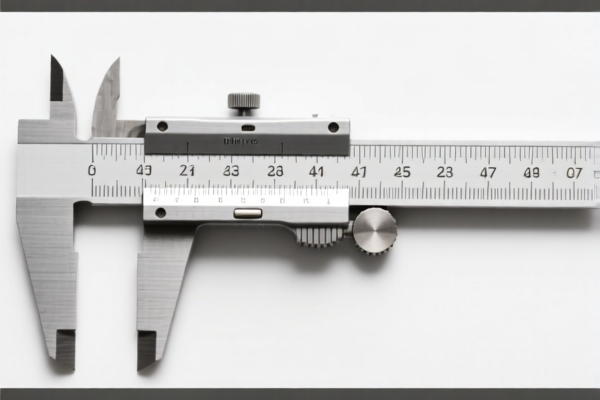
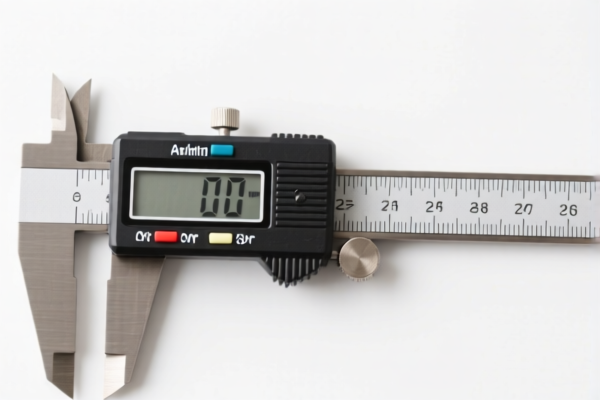
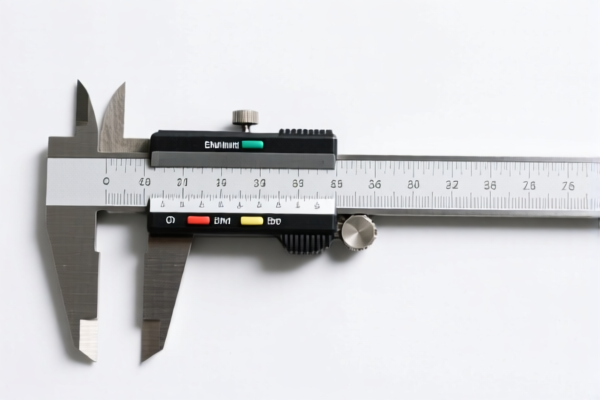
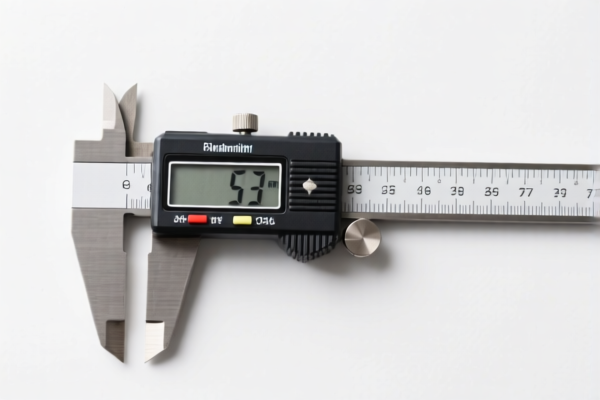
AI Analysis
🔬 Test Modules & Electrical Control Panels (Control/Distribution Boards)
🌐 HS Code Reference & Customs Clearance Guide | 2026 Latest Tariff Analysis | Professional Clearance Strategy
📌 I. Product Definition & Classification: What is a "Test Module"?
In the context of international trade and electronics, a "Test Module" is a broad term. However, when it involves two or more apparatus of heading 8535 or 8536 (such as switches, relays, fuses, connectors) for electric control or distribution, it falls under Heading 8537.
It is critical to distinguish between: 1. Integrated Control Panels/Consoles: Boards or cabinets equipped with multiple switching devices (8535/8536). 2. Programmable Logic Controllers (PLCs): Specialized control apparatus (often numerical control). 3. Simple Test Jigs/Fixtures: May fall under different headings if they lack the specific switching apparatus combination.
⚠️ Key Distinction Point:
- If the device is a board/panel/cabinet with two or more devices of 8535/8536 → HS Code 8537.10.91.xxxx
- If it is a standalone PLC with no other switching apparatus → HS Code 8537.10.91.60 (Programmable Controllers)
- If it is a generic base without sufficient switching apparatus → May not be 8537
📦 II. HS Code Classification Details (Based on Provided Data)
| HS Code | Product Description | Voltage Class | Specific Type | Tax Rate (China→US) |
|---|---|---|---|---|
8537.10.91.70 |
Boards, panels, consoles, desks, cabinets... equipped with ≥2 apparatus of 8535/8536. Other. | ≤ 1,000 V | Other / Generic | 27.7% |
8537.10.91.60 |
Boards, panels, consoles, desks, cabinets... equipped with ≥2 apparatus of 8535/8536. | ≤ 1,000 V | Programmable Controllers | 27.7% |
🔍 Critical Note:
- Both codes listed in your data share the same total tax rate (27.7%).
- The distinction lies in sub-classification:...60is for Programmable Controllers, while...70is for Other control/distribution equipment.
- Voltage Limit: Must be ≤ 1,000 V. If > 1,000 V, these codes are invalid.
💰 III. 2026 Tariff Rate Breakdown (Detailed Explanation)
✅ Source Data Application:
- Base Tariff: 2.7%
- Additional Tariff (Section 301/Trade War): 25.0%
- Total Tax: 27.7%
- Applicability: Typically applies to imports from China (CN) to the United States (US) based on the provided tax structure.
🎯 1. 8537.10.91.70 – Other Control/Distribution Boards (≤1,000V)
| Item | Details |
|---|---|
| Base Tariff | 2.7% |
| Additional Tariff | 25.0% |
| Total Tax | 27.7% |
| Calculation | CIF Value × 27.7% |
| De Minimis Exemption? | ❌ No (De minimis does not apply to duties over certain thresholds or specific countries/products) |
| Legal Basis | HTSUS 8537.10.91.70 + USITC Footnote (if applicable) |
📌 Explanation:
- This code covers general electric control panels that do not qualify as programmable controllers.
- Example: A junction box with multiple relays and fuses for industrial machinery control.
🎯 2. 8537.10.91.60 – Programmable Controllers (≤1,000V)
| Item | Details |
|---|---|
| Base Tariff | 2.7% |
| Additional Tariff | 25.0% |
| Total Tax | 27.7% |
| Calculation | CIF Value × 27.7% |
| De Minimis Exemption? | ❌ No |
| Legal Basis | HTSUS 8537.10.91.60 + USITC Footnote (if applicable) |
📌 Explanation:
- This code is specifically for Programmable Logic Controllers (PLCs) or numerical control apparatus that fit the description.
- Example: A compact control unit with a processor, input/output modules, and power supply, used for automation.
🛠️ IV. Customs Clearance Practical Advice
✅ 1. Document Preparation Checklist
| Document | Required? | Notes |
|---|---|---|
| ✅ Product Specification Sheet | ✔️ | Must detail: Voltage (≤1,000V), Number of Apparatus (≥2), Type of Switching Devices (8535/8536). |
| ✅ Circuit Diagram/Schematic | ✔️ | Crucial to prove presence of 8535/8536 apparatus. |
| ✅ Product Photos | ✔️ | Show internal components (relays, fuses, connectors). |
| ✅ Label/Nameplate | ✔️ | Clear model number, voltage rating, and country of origin. |
| ✅ Commercial Invoice | ✔️ | Describe as "Control Panel" or "Programmable Controller," NOT "Test Module" (too vague). |
| ✅ Packing List | ✔️ | Include all accessories. |
✅ 2. Classification Strategy
| Scenario | Recommended HS Code | Reason |
|---|---|---|
| Device has a CPU/Processor & is used for automation | 8537.10.91.60 |
Fits "Programmable Controller" definition. |
| Device is a simple board with multiple switches/relays | 8537.10.91.70 |
Fits "Other" control apparatus. |
| Voltage > 1,000 V | Do NOT use above codes | Check other subheadings under 8537 for higher voltage. |
| Single switch/relay only | Not 8537 | May fall under 8536 or 8504. |
🔥 Pro Tip:
- "Test Module" is NOT a valid HS Code description.
- Use "Control Panel", "Distribution Board", or "Programmable Logic Controller" in your commercial invoice.
- If the module is a test fixture without ≥2 8535/8536 apparatus, it might not be 8537 at all. Consult a customs broker if it’s a simple jig.
✅ 3. Common Mistakes to Avoid
| Mistake | Consequence | Correction |
|---|---|---|
| Using "Test Module" as product name | Customs may reject or reclassify | Use specific technical description (e.g., "PLC for Motor Control"). |
| Misdeclaring voltage | Wrong HS Code → Penalty | Ensure voltage ≤1,000V. If >1,000V, use different code. |
| Ignoring "≥2 Apparatus" rule | Wrong HS Code | Verify that the device contains at least two switching devices of 8535/8536. |
| Not paying attention to "Programmable" distinction | Incorrect sub-code | If it’s a PLC, use .60; if not, use .70. Both have same tax, but correct code avoids audits. |
🌍 V. Global Market Comparison (2026)
| Country | HS Code | Tariff Rate | Notes |
|---|---|---|---|
| 🇺🇸 USA | 8537.10.91.60 / .70 |
27.7% | 2.7% base + 25% Section 301 tariff. |
| 🇨🇳 China (Import) | 8537.10.99.00 |
~3-5% | Check latest Chinese HS code list for exact rate. |
| 🇪🇺 EU | 8537.10.99 |
~4% | Standard EU duty for control panels. |
| 🇬🇧 UK | 8537.10.99 |
~4% | Post-Brexit standard rate. |
📌 Conclusion:
- US Market: High tariff (27.7%) due to trade tensions.
- Other Markets: Lower or no additional tariffs.
- Strategy: If shipping to the US, ensure precise classification to avoid overpayment or penalties. Consider supply chain diversification if tariffs are prohibitive.
📌 VI. Final Recommendations
- Be Specific: Replace "Test Module" with "Control Panel" or "Programmable Controller" in all documentation.
- Verify Voltage: Confirm ≤1,000 V. If higher, research other 8537 subheadings.
- Check Apparatus Count: Ensure ≥2 devices of 8535/8536 are present.
- Pre-Consult: If unsure, apply for a Binding Tariff Information (BTI) or Customs Ruling from the US CBP.
- Budget for Tariffs: Include 27.7% in your cost analysis for US imports.
📣 Action Item:
📞 Contact a Customs Broker with product photos and schematics.
🚀 Accurate Classification = Cost Savings & Smooth Clearance!
✨ Precision in Classification, Peace of Mind in Customs!
💼 Your Supply Chain, Optimized.
Customer Reviews
About HS Code Classification
The Harmonized System (HS) is an internationally standardized nomenclature developed by the World Customs Organization (WCO) to classify traded products. Over 200 countries use the HS system as the basis for customs tariffs, trade statistics, and import/export regulations.
Each HS code follows a hierarchical structure:
- Chapter (2 digits) — Broad category of goods (e.g., Chapter 84: Machinery and Mechanical Appliances)
- Heading (4 digits) — More specific grouping within the chapter
- Subheading (6 digits) — Internationally standardized breakdown, used by all WCO member countries
- National subdivisions (8-10 digits) — Country-specific extensions for further classification, such as US HTSUS 10-digit codes
Correct HS code classification is essential for smooth customs clearance, accurate duty payment, and compliance with trade regulations. Misclassification can lead to customs delays, overpayment of duties, or penalties.
When importing from CN to US, the applicable tariff rates may include:
- Most-Favored-Nation (MFN) rate — The standard duty rate applied to WTO members
- General rate — Applied to countries without trade agreements
- Trade remedy duties — Additional tariffs such as Section 301 (anti-dumping), Section 232 (national security), or countervailing duties
The information provided on this page is for reference purposes only. For official classification, please consult with your local customs authority or a licensed customs broker.