Test Pen
CN → US| HS Code | Tariff Rate | Origin | Destination | Doc |
|---|---|---|---|---|
| 9030310000 | 35.0% | CN | US | Official Doc |
| 3002150091 | 10.0% | CN | US | Official Doc |
| 3822190080 | 10.0% | CN | US | Official Doc |
| 3822190030 | 10.0% | CN | US | Official Doc |
Product Images
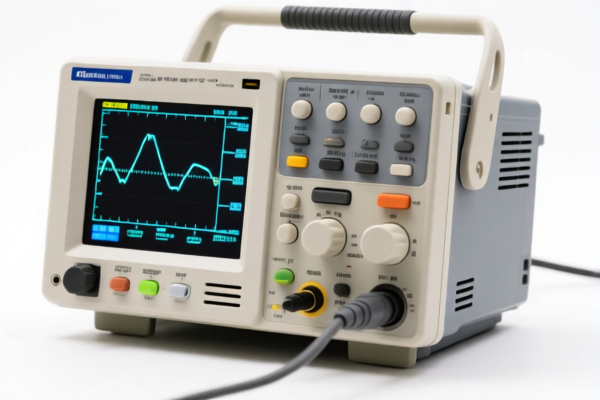
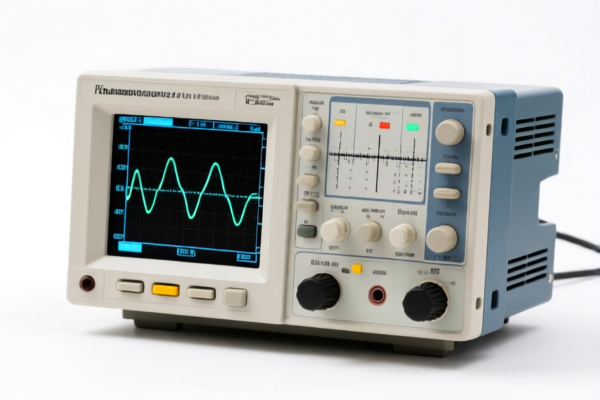
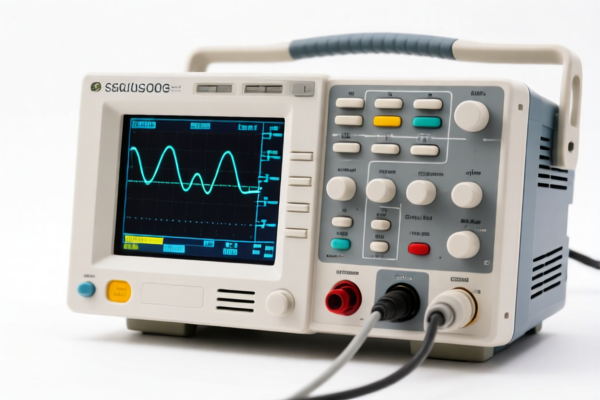
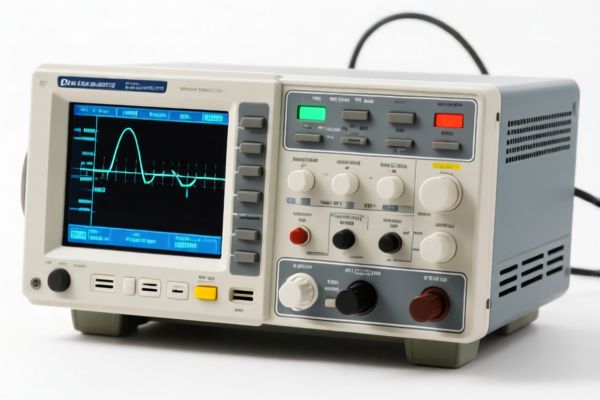
AI Analysis
🔌 Test Pen (Voltage Tester / Circuit Checker)
🌐 HS Code Reference & Customs Clearance Guide | 2026 Latest Tariff Analysis | Professional-Level Strategy
📌 I. Product Definition & Classification: Do You Really Understand "Test Pens"?
A Test Pen (also known as a Voltage Tester or Circuit Checker) is a handheld electrical tool used to verify the presence of voltage in electrical circuits. In international trade, the classification depends strictly on functionality and whether it possesses recording/data-logging capabilities.
Non-Recorded Voltage Detectors: Simple tools that provide a visual (LED/neon) or audible signal without storing data. Recorded/Measuring Instruments: Devices that log data, display precise numerical values, or possess complex internal circuitry for data storage (often overlapping with Multimeters).
⚠️ Key Distinction Point:
- If the device is a simple indicator (neon bulb, non-contact voltage detector) with no data recording capability, it falls under 9030.31.00.00.
- If the device functions primarily as a multimeter with data logging, it may fall under different subheadings (not covered in the provided<DATA>scope, but logically aligned with measurement instruments).
📦 II. HS Code Classification Details (Based on Provided Data)
| HS Code | Product Description | Application Logic | Key Attributes |
|---|---|---|---|
9030.31.00.00 |
Instruments & apparatus for checking voltage, not having a recording device | Simple voltage detection, non-contact testers, basic neon/test pens | ✅ No Recording Device ✅ Voltage Checking Function |
🔍 重点提醒:
- The provided<DATA>only lists9030.31.00.00for test pens. This classification is based on the summary: "Test pens or circuit checkers for checking voltage, belonging to detection tools without recording devices."
- Any "smart" test pen that logs voltage spikes or connects to an app for data history might be scrutinized, but simple physical test pens clearly fit this code.
💰 III. 2026 Latest Tariff Rate Breakdown (Detailed Policy Analysis)
✅ Applicable Country: United States (US)
✅ Country of Origin: China (CN) (Implied by the specific "Section 122" and "Trade Act" references)
✅ Effective Time: Current (2026 Context)
🎯 1. 9030.31.00.00 —— Test Pens / Voltage Checkers (No Recording)
| Item | Content |
|---|---|
| Base Duty Rate | 0.0% (ad valorem) |
| Trade War Surtax (Section 301) | +25.0% |
| Section 122 Tariff | +10.0% |
| Total Effective Rate | 35.0% |
| Tax Calculation | CIF Value × 35% |
| De Minimis Eligibility | ❌ Not Eligible (High tariff rate usually negates de minimis benefits for commercial shipments, or requires specific exemption analysis) |
| Legal Basis Path | Base: 9030.31.00.00 → Surtax: 25% (Section 301) → Section 122: 10% |
📌 Interpretation:
- "Base Tariff: 0%": Standard HS Code 9030.31.00.00 typically has a low or zero base duty for many origins, but this changes drastically for Chinese goods.
- "Surtax: 25%": This is the standard Section 301 additional duty on Chinese goods in this category.
- "Section 122 Tariff: 10%": This refers to specific trade remedy or emergency tariffs (often associated with recent executive orders or specific trade acts impacting electrical safety or testing equipment).
- Total: 35%: This is a significant cost driver. Importers must calculate this into their landed cost.
🛠️ IV. Customs Clearance Practical Advice (Battle-Tested Tips)
✅ 1. Required Documentation Checklist (Non-Negotiable)
| Document | Must Provide? | Explanation |
|---|---|---|
| ✅ Product Specification Sheet | ✔️ | Must explicitly state: "Non-recording device," "For voltage indication only," "No data storage capability." |
| ✅ Product Photos | ✔️ | Clear images of the pen tip, indicator light (LED/Neon), and any buttons. No screens showing data logs. |
| ✅ Commercial Invoice | ✔️ | Description must match HS Code logic: "Test Pen, Voltage Checker, No Recording Function." |
| ✅ Certification (UL/CE/FCC) | ✔️ | Electrical safety certificates are often requested for voltage-testing tools. |
| ✅ Packing List | ✔️ | Standard item count and weight. |
✅ 2. Declaration Strategy (Key Mantras)
🔥 “Clear Function, No Data, Low Risk!”
| Scenario | Correct Declaration | Wrong Action |
|---|---|---|
| Standard Neon Test Pen | 9030.31.00.00Description: "Voltage Test Pen, No Data Recording" |
Misdeclaring as a "Multimeter" or "Data Logger" → Higher scrutiny |
| Digital Screwdriver with Voltage Check | Check if it records data. If yes, may need different HS. | Assuming all digital testers are the same HS code |
| Smart Pen with App Connectivity | High Risk: May be classified as a "Data-Logging Instrument" → Different HS, potentially higher taxes or different regulations | Declaring as simple "Test Pen" when it has Bluetooth/Data features |
📌 Warning:
- If your test pen has a digital screen that stores historical readings or connects to a smartphone to log voltage events, it does NOT fit9030.31.00.00("not having a recording device"). It might fall under9030.39(Other instruments), which has different tariffs.
- Stick to the provided data: For the purpose of this guide, we assume basic, non-logged test pens.
✅ 3. Special Case Handling
| Situation | Handling Advice |
|---|---|
| OEM/Private Label | Ensure the invoice reflects the true manufacturer but can list your brand. Keep the functional description identical to avoid "misdeclaration" flags. |
| Kit Contents | If the test pen is sold in a kit with other tools (e.g., screwdrivers), do not split the shipment unless necessary. The dominant function (voltage testing) should drive the primary HS if possible, or split values carefully. |
| Digital vs. Analog | Neon/Analog = Safe for 9030.31.00.00. Digital with Memory = Verify HS Code with a customs broker immediately. |
🌍 V. Global Market Comparison (2026 Context)
| Country/Region | Recommended HS Code | Estimated Duty (China Origin) | Key Requirements | Note |
|---|---|---|---|---|
| 🇺🇸 USA | 9030.31.00.00 |
35% (0% Base + 25% + 10%) | FCC/UL Certification | High tariff burden due to Section 301 & 122 |
| 🇨🇳 China | 9030.31.00.00 |
~0-5% | CCC Certification | Lower import barriers |
| 🇪🇺 EU | 9030.31.00 |
0-2.7% | CE Marking, RoHS | No Section 301/122 tariffs |
| 🇬🇧 UK | 9030.31.00 |
0-2.7% | UKCA Marking | Post-Brexit independent tariffs |
📌 Conclusion:
- The US is the most expensive market for importing test pens from China due to the cumulative 35% tariff.
- European and Asian markets remain significantly more cost-effective.
- Importers shipping to the US must factor in this 35% cost into their pricing strategy.
📌 VI. Common Errors & Pitfalls (Lessons Learned)
❌ Error 1: Declaring a Digital Multimeter as a Test Pen
👉 Consequence: If the multimeter has data logging, it’s misclassified. If it’s just a display, it might still be correct, but complexity increases. Risk of audit.
❌ Error 2: Ignoring Section 122 Tariffs
👉 Consequence: Many importers only calculate Section 301 (25%) and forget the additional 10%, leading to underpayment and penalties.
❌ Error 3: Vague Product Description
👉 Consequence: "Electric Tool" or "Tester" is too vague. CBP (Customs and Border Protection) may reclassify it to a higher-duty item or hold the shipment for further inspection.
✅ Correct Practice:
"Handheld Voltage Test Pen, Non-Contact, LED Indicator, No Data Recording Function, Model XYZ, UL Listed"
🎯 VII. Conclusion: Precision in Classification Saves Money!
🎯 Remember the Mantra:
🔹 "No Data? Then 9030.31.00.00!"
🔹 "China to US? Pay 35% (0+25+10)!"
🔹 "Clear Specs, Clear Shipments!"
📌 Pro Tip:
If you are importing high-volume test pens to the US, consider:
1. Pre-Ruling: Request an Advance Ruling (R911168 style) from CBP to confirm the HS Code.
2. Supply Chain Diversification: Explore sourcing from countries not subject to Section 301 tariffs (e.g., Vietnam, Malaysia) if margins allow.
3. Duty Drawback: If you re-export the goods, check if duty drawback applies.
📣 Immediate Action:
📞 Consult a licensed customs broker.
📄 Provide clear functionality statements (No Recording).
📉 Calculate Landed Cost with 35% tax included.
🚀 Avoid delays, avoid penalties, protect your margin!
✨ Professional Clearance Starts with Accurate Classification!
💼 Every cent counts in cross-border trade!
Customer Reviews
About HS Code Classification
The Harmonized System (HS) is an internationally standardized nomenclature developed by the World Customs Organization (WCO) to classify traded products. Over 200 countries use the HS system as the basis for customs tariffs, trade statistics, and import/export regulations.
Each HS code follows a hierarchical structure:
- Chapter (2 digits) — Broad category of goods (e.g., Chapter 84: Machinery and Mechanical Appliances)
- Heading (4 digits) — More specific grouping within the chapter
- Subheading (6 digits) — Internationally standardized breakdown, used by all WCO member countries
- National subdivisions (8-10 digits) — Country-specific extensions for further classification, such as US HTSUS 10-digit codes
Correct HS code classification is essential for smooth customs clearance, accurate duty payment, and compliance with trade regulations. Misclassification can lead to customs delays, overpayment of duties, or penalties.
When importing from CN to US, the applicable tariff rates may include:
- Most-Favored-Nation (MFN) rate — The standard duty rate applied to WTO members
- General rate — Applied to countries without trade agreements
- Trade remedy duties — Additional tariffs such as Section 301 (anti-dumping), Section 232 (national security), or countervailing duties
The information provided on this page is for reference purposes only. For official classification, please consult with your local customs authority or a licensed customs broker.