Textbook Model
CN → US| HS Code | Tariff Rate | Origin | Destination | Doc |
|---|---|---|---|---|
| 9610000000 | 13.5% | CN | US | Official Doc |
| 4901990010 | 17.5% | CN | US | Official Doc |
| 4901990050 | 17.5% | CN | US | Official Doc |
| 4820200000 | 35.0% | CN | US | Official Doc |
| 4820102060 | 35.0% | CN | US | Official Doc |
| 9023000000 | 17.5% | CN | US | Official Doc |
| 9029909000 | 0.0% | CN | US | Official Doc |
Product Images
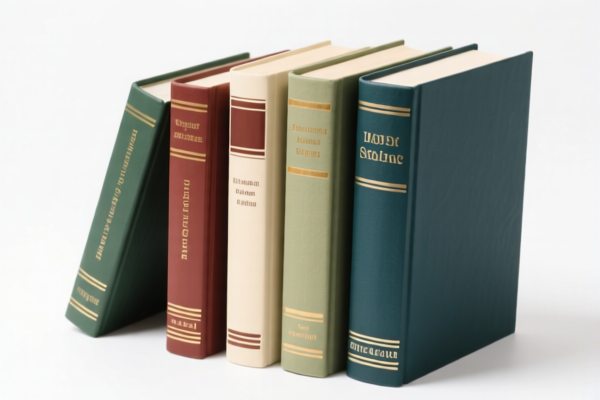


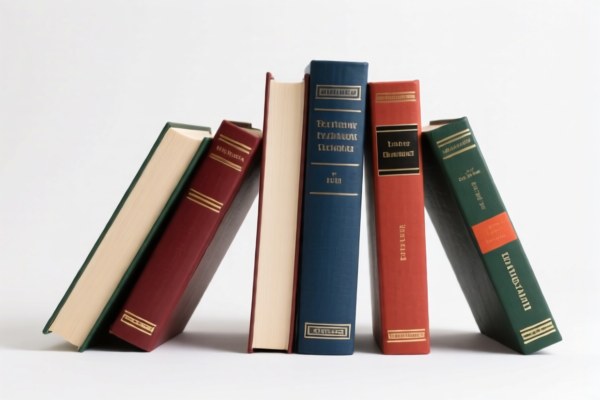
AI Analysis
📚 Textbook Model (Education & Stationery Goods)
🌐 HS Code Reference & Clearance Guide | 2026 Latest Tariff Analysis | Professional Customs Strategy
📌 I. Product Definition & Classification: What Exactly is a "Textbook Model"?
In international trade, the term "Textbook Model" can be ambiguous. It typically refers to one of two distinct product categories depending on the physical form:
- Printed Educational Materials: Physical books, brochures, or leaflets designed for educational purposes (specifically Textbooks).
- Demonstration Models: Physical instruments, apparatus, or models designed exclusively for demonstrational purposes (e.g., in education or exhibitions) and unsuitable for other uses (such as practical medical or industrial work).
⚠️ Critical Distinction:
- If the item is a printed book with pages and binding → It falls under Chapter 49 (Printed Books).
- If the item is a 3D object (plastic, metal, wood) used to teach a concept (e.g., a skeleton model, a globe, a circuit demonstrator) → It falls under Chapter 90 (Optical/Scientific Instruments).
📦 II. HS Code Classification Details (2026 Latest Tariff Authority Comparison)
Based on the provided data, here are the two primary pathways for "Textbook" related items:
Path A: Printed Textbooks (Physical Books)
| HS Code | Product Description | Key Characteristics |
|---|---|---|
4901.99.00.10 |
Other Textbooks (Under: Printed books, brochures, leaflets...) |
- Must be printed. - Bound or unbound. - Specifically identified as a "Textbook". - Excludes other technical/scientific non-textbook books. |
Path B: Educational/Demonstration Models (3D Objects/Instruments)
| HS Code | Product Description | Key Characteristics |
|---|---|---|
9023.00.00.00 |
Instruments, apparatus and models, designed for demonstrational purposes | - Designed for education/exhibitions. - Unsuitable for other uses (e.g., not for actual medical diagnosis or industrial measurement). - Includes parts and accessories. |
🔍 Important Note on Other Codes in Data:
-4820.20.00.00(Exercise Books): If your "model" is actually a blank or ruled notebook for students to write in, it is NOT a textbook. It is an Exercise Book.
-4820.10.20.60(Diaries/Notebooks): Address books, diaries, or memorandum pads. Not relevant for textbooks.
-9610.00.00.00(Slates/Boards): Writing surfaces. Not a textbook.
💰 III. 2026 Latest Tariff Rate Breakdown (Including Surcharge Policies)
✅ Applicable Market: Likely China (Based on the tax details provided in DATA)
✅ Origin: Not specified in data, but tax details imply specific trade policies.
⚠️ Warning: The data shows a mix of 0% base + 25% surcharge AND 0% base + 7.5% surcharge. This suggests different trade relations or product categories. We must analyze each path carefully.
🎯 1. Path A: Printed Textbooks (4901.99.00.10)
| Item | Detail |
|---|---|
| HS Code | 4901.99.00.10 |
| Product | Printed Textbooks |
| Base Tariff | 0.0% |
| Surcharge (Additional Tax) | 7.5% |
| Total Tariff Rate | 7.5% |
| Tax Calculation | CIF Value × 7.5% |
| Legal Basis | General Trade Regime (Assumed based on 7.5% total) |
📌 Explanation:
- Printed textbooks often enjoy lower tariffs to support education.
- The 7.5% total suggests a specific surcharge (possibly related to certain trade measures or non-FTA origin).
- Crucial: Ensure the content is strictly educational/textbook to avoid reclassification as "Technical Books" (4901.99.00.50), which also has a 7.5% rate but different description.
🎯 2. Path B: Educational Demonstration Models (9023.00.00.00)
| Item | Detail |
|---|---|
| HS Code | 9023.00.00.00 |
| Product | Demonstrational Instruments/Models (Unsuitable for other uses) |
| Base Tariff | 0.0% |
| Surcharge (Additional Tax) | 7.5% |
| Total Tariff Rate | 7.5% |
| Tax Calculation | CIF Value × 7.5% |
| Legal Basis | General Trade Regime |
📌 Explanation:
- Models designed only for teaching (e.g., a plastic heart model for biology class) fall here.
- If the model can also be used for actual medical purposes, it may be misclassified.
- Same 7.5% rate as textbooks in this dataset, indicating similar trade treatment for educational goods.
❌ 3. Misclassification Risk: Exercise Books / Stationery (4820.20.00.00 or 4820.10.20.60)
| Item | Detail |
|---|---|
| HS Code | 4820.20.00.00 (Exercise Books) or 4820.10.20.60 (Notebooks/Diaries) |
| Base Tariff | 0.0% |
| Surcharge | 25.0% |
| Total Tariff Rate | 25.0% |
| Difference | +17.5% higher than Textbooks/Models |
📌 Warning:
- Do NOT classify a printed textbook as an "Exercise Book" to avoid the 25% tariff if the content is instructional.
- However, if the item is a blank notebook for students to write in, it MUST be classified as Exercise Book (4820.20.00.00) and will incur 25% tax.
- Key Test: Is it a book of knowledge (Textbook/Model) or a book for writing (Exercise Book)?
🛠️ IV. Customs Clearance Practical Advice (Avoiding Pitfalls)
✅ 1. Preparation Checklist
| Document | Required? | Explanation |
|---|---|---|
| Product Photos | ✔️ | Show the content (if printed) or structure (if model). For models, show it's not a functional instrument. |
| Content Description | ✔️ | For textbooks: Provide table of contents to prove it's educational. |
| Material Composition | ✔️ | For models: Specify materials (plastic, wood, etc.) and confirm they are not functional instruments. |
| Commercial Invoice | ✔️ | Clearly state: "Educational Textbook" or "Demonstration Model for Education". Avoid vague terms like "School Supplies". |
| Origin Certificate | ✔️ | If applicable, to check for FTA benefits (though data shows 0% base, surcharge may apply). |
✅ 2. Declaration Strategy (Key Tips)
🔥 "Content Defines Code, Purpose Defines Model!"
| Scenario | Correct Classification | Wrong Classification | Consequence |
|---|---|---|---|
| A Biology Book | 4901.99.00.10 (Textbook) |
4820.20.00.00 (Exercise Book) |
Overpayment: 7.5% vs 25% |
| A Plastic Skeleton Model | 9023.00.00.00 (Demonstration Model) |
9029.90.90.00 (Other Instruments) |
Risk: 9029.90.90.00 has Error/Failed to retrieve tax data → Customs Delay! |
| A Blank Notebook | 4820.20.00.00 (Exercise Book) |
4901.99.00.10 (Textbook) |
Underpayment Risk: If misclassified as textbook, customs may audit and demand 25% + penalties. |
| A Diaries/Address Book | 4820.10.20.60 |
4820.20.00.00 |
Minor Error: Both 25%, but wrong description may cause questions. |
✅ 3. Special Handling for "Textbook Model"
- If it's a 3D Model:
- Explicitly state: "For Demonstrational Purposes Only".
- Do NOT include functional parts (e.g., if it's an electrical model, it must not be able to power devices).
-
If it has a screen/display, ensure it's not a "monitor" (
8528), which has different tariffs. -
If it's a Printed Book:
- Ensure it is bound (book format). Loose sheets might fall under "leaflets" (
4901.99.00.00), but still generally 7.5% for technical/other, but Textbooks have a specific sub-code4901.99.00.10. - Proof of "Textbook" Status: Provide a publisher's license or content outline showing educational purpose.
🌍 V. Global Market Comparison (2026 Latest)
| Country/Region | Recommended HS Code | Tariff (Approx.) | Notes |
|---|---|---|---|
| 🇨🇳 China (Data Source) | 4901.99.00.10 or 9023.00.00.00 |
7.5% | Base 0% + 7.5% surcharge. |
| 🇺🇸 USA | 4901.99.00 or 9023.00 |
0% - 5% | Often duty-free for educational materials, but check Section 301 lists. |
| 🇪🇺 EU | 4901.99 or 9023.00 |
0% - 6% | Usually low or zero for educational goods under GSP or CN codes. |
| 🇬🇧 UK | 4901.99 or 9023.00 |
0% - 5% | Similar to EU post-Brexit. |
📌 Conclusion:
- China (as per data) imposes a 7.5% surcharge on educational books and models.
- Exercise Books/Stationery face a much higher 25% surcharge.
- Key Strategy: Classify Printed Books and Demonstration Models under their specific educational codes to save 17.5% compared to stationery.
📌 VI. Common Errors & Pitfalls (Blood Lessons)
❌ Error 1: Classifying a Textbook as an Exercise Book.
👉 Consequence: Pay 25% instead of 7.5%. Overpayment of 17.5%.
👉 Fix: Emphasize "Educational Content" in description.
❌ Error 2: Classifying a 3D Demonstration Model as a Functional Instrument.
👉 Consequence: 9029.90.90.00 shows "Failed to retrieve tax information".
👉 Result: Customs holds the shipment for manual review → Delay of 2-4 weeks.
👉 Fix: Provide a declaration that the model is "Unsuitable for other uses" (i.e., not for actual measurement).
❌ Error 3: Using vague terms like "School Items" on the Invoice.
👉 Consequence: Customs officer may guess the code, leading to arbitrary classification (often the highest rate).
👉 Fix: Use precise terms: "Printed Textbook: Biology for High School" or "Educational Demonstration Model: Human Anatomy".
✅ Correct Declaration Example:
"Product: Educational Demonstration Model (Human Skeleton), Plastic, Non-functional, For Classroom Use Only. HS Code: 9023.00.00.00"
OR
"Product: Printed Mathematics Textbook, Hardcover, 2026 Edition. HS Code: 4901.99.00.10"
🎯 VII. Conclusion: Professional Declaration, Cost Savings
🎯 Remember the Golden Rule:
🔹 "Books & Models for Education: 7.5%
🔹 "Notebooks & Diaries for Writing: 25%
🔹 "Functional Instruments: Unknown/Error – Risk of Delay!"
📌 Action Plan:
1. Identify if your product is a printed book or a 3D model.
2. Exclude if it is a blank notebook (it will cost 25%).
3. Declare with precise educational purpose.
4. Verify that 3D models are non-functional to avoid the "Error" tax code.
📣 Immediate Action:
📞 Contact your customs broker with photos and content descriptions.
🚀 Save 17.5% by classifying correctly as Educational Goods, not Stationery!
✨ Precision in Classification, Profit in Your Pocket!
💼 Every Tax Point Counts!
Customer Reviews
About HS Code Classification
The Harmonized System (HS) is an internationally standardized nomenclature developed by the World Customs Organization (WCO) to classify traded products. Over 200 countries use the HS system as the basis for customs tariffs, trade statistics, and import/export regulations.
Each HS code follows a hierarchical structure:
- Chapter (2 digits) — Broad category of goods (e.g., Chapter 84: Machinery and Mechanical Appliances)
- Heading (4 digits) — More specific grouping within the chapter
- Subheading (6 digits) — Internationally standardized breakdown, used by all WCO member countries
- National subdivisions (8-10 digits) — Country-specific extensions for further classification, such as US HTSUS 10-digit codes
Correct HS code classification is essential for smooth customs clearance, accurate duty payment, and compliance with trade regulations. Misclassification can lead to customs delays, overpayment of duties, or penalties.
When importing from CN to US, the applicable tariff rates may include:
- Most-Favored-Nation (MFN) rate — The standard duty rate applied to WTO members
- General rate — Applied to countries without trade agreements
- Trade remedy duties — Additional tariffs such as Section 301 (anti-dumping), Section 232 (national security), or countervailing duties
The information provided on this page is for reference purposes only. For official classification, please consult with your local customs authority or a licensed customs broker.