Textile Articles (HS 6307903020)
CN → US| HS Code | Tariff Rate | Origin | Destination | Doc |
|---|---|---|---|---|
| 6304996040 | 20.7% | CN | US | Official Doc |
| 6304910170 | 23.3% | CN | US | Official Doc |
| 6307903020 | 25.4% | CN | US | Official Doc |
| 6307903010 | 25.4% | CN | US | Official Doc |
| 6307903020 | 25.4% | CN | US | Official Doc |
Product Images
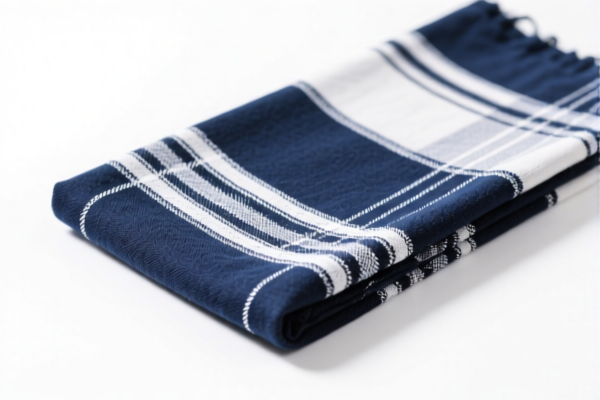
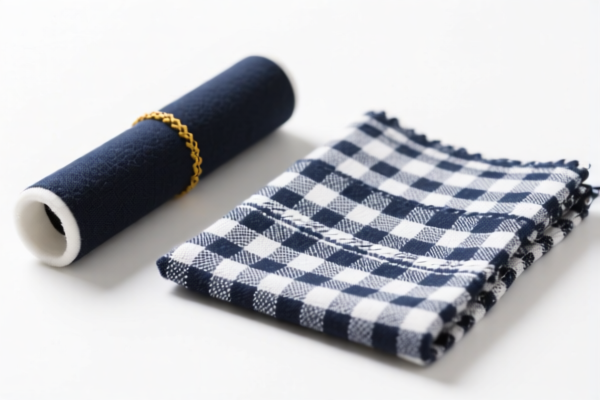
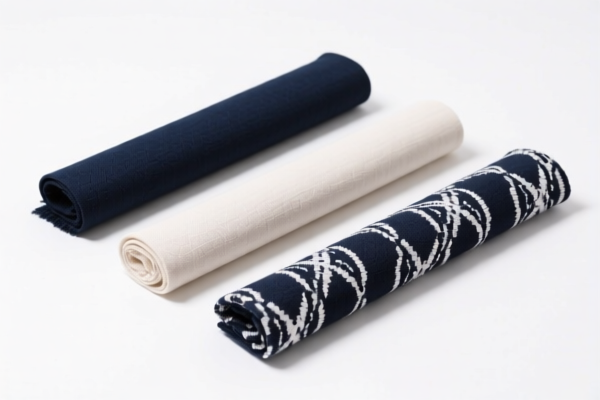
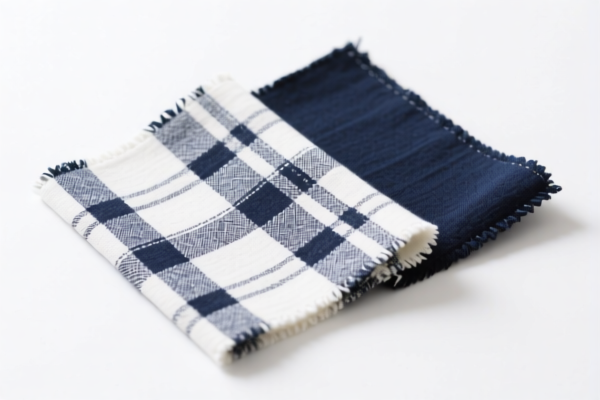
AI Analysis
🧵 Textile Articles (HS 6307.90.30.20)
🌐 HS Code Reference & Customs Clearance Guide | 2026 Latest Tariff Breakdown | Pro-Level Import Strategy
📌 One, Product Definition & Classification: What Exactly Are "Textile Articles"?
Textile articles are non-apparel, functional or decorative household textile goods made from any textile material—cotton, polyester, rayon, blends, etc.—that do not fall under clothing, bedding, or upholstery. They are typically used for home decoration, storage, or utility purposes.
In the U.S. Harmonized Tariff Schedule (HTSUS), HS 6307.90.30.20 specifically covers:
✅ Other textile articles, not elsewhere specified (NES), with no material conflict
✅ Common examples: Fabric-covered storage boxes, decorative fabric panels, textile organizers, wall hangings, fabric-bound notebooks, and similar non-apparel items⚠️ Key Distinction:
- If it’s a label made of cotton fabric → HS 6307.90.30.10
- If it’s a general textile article with no material conflict → HS 6307.90.30.20
- If it’s a bag, cushion, or household item with specific material → may fall under other subheadings
📦 Two, HS Code Classification Details (2026 Latest Tariff Authority)
| HS Code | Product Description | Applicable Use Case | Material Conflict? |
|---|---|---|---|
6307.90.30.10 |
Cotton fabric labels, other textile articles | Product tags, name tags, garment labels | ✅ Yes (cotton-specific) |
6307.90.30.20 |
Other textile articles, no material conflict | Decorative panels, fabric organizers, wall art, textile boxes | ❌ No (general category) |
🔍 Critical Insight:
- HS 6307.90.30.20 is a catch-all for textile items that don’t fit into more specific categories.
- No material conflict means the fabric composition is not restricted or not declared in a way that triggers higher tariffs (e.g., no prohibited blend, no conflict with trade agreements).
- If the item is cotton-based, but not a label → still 6307.90.30.20, not 6307.90.30.10.
💰 Three, 2026 Latest Tariff Breakdown (With附加 Taxes & Legal Triggers)
✅ Applicable Country: United States (US)
✅ Origin: China (CN)
✅ Effective Date: November 10, 2025 (including future imports)
🎯 1. 6307.90.30.20 — Other Textile Articles (No Material Conflict)
| Item | Details |
|---|---|
| Base Duty Rate | 7.9% (ad valorem) |
| Section 301 Additional Duty (USITC) | +7.5% |
| Section 122 Additional Duty (IEEPA) | +10% |
| Total Effective Duty | 25.4% |
| Tax Calculation | CIF Value × 25.4% |
| De Minimis Threshold | ❌ Not eligible (denied under 19 CFR 152.104) |
| Legal Basis Path | IEEPA:9903.01.25 → IEEPA:9903.01.24 → USITC:6307.90.30.20 → FOOTNOTE:9903.88.01 |
📌 Explanation: - 7.9% Base Duty: Standard rate for non-apparel textile articles under HTSUS. - +7.5% Section 301 (USITC): From the U.S. Trade Representative’s Section 301 investigation into China’s unfair trade practices. - +10% Section 122 (IEEPA): Under the International Emergency Economic Powers Act, targeting goods from China and Hong Kong. - Total: 25.4% — Highly punitive for non-apparel textile goods from China.
🛠️ Four, Customs Clearance Best Practices (Real-World Pro Tips)
✅ 1. Required Documentation (No Exceptions!)
| Document | Must Provide? | Why It Matters |
|---|---|---|
| ✅ Product Specification Sheet | ✔️ | Clarifies use, material, size, and function |
| ✅ Fabric Composition & Labeling | ✔️ | Prevents misclassification (e.g., cotton vs. blend) |
| ✅ Product Photos (Front, Back, Close-up) | ✔️ | Proves no material conflict, no hidden labels |
| ✅ Commercial Invoice | ✔️ | Must state: “Textile Article, Not Elsewhere Specified, No Material Conflict” |
| ✅ Certificate of Origin (CO) | ✔️ | If from Vietnam, Mexico, or Thailand → may qualify for lower duty |
| ✅ Packing List | ✔️ | Shows packaging integrity; avoids split-shipment risks |
| ✅ Test Report (e.g., CPSIA, REACH, OEKO-TEX) | ✔️ | Reduces audit risk, especially for children’s or decorative items |
✅ 2.申报技巧(Key Rules of Thumb)
🔥 “Label? Use 6307.90.30.10. Other? Use 6307.90.30.20. No Conflict? 25.4% Tax. Be Precise!”
| Scenario | Correct HS Code | Common Mistake |
|---|---|---|
| Fabric-covered storage box (cotton blend) | 6307.90.30.20 |
Misclassified as 6304.99.60.40 (home textiles) → lower base rate but still 25.4% |
| Cotton fabric label (e.g., for garment) | 6307.90.30.10 |
Reported as 6307.90.30.20 → incorrect, higher risk of audit |
| Decorative wall panel (non-cotton) | 6307.90.30.20 |
Reported as 6304.99.60.40 → wrong category, higher risk |
| Textile organizer (no material conflict) | 6307.90.30.20 |
Split into “fabric” + “frame” → each taxed at 89.5% → total 179%+ |
✅ 3. Special Cases & Workarounds
| Situation | Recommended Action |
|---|---|
| Item is made in Vietnam/Mexico | Apply for IEEPA exemption → 0% additional duty → total ~7.9% |
| Item contains recycled fabric | Ensure material is declared properly; no conflict with U.S. anti-dumping rules |
| Item is for resale (retail packaging) | Use "Textile Article, Not Elsewhere Specified, No Material Conflict" in invoice |
| Item is used in commercial interior design | Still falls under 6307.90.30.20 — no special exemption |
| Item is a prototype or sample | Apply for de minimis exemption (if value < $800) — but only if not from China |
🌍 Five, Global Customs Comparison (2026)
| Country/Region | Recommended HS Code | Tariff Rate | Certification | Notes |
|---|---|---|---|---|
| 🇺🇸 United States | 6307.90.30.20 |
25.4% (China) | None (unless material-specific) | High-risk due to 301 + IEEPA |
| 🇨🇳 China | 6307.90.30.20 |
5% | CCC, RoHS | No additional tariffs |
| 🇪🇺 EU | 6307.90.30.20 |
0% (if CE compliant) | CE, REACH | No 301/IEEPA tariffs |
| 🇦🇺 Australia | 6307.90.30.20 |
5% | RCM | No additional duties |
| 🇯🇵 Japan | 6307.90.30.20 |
0% | PSE | No extra charges |
📌 Key Takeaway:
- The U.S. is the only market with 25.4% total duty on these items from China.
- Switching origin to Vietnam, Mexico, or Thailand can reduce tax to 7.9% — huge cost saving!
📌 Six, Common Mistakes & Pitfalls (Avoid These!)
❌ Mistake 1: Misclassifying a cotton label as 6307.90.30.20
👉 Result: Incorrect tariff, audit risk, potential penalties
❌ Mistake 2: Splitting a fabric organizer into "fabric" + "frame"
👉 Result: Each part taxed at 89.5% → total over 179% → huge loss
❌ Mistake 3: Not declaring material composition clearly
👉 Result: Customs may assume conflict → higher scrutiny, delay, or rejection
❌ Mistake 4: Using generic name like “Fabric Item” or “Textile”
👉 Result: No clarity → misclassification risk → audit
✅ Best Practice:
Use precise language:
“Decorative Fabric Organizer, 12x8x6 in, Cotton-Polyester Blend, No Material Conflict, Not a Label”
🎯 Seven, Final Verdict: Accurate Classification = Profit Protection
🎯 Remember the Golden Rule:
🔹 “If it’s not a label, not clothing, not bedding — and no material conflict? Use 6307.90.30.20.”
🔹 “From China? 25.4% tax. From Vietnam? 7.9%. Choose wisely!”
📌 Pro Tip:
✅ Apply for a Pre-Review Ruling (Advance Ruling) from U.S. Customs before shipping.
✅ Use a U.S.-based customs broker with textile expertise.
✅ Change origin to Vietnam/Mexico if possible — save thousands per shipment.
📣 Act Now:
📞 Contact a specialized customs broker + submit product photos + request HS Code pre-approval
🚀 Avoid 25.4% surprise taxes. Ship smarter. Save more. Grow faster.
✨ Precision in Classification = Peace of Mind in Clearance!
💼 Your product’s fate starts with the right HS Code.
Customer Reviews
About HS Code Classification
The Harmonized System (HS) is an internationally standardized nomenclature developed by the World Customs Organization (WCO) to classify traded products. Over 200 countries use the HS system as the basis for customs tariffs, trade statistics, and import/export regulations.
Each HS code follows a hierarchical structure:
- Chapter (2 digits) — Broad category of goods (e.g., Chapter 84: Machinery and Mechanical Appliances)
- Heading (4 digits) — More specific grouping within the chapter
- Subheading (6 digits) — Internationally standardized breakdown, used by all WCO member countries
- National subdivisions (8-10 digits) — Country-specific extensions for further classification, such as US HTSUS 10-digit codes
Correct HS code classification is essential for smooth customs clearance, accurate duty payment, and compliance with trade regulations. Misclassification can lead to customs delays, overpayment of duties, or penalties.
When importing from CN to US, the applicable tariff rates may include:
- Most-Favored-Nation (MFN) rate — The standard duty rate applied to WTO members
- General rate — Applied to countries without trade agreements
- Trade remedy duties — Additional tariffs such as Section 301 (anti-dumping), Section 232 (national security), or countervailing duties
The information provided on this page is for reference purposes only. For official classification, please consult with your local customs authority or a licensed customs broker.