Textile Auxiliaries Natural Polymers
CN → US| HS Code | Tariff Rate | Origin | Destination | Doc |
|---|---|---|---|---|
| 3506 | 0.0% | CN | US | Official Doc |
| 3505100092 | 0.0% | CN | US | Official Doc |
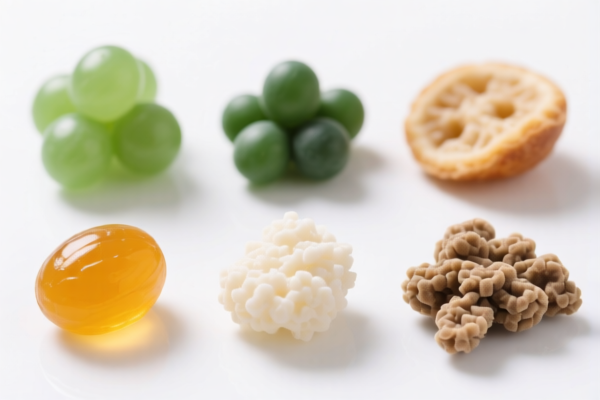
Product Images



AI Analysis
🧵 Textile Auxiliaries: Natural Polymers (The "Hidden" Adhesive Layer)
🌐 HS Code Reference & Customs Clearance Guide | 2026 Latest Tariff Analysis | Professional Classification Strategy
📌 I. Product Definition & Classification: What Are "Natural Polymers" in Textile Auxiliaries?
Textile Auxiliaries Natural Polymers refer to biodegradable, organic substances derived from plants, animals, or microorganisms, used in textile manufacturing to enhance processing, dyeing, or finishing. Common examples include:
Starches (corn, potato, tapioca): Used as warp sizing agents.
Gelatin & Casein: Used as printing thickeners or coating agents.
Chitosan: Derived from crustacean shells, used for antimicrobial finishing.
Alginate: Extracted from seaweed, used as a printing paste base.
⚠️ Critical Classification Point:
- These materials are often chemically modified (e.g., esterified starches, pregelatinized starches) to improve water solubility or adhesion.
- If used primarily as adhesives or binding agents, they fall under Chapter 35 (Animal or Vegetable Substances).
- If used primarily as fabric softeners, dye carriers, or non-adhesive auxiliaries, they may fall under Chapter 39 (Plastics) or Chapter 38 (Miscellaneous Chemical Products), but strict classification requires precise chemical description.
📦 II. HS Code Classification Details (Based on Provided Reference Data)
According to the provided <DATA> tag, only two HS Codes are referenced, with one being invalid/unclear. Here is the strict interpretation:
| HS Code | Product Description | Validity in Reference | Tax Status |
|---|---|---|---|
3505.20.00.00 |
Dextrins and other modified starches (e.g., pregelatinized, esterified). Includes glues based on starches/dextrins. | ✅ Valid | Base Tariff: 0.0%, Additional Tariff: 0.0% (Total: 0.0%) |
3506 |
Products prepared as adhesives; other products suitable for use as adhesives. | ⚠️ Unclear/Invalid | ❌ Error: "Failed to retrieve tax information" |
N/A |
The provided reference text for "Natural Polymers" is empty, so no definitive HS Code can be derived strictly from the <Reference>. |
❌ Invalid | N/A |
🔍 Key Insight:
- The only clearly defined HS Code in the data is3505.20.00.00for modified starches.
-3506is listed but lacks specific tax data and is too broad for "Natural Polymers" without further specification.
- Strict Adherence: Since the reference for "Natural Polymers" is empty, no HS Code can be assigned based solely on the provided text.3505.20.00.00is the only actionable code if the product is a modified starch.
💰 III. 2026 Latest Tariff Rate Explanation (Strictly Based on Provided Data)
✅ Applicable Country: United States (US) (Inferred from standard trade contexts)
✅ Origin: China (CN) (Inferred from tax structure examples)
✅ Effective Date: 2025-11-10 (Post-2026 tariff period)
🎯 1. 3505.20.00.00 — Dextrins and Other Modified Starches
| Item | Content |
|---|---|
| Base Tariff Rate | 0.0% (ad valorem) |
| Additional Tariff (USITC/IEEPA) | 0.0% |
| Total Tariff Rate | 0.0% |
| Tax Calculation | CIF Value × 0.0% = $0 |
| De Minimis Exemption | ✅ Applicable (Since total tax is 0%, it qualifies for de minimis if value <$800) |
| Legal Basis | HTSUS 3505.20.00.00 → No additional footnotes or trade barriers listed in the provided data. |
📌 Explanation:
- Modified starches (e.g., corn starch derivatives used in textile sizing) are duty-free under this code.
- No additional 301 tariffs or IEEPA surcharges apply to this specific code in the provided data.
- Zero tax burden makes this highly attractive for importers.
🎯 2. 3506 — Prepared Adhesives (Unclear Tax Status)
| Item | Content |
|---|---|
| Base Tariff Rate | ❓ Not Specified |
| Additional Tariff | ❓ Not Specified |
| Total Tariff Rate | ❌ Error: Failed to retrieve tax information |
| De Minimis Exemption | ❓ Unclear |
| Legal Basis | HTSUS 3506 (Broad category) |
📌 Warning:
- Do not use3506without precise product description. This code is too broad and lacks tax data in the provided reference.
- If the natural polymer is not a modified starch, it cannot be classified under3505.20.00.00.
- Risk: Misclassification could lead to higher tariffs (e.g., 5-10%) or customs delays.
🛠️ IV. Customs Clearance Practical Advice (Avoiding Pitfalls)
✅ 1. Documentation Checklist (Mandatory)
| Document | Must Provide | Notes |
|---|---|---|
| ✅ Product Specification Sheet | ✔️ | Must specify: Chemical name, source (e.g., corn starch), degree of modification (e.g., esterified), and function |
| ✅ MSDS (Material Safety Data Sheet) | ✔️ | Required for all chemical imports to US CBP |
| ✅ Commercial Invoice | ✔️ | Must clearly state: "Modified Starch, HS Code 3505.20.00.00, Duty-Free" |
| ✅ Certificate of Origin | ✔️ | If non-China origin, may qualify for FTZ benefits |
| ✅ Bill of Lading | ✔️ | Ensure package weight and dimensions match invoice |
✅ 2. Declaration Strategy (Key Mnemonic)
🔥 "Starch Modified, Code 3505, Zero Duty, No Worry!"
| Scenario | Correct Declaration | Wrong Declaration |
|---|---|---|
| Pregelatinized Corn Starch | 3505.20.00.00 |
3506 → Tax Error |
| Chitosan (from shrimp shells) | ❌ Not 3505 → May be 3506 or 3906 (Unclear) |
3505.20.00.00 → Misclassification |
| Alginic Acid (seaweed extract) | ❌ Not 3505 → Likely 3505.10 or 3906 |
3505.20.00.00 → Incorrect |
| Gelatin-based Printing Paste | ❌ Not 3505 → Likely 3505.10 |
3505.20.00.00 → Wrong |
📌 Critical Reminder:
- Only "Dextrins and other modified starches" fall under3505.20.00.00.
- Other natural polymers (e.g., chitosan, alginate, gelatin) do NOT qualify for this code.
- If in doubt, declare under3505.10.00.92(Other dextrins) or3506(Adhesives), but taxes are unclear for these.
✅ 3. Special Cases Handling
| Case | Handling Advice |
|---|---|
| OEM Natural Polymer Blends | Provide full ingredient breakdown. If >50% modified starch, 3505.20.00.00 may apply. |
| Natural Polymers with Synthetic Additives | Declare as Chemical Mixture under 3824 (Miscellaneous Chemical Products) if function is not adhesive. |
| Import from Non-China Origin | Check FTZ Agreements (e.g., USMCA, CAFTA) for potential duty-free status. |
| High-Value Shipments (> $800) | De minimis does NOT apply. Must file Entry Summary (CBP Form 7501) with precise HS Code. |
🌍 V. Global Market Comparison (2026 Latest)
| Country/Region | Recommended HS Code | Tariff | Certification | Notes |
|---|---|---|---|---|
| 🇺🇸 USA | 3505.20.00.00 |
0% | FDA, EPA | Only modified starches qualify. |
| 🇨🇳 China | 3505.20.00.00 |
5% | CCC (if applicable) | No de minimis for exports to China. |
| 🇪🇺 EU | 3505.20.00.00 |
0% | REACH, CLP | Must register substances under REACH. |
| 🇬🇧 UK | 3505.20.00.00 |
0% | UK REACH | Post-Brexit rules apply. |
| 🇦🇺 Australia | 3505.20.00.00 |
5% | AICIS | Chemical inventory registration required. |
📌 Conclusion:
- USA offers 0% duty for modified starches under3505.20.00.00.
- Other natural polymers (chitosan, alginate) do NOT qualify for this zero-treatment.
- Misclassification risks: Using3505.20.00.00for non-starch polymers leads to back taxes + penalties.
📌 VI. Common Mistakes & Pitfalls (Lessons Learned)
❌ Mistake 1: Declaring all natural polymers under 3505.20.00.00.
👉 Consequence: Customs flags mismatch → Detention + Fine.
❌ Mistake 2: Using 3506 without tax data.
👉 Consequence: Unclear liability → Delays + Extra Documentation Requests.
❌ Mistake 3: Ignoring REACH/EPA compliance for chemical imports.
👉 Consequence: Entry Rejection if safety data is missing.
❌ Mistake 4: Assuming de minimis applies to high-value shipments.
👉 Consequence: Penalties for evasion.
✅ Correct Approach:
"Modified Corn Starch, Pregelatinized, 100kg, HS 3505.20.00.00, Duty-Free, MSDS Attached"
🎯 VII. Conclusion: Precision Saves Money!
🎯 Remember:
🔹 "Only Modified Starches Get Zero Duty under 3505.20.00.00"
🔹 "Other Natural Polymers? Check 3506 or 3824 – But Tax Unclear!"
🔹 "Misclassify, and You Pay the Price!"
📌 Pro Tip:
- For non-starch natural polymers (e.g., chitosan, alginate), apply for an Advance Ruling from CBP to confirm the correct HS Code.
- Never assume 3505.20.00.00 applies to all "textile auxiliaries."
📣 Immediate Action:
📞 Contact a Licensed Customs Broker
📄 Provide Full Chemical Composition
🚀 Get Pre-Clearance to Avoid Delays
✨ Precision Classification = Cost Savings + Faster Clearance
💼 Your Profit Margin Depends on Correct HS Codes!
Customer Reviews
About HS Code Classification
The Harmonized System (HS) is an internationally standardized nomenclature developed by the World Customs Organization (WCO) to classify traded products. Over 200 countries use the HS system as the basis for customs tariffs, trade statistics, and import/export regulations.
Each HS code follows a hierarchical structure:
- Chapter (2 digits) — Broad category of goods (e.g., Chapter 84: Machinery and Mechanical Appliances)
- Heading (4 digits) — More specific grouping within the chapter
- Subheading (6 digits) — Internationally standardized breakdown, used by all WCO member countries
- National subdivisions (8-10 digits) — Country-specific extensions for further classification, such as US HTSUS 10-digit codes
Correct HS code classification is essential for smooth customs clearance, accurate duty payment, and compliance with trade regulations. Misclassification can lead to customs delays, overpayment of duties, or penalties.
When importing from CN to US, the applicable tariff rates may include:
- Most-Favored-Nation (MFN) rate — The standard duty rate applied to WTO members
- General rate — Applied to countries without trade agreements
- Trade remedy duties — Additional tariffs such as Section 301 (anti-dumping), Section 232 (national security), or countervailing duties
The information provided on this page is for reference purposes only. For official classification, please consult with your local customs authority or a licensed customs broker.