Textile Bib Set
CN → USProduct Images
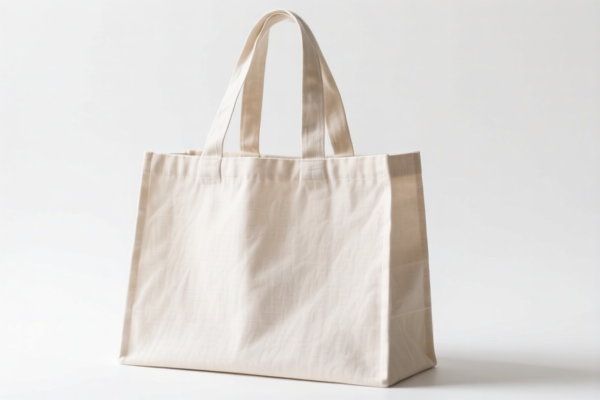
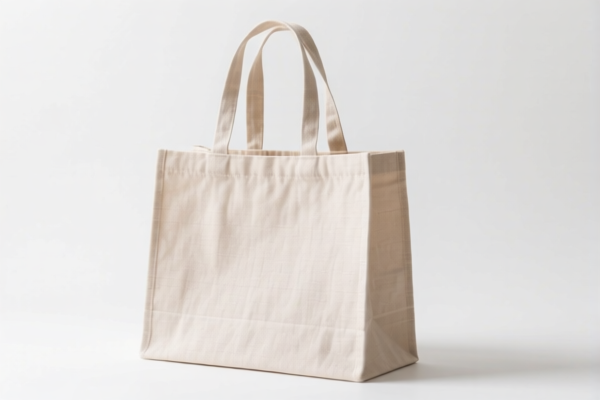
AI Analysis
👶 Baby Textile Bib Set
🌐 HS Code Reference & Customs Clearance Guide | 2026 Latest Tariff Analysis | Professional Strategy
📌 1. Product Definition and Classification: What Exactly is a "Bib Set"?
A Textile Bib Set refers to a set of baby care accessories primarily made from fabric (cotton, polyester, bamboo, etc.), designed to protect a baby’s clothing from food spillage during feeding.
In international trade, these are classified not as toys or general textiles, but specifically under Baby Garments. The key distinction lies in the material composition and intended use.
⚠️ Critical Distinction:
- Textile Bibs (Cotton, Polyester, Bamboo): Classified under Chapters 61/62 (if knitted or woven). Most common in consumer markets.
- Plastic/Rubber Bibs: Classified under Chapter 39 (Plastics).
- Leather Bibs: Classified under Chapter 41/43.
- Sets: If the bib is packaged with a matching burp cloth or mittens, the principal character rule applies. Usually, the bib determines the classification.
📦 2. HS Code Classification Details (2026 Latest Tariff Authority)
| HS Code | Product Description | Applicable Scenario | Material Type |
|---|---|---|---|
6111.20.00.00 |
Babies' garments, knitted or crocheted, of cotton | Most common organic cotton bibs | ✅ Knitted/Woven Cotton |
6111.90.00.00 |
Babies' garments, knitted or crocheted, of other textile materials (Polyester, Bamboo, etc.) | Synthetic or blend bibs | ✅ Knitted/Woven Non-Cotton |
6209.20.00.00 |
Babies' garments, woven, of cotton | Woven cotton bibs (less common) | ✅ Woven Cotton |
6209.90.00.00 |
Babies' garments, woven, of other textile materials | Woven synthetic bibs | ✅ Woven Non-Cotton |
3926.90.90.90 |
Other articles of plastic | Plastic/Silicone bibs | ❌ Plastic/Silicone |
4202.92.00.00 |
Articles of apparel and clothing accessories, with outer surface of plastics, textile materials | Plastic-backed textile bibs | ❌ Mixed Plastic/Textile |
🔍 Key Reminder:
- "Bib" is explicitly defined as a "Garment" in the Harmonized System. Do NOT classify under Chapter 63 (Other made-up textile articles) or Chapter 95 (Toys) unless they are purely decorative.
- If the bib has snaps, velcro, or elastic, it is still a garment.
- Sets: If a bib is sold with a matching washcloth, the set is usually classified based on the bib (the essential item), unless the washcloth is significantly more valuable and the set is marketed as a "washcloth set."
💰 3. 2026 Latest Tariff Rate Details (Including Surtaxes, Policy Surcharges)
✅ Applicable Country: United States (US)
✅ Country of Origin: China (CN)
✅ Effective Date: November 10, 2025 onwards (including subsequent imports)
🎯 1. 6111.20.00.00 —— Babies' Garments, Knitted, Cotton
| Item | Content |
|---|---|
| Base Tariff Rate | 0% (Ad valorem) |
| USITC Surtax (Section 301) | +25% (From USITC Footnote 9903.01.24) |
| IEEPA Surtax (China-specific) | +10% (For Chinese/Hong Kong products, from Nov 10, 2025) |
| Total Tariff Rate | 35% |
| Tax Calculation | CIF Value × 35% |
| De Minimis Eligibility | ❌ Not Eligible (deny_de_minimis) |
| Legal Path | IEEPA:9903.01.24 → USITC:6111.20.00.00 → FOOTNOTE:9903.01.24 |
📌 Explanation:
- Cotton baby garments are subject to the 25% Section 301 surtax.
- The 10% IEEPA surtax was newly added for Chinese textile goods starting late 2025.
- Total burden: 35%. This is a high tariff category. Do not rely on de minimis exemptions (Under $800) for bulk shipments or commercial imports.
🎯 2. 6111.90.00.00 —— Babies' Garments, Knitted, Other Textiles
| Item | Content |
|---|---|
| Base Tariff Rate | 0% |
| USITC Surtax | +25% |
| IEEPA Surtax | +10% |
| Total Tariff Rate | 35% |
| Tax Calculation | CIF × 35% |
| De Minimis Eligibility | ❌ Not Eligible |
| Legal Path | IEEPA:9903.01.24 → USITC:6111.90.00.00 → FOOTNOTE:9903.01.24 |
📌 Note:
- Synthetic bibs (Polyester, Bamboo) face the same 35% rate as cotton.
- Even if made from "eco-friendly" bamboo viscose, it is still classified as "Other Textile Materials," not cotton, but the tariff burden is identical.
🎯 3. 6209.20.00.00 —— Babies' Garments, Woven, Cotton
| Item | Content |
|---|---|
| Base Tariff Rate | 0% |
| USITC Surtax | +25% |
| IEEPA Surtax | +10% |
| Total Tariff Rate | 35% |
| Tax Calculation | CIF × 35% |
| De Minimis Eligibility | ❌ Not Eligible |
| Legal Path | IEEPA:9903.01.24 → USITC:6209.20.00.00 → FOOTNOTE:9903.01.24 |
📌 Note:
- Woven bibs (often with plastic backing or laminated fabric) also incur the 35% total rate.
- No difference in surtax between knitted and woven for this category.
🛠️ 4. Customs Clearance Practical Advice (Battle-Tested Pitfall Guide)
✅ 1. Documentation Checklist (Required)
| Document | Must Provide | Explanation |
|---|---|---|
| ✅ Product Specification Sheet | ✔️ | Material composition (e.g., 100% Cotton, 50/50 Poly/Cotton) |
| ✅ Labeling | ✔️ | Must show "Made in China," fiber content, care instructions |
| ✅ Commercial Invoice | ✔️ | Clearly state "Babies' Bibs," not "Cloth" or "Accessories" |
| ✅ Photos | ✔️ | Show the item, packaging, and any safety labels (Choking Hazard if small parts) |
| ✅ CPSC Certificate | ✔️ | Critical for USA! Children’s Product Certificate (CPC) is mandatory |
| ✅ Third-Party Test Report | ✔️ | ASTM F963 (Toy Safety), Phthalates, Lead content |
✅ 2. Declaration Tips (Key Mnemonic)
🔥 "Bib is Garment, Not Toy! CPC is Key, Tariff 35%!"
| Scenario | Correct Declaration | Wrong Practice |
|---|---|---|
| Cotton Bib Set | 6111.20.00.00 |
Misclassify as 6307.90 (Other Textile Articles) → Audit Risk |
| Plastic Backing Bib | Check material weight | If plastic > textile, may shift to Ch 39 → Wrong HS |
| "Bib" with Snaps | Still 6111.xx |
Declare as "Snap Buttons" → Customs Rejection |
| Small Parts (Plastic Buckles) | Add Choking Hazard Label | No safety label → FDA/CPSC Recall Risk |
✅ 3. Special Cases Handling
| Situation | Handling Advice |
|---|---|
| OEM Custom Bibs | Provide design specs to prove "Babies' Garment" status |
| Bib + Matching Hat Set | Classify based on Bib (principal item) unless Hat is more expensive |
| Biodegradable Bibs | Same HS Code, but marketing claims must be verified |
| Bulk Commercial Shipments | Must have CPC. De minimis ($800) applies only to personal use |
🌍 5. Global Market Clearance Comparison (2026 Latest)
| Country/Region | Recommended HS Code | Tariff | Certification | Notes |
|---|---|---|---|---|
| 🇺🇸 USA | 6111.20.00.00 |
35% (China) | CPC + ASTM F963 | High tariff, strict safety |
| 🇨🇳 China | 6111.20.00.00 |
5% | CCC (if applicable) | No surtax |
| 🇪🇺 EU | 6111.20.00.00 |
4% | CE + EN71 | No surtax |
| 🇬🇧 UK | 6111.20.00.00 |
4% | UKCA + EN71 | Post-Brexit rules |
| 🇦🇺 Australia | 6111.20.00.00 |
5% | WPLS | Safety standard |
📌 Conclusion:
- USA is the most expensive market for Chinese textile bibs due to Section 301 + IEEPA surcharges (35% total).
- EU/UK/China have much lower base rates and no US-style surtaxes.
- Safety Certification (CPC) is the biggest hurdle in the US, not just tariffs.
📌 6. Common Errors & Pitfalls (Blood Lessons)
❌ Error 1: Declaring Bibs as "Textile Bags" (6305.33)
👉 Consequence: Misclassification → Audit, Penalties, Back Taxes!
❌ Error 2: Ignoring CPSC Requirements
👉 Consequence: Goods Seized at US Port → Return or Destroy!
❌ Error 3: Claiming "De Minimis" for Commercial Inventory
👉 Consequence: CBP Seizure → De minimis is for personal use only.
❌ Error 4: Using "Baby Clothes" Generic Term
👉 Consequence: Ambiguity → Customs Delay for Classification Review
✅ Correct Practice:
"Babies' Bibs, Knitted, 100% Cotton, with Snap Closure, CPC Certified, Model XYZ, HS 6111.20.00.00"
🎯 7. Conclusion: Professional Declaration, Save Time, Reduce Costs!
🎯 Remember the Mantra:
🔹 "Bib is Garment, Not Accessory!"
🔹 "CPC is Mandatory for USA!"
🔹 "Tariff is 35% for China Origin!"
🔹 "De Minimis is for Personal Use Only!"
📌 Pro Tip:
If your bibs are sourced from Vietnam, India, or Bangladesh, you may avoid the 10% IEEPA surtax, but still face the 25% Section 301 if the value-added in China is significant. Always verify Origin Rules with a customs broker.
📞 Contact a Professional Customs Broker + Provide CPC + Apply for Advance Ruling
🚀 Let Your Bibs Clear Smoothly, Reach Parents Efficiently, and Boost Profits!
✨ Professional Clearance Starts with Precise Classification!
💼 Every Dollar Saved in Tariffs is Pure Profit!
Customer Reviews
About HS Code Classification
The Harmonized System (HS) is an internationally standardized nomenclature developed by the World Customs Organization (WCO) to classify traded products. Over 200 countries use the HS system as the basis for customs tariffs, trade statistics, and import/export regulations.
Each HS code follows a hierarchical structure:
- Chapter (2 digits) — Broad category of goods (e.g., Chapter 84: Machinery and Mechanical Appliances)
- Heading (4 digits) — More specific grouping within the chapter
- Subheading (6 digits) — Internationally standardized breakdown, used by all WCO member countries
- National subdivisions (8-10 digits) — Country-specific extensions for further classification, such as US HTSUS 10-digit codes
Correct HS code classification is essential for smooth customs clearance, accurate duty payment, and compliance with trade regulations. Misclassification can lead to customs delays, overpayment of duties, or penalties.
When importing from CN to US, the applicable tariff rates may include:
- Most-Favored-Nation (MFN) rate — The standard duty rate applied to WTO members
- General rate — Applied to countries without trade agreements
- Trade remedy duties — Additional tariffs such as Section 301 (anti-dumping), Section 232 (national security), or countervailing duties
The information provided on this page is for reference purposes only. For official classification, please consult with your local customs authority or a licensed customs broker.