Textile Composite Plastic Advertising Board
CN → US| HS Code | Tariff Rate | Origin | Destination | Doc |
|---|---|---|---|---|
| 6306120000 | 18.8% | CN | US | Official Doc |
| 3926905900 | 37.4% | CN | US | Official Doc |
| 3926909989 | 22.8% | CN | US | Official Doc |
| 6815190000 | 35.0% | CN | US | Official Doc |
| 3921905010 | 39.8% | CN | US | Official Doc |
Product Images

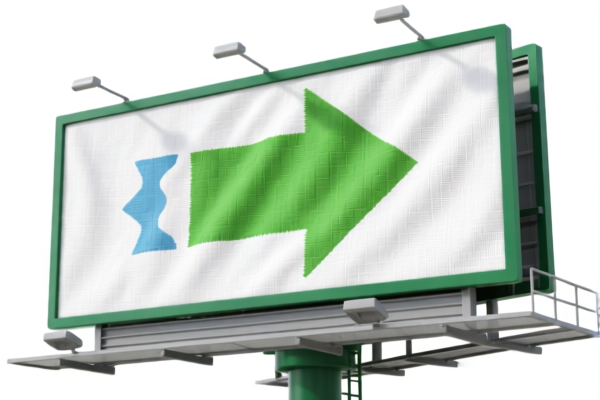
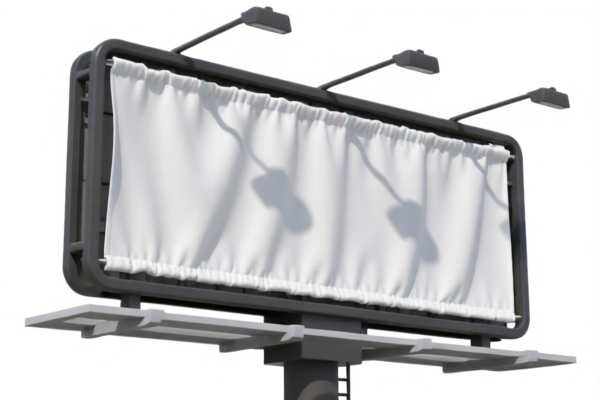
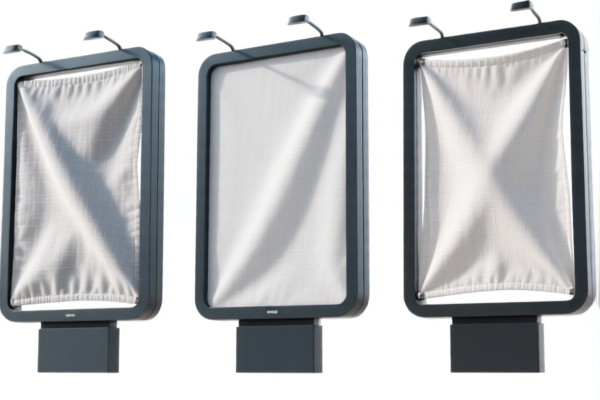
AI Analysis
🏗️ Textile Composite Plastic Advertising Board (Shade Boards)
🌐 HS Code Reference & Customs Clearance Guide | 2026 Latest Tariff Analysis | Strategic Entry Strategy
📌 I. Product Definition: What Exactly Is a "Textile Composite Plastic Advertising Board"?
The Textile Composite Plastic Advertising Board is a multifunctional material widely used in outdoor advertising, sunshades, and construction scaffolding. It is not a simple fabric or a simple plastic sheet, but a composite material.
Key Characteristics: * Structure: Typically consists of a polyester (textile) mesh or fabric coated with, laminated to, or embedded within a PVC (plastic) matrix. * Function: Used for high-tensile strength banners, tensile structures, and shading devices. * Customs Challenge: Because it combines "Textiles" (Chapter 63) and "Plastics/Articles of Plastic" (Chapter 39), classification disputes are common. The correct HS Code depends on whether the textile component or the plastic component is considered the "essential character."
⚠️ Key Distinction Point: - If classified as a Textile Article (shading nets/fabrics) → 6306.12.00.00 - If classified as a Plastic Article (general plastic goods) → 3926.90.59.00 / 3926.90.99.89 - If classified as a Plastic Sheet (decorative/engineered) → 3921.90.40.10 - If classified as Other Composite (non-electrical, non-plastic dominant) → 6815.19.00.00
📦 II. HS Code Classification Details (Based on Provided Data)
Based on the provided dataset, there are 5 possible classifications depending on how Customs interprets the "essential character" and specific material composition.
| HS Code | Summary Description | Basis for Classification |
|---|---|---|
6306.12.00.00 |
Textile Composite Plastic Shading Board | Classified based on textile + plastic combination and shading purpose. Treated primarily as a textile shading net/article. |
3926.90.59.00 |
Textile Composite Plastic Shading Board | Classified based on presence of textile fibers and plastic product features. Treated as other plastic articles with textile elements. |
3926.90.99.89 |
Textile Composite Plastic Shading Board | Classified based on plastic material and shading board form. Treated as other plastic articles not elsewhere specified. |
3921.90.40.10 |
Textile-Reinforced Plastic Decorative Board | Classified based on plastic board form and textile-reinforced material. Treated as a specific type of plastic sheet/board for decoration. |
6815.19.00.00 |
Textile-Reinforced Plastic Decorative Board | Classified based on textile-reinforced material and non-electrical composite article attribute. Treated as stone/plastic composite articles. |
🔍 Critical Warning: - The tax rate difference is massive, ranging from 18.8% to 39.2%. - Misclassification Risk: If you declare it as
3926.90.99.89(22.8%) but Customs determines it fits3926.90.59.00(37.4%) due to specific textile fiber content, you will face a 14.6% penalty plus back taxes. - "Essential Character": U.S. Customs (CBP) will look at which material gives the board its primary function. Is it the strength (plastic/reinforcement) or the permeability/shading (textile)?
💰 III. 2026 Latest Tariff Rate Breakdown (Detailed Tax Clauses)
✅ Applicable Country: United States (US) ✅ Origin: China (CN) ✅ Effective Time: Current Trade Policies (Including Section 301 & IEEPA)
🎯 1. 6306.12.00.00 —— Textile Shading Nets & Tarpaulins (Most Favorable)
| Item | Detail |
|---|---|
| Base Duty | 8.8% |
| Section 301 (Additional) | 0.0% (No specific Section 301 tariff listed for this code in data) |
| 122 Clause Tariff | 10% |
| Total Tax Rate | 18.8% |
| Tax Calculation | CIF Value × 18.8% |
| Legal Basis Path | Chapter 63 (Textiles) → HTS 6306.12 (Shading nets) |
📌 Explanation: - This is the lowest tax rate in the provided list. - It treats the product as a textile article (shading net). - Requirement: Must be primarily defined as a "shading net" or "tarpaulin" made of synthetic fibers.
🎯 2. 3926.90.59.00 —— Other Plastic Articles (High Risk)
| Item | Detail |
|---|---|
| Base Duty | 2.4% |
| Section 301 (Additional) | 25.0% |
| 122 Clause Tariff | 10% |
| Total Tax Rate | 37.4% |
| Tax Calculation | CIF Value × 37.4% |
| Legal Basis Path | Chapter 39 (Plastics) → HTS 3926.90 (Other plastic articles) |
📌 Warning: - Despite a low base duty (2.4%), the 25% Section 301 tariff and 10% 122 Clause make this extremely expensive. - Total 37.4% is nearly double the cheapest option.
🎯 3. 3926.90.99.89 —— Other Plastic Articles (Moderate Risk)
| Item | Detail |
|---|---|
| Base Duty | 5.3% |
| Section 301 (Additional) | 7.5% |
| 122 Clause Tariff | 10% |
| Total Tax Rate | 22.8% |
| Tax Calculation | CIF Value × 22.8% |
| Legal Basis Path | Chapter 39 (Plastics) → HTS 3926.99 (Other) |
📌 Note: - Lower Section 301 impact (7.5% vs 25%) compared to the previous code. - Suitable if the product is viewed as a generic plastic board with textile backing.
🎯 4. 3921.90.40.10 —— Plastic Sheets (Decorative/Reinforced)
| Item | Detail |
|---|---|
| Base Duty | 4.2% |
| Section 301 (Additional) | 25.0% |
| 122 Clause Tariff | 10% |
| Total Tax Rate | 39.2% |
| Tax Calculation | CIF Value × 39.2% |
| Legal Basis Path | Chapter 39 (Plastics) → HTS 3921.90 (Plastic plates/sheets) |
📌 Warning: - Highest Tax Rate (39.2%). - This classification treats the item as a rigid or semi-rigid plastic board. - Avoid unless you have a specific ruling supporting this classification and accept the high cost.
🎯 5. 6815.19.00.00 —— Stone/Plastic Composites (Niche)
| Item | Detail |
|---|---|
| Base Duty | 0.0% |
| Section 301 (Additional) | 25.0% |
| 122 Clause Tariff | 10% |
| Total Tax Rate | 35.0% |
| Tax Calculation | CIF Value × 35.0% |
| Legal Basis Path | Chapter 68 (Articles of Stone/Plaster) → HTS 6815.19 (Other) |
📌 Note: - Zero base duty, but high additional tariffs. - Only applicable if the product is considered a composite article where plastic is mixed with other materials (like stone fibers) or heavily reinforced in a way that moves it out of Chapter 39/63. Rare for standard PVC/Polyester advertising boards.
🛠️ IV. Customs Clearance Practical Advice (Field Avoidance Guide)
✅ 1. Document Checklist (Non-Negotiable)
| Document | Required? | Purpose |
|---|---|---|
| ✅ Product Specification Sheet | ✔️ | Must detail: % of Polyester, % of PVC, Grammage (gsm), Coating thickness. |
| ✅ Material Composition Statement | ✔️ | Explicitly state: "Composite of 100% Polyester Fabric coated with PVC." |
| ✅ Product Photos | ✔️ | Show texture, coating, and use case (e.g., hanging as a banner). |
| ✅ Commercial Invoice | ✔️ | Must match HS Code description exactly. |
| ✅ Binding Ruling (If Available) | ✔️ | Highly Recommended. Obtain a CBP Pre-Ruling to lock in 6306.12.00.00 or 3926.90.99.89. |
✅ 2. Declaration Strategy (Key Mnemonics)
🔥 "Function Defines Chapter, Texture Defines Code!"
| Scenario | Recommended HS Code | Risk Level | Why? |
|---|---|---|---|
| Soft, Flexible Banner | 6306.12.00.00 |
🟢 Low (18.8%) | Classified as textile shading net. Best for cost saving. |
| Semi-Rigid Board | 3926.90.99.89 |
🟡 Medium (22.8%) | Classified as plastic article. Moderate cost. |
| Rigid Decorative Panel | 3921.90.40.10 |
🔴 High (39.2%) | Classified as plastic sheet. Highest cost. |
| Ambiguous Composite | 3926.90.59.00 |
🔴 High (37.4%) | Risky. High Section 301 tariff. |
📌 Pro Tip: - If the board is flexible and used for shading/banners, strongly argue for
6306.12.00.00. - If the board is rigid and used for wall decoration, it may be pushed to3921or3926.59.
✅ 3. Special Circumstances Handling
| Situation | Handling Advice |
|---|---|
| PVC-Coated Polyester Mesh | Usually falls under 6306.12.00.00 if used as shading nets. Provide GSM and mesh size. |
| Rigid PVC Board with Fabric Backing | Likely 3926.90.59.00 or 3921.90.40.10. Avoid if possible due to high tax. |
| OEM Custom Designs | Ensure the functional use is stated in the invoice (e.g., "Outdoor Shading Banner") to support textile classification. |
| Misclassification Dispute | If CBP rejects 6306.12.00.00, have a fallback argument for 3926.90.99.89 (22.8%) rather than 3926.90.59.00 (37.4%). |
🌍 V. Global Market Comparison (2026 Outlook)
| Country/Region | Preferred HS Code | Est. Duty | Notes |
|---|---|---|---|
| 🇺🇸 USA | 6306.12.00.00 |
18.8% | Lowest cost. Requires strong textile argument. |
| 🇺🇸 USA | 3926.90.99.89 |
22.8% | Acceptable alternative if textile classification is weak. |
| 🇪🇺 EU | Varies (Often 3926/6306) | Varies | EU uses similar logic; textile-based is often cheaper. |
| 🇨🇳 China | N/A (Import) | Varies | Check China's specific FTA rates if applicable. |
📌 Conclusion: - USA is the most tax-sensitive market for this product due to Section 301 and IEEPA tariffs. - Target
6306.12.00.00for the best margin. - Avoid3921.90.40.10unless absolutely necessary, as it is the most expensive.
📌 VI. Common Mistakes & Pitfalls (Blood & Tears Lessons)
❌ Mistake 1: Declaring as 6306.12.00.00 for a rigid, flat sign board
👉 Consequence: CBP may rule it as a plastic article → Tax jumps from 18.8% to 37.4%+.
❌ Mistake 2: Using vague description "Plastic Board"
👉 Consequence: CBP may assign the highest applicable code (3926.90.59.00 or 3921.90.40.10) → Back taxes + Penalties.
❌ Mistake 3: Ignoring the "122 Clause" 👉 Consequence: Forgetting the 10% 122 Clause tariff → Unexpected 10% cost increase.
✅ Correct Approach:
"PVC-Coated Polyester Textile Banner, 500 GSM, Flexible, For Outdoor Shading, Model XYZ"
🎯 VII. Conclusion: Professional Classification Saves Money!
🎯 Remember the Golden Rule:
🔹 "Flexible = Textile (18.8%) | Rigid = Plastic (22%-39%) | Vague = Penalty!" 🔹 "Fight for Chapter 63, Avoid Chapter 39 High-Tariff Codes!"
📌 Pro Tip:
If your product can be argued as a textile shading net, provide tensile strength tests and mesh specifications to support
6306.12.00.00. This saves you up to 20% in duties compared to plastic classifications.
📣 Immediate Action:
📞 Contact a US Customs Broker to request a Pre-Ruling for
6306.12.00.00. 🚀 Optimize your supply chain by locking in the 18.8% rate before 2026 tariff hikes.
✨ Professional Clearance Starts with Precise Classification! 💼 Every percent saved is pure profit!
Customer Reviews
About HS Code Classification
The Harmonized System (HS) is an internationally standardized nomenclature developed by the World Customs Organization (WCO) to classify traded products. Over 200 countries use the HS system as the basis for customs tariffs, trade statistics, and import/export regulations.
Each HS code follows a hierarchical structure:
- Chapter (2 digits) — Broad category of goods (e.g., Chapter 84: Machinery and Mechanical Appliances)
- Heading (4 digits) — More specific grouping within the chapter
- Subheading (6 digits) — Internationally standardized breakdown, used by all WCO member countries
- National subdivisions (8-10 digits) — Country-specific extensions for further classification, such as US HTSUS 10-digit codes
Correct HS code classification is essential for smooth customs clearance, accurate duty payment, and compliance with trade regulations. Misclassification can lead to customs delays, overpayment of duties, or penalties.
When importing from CN to US, the applicable tariff rates may include:
- Most-Favored-Nation (MFN) rate — The standard duty rate applied to WTO members
- General rate — Applied to countries without trade agreements
- Trade remedy duties — Additional tariffs such as Section 301 (anti-dumping), Section 232 (national security), or countervailing duties
The information provided on this page is for reference purposes only. For official classification, please consult with your local customs authority or a licensed customs broker.