Textile Composite Plastic Board for Home Decoration
CN → US| HS Code | Tariff Rate | Origin | Destination | Doc |
|---|---|---|---|---|
| 3921904010 | 39.2% | CN | US | Official Doc |
| 6815190000 | 35.0% | CN | US | Official Doc |
| 3921905010 | 39.8% | CN | US | Official Doc |
| 3921904090 | 39.2% | CN | US | Official Doc |
| 3921904010 | 39.2% | CN | US | Official Doc |
Product Images
AI Analysis
🏠 Textile Composite Plastic Board for Home Decoration
🌐 HS Code Reference & Customs Clearance Guide | 2026 Latest Tariff Analysis | Professional Clearance Strategy
📌 1. Product Definition & Classification: What is “Textile Composite Plastic Board”?
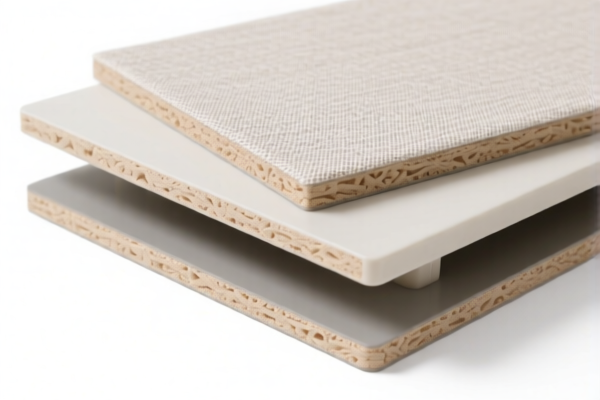
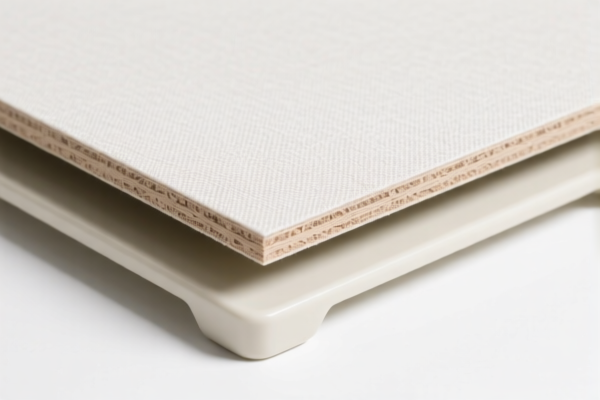
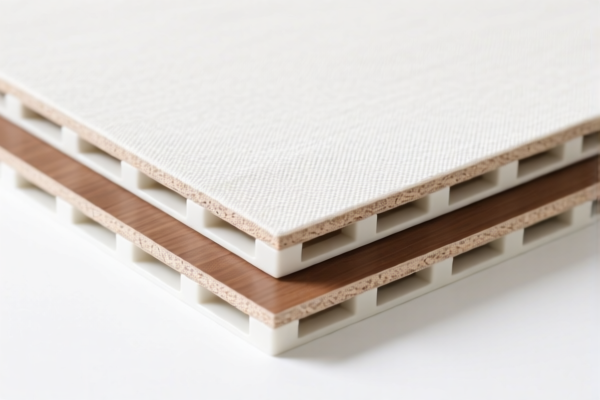
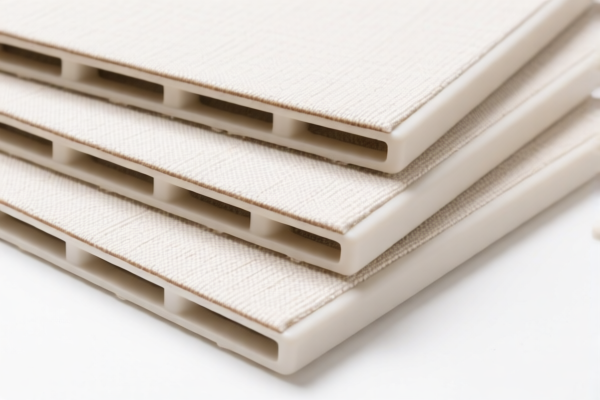
This product is a decorative panel used for interior home decoration. It is a composite material consisting of: 1. Plastic Matrix: The main body (typically resin-impregnated). 2. Textile Reinforcement: Fibers (non-carbon) embedded within the plastic to provide structural integrity or texture.
In international trade, this falls under Chapter 39 (Plastics and Articles Thereof). The critical distinction is whether the textile is merely a surface decoration or a structural reinforcement, and whether it contains carbon fibers (which would trigger different chapters). Based on the provided data, this is a non-carbon textile-reinforced plastic laminate/panel.
⚠️ Key Distinction Point:
- If the material contains Carbon Fiber or similar conductive fibers → It may fall under Chapter 68 (Articles of Stone, Plaster, Cement, Asbestos, Mica, or Similar Materials).
- If the material is Standard Textile (Cotton, Polyester, Glass, etc.) reinforced Plastic → It falls under Chapter 39 (Plastics).
📦 2. HS Code Classification Details (2026 Latest Tariff Authority Comparison)
| HS Code | Product Description | Application Scenario | Reinforcement Type | Total Tax Rate |
|---|---|---|---|---|
3921.90.40.10 |
Plastic plates, sheets, film, foil and strip, other: Other: Textile-reinforced plastic decorative boards | Home decoration, furniture surfaces | Textile (Non-Carbon) | 39.2% |
6815.19.00.00 |
Articles of stone or of other mineral substances (not elsewhere specified or included): Other: Other: Carbon fiber or similar fiber reinforced composites | High-tech industrial, aerospace, heavy-duty structural | Carbon/Similar Fiber | 35.0% |
3921.90.50.10 |
Plastic plates, sheets...: Other: High-pressure laminates (HPL) with decorative layers | Commercial furniture, high-wear surfaces | Textile (as reinforcement layer) | 39.8% |
3921.90.40.90 |
Plastic plates, sheets...: Other: Other | General plastic composite panels | Plastic/Textile Mix | 39.2% |
🔍 Critical Analysis:
-6815.19.00.00is relevant ONLY IF the textile reinforcement consists of Carbon Fiber or Similar Fibers. This category has the lowest base tariff (0%) but is strictly regulated for "composite materials" in Chapter 68.
-3921.90.40.10and3921.90.40.90are the most common classifications for standard textile-reinforced plastic decorative boards. They treat the textile as a variant of the plastic board.
-3921.90.50.10is a specific sub-category for High-Pressure Laminates (HPL) with decorative layers. If your board is manufactured using high-pressure lamination processes, this may apply, resulting in a slightly higher total tax (39.8%).
💰 3. 2026 Latest Tariff Rate Breakdown (Including Surcharges & Policy Add-ons)
✅ Applicable Country: United States (US)
✅ Country of Origin: China (CN)
✅ Effective Date: From November 10, 2025 (including subsequent imports)
🎯 1. 3921.90.40.10 & 3921.90.40.90 —— Textile-Reinforced Plastic Boards (Standard)
| Item | Content |
|---|---|
| Base Tariff | 4.2% (Ad Valorem) |
| Section 301 Surcharge | +25.0% (USITC Footnote, against China) |
| 122-Clause Tariff | +10.0% (Specific provision against China) |
| Total Effective Tax Rate | 39.2% |
| Tax Calculation | CIF Value × 39.2% |
| De Minimis Exemption Available? | ❌ NO (Denied under current trade policies) |
| Legal Basis Path | IEEPA:9903.01.25 → USITC:3921.90.40 → FOOTNOTE:9903.88.01 |
📌 Explanation:
- The 4.2% is the standard Most Favored Nation (MFN) duty for plastic boards.
- The 25% is the punitive tariff under Section 301 of the Trade Act.
- The 10% is an additional surcharge applied under specific clauses targeting Chinese plastic/composite imports.
- Total: 39.2%. This is a high-cost category for US importers.
🎯 2. 6815.19.00.00 —— Carbon Fiber or Similar Fiber Composites (If Applicable)
| Item | Content |
|---|---|
| Base Tariff | 0.0% (Ad Valorem) |
| Section 301 Surcharge | +25.0% |
| 122-Clause Tariff | +10.0% |
| Total Effective Tax Rate | 35.0% |
| Tax Calculation | CIF Value × 35.0% |
| De Minimis Exemption Available? | ❌ NO |
| Legal Basis Path | IEEPA:9903.01.24 → USITC:6815.19.00.00 |
📌 Note:
- This rate is 5.0% lower than the standard plastic board rate.
- However, misclassification is a severe customs violation. You can ONLY use this if the textile reinforcement is explicitly Carbon Fiber or "Similar Fiber" as defined by USITC. Standard cotton/polyester textiles do NOT qualify.
🎯 3. 3921.90.50.10 —— High-Pressure Laminates (HPL)
| Item | Content |
|---|---|
| Base Tariff | 4.8% (Ad Valorem) |
| Section 301 Surcharge | +25.0% |
| 122-Clause Tariff | +10.0% |
| Total Effective Tax Rate | 39.8% |
| Tax Calculation | CIF Value × 39.8% |
| De Minimis Exemption Available? | ❌ NO |
📌 Note:
- If your product is classified as High-Pressure Laminates (HPL) due to manufacturing method (high pressure/heat), the base tariff is slightly higher (4.8% vs 4.2%), leading to a 39.8% total rate.
- Ensure your technical documentation specifies the manufacturing process to support this classification if advantageous, otherwise stick to the general plastic board classification.
🛠️ 4. Customs Clearance Practical Advice (Pitfall Avoidance Guide)
✅ 1. Documentation Checklist (Mandatory)
| Document | Required? | Explanation |
|---|---|---|
| ✅ Technical Data Sheet | ✔️ | Must specify: Plastic type, Textile type (Cotton/Polyester/Glass vs. Carbon), Layer structure, Manufacturing process (Low-pressure vs. High-pressure). |
| ✅ Product Photos | ✔️ | Clear images showing cross-section (to verify reinforcement) and surface finish. |
| ✅ Commercial Invoice | ✔️ | Must clearly state "Textile Reinforced Plastic Decorative Board" – avoid vague terms like "Furniture Part". |
| ✅ Bill of Lading | ✔️ | Standard shipping document. |
| ✅ Origin Certificate | ✔️ | If claiming benefits elsewhere, but for US, this confirms China origin for surcharges. |
✅ 2. Declaration Tips (Key Mnemonic)
🔥 "Plastic Base, Textile Reinforce, Check Carbon, Choose Chapter!"
| Scenario | Correct HS Code | Risk if Incorrect |
|---|---|---|
| Standard Plastic + Textile (Non-Carbon) | 3921.90.40.10 or 3921.90.40.90 |
Avoid 6815 (Penalty for misclassification). |
| Plastic + Carbon Fiber | 6815.19.00.00 |
Avoid 3921 (Lower base rate 0%, but risk of audit if not carbon). |
| High-Pressure Laminated Decorative Panel | 3921.90.50.10 |
Higher tax (39.8%) but accurate for HPL manufacturing. |
| Simple Plastic Sheet (No Reinforcement) | 3921.10/90 |
Lower base rate, but if textile is present, this is False Declaration. |
⚠️ Critical Warning:
- Do NOT declare "Textile Reinforced Board" as a pure "Textile Product" (Chapter 50-63).
- Do NOT declare it as "Wood" or "Metal" unless it is a composite with those materials.
- The primary material is Plastic, so Chapter 39 is the default unless Carbon Fiber is explicitly used (Chapter 68).
✅ 3. Special Circumstances
| Situation | Handling Advice |
|---|---|
| Mixed Materials | If the board has wood veneer on top of plastic, consult customs on whether it becomes a "Wood Composite". Usually, if plastic is the main bulk, Chapter 39 still applies. |
| Sample vs. Commercial | Commercial shipments are strictly audited. Ensure documentation matches the commercial shipment. |
| USMCA Origin | If produced in USA/Canada/Mexico with qualified materials, tariffs may be 0%. Provide detailed Cost Calculation Report. |
| Carbon Fiber Verification | If claiming 6815, provide lab test results confirming fiber type. Customs may demand proof. |
🌍 5. Global Market Comparison (2026 Latest)
| Country/Region | Recommended HS Code | Tariff (China Origin) | Certification Required | Notes |
|---|---|---|---|---|
| 🇺🇸 USA | 3921.90.40.10 |
39.2% | None specific for tariff, but FCC/UL for fire safety recommended | High surcharges apply |
| 🇨🇳 China | 3921.90.40.10 |
4.2% | CCC (if applicable) | No surcharges |
| 🇪🇺 EU | 3921.90.90 |
6.5% | CE, REACH | No 25% surcharge |
| 🇦🇺 Australia | 3921.90.90 |
5.0% | ARRC | Low tariffs |
| 🇯🇵 Japan | 3921.90.90 |
6.0% | JIS | Moderate tariffs |
📌 Conclusion:
- USA is the most expensive market due to Section 301 and 122-Clause tariffs.
- China, EU, and Australia offer significantly lower tariff burdens.
- Diversification Strategy: Consider manufacturing in third countries (e.g., Vietnam, Mexico) if targeting the US, to avoid punitive tariffs.
📌 6. Common Mistakes & Pitfall Guide (Lessons Learned)
❌ Mistake 1: Classifying as "Textile Product" (e.g., Chapter 59)
👉 Consequence: Wrong HS Code → Severe Penalties + Back Taxes. Plastic is the essential character.
❌ Mistake 2: Ignoring Carbon Fiber Content
👉 Consequence: If it IS carbon fiber, declaring 3921 leads to underpayment. If it is NOT, declaring 6815 leads to misclassification penalties. Verify fiber type!
❌ Mistake 3: Missing the 122-Clause Tariff
👉 Consequence: Forgetting the 10% surcharge results in under-declaration and interest fees.
❌ Mistake 4: Using Generic Names
👉 Consequence: "Decorative Board" is too vague. Use "Textile-Reinforced Plastic Decorative Panel" to aid customs classification.
✅ Correct Declaration Example:
"Textile-Reinforced Plastic Decorative Board, Non-Carbon, Used for Interior Wall Cladding, Manufactured by Lamination, Model: DECOR-01"
🎯 7. Conclusion: Professional Declaration, Cost Saving, Efficiency!
🎯 Remember the Mnemonic:
🔹 "Plastic Base, 39.2% is the norm; Carbon Fiber? 35.0% but verify! HPL? 39.8%. Don't mix chapters!"
🔹 "HS Code determines destiny; A 5% difference means thousands of dollars saved!"
📌 Pro Tip:
If your product is produced in the US, Canada, or Mexico and meets USMCA rules, you may qualify for 0% tariffs. Provide a Certificate of Origin and detailed Cost of Production breakdown.
For US imports, consider applying for an Advance Ruling (CBP Ruling) to lock in the HS Code classification and avoid future disputes.
📣 Immediate Action:
📞 Contact a professional customs broker + Provide Product Photos + Request HS Code Advance Ruling
🚀 Let your products pass through customs smoothly, efficiently, and profitably!
✨ Professional Clearance Starts with Accurate Classification!
💼 Every Cent of Cost Deserves Precise Calculation!
Customer Reviews
About HS Code Classification
The Harmonized System (HS) is an internationally standardized nomenclature developed by the World Customs Organization (WCO) to classify traded products. Over 200 countries use the HS system as the basis for customs tariffs, trade statistics, and import/export regulations.
Each HS code follows a hierarchical structure:
- Chapter (2 digits) — Broad category of goods (e.g., Chapter 84: Machinery and Mechanical Appliances)
- Heading (4 digits) — More specific grouping within the chapter
- Subheading (6 digits) — Internationally standardized breakdown, used by all WCO member countries
- National subdivisions (8-10 digits) — Country-specific extensions for further classification, such as US HTSUS 10-digit codes
Correct HS code classification is essential for smooth customs clearance, accurate duty payment, and compliance with trade regulations. Misclassification can lead to customs delays, overpayment of duties, or penalties.
When importing from CN to US, the applicable tariff rates may include:
- Most-Favored-Nation (MFN) rate — The standard duty rate applied to WTO members
- General rate — Applied to countries without trade agreements
- Trade remedy duties — Additional tariffs such as Section 301 (anti-dumping), Section 232 (national security), or countervailing duties
The information provided on this page is for reference purposes only. For official classification, please consult with your local customs authority or a licensed customs broker.