Textile Composite Plastic Decorative Panel
CN → US| HS Code | Tariff Rate | Origin | Destination | Doc |
|---|---|---|---|---|
| 3921905050 | 39.8% | CN | US | Official Doc |
| 3921904090 | 39.2% | CN | US | Official Doc |
| 3920992000 | 39.2% | CN | US | Official Doc |
| 7308909560 | 85.0% | CN | US | Official Doc |
| 3925200091 | 22.8% | CN | US | Official Doc |
Product Images

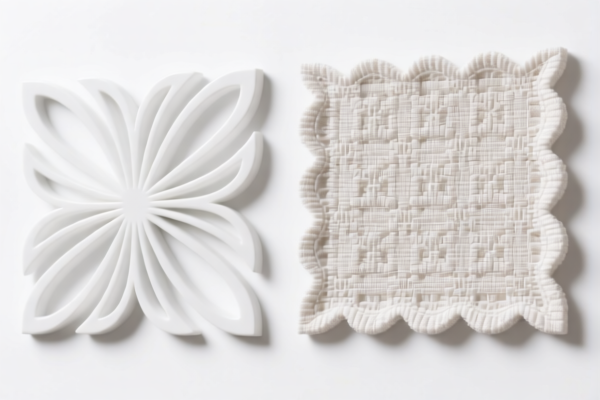
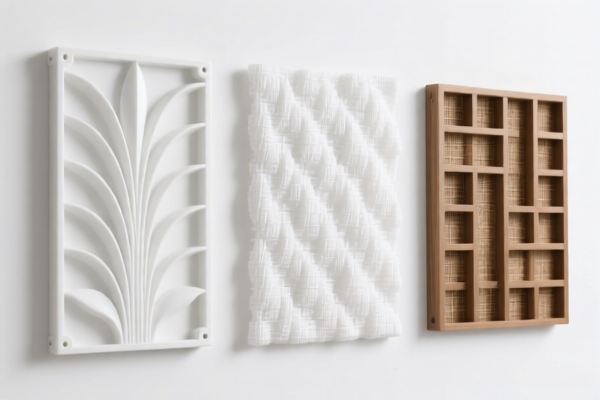
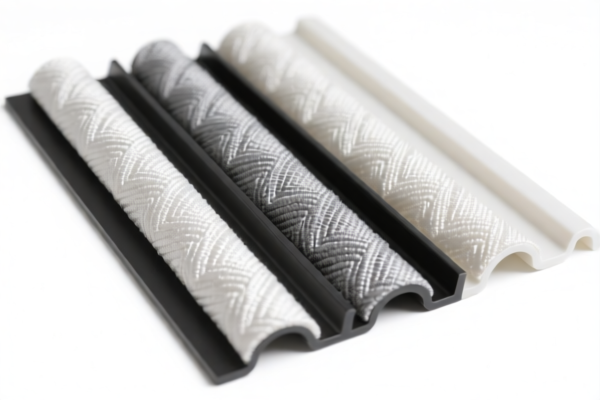
AI Analysis
🧱 Textile Composite Plastic Decorative Panel
🌐 HS Code Reference & Customs Clearance Guide | 2026 Latest Tariff Analysis | Professional Level Clearance Strategy
📌 I. Product Definition & Classification: What Exactly Is a "Textile Composite Plastic Decorative Panel"?
The Textile Composite Plastic Decorative Panel is a specialized building material used for interior decoration, wall cladding, and furniture finishing. In international trade, it is primarily classified based on its primary material composition and form.
Key Characteristics: * Material: Primarily Plastic (Polymers) combined with textile fibers or layers. * Form: Plates/Sheets/Planks (Rigid or semi-rigid). * Usage: Decorative, architectural, or furniture applications.
⚠️ Critical Classification Point:
- If the plastic is the essential character and the form is a plate/sheet → Chapter 39 (Plastics).
- If the metal frame/component is the essential character (less common for "decorative panels" unless specified as metal-core) → Chapter 73 (Iron/Steel).
- If it is a specific construction item made of plastic (e.g., siding) → Chapter 39 Section 3925.
📦 II. HS Code Classification Details (2026 Latest Tariff Authority Comparison)
Based on the input data, here are the five potential HS codes, ranked by suitability and tax implications.
| HS Code | Product Description | Suitability Analysis | Total Tax Rate (China→US) |
|---|---|---|---|
3921.90.50.50 |
Plastic Plates, Sheets, Film, Foil & Strip (Other) | ✅ High Match: Material is plastic; form is plate. Direct match for "Plastic Plate." | 39.8% |
3921.90.40.90 |
Other Plastic Plates/Sheets (Other) | ✅ High Match: Plastic material + Plate form. Fits under "Other" plastics. | 39.2% |
3920.99.20.00 |
Other Plates, Sheets, Film (Plastics) | ✅ Moderate Match: "Composite Board" fits "Laminated/Composite" definition. Often used for layered plastic products. | 39.2% |
7308.90.95.60 |
Structures & Parts of Structures (Iron/Steel) | ⚠️ Low Match: Only if the panel is primarily Metal/Iron based. Assumes "Decorative Panel" implies metal structure if plastic content is low or non-defining. | 85.0% |
3925.20.00.91 |
Other Plastic Building Articles | 🟡 Contextual Match: Fits if classified as a "Building Article" (e.g., exterior siding). Lower base duty. | 22.8% |
🔍 Key Insight:
- The Plastic-based HS Codes (3921/3920) are the most technically accurate for a "Plastic Decorative Panel."
- HS 7308 carries a significantly higher tax (85%) due to steel/aluminum surcharges and is only applicable if the product is predominantly metal.
- HS 3925 offers the lowest tax rate but requires the product to be explicitly defined as a "Building Article" (like siding or fencing) rather than a general decorative sheet.
💰 III. 2026 Latest Tariff Rate Breakdown (Including Surtaxes & Policy Add-ons)
✅ Applicable Country: United States (US)
✅ Origin: China (CN)
✅ Effective Date: Nov 10, 2025 onwards (including subsequent imports)
🎯 1. 3921.90.50.50 —— Plastic Plates/Sheets (High Compliance)
| Item | Details |
|---|---|
| Base Duty | 4.8% |
| USITC Surtax (Section 301) | +25.0% |
| IEEPA Surtax (China Specific) | +10.0% |
| Total Effective Tax Rate | 39.8% |
| De Minimis Exemption | ❌ Not Available |
| Legal Basis Path | Base:3921.90 → USITC:9903.88.01 → IEEPA:9903.01.24 |
📌 Explanation:
- This is a standard plastic product. The 25% Section 301 tariff applies broadly to Chinese plastics.
- The additional 10% IEEPA tariff targets specific Chinese imports.
- Total: 39.8% is the safest, most common classification for plastic decorative sheets.
🎯 2. 3921.90.40.90 & 3920.99.20.00 —— Plastic Plates (Alternative Plastic Codes)
| Item | Details |
|---|---|
| Base Duty | 4.2% |
| USITC Surtax (Section 301) | +25.0% |
| IEEPA Surtax (China Specific) | +10.0% |
| Total Effective Tax Rate | 39.2% |
| De Minimis Exemption | ❌ Not Available |
| Legal Basis Path | Similar to above, varying only by subheading nuance. |
📌 Note:
- Slightly cheaper base duty (4.2% vs 4.8%) results in a 0.6% savings compared to3921.90.50.50.
- Suitable if the product is a "composite" or "laminated" plastic board (3920) or an "other" plastic plate (3921.40).
🎯 3. 7308.90.95.60 —— Steel/Iron Structures (High Risk/High Cost)
| Item | Details |
|---|---|
| Base Duty | 0.0% |
| USITC Surtax (Section 301) | +25.0% |
| IEEPA Surtax (China Specific) | +10.0% |
| Steel/Aluminum Surtax (Section 232) | +50.0% |
| Total Effective Tax Rate | 85.0% |
| De Minimis Exemption | ❌ Not Available |
| Legal Basis Path | Base:7308 → USITC:9903.88.01 → IEEPA:9903.01.24 → Section 232:7308 |
📌 Warning:
- DO NOT USE unless the panel is clearly identified as Steel/Iron.
- The 50% Section 232 tariff on steel/aluminum products makes this prohibitively expensive.
- Misclassification here as plastic could lead to audits, but classifying plastic as steel will definitely result in an 85% bill.
🎯 4. 3925.20.00.91 —— Plastic Building Articles (Lowest Tax)
| Item | Details |
|---|---|
| Base Duty | 5.3% |
| USITC Surtax (Section 301) | +7.5% |
| IEEPA Surtax (China Specific) | +10.0% |
| Total Effective Tax Rate | 22.8% |
| De Minimis Exemption | ❌ Not Available |
| Legal Basis Path | Base:3925.20 → USITC:9903.75.01 (if applicable) → IEEPA:9903.01.24 |
📌 Strategy:
- If your product is used as exterior siding, wall cladding, or building facade, you may argue for this classification.
- Savings: 16.4% - 17% lower than standard plastic plates.
- Risk: Customs may reject this if the product is deemed "decorative" rather than "building structural." Requires strong documentation.
🛠️ IV. Customs Clearance Practical Advice (Battle-Tested Pitfall Guide)
✅ 1. Documentation Checklist (Non-Negotiable)
| Document | Required | Purpose |
|---|---|---|
| ✅ Product Spec Sheet | ✔️ | Must detail: Layer structure (Textile + Plastic), Thickness, Material Composition % |
| ✅ Material Safety Data Sheet (MSDS) | ✔️ | Confirms chemical composition (Plastic type) |
| ✅ Product Photos (Front/Back/Edge) | ✔️ | Visual proof of "Plate/Sheet" form, not fabric rolls |
| ✅ Commercial Invoice | ✔️ | Description: "Plastic Decorative Panel, Laminated, for Interior Use" |
| ✅ Packing List | ✔️ | Weight/Volume calculation for CIF value |
| ✅ Certificate of Origin | ✔️ | Essential for proving Chinese origin for tariff calculations |
✅ 2. Declaration Strategy (Key Mantra)
🔥 "Plastic Base, Plate Form, Avoid Metal Label, Optimize 'Building' Argument!"
| Scenario | Recommended HS Code | Reason |
|---|---|---|
| Standard Decorative Sheet (Wall/Furniture) | 3921.90.50.50 or 3921.90.40.90 |
Safest, most direct fit for "Plastic Plate" |
| Layered/Laminated Plastic Board | 3920.99.20.00 |
Fits "Composite/Laminated" definition |
| Exterior Siding / Facade Cladding | 3925.20.00.91 |
Lowest tax (22.8%) if classified as "Building Article" |
| Metal-Cored Decorative Panel | 7308.90.95.60 |
Only if >50% weight is steel/iron. Avoid due to 85% tax. |
✅ 3. Special Case Handling
| Situation | Recommendation |
|---|---|
| OEM Custom Colors/Patterns | Specify "Decorative" but emphasize "Plastic Substrate" to avoid textile classification |
| Thin Plastic Film with Textile Backing | May fall under 3920 (Laminated) rather than 3921 (Solid Plate). Verify thickness. |
| Product Used in Hospitals/Healthcare | Still 3921 or 3925. No special tariff exemption unless medical device (unlikely). |
| Mixed Packaging (Panels + Frames) | Do not split. Declare the whole set as the primary item (Panels). Splitting frames might trigger metal tariffs. |
🌍 V. Global Market Comparison (2026 Latest)
| Country/Region | Recommended HS Code | Est. Total Tax (China Origin) | Certification | Notes |
|---|---|---|---|---|
| 🇺🇸 USA | 3921.90.50.50 |
39.8% | None | High tariff due to Section 301 + IEEPA |
| 🇨🇳 China | 3921.90.50.50 |
8-10% | None | Low import duty for domestic use |
| 🇪🇺 EU | 3921.90.50.50 |
6-7% | REACH, CE | No anti-dumping on plastics generally |
| 🇬🇧 UK | 3921.90.50.50 |
6-7% | UKCA | Post-Brexit tariffs similar to EU |
| 🇦🇺 Australia | 3921.90.50.50 |
5% | ACMA (if electronic) | No major surcharges |
📌 Conclusion:
- USA is the most expensive market due to layered tariffs (Base + 301 + IEEPA).
- EU/UK/Asia have significantly lower duties, making US exports more costly.
- Consider supply chain diversification (e.g., Vietnam/Malaysia) if shipping to the US, as some plastic categories may benefit from FTA preferences.
📌 VI. Common Errors & Pitfall Guide (Blood & Tears Lessons)
❌ Error 1: Classifying "Plastic Panel" as "Textile Product" (Chapter 50-63)
👉 Consequence: Customs will reclassify to Chapter 39, apply plastic tariffs, and impose penalties. Textile backing does not change the primary material if plastic is the structural component.
❌ Error 2: Using 7308 for a Plastic Panel to "Save" on Base Duty
👉 Consequence: 85% Tax instead of 39%. You lose money by misclassifying plastic as steel.
❌ Error 3: Claiming "Building Article" (3925) for General Interior Decor
👉 Consequence: Customs may reject the lower tax rate if the product is used for furniture or interior partitioning, not structural building components. Stick to 3921 for safety.
❌ Error 4: Ignoring IEEPA 10% Surtax
👉 Consequence: Under-declaring tax liability. The 10% IEEPA tariff is mandatory for most Chinese plastic goods since Nov 2025.
✅ Correct Practice:
"Plastic Decorative Panel, Laminated, 2mm Thick, PVC Core with Textile Layer, for Interior Wall Cladding, Model XYZ, Made in China"
🎯 VII. Conclusion: Professional Declaration, Save Costs, Ensure Compliance!
🎯 Remember the Mantra:
🔹 "Plastic Base → Chapter 39. Plate Form → Subheading 90. Avoid Steel → 85% Tax. Building Use → 3925 for Savings."
🔹 "HS Code Determines Life, Tax Rate Differs by 60%, One Mistake Costs Thousands!"
📌 Pro Tip:
If your product is used as Exterior Siding or Facade Cladding, consult a customs broker to argue for 3925.20.00.91 to save ~17% in taxes. For general interior decor, stick with 3921.90.50.50 for compliance safety.
📣 Immediate Action:
📞 Contact a licensed customs broker + Provide Product Images + Apply for Advance Ruling if volume is high.
🚀 Ensure your panels clear US Customs smoothly, avoid delays, and maximize profit margins!
✨ Professional Clearance Starts with Accurate Classification!
💼 Every Cent of Your Cost Deserves Precise Calculation!
Customer Reviews
About HS Code Classification
The Harmonized System (HS) is an internationally standardized nomenclature developed by the World Customs Organization (WCO) to classify traded products. Over 200 countries use the HS system as the basis for customs tariffs, trade statistics, and import/export regulations.
Each HS code follows a hierarchical structure:
- Chapter (2 digits) — Broad category of goods (e.g., Chapter 84: Machinery and Mechanical Appliances)
- Heading (4 digits) — More specific grouping within the chapter
- Subheading (6 digits) — Internationally standardized breakdown, used by all WCO member countries
- National subdivisions (8-10 digits) — Country-specific extensions for further classification, such as US HTSUS 10-digit codes
Correct HS code classification is essential for smooth customs clearance, accurate duty payment, and compliance with trade regulations. Misclassification can lead to customs delays, overpayment of duties, or penalties.
When importing from CN to US, the applicable tariff rates may include:
- Most-Favored-Nation (MFN) rate — The standard duty rate applied to WTO members
- General rate — Applied to countries without trade agreements
- Trade remedy duties — Additional tariffs such as Section 301 (anti-dumping), Section 232 (national security), or countervailing duties
The information provided on this page is for reference purposes only. For official classification, please consult with your local customs authority or a licensed customs broker.