Textile Composite Plastic Display Board
CN → US| HS Code | Tariff Rate | Origin | Destination | Doc |
|---|---|---|---|---|
| 3921902510 | 41.5% | CN | US | Official Doc |
| 3926905900 | 37.4% | CN | US | Official Doc |
| 3920992000 | 39.2% | CN | US | Official Doc |
| 3921904090 | 39.2% | CN | US | Official Doc |
| 3921905050 | 39.8% | CN | US | Official Doc |
Product Images
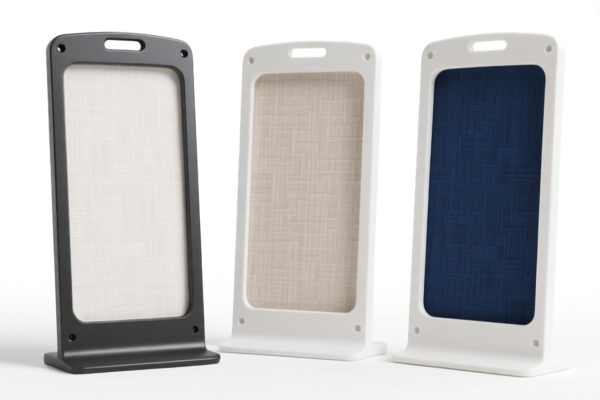
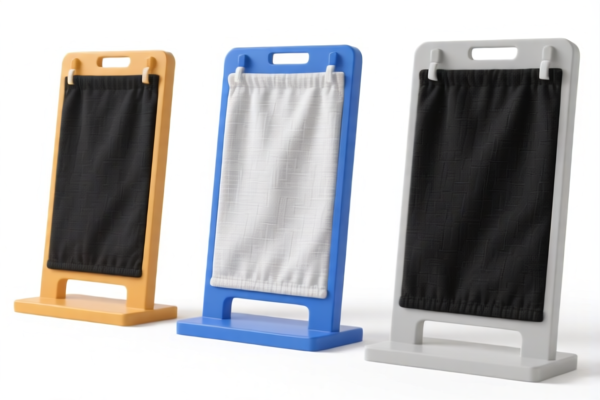

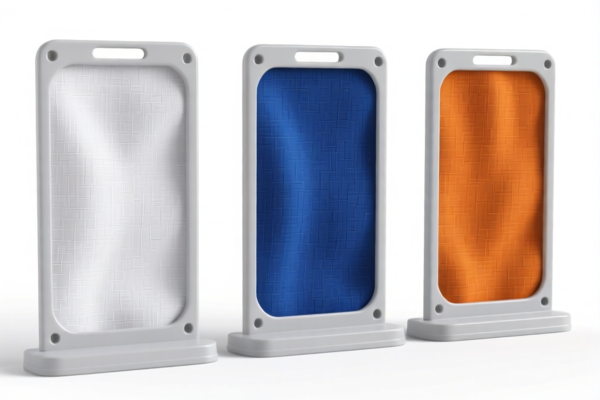
AI Analysis
🖼️ Textile Composite Plastic Display Board
🌐 HS Code Reference & Customs Clearance Guide | 2026 Latest Tariff Analysis | Professional Clearance Strategy
📌 I. Product Definition & Classification: What is a "Textile Composite Plastic Display Board"?
A Textile Composite Plastic Display Board is a specialized panel used for exhibitions, retail displays, or signage. Its defining characteristic is the composite structure: it consists of plastic materials reinforced or bonded with textile fibers/components.
In international trade classification, the key determinant is whether the product is viewed primarily as a plastic sheet/board or as a textile product. Since the primary material providing structural integrity and form is plastic (often reinforced with textiles), it generally falls under Chapter 39 (Plastics and Articles Thereof) rather than Chapter 54 or 60 (Textiles).
⚠️ Key Distinction Point:
- If the textile is merely a surface finish (e.g., fabric laminated onto plastic) → Likely Chapter 39.
- If the textile forms the core structural base with a thin plastic coating → Potentially Chapter 54/59, but for "Display Boards," customs often prefer Chapter 39 due to the rigid panel nature.
- The HS codes provided below reflect the "Plastic" perspective, which is the most common classification for rigid composite display panels.
📦 II. HS Code Classification Details (2026 Latest Tariff Authority)
Based on the provided data, the product is classified into three primary HS codes, all falling under Chapter 39. The slight variations depend on whether the customs authority views it as a "composite board," a "panel," or a "sheet."
| HS Code | Product Description | Application Scenario | Tax Rate (Total) |
|---|---|---|---|
| 3921.90.25.10 | Textile-Reinforced Plastic Display Panel Plastic material containing textile components, formed as a panel. Matches "Other" categories in HS. |
High-end display panels where textile reinforcement is explicit. | 41.5% |
| 3926.90.59.00 | Textile-Enhanced Plastic Panel/Sheet Plastic articles with textile fiber characteristics, categorized as "Other plastic articles." |
General-purpose display panels; emphasizes the "finished article" aspect over the "board" aspect. | 37.4% |
| 3920.99.20.00 | Plastic Composite Board Laminated or composite material made of plastic, forming a board. |
Standard composite boards; focuses on the "layered/composite" nature. | 39.2% |
| 3921.90.40.90 | Plastic Composite Board Plastic boards under "Other" categories. |
Flexible or semi-rigid plastic boards with textile integration. | 39.2% |
| 3921.90.50.50 | Plastic Composite Board Plastic boards/films meeting the requirements of plastic sheet/board categories. |
Rigid plastic boards with textile elements, fitting the broad "board/sheet" definition. | 39.8% |
🔍 Critical Note:
- All codes involve high tariff rates due to the Section 301 (25%) and Section 122 (10%) additional tariffs on Chinese goods.
- The choice between 3921 (Plastic Plates/Sheets/Foils/Films/Tape) and 3920 (Non-cellular Plastic Plates/Sheets/Foils/Films) or 3926 (Other Plastic Articles) depends on the exact physical structure and primary function.
- 3921.90.25.10 has the highest total tax (41.5%), while 3926.90.59.00 has the lowest total tax (37.4%).
💰 III. 2026 Latest Tariff Rate Breakdown (Including Surcharges & Policy Add-ons)
✅ Applicable Country: United States (US)
✅ Origin: China (CN)
✅ Effective Date: From November 10, 2025 (including subsequent imports)
🎯 1. 3921.90.25.10 —— Textile-Reinforced Plastic Display Panel (Highest Tax)
| Item | Content |
|---|---|
| Base Tariff | 6.5% (ad valorem) |
| Section 301 Surcharge | +25.0% (China-origin goods) |
| Section 122 Surcharge | +10.0% (Specific policy add-on) |
| Total Tax Rate | 41.5% |
| Tax Calculation | CIF Value × 41.5% |
| De Minimis Eligibility | ❌ Not Eligible (Denied due to high tariff classification) |
| Legal Basis Path | HTSUS:3921.90.25.10 → Section 301: Footnote 9903.88.01 → Section 122: IEEPA Authority |
📌 Explanation:
- The 6.5% base tariff applies to "Other plates, sheets, film, foil and strip, of plastics."
- The 25% Section 301 tariff is the standard punitive tariff on Chinese plastic articles.
- The 10% Section 122 tariff is a specific policy add-on applicable to certain plastic imports.
- Total 41.5% is a significant cost factor that must be pre-calculated.
🎯 2. 3926.90.59.00 —— Other Plastic Articles (Lowest Tax in List)
| Item | Content |
|---|---|
| Base Tariff | 2.4% (ad valorem) |
| Section 301 Surcharge | +25.0% (China-origin goods) |
| Section 122 Surcharge | +10.0% (Specific policy add-on) |
| Total Tax Rate | 37.4% |
| Tax Calculation | CIF Value × 37.4% |
| De Minimis Eligibility | ❌ Not Eligible |
| Legal Basis Path | HTSUS:3926.90.59.00 → Section 301: Footnote 9903.88.01 → Section 122: IEEPA Authority |
📌 Note:
- This code classifies the item as an "Other plastic article" rather than a "plate/sheet."
- The lower base tariff (2.4%) results in the lowest total tax (37.4%) among the listed options.
- This classification is favorable if the product can be argued as a "finished display accessory" rather than a raw "plastic board."
🎯 3. 3920.99.20.00 & 3921.90.40.90 —— Plastic Composite Boards
| Item | Content |
|---|---|
| Base Tariff | 4.2% (ad valorem) |
| Section 301 Surcharge | +25.0% (China-origin goods) |
| Section 122 Surcharge | +10.0% (Specific policy add-on) |
| Total Tax Rate | 39.2% |
| Tax Calculation | CIF Value × 39.2% |
| De Minimis Eligibility | ❌ Not Eligible |
📌 Comparison:
- Both 3920 and 3921 (other variants) carry the same total tax of 39.2%.
- The difference lies in the technical definition: 3920 is for non-cellular plates/sheets, while 3921 is for other plastic plates/sheets.
- Choose 3920 if the product is a rigid, non-cellular composite board.
- Choose 3921 if it has specific composite features not covered by 3920.
🎯 4. 3921.90.50.50 —— Plastic Board/Film
| Item | Content |
|---|---|
| Base Tariff | 4.8% (ad valorem) |
| Section 301 Surcharge | +25.0% (China-origin goods) |
| Section 122 Surcharge | +10.0% (Specific policy add-on) |
| Total Tax Rate | 39.8% |
| Tax Calculation | CIF Value × 39.8% |
| De Minimis Eligibility | ❌ Not Eligible |
📌 Note:
- This code has a slightly higher base tariff (4.8%) than other 3921 variants, resulting in a 39.8% total tax.
- It is a "catch-all" for plastic boards/films that do not fit more specific subheadings.
🛠️ IV. Customs Clearance Practical Advice (Avoid Pitfalls)
✅ 1. Required Documentation Checklist (Mandatory)
| Document | Must Provide | Description |
|---|---|---|
| ✅ Product Specification Sheet | ✔️ | Details on plastic type, textile component percentage, dimensions, and weight. |
| ✅ Material Composition Report | ✔️ | Crucial for proving "plastic" is the primary material. |
| ✅ Product Photos | ✔️ | Show cross-section to demonstrate composite structure (plastic + textile). |
| ✅ Commercial Invoice | ✔️ | Must state "Textile Composite Plastic Display Board" and HS Code. |
| ✅ Packing List | ✔️ | Itemize quantities and weights accurately. |
| ✅ Certificate of Origin (CO) | ✔️ | Required for Section 301 and 122 duty calculations. |
✅ 2. Declaration Tips (Key Mantras)
🔥 "Composite Structure, Plastic Core, Declare as Plastic!"
| Scenario | Correct Declaration | Incorrect Action |
|---|---|---|
| Rigid Display Panel | 3920.99.20.00 or 3921.90.25.10 |
Declare as "Textile Fabric" → 0% base but high risk of reclassification + penalties. |
| Laminated Board | 3921.90.40.90 |
Split declaration (plastic part + textile part) → Incorrect; must be declared as composite. |
| Finished Display Unit | 3926.90.59.00 |
Declare as "Plastic Sheet" → May be reclassified, leading to duty underpayment. |
✅ 3. Special Considerations
| Issue | Handling Advice |
|---|---|
| Textile Content | If textile >50% by weight, customs may challenge Chapter 39 classification. Provide proof of plastic's structural dominance. |
| Section 122 Applicability | Verify if your specific product form (e.g., specific thickness) is exempt from Section 122. |
| Pre-Ruling | Apply for an Advance Ruling from CBP to lock in the HS Code and avoid post-entry audits. |
🌍 V. Global Market Comparison (2026)
| Country/Region | Recommended HS Code | Total Tax (China Origin) | Notes |
|---|---|---|---|
| 🇺🇸 USA | 3926.90.59.00 |
37.4% | Lowest among options; best for finished articles. |
| 🇪🇺 EU | 3920.99 |
~4.2% + VAT | No Section 301/122; lower tariffs. |
| 🇨🇳 China | 3921.90 |
~4-6% | Domestic use; no export tariffs. |
| 🇬🇧 UK | 3921.90 |
~4-6% | Post-Brexit tariffs similar to EU base rates. |
📌 Conclusion:
- USA imposes 37.4%-41.5% total tax due to Section 301 and 122.
- EU/UK/Asia have significantly lower tariffs but may have different classification nuances.
📌 VI. Common Mistakes & Pitfalls (Lessons Learned)
❌ Mistake 1: Classifying as "Textile Product" (Chapter 54/59)
👉 Consequence: If deemed plastic, back-tariffs + penalties. If deemed textile, it may face different restrictions (e.g., cotton quotas).
❌ Mistake 2: Ignoring Section 122 Surcharge
👉 Consequence: Underpayment of 10% on top of Section 301 duties.
❌ Mistake 3: Ambiguous Product Name
👉 Consequence: Customs may request additional documentation, causing delays. Use "Plastic Composite Panel" clearly.
✅ Correct Approach:
"Plastic Composite Display Board, 5mm thick, 60% PP, 40% Polyester Fiber, Rigid Panel for Retail Display."
🎯 VII. Conclusion: Precision in Classification, Savings in Cost
🎯 Key Takeaways:
🔹 Lowest Tax:
3926.90.59.00at 37.4% (if eligible).
🔹 Highest Tax:3921.90.25.10at 41.5%.
🔹 Standard:3920/3921variants at 39.2%-39.8%.
📌 Recommendation:
- Use 3926.90.59.00 if the product can be argued as a "finished plastic article" to save 2.1% in duties.
- Ensure all documentation highlights the plastic composition to stay within Chapter 39.
- Apply for an Advance Ruling to confirm the correct HS Code and avoid disputes.
📣 Immediate Action:
📞 Consult with a customs broker for a Pre-Classification Ruling.
🚀 Optimize your supply chain to account for the 37.4%-41.5% tariff impact.
✨ Professional Clearance Starts with Accurate Classification!
💼 Every Percentage Point Matters in Global Trade!
Customer Reviews
About HS Code Classification
The Harmonized System (HS) is an internationally standardized nomenclature developed by the World Customs Organization (WCO) to classify traded products. Over 200 countries use the HS system as the basis for customs tariffs, trade statistics, and import/export regulations.
Each HS code follows a hierarchical structure:
- Chapter (2 digits) — Broad category of goods (e.g., Chapter 84: Machinery and Mechanical Appliances)
- Heading (4 digits) — More specific grouping within the chapter
- Subheading (6 digits) — Internationally standardized breakdown, used by all WCO member countries
- National subdivisions (8-10 digits) — Country-specific extensions for further classification, such as US HTSUS 10-digit codes
Correct HS code classification is essential for smooth customs clearance, accurate duty payment, and compliance with trade regulations. Misclassification can lead to customs delays, overpayment of duties, or penalties.
When importing from CN to US, the applicable tariff rates may include:
- Most-Favored-Nation (MFN) rate — The standard duty rate applied to WTO members
- General rate — Applied to countries without trade agreements
- Trade remedy duties — Additional tariffs such as Section 301 (anti-dumping), Section 232 (national security), or countervailing duties
The information provided on this page is for reference purposes only. For official classification, please consult with your local customs authority or a licensed customs broker.