Textile Composite Plastic Display Boards
CN → US| HS Code | Tariff Rate | Origin | Destination | Doc |
|---|---|---|---|---|
| 3920992000 | 39.2% | CN | US | Official Doc |
| 3921904090 | 39.2% | CN | US | Official Doc |
| 3921905050 | 39.8% | CN | US | Official Doc |
| 3926909989 | 22.8% | CN | US | Official Doc |
| 9403708031 | 35.0% | CN | US | Official Doc |
Product Images
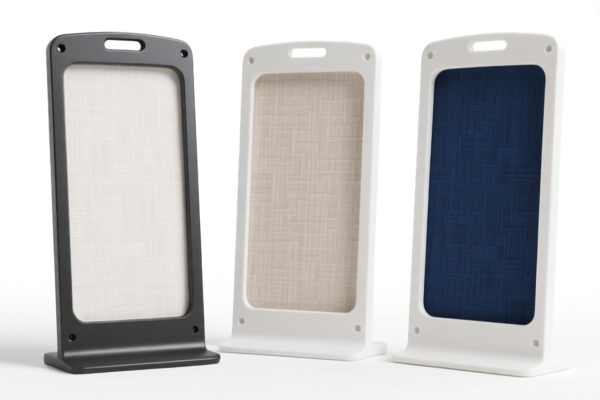
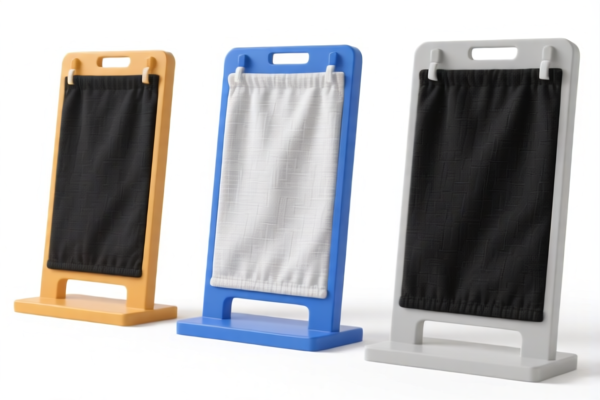

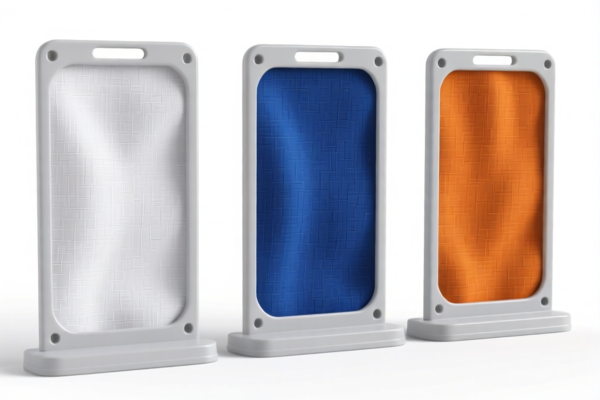
AI Analysis
🖥️ Textile Composite Plastic Display Boards
🌐 HS Code Reference & Customs Clearance Guide | 2026 Latest Tariff Analysis | Professional-Level Clearance Strategy
📌 I. Product Definition and Classification: Do You Really Understand "Textile Composite Plastic Display Boards"?
Textile composite plastic display boards are specialized signage and retail display materials made by laminating textile layers with plastic resins. In international trade, their classification depends heavily on the dominant material, manufacturing process (laminated vs. single-layer composite), and specific end-use.
Because these products sit on the boundary between "Plastics" (Chapter 39) and "Plastic Articles" (Chapter 94), misclassification can lead to significant duty discrepancies.
⚠️ Key Distinction Point:
- If the product is primarily a flat sheet/board formed by laminating or combining materials → It falls under Chapter 39 (Plastics) (3920or3921).
- If the product is a finished article specifically shaped for display/retail purposes (like a rack or stand) → It may fall under Chapter 94 (Furniture/Display Units) (9403) or Chapter 39 General Articles (3926).
📦 II. HS Code Classification Details (2026 Latest Tariff Authority Comparison)
| HS Code | Product Description | Scenario | Material Structure |
|---|---|---|---|
3920.99.20.00 |
Plastic Composite Boards (Other) | Laminated sheets, floor coverings, wall panels, or generic display backings where plastics are the main component. | ✅ Laminated/Composite (Multiple layers combined) |
3921.90.40.90 |
Other Plastic Plates, Sheets, Film, Foil, and Strip | Solid plastic boards that may have a textile-like finish but are essentially single-material plastic plates. | ✅ Single-layer Plastic Plate |
3921.90.50.50 |
Plastic Plates, Sheets, etc. | Similar to above, but often refers to specific technical plastic sheets. May overlap with 3921.90.40. |
✅ Plastic Plate/Sheet |
3926.90.99.89 |
Other Plastic Articles (Not Elsewhere Specified) | Finished display racks, holders, or decorative plastic frames that are not furniture. | ✅ Finished Plastic Article (Non-Furniture) |
9403.70.80.31 |
Plastic Furniture or Display Units | Finished display stands, racks, or shelving units made of plastic, classified as furniture/cabinet-type display units. | ✅ Finished Display Furniture/Unit |
🔍 Crucial Reminder:
- Raw/Laminated Sheets must be classified under 3920 or 3921. Do not classify a flat sheet as a "Display Stand" (9403).
- Finished Stands/Racks must be classified under 9403 or 3926. Do not classify a ready-to-use stand as a raw "Plastic Plate."
- Packaging: If a display board is pre-cut and includes mounting hardware for immediate use as a stand, customs may insist on Classifying it as an article (9403/3926), not a plate (3920/3921).
💰 III. 2026 Latest Tariff Rate Breakdown (Including Surcharges & Policy Add-ons)
✅ Applicable Country: United States (US)
✅ Country of Origin: China (CN)
✅ Effective Date: From November 10, 2025 (including subsequent imports)
🎯 1. 3920.99.20.00 —— Plastic Composite Boards (Laminated)
| Item | Content |
|---|---|
| Base Tariff | 4.2% (ad valorem) |
| Section 301 Surcharge | +25.0% (Additional Tariff) |
| 122 Clause Tariff | +10.0% (Specific US Trade Enforcement) |
| Total Tax Rate | 39.2% |
| Tax Calculation | CIF Value × 39.2% |
| De Minimis Eligibility | ❌ Not Eligible (deny_de_minimis) |
| Legal Basis Path | Base: 3920.99.20.00 → Section 301: +25% → 122 Clause: +10% |
📌 Explanation:
- This classification is for composite materials. The "122 Clause" (often related to specific trade enforcement actions) adds a 10% surcharge on top of the standard Section 301 duties.
- Total burden is high (39.2%). Cost calculation must include all three components.
🎯 2. 3921.90.40.90 —— Other Plastic Plates (Non-Composite/Single Layer)
| Item | Content |
|---|---|
| Base Tariff | 4.2% (ad valorem) |
| Section 301 Surcharge | +25.0% |
| 122 Clause Tariff | +10.0% |
| Total Tax Rate | 39.2% |
| Tax Calculation | CIF Value × 39.2% |
| De Minimis Eligibility | ❌ Not Eligible |
| Legal Basis Path | Base: 3921.90.40.90 → Section 301: +25% → 122 Clause: +10% |
📌 Note:
- Even if the product is labeled "Textile-look," if it is technically a single plastic plate (or the textile is merely a surface finish on a plastic base without true lamination), it falls here.
- The tariff rate is identical to3920.99.20.00due to the uniform Section 301 and 122 Clause application on most plastic articles from China.
🎯 3. 3921.90.50.50 —— Plastic Plates, Sheets, Film, Foil (Specific Sub-category)
| Item | Content |
|---|---|
| Base Tariff | 4.8% (ad valorem) |
| Section 301 Surcharge | +25.0% |
| 122 Clause Tariff | +10.0% |
| Total Tax Rate | 39.8% |
| Tax Calculation | CIF Value × 39.8% |
| De Minimis Eligibility | ❌ Not Eligible |
| Legal Basis Path | Base: 3921.90.50.50 → Section 301: +25% → 122 Clause: +10% |
📌 Difference:
- The base tariff is slightly higher (4.8% vs 4.2%), resulting in a total of 39.8%.
- Ensure your product description matches the specific sub-heading requirements for50.50(often specific to certain plastic formulations or dimensions).
🎯 4. 3926.90.99.89 —— Other Plastic Articles (Non-Furniture Display)
| Item | Content |
|---|---|
| Base Tariff | 5.3% (ad valorem) |
| Section 301 Surcharge | +7.5% |
| 122 Clause Tariff | +10.0% |
| Total Tax Rate | 22.8% |
| Tax Calculation | CIF Value × 22.8% |
| De Minimis Eligibility | ❌ Not Eligible |
| Legal Basis Path | Base: 3926.90.99.89 → Section 301: +7.5% → 122 Clause: +10% |
📌 Advantage:
- Significant Savings! If the item is a finished plastic display holder (not a sheet/board) and does not qualify as "Furniture" (9403), the Section 301 rate is only 7.5% instead of 25%.
- Total Rate: 22.8%. This is nearly 17 percentage points lower than the composite plate classifications.
- Strategy: If your "Display Board" is a pre-formed plastic rack or holder, argue for this classification over3920/3921.
🎯 5. 9403.70.80.31 —— Plastic Furniture or Display Units
| Item | Content |
|---|---|
| Base Tariff | 0.0% (ad valorem) |
| Section 301 Surcharge | +25.0% |
| 122 Clause Tariff | +10.0% |
| Total Tax Rate | 35.0% |
| Tax Calculation | CIF Value × 35.0% |
| De Minimis Eligibility | ❌ Not Eligible |
| Legal Basis Path | Base: 9403.70.80.31 → Section 301: +25% → 122 Clause: +10% |
📌 Comparison:
- Base tariff is 0%, but the Section 301 surcharge is high (25%).
- Total Rate: 35.0%.
- This is higher than the3926(Non-furniture plastic article) rate of 22.8%.
- Caution: Only classify as9403if it is indisputably "Furniture" or a "Display Unit" in the traditional sense. If it’s a simple plastic rack,3926is cheaper.
🛠️ IV. Customs Clearance Practical Advice (Battle-Tested Pitfall Avoidance)
✅ 1. Required Documentation Checklist (No Exceptions)
| Document | Must Provide | Description |
|---|---|---|
| ✅ Product Specification Sheet | ✔️ | Must detail layers: e.g., "Polyester textile laminated to PVC sheet, total thickness 2mm." |
| ✅ Photos (Clear & Detailed) | ✔️ | Show cross-section (to prove lamination vs. single layer) and final use. |
| ✅ Commercial Invoice | ✔️ | Use precise language: "Laminated Plastic Display Board" or "Plastic Display Rack." Avoid vague terms like "Decoration." |
| ✅ Packing List | ✔️ | Indicate if items are stacked (boards) or assembled (racks). |
| ✅ Declaration of Composition | ✔️ | State percentage of textile vs. plastic by weight to support HS Code choice. |
✅ 2. Declaration Tactics (Key Mnemonic)
🔥 "Sheets go to Ch39, Finished Goods go to Ch39/94. Check the 'Finished' state!"
| Scenario | Correct Classification | Incorrect Action | Consequence |
|---|---|---|---|
| Flat laminated sheet | 3920.99.20.00 or 3921.90.40.90 |
Declare as "Display Rack" | Risk of misclassification penalty + potential re-evaluation. |
| Pre-formed Plastic Rack | 3926.90.99.89 |
Declare as "Plastic Plate" | Higher duty (39.2% vs 22.8%). You pay more. |
| Tall Plastic Display Cabinet | 9403.70.80.31 |
Declare as "Plastic Plate" | Higher duty (35.0% vs 22.8% for simple racks). |
| Unassembled Display Kit | Check Assembly Level | Split into parts | Parts may have different duties. Usually, "Complete Article" rule applies. |
✅ 3. Special Case Handling
| Situation | Handling Advice |
|---|---|
| Textile-Look Plastic | If the textile is only a surface coating on a plastic sheet, declare as Plastic Plate (3921), not textile composite. |
| True Laminate (Textile + Plastic) | If layers are distinct and bonded, declare as Composite (3920). |
| Display Board with Mounting Brackets | If brackets are included in the same package, the whole set is usually classified as the Display Unit (9403 or 3926). |
| Raw Material for Signs | If sold to manufacturers to cut into shapes later, ensure it is declared as Sheet/Board (3920/3921), not a finished article. |
🌍 V. Global Market Comparison (2026 Latest)
| Country/Region | Recommended HS Code | Tariff Rate (China Origin) | Notes |
|---|---|---|---|
| 🇺🇸 USA | 3920.99.20.00 / 3921.90.40.90 |
39.2% | High Section 301 + 122 Clause. |
| 🇺🇸 USA | 3926.90.99.89 |
22.8% | Best Option for non-furniture plastic displays. |
| 🇨🇳 China | 3920.99.20.00 |
~4.2% (Import) | Low base duty. No Section 301. |
| 🇪🇺 EU | 3920.99.20.00 |
~4.2% - 5% | No Section 301. VAT applies. |
📌 Conclusion:
- The USA is the most complex market due to Section 301 and 122 Clause surcharges.
- Optimization Strategy: For "Textile Composite Plastic Display Boards," try to structure the product as a "Plastic Article" (3926) rather than a "Plastic Plate/Board" (3920/3921) if it is a finished display holder. This saves ~16-17% in duties.
- If it is a raw sheet, you must pay 39.2%. No avoidance possible for the plate itself.
📌 VI. Common Errors & Pitfall Guide (Blood & Tears Lessons)
❌ Error 1: Calling a "Plastic Display Rack" a "Plastic Plate"
👉 Result: You pay 39.2% instead of 22.8%. Loss: 16.4% of CIF value.
❌ Error 2: Calling a "Laminated Sheet" a "Textile Product"
👉 Result: Customs rejects Chapter 50/54/55. Forcibly reclassifies to Chapter 39 with higher scrutiny. Delay + Demurrage.
❌ Error 3: Ignoring the "122 Clause"
👉 Result: Under-declaring duties. Customs audits reveal the 10% surcharge was omitted. Back taxes + Penalties.
❌ Error 4: Mixing "Furniture" and "Display"
👉 Result: If it’s a simple hook-and-hang board, do NOT classify as 9403 (Furniture) if 3926 is more appropriate. 9403 has a higher Section 301 rate (25%) vs 3926 (7.5%).
✅ Correct Approach:
"Plastic Composite Display Board, Laminated Polyester/PVC, 2mm Thick, for Retail Signage, Model XYZ, Unassembled Sheets."
🎯 VII. Conclusion: Precision Classification, Cost Reduction!
🎯 Remember the Mantra:
🔹 "Sheets = Ch39 (39.2%). Finished Holders = Ch39/94 (22.8%-35%).
🔹 "Furniture (9403) is Expensive (35%). Non-Furniture Plastic (3926) is Cheaper (22.8%).
🔹 "122 Clause is Always +10%. Don't Forget It!"
📌 Pro Tip:
If your supply chain allows, consider shaping the plastic into display holders (3926) during manufacturing to qualify for the lower 22.8% rate, rather than exporting flat composite sheets (3920/3921) at 39.2%.
For complex cases, apply for an Advance Ruling (ACE) from U.S. Customs to lock in the 22.8% classification for your specific product design.
📣 Act Now:
📞 Contact a licensed customs broker + Provide cross-section photos + Request HS Code Advance Ruling
🚀 Ensure your Textile Composite Plastic Display Boards clear customs smoothly and efficiently!
✨ Professional Clearance Starts with Accurate Classification!
💼 Every Percent Saved is Pure Profit!
Customer Reviews
About HS Code Classification
The Harmonized System (HS) is an internationally standardized nomenclature developed by the World Customs Organization (WCO) to classify traded products. Over 200 countries use the HS system as the basis for customs tariffs, trade statistics, and import/export regulations.
Each HS code follows a hierarchical structure:
- Chapter (2 digits) — Broad category of goods (e.g., Chapter 84: Machinery and Mechanical Appliances)
- Heading (4 digits) — More specific grouping within the chapter
- Subheading (6 digits) — Internationally standardized breakdown, used by all WCO member countries
- National subdivisions (8-10 digits) — Country-specific extensions for further classification, such as US HTSUS 10-digit codes
Correct HS code classification is essential for smooth customs clearance, accurate duty payment, and compliance with trade regulations. Misclassification can lead to customs delays, overpayment of duties, or penalties.
When importing from CN to US, the applicable tariff rates may include:
- Most-Favored-Nation (MFN) rate — The standard duty rate applied to WTO members
- General rate — Applied to countries without trade agreements
- Trade remedy duties — Additional tariffs such as Section 301 (anti-dumping), Section 232 (national security), or countervailing duties
The information provided on this page is for reference purposes only. For official classification, please consult with your local customs authority or a licensed customs broker.