Textile Composite Plastic Embossed Board
CN → US| HS Code | Tariff Rate | Origin | Destination | Doc |
|---|---|---|---|---|
| 6306120000 | 18.8% | CN | US | Official Doc |
| 3926905900 | 37.4% | CN | US | Official Doc |
| 3926909989 | 22.8% | CN | US | Official Doc |
| 5911900080 | 38.8% | CN | US | Official Doc |
| 3921902100 | 41.5% | CN | US | Official Doc |
Product Images
AI Analysis
🛡️ Textile Composite Plastic Embossed Board (纺织复合塑料压花板)
🌐 HS Code Reference & Customs Clearance Guide | 2026 Latest Tariff Analysis | Professional Clearance Strategy
📌 I. Product Definition & Classification: What is a "Textile Composite Plastic Board"?
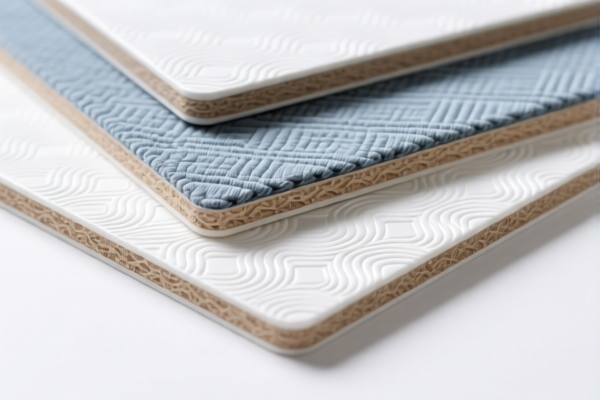
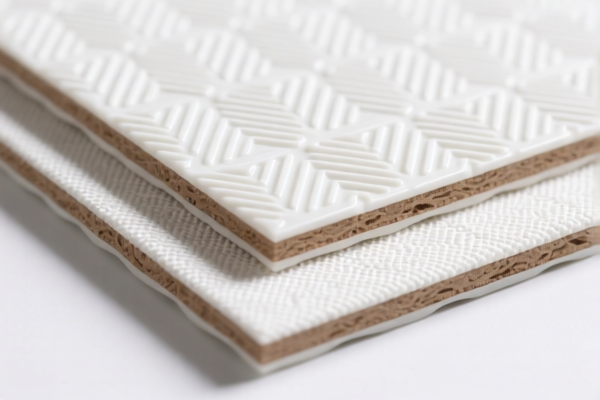
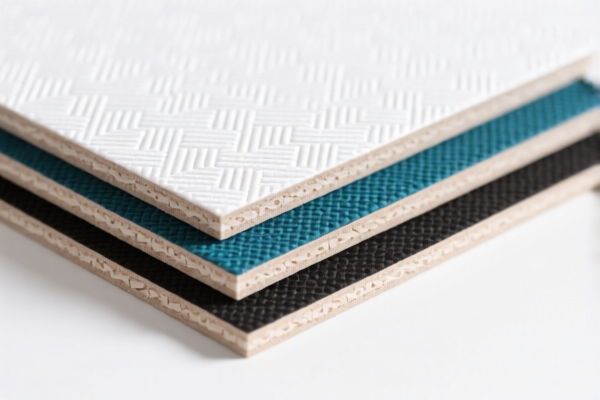
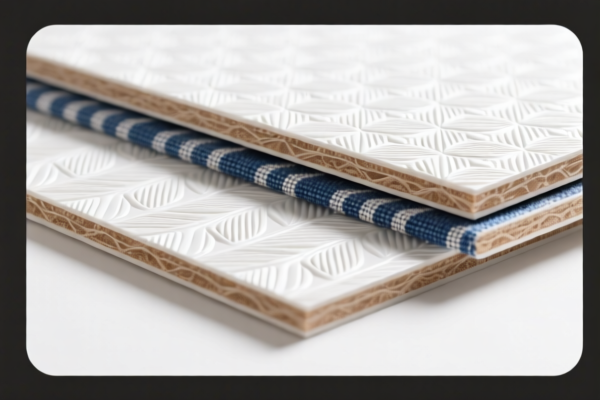
A Textile Composite Plastic Embossed Board is a hybrid material combining textile fibers (such as cotton, polyester, or synthetic blends) with plastic polymers. The term "Embossed" indicates a raised pattern on the surface, while "Board" suggests a rigid or semi-rigid structural form.
In international trade, this product sits at the intersection of Chapter 39 (Plastics) and Chapter 59 (Textile Articles Impregnated, Coated, Covered or Layered). The correct HS Code depends heavily on the primary characteristic of the material: * Is the plastic the essential character? → Chapter 39 * Is the textile the essential character? → Chapter 59 or Chapter 63 (if used as a specific finished article like a sunshade).
⚠️ Critical Distinction:
- If the product is used as a technical industrial filter or cushion with textile as the base → 5911
- If the product is a finished sunshade/awning made from this composite → 6306
- If the product is a generic plastic plate/sheet containing textile fibers → 3926
📦 II. HS Code Classification Details (2026 Latest Tariff Authority Comparison)
Based on the provided data, here are the five possible classifications and their logic:
| HS Code | Product Description | Matching Logic (Summary from Data) | Material/Shape Key |
|---|---|---|---|
6306.12.00.00 |
Textile Composite Plastic Sunshade | Matches "Sunshade" use case; "Textile" + "Plastic" inferred as synthetic fiber composition. | Use: Sunshade Mat: Synthetic/Composite |
3926.90.59.00 |
Plastic Articles with Textile Fibers | Contains "Plastic" material & "Textile" fiber features; fits "containing textile fibers" & "plastic articles" requirements. | Mat: Plastic + Textile Form: Plastic Article |
3926.90.99.89 |
Other Plastic Articles | Material contains "Plastic"; shape is "Board/Sunshade" (artifact); fits 3926.90 "Other plastic articles". | Mat: Plastic Form: Plastic Artifact |
5911.90.00.80 |
Cotton Textile Composite Board | Material is "Cotton" (Textile); shape is "Composite Board" (Technical textile product form). | Mat: Cotton Form: Technical Textile |
3921.90.21.00 |
Cotton-Plastic Composite Board | Explicitly contains "Cotton"; shape "Board" fits "Plate/Sheet/Film"; class of plastic + textile combination. | Mat: Cotton + Plastic Form: Plate/Sheet |
🔍 Key Reminder:
- 3926 vs 5911: If the plastic binds the textile to create a rigid board, customs may lean toward 3926 (Plastics). If the textile is the main structural element coated/laminated with plastic, it may fall under 5911 (Technical Textiles).
- 6306: Only applicable if the board is specifically designed/used as a sunshade or awning. If it’s a raw material board, this code is likely incorrect.
💰 III. 2026 Latest Tariff Rate Breakdown (Including Surcharges & Policy Add-ons)
✅ Applicable Country: United States (US)
✅ Origin: China (CN)
✅ Effective Date: 2025/2026 (Current Trade Rules)
🎯 1. 6306.12.00.00 – Textile Composite Sunshade
| Item | Detail |
|---|---|
| Base Tariff | 8.8% |
| Section 301 Surcharge | 0.0% (No additional 25% tariff listed in data) |
| Section 122 Tariff | +10% |
| Total Tariff Rate | 18.8% |
| Tax Calculation | CIF Value × 18.8% |
| De Minimis Exemption | ❌ Not Applicable (Import value typically exceeds $800 threshold for duty-free) |
| Legal Basis | HTSUS 6306.12.00 + Section 122 Order |
📌 Explanation:
- This is the lowest tax rate among the options.
- However, it requires the product to be explicitly classified as a Sunshade. If it’s a raw board for manufacturing, this classification may be rejected.
🎯 2. 3926.90.59.00 – Plastic Articles with Textile Fibers
| Item | Detail |
|---|---|
| Base Tariff | 2.4% |
| Section 301 Surcharge | +25.0% (High penalty for plastics from China) |
| Section 122 Tariff | +10% |
| Total Tariff Rate | 37.4% |
| Tax Calculation | CIF Value × 37.4% |
| De Minimis Exemption | ❌ Not Applicable |
| Legal Basis | HTSUS 3926.90.59 + Section 301 + Section 122 |
📌 Explanation:
- Despite a low base rate (2.4%), the 301 tariff (25%) drastically increases the cost.
- This is a high-cost classification for Chinese-origin goods.
🎯 3. 3926.90.99.89 – Other Plastic Articles
| Item | Detail |
|---|---|
| Base Tariff | 5.3% |
| Section 301 Surcharge | +7.5% |
| Section 122 Tariff | +10% |
| Total Tariff Rate | 22.8% |
| Tax Calculation | CIF Value × 22.8% |
| De Minimis Exemption | ❌ Not Applicable |
| Legal Basis | HTSUS 3926.90.99 + Section 301 (partial) + Section 122 |
📌 Explanation:
- A moderate-risk classification.
- Lower 301 surcharge (7.5%) compared to3926.90.59makes this more competitive if classified under this specific subheading.
🎯 4. 5911.90.00.80 – Cotton Textile Composite Board
| Item | Detail |
|---|---|
| Base Tariff | 3.8% |
| Section 301 Surcharge | +25.0% |
| Section 122 Tariff | +10% |
| Total Tariff Rate | 38.8% |
| Tax Calculation | CIF Value × 38.8% |
| De Minimis Exemption | ❌ Not Applicable |
| Legal Basis | HTSUS 5911.90 + Section 301 + Section 122 |
📌 Explanation:
- Highest tax rate in the dataset.
- Likely applicable only if the product is strictly defined as a technical cotton textile (e.g., for filtration/cushioning) and not a general plastic board.
🎯 5. 3921.90.21.00 – Cotton-Plastic Composite Plate/Sheet
| Item | Detail |
|---|---|
| Base Tariff | 6.5% |
| Section 301 Surcharge | +25.0% |
| Section 122 Tariff | +10% |
| Total Tariff Rate | 41.5% |
| Tax Calculation | CIF Value × 41.5% |
| De Minimis Exemption | ❌ Not Applicable |
| Legal Basis | HTSUS 3921.90.21 + Section 301 + Section 122 |
📌 Explanation:
- Most expensive option.
- Specific to "Plates/Sheets" containing cotton. Only use if the product is strictly a flat sheet/plate and not a "board" with structural or sunshade properties.
🛠️ IV. Customs Clearance Practical Advice (Pitfall Avoidance Guide)
✅ 1. Documentation Checklist (Mandatory)
| Document | Required | Notes |
|---|---|---|
| ✅ Product Spec Sheet | ✔️ | Must detail: % Cotton vs. Plastic, Embossing Pattern, Thickness, Rigidity. |
| ✅ Material Composition Proof | ✔️ | Lab test report showing layer structure (which is the essential character?). |
| ✅ Photos (Clear & Detailed) | ✔️ | Show edge view (layers) and surface texture (embossed). |
| ✅ Commercial Invoice | ✔️ | Describe as "Textile-Plastic Composite Board, Model XYZ". Avoid vague terms. |
| ✅ Packing List | ✔️ | Weight and dimensions of each board. |
| ✅ Intended Use Declaration | ✔️ | Is it for sunshades? Construction? Filtration? This dictates HS Code. |
✅ 2. Declaration Strategy (Key Tips)
🔥 "Character is King: Define the Primary Material!"
| Scenario | Recommended HS Code | Risk Level |
|---|---|---|
| Product is a finished Sunshade | 6306.12.00.00 |
✅ Low Tax (18.8%) - Best if usage is clear. |
| Product is a generic Plastic Board with textile backing | 3926.90.99.89 |
⚠️ Medium Tax (22.8%) - Safer than 5911/3921.90.21. |
| Product is a Technical Textile Filter/Cushion | 5911.90.00.80 |
❌ High Tax (38.8%) - Only if strictly technical. |
| Product is a Flat Sheet/Plate (Cotton+Plastic) | 3921.90.21.00 |
❌ Highest Tax (41.5%) - Avoid if possible. |
📌 Warning:
- Do not declare "Plastic Board" if textile is the main value driver; customs may reclassify to 5911 or 3926.90.59 (higher tax).
- Do not declare "Sunshade" if it’s just a raw board; customs will reject and impose penalties.
✅ 3. Special Cases & Mitigation
| Situation | Action |
|---|---|
| Cotton Content is High (>50%) | Consider 5911 or 3921.90.21, but expect 301 tariffs. |
| Plastic Content is High | Use 3926 codes. Try to qualify for 3926.90.99.89 (7.5% 301) vs 3926.90.59 (25% 301). |
| Intended as Sunshade | Provide usage photos and marketing materials proving it’s a sunshade → Use 6306.12.00.00 (18.8%). |
| Origin Non-China (e.g., Vietnam) | Apply for preferential tariff or avoid Section 301 (if applicable). |
🌍 V. Global Market Comparison (2026)
| Country/Region | Recommended HS Code | Est. Tariff (China Origin) | Certification | Notes |
|---|---|---|---|---|
| 🇺🇸 USA | 6306.12.00.00 |
18.8% | None specific | Lowest risk if classified as sunshade. |
| 🇪🇺 EU | 3926.90.95 / 5911.90 |
~6-12% + VAT | CE (if technical) | No Section 301/122 surcharges. |
| 🇨🇳 China | 3926.90.90 / 5911.90 |
5-10% | CCC (if electrical parts) | Lower base rates, no US surcharges. |
| 🇬🇧 UK | 3926.90.99 |
~6.5% + VAT | UKCA | Post-Brexit rules apply. |
📌 Conclusion:
- USA is the most expensive market due to Section 301 and 122 tariffs.
- Classification as Sunshade (6306) is the most tax-efficient strategy for the US market.
- Classification as Plastic Article (3926) carries high 301 tariffs; verify if any exemptions apply.
📌 VI. Common Errors & Pitfalls (Lessons Learned)
❌ Error 1: Declaring a Sunshade as a Plastic Plate (3921.90.21.00)
👉 Result: Tax jumps from 18.8% to 41.5%.
✅ Fix: Declare intended use accurately.
❌ Error 2: Declaring a Technical Textile Board as Plastic Article (3926.90.59.00)
👉 Result: Tax at 37.4%. If reclassified to 5911, tax could be 38.8% (similar, but risk of dispute).
✅ Fix: Provide material composition reports.
❌ Error 3: Ignoring Section 122 Tariff
👉 Result: All US-bound goods face an additional 10% regardless of HS Code.
✅ Fix: Budget for +10% in all scenarios.
🎯 VII. Conclusion: Optimize Your Classification, Minimize Your Costs!
🎯 Key Takeaways:
🔹 If it’s a Sunshade → Use
6306.12.00.00(18.8%).
🔹 If it’s a Plastic Board → Use3926.90.99.89(22.8%).
🔹 Avoid3921.90.21.00and5911.90.00.80unless strictly required (41.5% & 38.8%).📌 Pro Tip:
- Submit a Binding Tariff Information (BTI) or Advance Ruling to US Customs (CBP) to lock in the 18.8% rate if your product qualifies as a sunshade.
- Always include Section 122 (10%) in your cost calculations.
📣 Immediate Action:
📞 Consult with a licensed customs broker.
📸 Provide clear product images and material specs.
🚀 Secure the lowest applicable tariff (18.8%) by declaring correct use!
✨ Professional clearance starts with accurate classification!
💼 Every percentage point saved is pure profit!
Customer Reviews
About HS Code Classification
The Harmonized System (HS) is an internationally standardized nomenclature developed by the World Customs Organization (WCO) to classify traded products. Over 200 countries use the HS system as the basis for customs tariffs, trade statistics, and import/export regulations.
Each HS code follows a hierarchical structure:
- Chapter (2 digits) — Broad category of goods (e.g., Chapter 84: Machinery and Mechanical Appliances)
- Heading (4 digits) — More specific grouping within the chapter
- Subheading (6 digits) — Internationally standardized breakdown, used by all WCO member countries
- National subdivisions (8-10 digits) — Country-specific extensions for further classification, such as US HTSUS 10-digit codes
Correct HS code classification is essential for smooth customs clearance, accurate duty payment, and compliance with trade regulations. Misclassification can lead to customs delays, overpayment of duties, or penalties.
When importing from CN to US, the applicable tariff rates may include:
- Most-Favored-Nation (MFN) rate — The standard duty rate applied to WTO members
- General rate — Applied to countries without trade agreements
- Trade remedy duties — Additional tariffs such as Section 301 (anti-dumping), Section 232 (national security), or countervailing duties
The information provided on this page is for reference purposes only. For official classification, please consult with your local customs authority or a licensed customs broker.