Textile Composite Plastic Film for Clothing
CN → US| HS Code | Tariff Rate | Origin | Destination | Doc |
|---|---|---|---|---|
| 5903902000 | 35.0% | CN | US | Official Doc |
| 5903102090 | 35.0% | CN | US | Official Doc |
| 3921901500 | 41.5% | CN | US | Official Doc |
| 3920991000 | 41.0% | CN | US | Official Doc |
| 3920992000 | 39.2% | CN | US | Official Doc |
Product Images
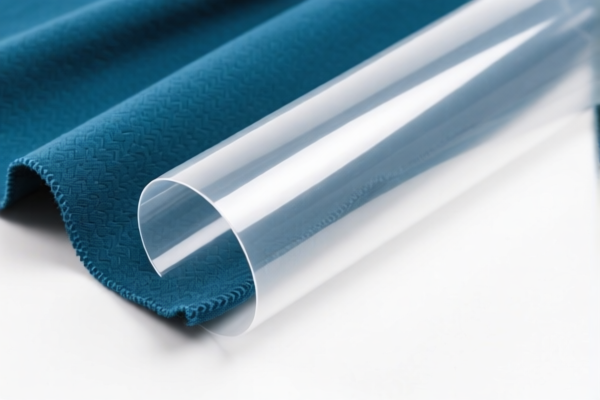
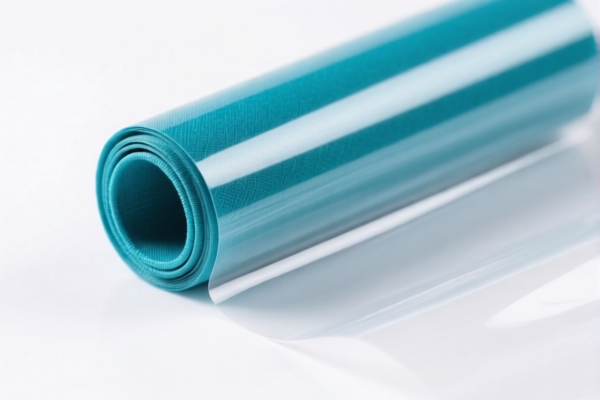
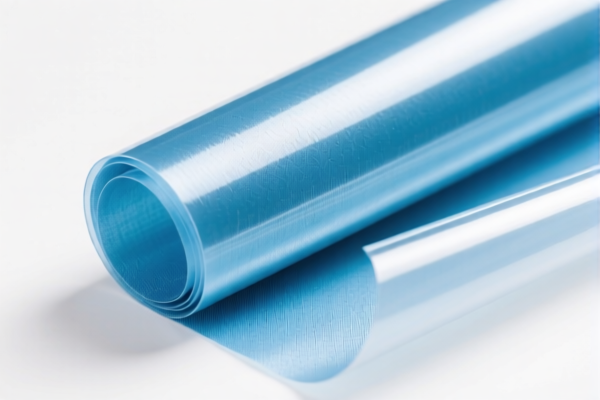

AI Analysis
🧥 Textile Composite Plastic Film for Clothing
🌐 HS Code Reference & Customs Clearance Guide | 2026 Latest Tariff Analysis | Professional-Grade Clearance Strategy
📌 I. Product Definition & Classification: Do You Really Understand “Textile Composite Plastic Film”?
Textile Composite Plastic Film is a versatile material combining the durability of textiles with the waterproof/windproof properties of plastics. In international trade, it is primarily used for outdoor apparel, raincoats, bags, and protective gear. The classification depends heavily on which material serves as the substrate and how the plastic is applied.
Key Distinction:
- If the base is textile and coated with plastic → Generally falls under Chapter 59.
- If the base is plastic and bonded with textile → Generally falls under Chapter 39.
⚠️ Critical Differentiator:
- If the textile layer is dominant (e.g., woven fabric coated with PVC/PU) → HS 5903
- If the plastic layer is dominant (e.g., plastic film laminated with fabric) → HS 3920/3921
📦 II. HS Code Classification Details (2026 Latest Tariff Authority Comparison)
Based on the provided data, here are the four potential HS codes for "Lightweight Textile Composite Plastic Film," along with their specific tax implications.
| HS Code | Product Description | Classification Logic | Total Tax Rate |
|---|---|---|---|
5903.90.20.00 |
Other impregnated, coated, covered or laminated textile fabrics | Matches the characteristic of textile fabric with plastic film features. Classified as "Other impregnated/coated plastic films" matching textile characteristics. | 35.0% |
5903.10.20.90 |
Textile fabrics coated with plastics (PVC, etc.) | Matches the film morphology and plastic coating attributes. Classified as "Plastic-coated fabrics with PVC or similar materials." | 35.0% |
3920.99.20.00 |
Other plates, sheets, film, foil and strip (other plastics) | Matches plastic material and film morphology. Classified as "Laminated, backed or otherwise combined plastic products." | 39.2% |
3920.99.10.00 |
Other plates, sheets, film, foil and strip (other plastics) | Matches plastic material and film morphology. Classified as "Plastic products combined with other materials." | 41.0% |
3921.90.15.00 |
Other plates, sheets, film, foil and strip | Matches the composite form of plastic and textile. Classified as "Plastic plates, sheets, film, foil and strip, combined with textile materials." | 41.5% |
🔍 Key Reminder:
- HS 5903 is generally preferred if the textile substrate is essential to the identity of the good (e.g., a raincoat where the fabric provides structure).
- HS 3920/3921 applies if the plastic film is the dominant feature, and the textile is merely a backing or reinforcement layer.
- Tax rates vary significantly (35% – 41.5%). Accurate classification is crucial for cost control.
💰 III. 2026 Latest Tariff Rate Details (Including Additional Taxes)
✅ Applicable Country: United States (US)
✅ Origin: China (CN)
✅ Effective Date: From November 10, 2025 onwards
🎯 1. 5903.90.20.00 & 5903.10.20.90 —— Textile-Based Composite Films
| Item | Content |
|---|---|
| Base Tariff | 0.0% (ad valorem) |
| Section 301 Additional Tariff | +25.0% (From USITC Footnote) |
| Section 122 Tariff | +10.0% (Specific provision for certain textile/plastic hybrids) |
| Total Tax Rate | 35.0% |
| Tax Calculation | CIF Value × 35% |
| De Minimis Exemption | ❌ Not Eligible (deny_de_minimis) |
| Legal Basis Path | USITC:5903.90.20.00 → FOOTNOTE:Section301 → Section122:10% |
📌 Explanation:
- These codes fall under Chapter 59 (Textile Articles).
- The 0% base tariff is offset by 25% (Section 301) and 10% (Section 122).
- Total 35% is a high burden. Misclassification as a standard textile (with lower tariffs) can lead to severe penalties.
🎯 2. 3921.90.15.00 —— Plastic-Textile Composite (High-End Classification)
| Item | Content |
|---|---|
| Base Tariff | 6.5% (ad valorem) |
| Section 301 Additional Tariff | +25.0% |
| Section 122 Tariff | +10.0% |
| Total Tax Rate | 41.5% |
| Tax Calculation | CIF Value × 41.5% |
| De Minimis Exemption | ❌ Not Eligible |
| Legal Basis Path | USITC:3921.90.15.00 → FOOTNOTE:Section301 → Section122:10% |
📌 Note:
- This is the highest tax rate among the options.
- Applies when the product is viewed primarily as a plastic article with textile reinforcement.
- Avoid this classification if possible to save 6.5% compared to HS 5903.
🎯 3. 3920.99.10.00 & 3920.99.20.00 —— Other Plastic Composite Films
| Item | Content |
|---|---|
| Base Tariff | 6.0% (for 3920.99.10) / 4.2% (for 3920.99.20) |
| Section 301 Additional Tariff | +25.0% |
| Section 122 Tariff | +10.0% |
| Total Tax Rate | 41.0% (for 3920.99.10) / 39.2% (for 3920.99.20) |
| Tax Calculation | CIF Value × Rate |
| De Minimis Exemption | ❌ Not Eligible |
| Legal Basis Path | USITC:3920.99.x0 → FOOTNOTE:Section301 → Section122:10% |
📌 Note:
- 3920.99.20.00 offers the lowest tax rate among the plastic-based classifications at 39.2%.
- Suitable for products where the plastic layer is clearly defined as a "laminated" or "backed" product rather than a simple coating.
🛠️ IV. Customs Clearance Practical Advice (Avoiding Pitfalls)
✅ 1. Required Documentation Checklist (Mandatory)
| Document | Must Provide | Description |
|---|---|---|
| ✅ Product Specification Sheet | ✔️ | Material composition (e.g., 60% Polyester, 40% PVC), weight, thickness. |
| ✅ Technical Diagram | ✔️ | Shows layer structure: Is textile the base? Is plastic coated or laminated? |
| ✅ Product Photos | ✔️ | Clear images of the fabric texture, plastic side, and any branding. |
| ✅ Test Reports | ✔️ | Waterproof rating, tensile strength, chemical composition (PVC/PU). |
| ✅ Commercial Invoice | ✔️ | Accurately describe as "Lightweight Textile Composite Plastic Film for Clothing." |
| ✅ Packing List | ✔️ | Detail roll dimensions, weight, and quantity. |
✅ 2. Declaration Tips (Key Mantras)
🔥 "Substrate Defines Code, Plastic Defines Tax!"
| Scenario | Correct Declaration | Incorrect Practice |
|---|---|---|
| Textile Base + Plastic Coating | 5903.10.20.90 or 5903.90.20.00 |
Report as plastic film → 39-41% tax |
| Plastic Base + Textile Lamination | 3920.99.20.00 |
Report as textile fabric → 0% tax (Penalty Risk) |
| Mixed/Undifferentiated | 3921.90.15.00 |
Vague description → 41.5% tax (Highest) |
| Small Samples (<$800) | ❌ Not Eligible for De Minimis | Attempting to ship under $800 → Seizure |
📌 Key Point:
- If the textile is the essential character, choose HS 5903 (35% tax).
- If the plastic is the essential character, choose HS 3920/3921 (39-41.5% tax).
- HS 5903 is generally more cost-effective for clothing-grade films.
✅ 3. Special Case Handling
| Situation | Handling Advice |
|---|---|
| OEM Custom Fabric | Provide customer specs and design drawings to prove textile dominance. |
| Waterproof Jackets | Clearly state "Waterproof" and "Breathable" if applicable; may require additional certification. |
| Recycled Materials | If using recycled plastic, provide proof to potentially qualify for eco-friendly incentives (if available). |
| High-Value Apparel | Ensure HS code matches the end-use to avoid classification disputes. |
🌍 V. Global Market Comparison (2026 Latest)
| Country/Region | Recommended HS Code | Tariff (China Origin) | Certification | Notes |
|---|---|---|---|---|
| 🇺🇸 USA | 5903.10.20.90 |
35% | N/A | Highest cost due to Section 301 & 122. |
| 🇨🇳 China | 5903.10.20.90 |
5-10% | N/A | Lower tariffs for domestic use. |
| 🇪🇺 EU | 5903.10.20.90 |
6.5% | REACH | No Section 301/122 equivalent. |
| 🇬🇧 UK | 5903.10.20.90 |
6.5% | UKCA | Post-Brexit tariffs apply. |
| 🇯🇵 Japan | 5903.10.20.90 |
6% | PSE | No additional tariffs. |
📌 Conclusion:
- USA is the most challenging market due to Section 122 and Section 301 tariffs.
- Total 35-41.5% is a significant cost factor. Consider supply chain diversification or tariff engineering if shipping to the US.
📌 VI. Common Mistakes & Pitfalls (Lessons Learned)
❌ Mistake 1: Classifying textile-coated plastic as "Plastic Sheets"
👉 Result: Tax jumps from 35% to 41.5% + Penalties.
❌ Mistake 2: Under-declaring value to avoid Section 122
👉 Result: Seizure, fines, and blacklisting.
❌ Mistake 3: Not specifying material composition
👉 Result: Customs may classify at the highest rate (41.5%) due to ambiguity.
❌ Mistake 4: Assuming De Minimis applies
👉 Result: Shipments under $800 are not exempt for these goods.
✅ Correct Practice:
"Lightweight Textile Composite Plastic Film, 100% Polyester base with PVC coating, for raincoat manufacturing, Model XYZ, Non-De Minimis"
🎯 VII. Conclusion: Professional Declaration Saves Costs!
🎯 Remember the Mantra:
🔹 "Textile Base = 35% (HS 5903)"
🔹 "Plastic Base = 39-41.5% (HS 3920/3921)"
🔹 "No De Minimis for China Origin!"
🔹 "Specify Composition to Avoid Higher Rates!"
📌 Pro Tip:
If your product can be technically classified under HS 5903 (35%) rather than HS 3921 (41.5%), always choose HS 5903. This saves 6.5% on the CIF value. Provide detailed material specifications to support this classification.
📣 Immediate Action:
📞 Contact a professional customs broker + Provide product specs + Apply for HS Code Pre-Ruling (if available)
🚀 Ensure smooth clearance, minimize costs, and maximize profit!
✨ Professional Clearance Starts with Accurate Classification!
💼 Every percentage point matters in international trade!
Customer Reviews
About HS Code Classification
The Harmonized System (HS) is an internationally standardized nomenclature developed by the World Customs Organization (WCO) to classify traded products. Over 200 countries use the HS system as the basis for customs tariffs, trade statistics, and import/export regulations.
Each HS code follows a hierarchical structure:
- Chapter (2 digits) — Broad category of goods (e.g., Chapter 84: Machinery and Mechanical Appliances)
- Heading (4 digits) — More specific grouping within the chapter
- Subheading (6 digits) — Internationally standardized breakdown, used by all WCO member countries
- National subdivisions (8-10 digits) — Country-specific extensions for further classification, such as US HTSUS 10-digit codes
Correct HS code classification is essential for smooth customs clearance, accurate duty payment, and compliance with trade regulations. Misclassification can lead to customs delays, overpayment of duties, or penalties.
When importing from CN to US, the applicable tariff rates may include:
- Most-Favored-Nation (MFN) rate — The standard duty rate applied to WTO members
- General rate — Applied to countries without trade agreements
- Trade remedy duties — Additional tariffs such as Section 301 (anti-dumping), Section 232 (national security), or countervailing duties
The information provided on this page is for reference purposes only. For official classification, please consult with your local customs authority or a licensed customs broker.