Textile Composite Plastic Film for Suitcases
CN → US| HS Code | Tariff Rate | Origin | Destination | Doc |
|---|---|---|---|---|
| 5903102010 | 35.0% | CN | US | Official Doc |
| 6307909891 | 24.5% | CN | US | Official Doc |
| 5903102090 | 35.0% | CN | US | Official Doc |
| 6307909875 | 24.5% | CN | US | Official Doc |
| 5903102010 | 35.0% | CN | US | Official Doc |
Product Images



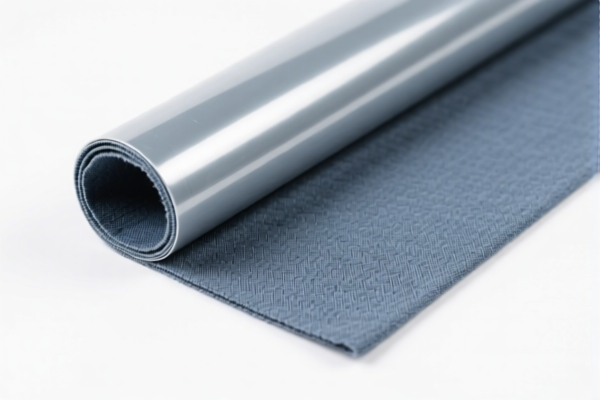
AI Analysis
🧳 Luggage Straps: Plastic-Composite Textile Bands
🌐 HS Code Reference & Customs Clearance Guide | 2026 Latest Tariff Analysis | Professional Level Clearance Strategy
📌 I. Product Definition & Classification: Do You Really Understand "Plastic-Composite Textile Bands for Luggage"?
Plastic-composite textile bands are critical accessories for luggage, suitcases, and travel bags. In international trade, they are typically classified based on their material composition, form (woven/fabric), and primary function.
Key Distinction Points: - Plastic-Impregnated/Coated Textiles (Chapter 59): If the textile is impregnated, coated, covered, or laminated with plastic, it is generally classified under Chapter 59. This is the most common and accurate classification for standard luggage straps. - Other Made-up Articles (Chapter 63): If the product is considered a finished accessory not specifically covered elsewhere, it might fall into the "Other" category of Chapter 63. However, this is often a less preferred classification if Chapter 59 is applicable due to the specific plastic-composite nature.
⚠ Critical Note:
- If the textile is significantly changed in character by the plastic coating/impregnation → Chapter 59.
- If it is a simple finished accessory without strong plastic-impregnation characteristics → Chapter 63.
- Most luggage straps fall under 5903.10.20.10 or 5903.10.20.90 due to the plastic composite nature.
📦 II. Detailed Classification Analysis (Based on Provided Data)
| HS Code | Product Description | Classification Logic | Total Tax Rate |
|---|---|---|---|
| 5903.10.20.10 | Plastic-Composite Textile Bands for Luggage | Primary Classification: Textile fabric impregnated/coated with PVC or similar plastics. Fits Chapter 59 specifically for plastic-impregnated textiles. | 35.0% |
| 5903.10.20.90 | Plastic-Composite Textile Bands for Luggage | Alternative within Ch. 59: Same material characteristics (plastic-impregnated textile) but categorized under the "Other" subheading within the same code family. | 35.0% |
| 6307.90.98.91 | Plastic-Composite Textile Bands for Luggage | Secondary Classification: Classified as a "Made-up Article" under Chapter 63. Used when the product is considered a finished accessory not strictly defined under Ch. 59. | 24.5% |
| 6307.90.98.75 | Plastic-Composite Textile Bands for Luggage | Alternative within Ch. 63: Another "Other Made-up Articles" code under Chapter 63. Similar to above, applies to finished textile accessories. | 24.5% |
🔍 Key Insight:
- Codes 5903.10.20.10 & 5903.10.20.90 (35% total tax) are based on the material (plastic-impregnated textile).
- Codes 6307.90.98.91 & 6307.90.98.75 (24.5% total tax) are based on the end-use (luggage accessory).
- Why the difference? Customs may interpret the product either as a raw material/component (Ch. 59) or a finished good (Ch. 63). The 35% rate is higher due to Section 301 tariffs applied to Chapter 59 goods from China.
💰 III. 2026 Latest Tariff Rate Breakdown (Including Additional Duties)
✅ Applicable Country: USA (US)
✅ Origin: China (CN)
✅ Effective Date: From November 10, 2025 (for subsequent imports)
🎯 1. HS Code: 5903.10.20.10 — Plastic-Impregnated Textile Bands (High-Tariff Category)
| Item | Details |
|---|---|
| Base Duty | 0.0% (Ad Valorem) |
| Section 301 Duty | +25.0% (USITC Footnote 9903.88.01) |
| 122 Clause Duty | +10.0% (China-specific additional tariff) |
| Total Tax Rate | 35.0% |
| Calculation | CIF Value × 35.0% |
| De Minimis Exempt? | ❌ No (deny_de_minimis applies) |
| Legal Path | IEEPA:9903.01.25 → IEEPA:9903.01.24 → USITC:5903.10.20.10 → FOOTNOTE:9903.88.01 |
📌 Explanation:
- The 25% is the standard Section 301 tariff on Chinese textiles and plastics.
- The 10% is an additional 122 Clause tariff targeting specific Chinese imports.
- Total 35% is very high. This is the most likely classification for plastic-composite straps.
🎯 2. HS Code: 6307.90.98.91 — Other Made-up Textile Articles (Lower-Tariff Category)
| Item | Details |
|---|---|
| Base Duty | 7.0% |
| Section 301 Duty | +7.5% (Partial Section 301 application) |
| 122 Clause Duty | +10.0% |
| Total Tax Rate | 24.5% |
| Calculation | CIF Value × 24.5% |
| De Minimis Exempt? | ❌ No |
| Legal Path | IEEPA:9901.25 → IEEPA:9903.01.24 → USITC:6307.90.98.91 → FOOTNOTE:9903.88.01 |
📌 Explanation:
- Chapter 63 goods often face lower Section 301 rates (7.5%) compared to Chapter 59 (25%).
- However, the 122 Clause (10%) still applies.
- Total 24.5% is lower, but requires strong justification that the product is a "finished article" rather than a "plastic-impregnated textile."
🛠 IV. Customs Clearance Practical Advice (Avoid Pitfall Guide)
✅ 1. Document Checklist (Mandatory)
| Document | Required? | Purpose |
|---|---|---|
| ✅ Product Specification Sheet | ✔ | Show material composition (e.g., "Polyester base with PVC coating"). |
| ✅ Composition Breakdown | ✔ | Detail the percentage of textile vs. plastic. Crucial for Ch. 59 vs. Ch. 63. |
| ✅ Product Photos (Including Labels) | ✔ | Show the texture, weave, and any branding. |
| ✅ Commercial Invoice | ✔ | Clearly state "Plastic-Composite Textile Strap for Luggage." |
| ✅ Packing List | ✔ | Ensure no misleading descriptions. |
✅ 2. Declaration Tips (Key Mantra)
🔥 "Be Precise: Material Defines Chapter, Usage Defines Code!"
| Scenario | Recommended Declaration | Risk if Incorrect |
|---|---|---|
| Heavy Plastic Coating | 5903.10.20.10 (35%) |
If declared as Ch. 63, you may be audited for underpayment. |
| Light Textile with Minor Plastic | 6307.90.98.91 (24.5%) |
If declared as Ch. 59, you may be penalized for over-declaration. |
| Finished Luggage Strap | Clearly state "Finished Accessory" | Ambiguity leads to customs seizure or delay. |
✅ 3. Special Handling
| Situation | Advice |
|---|---|
| OEM Custom Straps | Provide the customer’s design spec sheet to prove intended use. |
| Mixed Shipments | If plastic straps are mixed with non-composite fabrics, declare separately to avoid classification errors. |
| Value Engineering | If the product is 95% textile and 5% plastic, argue for Ch. 63 to save 10.5% in taxes. |
🌍 V. Global Market Comparison (2026 Update)
| Country/Region | Recommended HC | Estimated Duty | Certifications | Notes |
|---|---|---|---|---|
| 🇺🇸 USA | 5903.10.20.10 |
35.0% (Ch. 59) / 24.5% (Ch. 63) | None Specific | High Section 301 risk. |
| 🇨🇳 China (Import) | 5903.10.20.10 |
~5-7% | N/A | Lower duty, but check anti-dumping. |
| 🇪🇺 EU | 5903.20.90 |
~4-6% | CE (if applicable) | No Section 301 equivalent. |
| 🇯🇵 Japan | 5903.20.90 |
~0-8% | PSE (if electrical) | Varies by plastic type. |
📌 Conclusion:
- USA is the most expensive market due to Section 301 and 122 Clause tariffs.
- Chapter 63 (Ch. 63) offers a lower tariff (24.5%) but requires strong evidence that the product is a "finished article."
- Chapter 59 (Ch. 59) is the safer, more accurate classification for plastic-composite materials but comes with a higher tax (35%).
📌 VI. Common Mistakes & Pitfall Guide (Lessons Learned)
❌ Mistake 1: Classifying as "Textile Strap" without mentioning "Plastic-Composite"
👉 Result: Customs may reclassify to Ch. 59 and apply 35% + back taxes.
❌ Mistake 2: Assuming all luggage accessories are Ch. 63
👉 Result: If the plastic coating is substantial, Ch. 59 applies. Audits will catch this.
❌ Mistake 3: Omitting the "Plastic" component in the description
👉 Result: Customs will ask for clarification, causing shipment delay.
✅ Best Practice:
"Plastic-Composite Textile Band, PVC-Coated Polyester, for Luggage Accessory, Model XYZ"
🎯 VII. Conclusion: Professional Declaration for Cost Optimization
🎯 Remember:
🔹 "Material First, Use Second: Ch. 59 is Safe, Ch. 63 is Cheaper but Risier!"
🔹 "35% vs. 24.5%: A 10.5% Difference WORTH Fighting For!"📌 Pro Tip:
If your straps are primarily textile with a thin plastic layer, consult a customs broker to argue for 6307.90.98.91 (24.5%).
If the plastic is coating or impregnating the textile, expect 5903.10.20.10 (35%).
📣 Immediate Action:
📞 Contact a Licensed Customs Broker
📄 Provide Detailed Material Composition
🚀 Apply for Advance Ruling (if possible)
Ensure Compliance, Avoid Penalties, Maximize Profit!
✨ Professional Clearance Starts with Accurate Classification!
💼 Every Percent of Duty Saved is Pure Profit!
Customer Reviews
About HS Code Classification
The Harmonized System (HS) is an internationally standardized nomenclature developed by the World Customs Organization (WCO) to classify traded products. Over 200 countries use the HS system as the basis for customs tariffs, trade statistics, and import/export regulations.
Each HS code follows a hierarchical structure:
- Chapter (2 digits) — Broad category of goods (e.g., Chapter 84: Machinery and Mechanical Appliances)
- Heading (4 digits) — More specific grouping within the chapter
- Subheading (6 digits) — Internationally standardized breakdown, used by all WCO member countries
- National subdivisions (8-10 digits) — Country-specific extensions for further classification, such as US HTSUS 10-digit codes
Correct HS code classification is essential for smooth customs clearance, accurate duty payment, and compliance with trade regulations. Misclassification can lead to customs delays, overpayment of duties, or penalties.
When importing from CN to US, the applicable tariff rates may include:
- Most-Favored-Nation (MFN) rate — The standard duty rate applied to WTO members
- General rate — Applied to countries without trade agreements
- Trade remedy duties — Additional tariffs such as Section 301 (anti-dumping), Section 232 (national security), or countervailing duties
The information provided on this page is for reference purposes only. For official classification, please consult with your local customs authority or a licensed customs broker.