Textile Composite Plastic Films for Industrial Use
CN → US| HS Code | Tariff Rate | Origin | Destination | Doc |
|---|---|---|---|---|
| 5903102090 | 35.0% | CN | US | Official Doc |
| 3921901100 | 39.2% | CN | US | Official Doc |
| 5603110070 | 35.0% | CN | US | Official Doc |
| 5603120070 | 35.0% | CN | US | Official Doc |
Product Images

AI Analysis
🧵🛡️ Industrial Textile Composite Plastic Films (Textile-Plastic Composites)
🌐 Global HS Code Reference & Customs Clearance Guide | 2024-2025 Tax Strategy | Professional Classification & Duty Analysis
📌 Part 1: Product Definition & Classification Logic
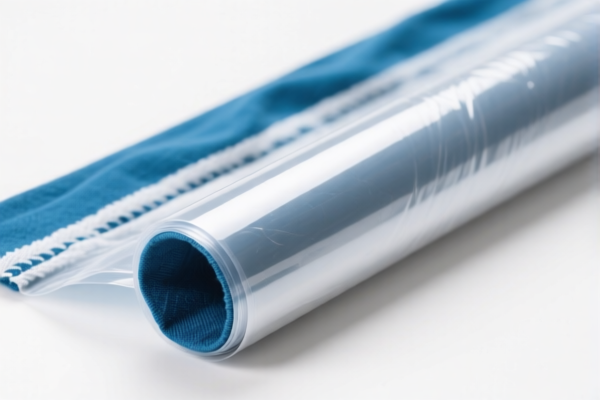
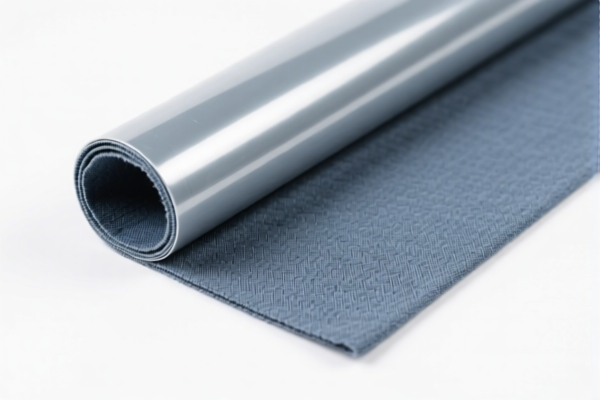
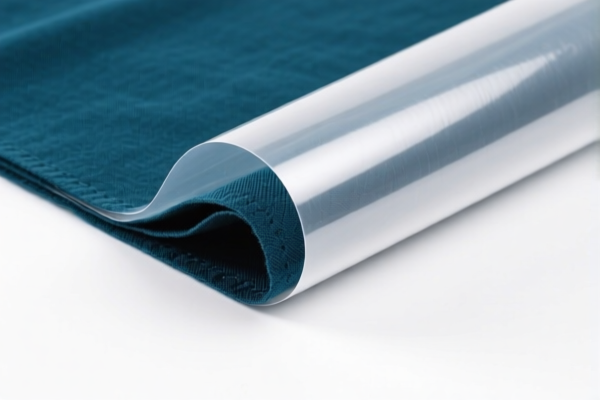
Industrial Textile Composite Plastic Films are high-performance materials where a fabric (woven, non-woven, or knitted) is impregnated, coated, covered, or laminated with plastic. These materials are engineered for durability, chemical resistance, and mechanical strength in industrial sectors such as: * Geotextiles & Construction: Ground stabilization, drainage, and erosion control. * Industrial Filtration: Air and liquid filtration media. * Protection & Covering: Tarps, protective linings, and industrial bags. * Insulation & Reinforcement: Structural reinforcement in composites.
⚠️ The Critical Distinction:
Classification depends on the dominant characteristic: 1. If the Fabric is Dominant: The plastic treatment is secondary (e.g., thin coating). → Chapter 56 (Textile Articles) 2. If the Plastic is Dominant: The fabric is merely an internal reinforcement or the plastic layer is thick/continuous. → Chapter 39 (Plastics)For this specific industrial category, we analyze the four potential HS Codes based on material structure and application.
📦 Part 2: HS Code Classification Details (2024/2025 Customs Tariff)
Based on the product specifications for "Industrial Use," here is the detailed breakdown of the four applicable codes and the logic behind their classification.
| HS Code | Product Description & Logic | Primary Material Structure | Application Context |
|---|---|---|---|
| 5903.10.20.90 | Textile material impregnated/coated with plastics (Logic: "Textile fabric" is the base, plastic is a coating.) |
Woven/Knitted textile + Plastic layer | Industrial Fabrics: Heavy-duty tarps, conveyor belt covers, industrial bags, filtration cloths where the fabric gives the strength. |
| 3921.90.11.00 | Plastic plates, sheets, film, strip & sheet (other) (Logic: "Plastic" is the base, textile acts as reinforcement.) |
Plastic sheet + Reinforcing textile layer | Composite Sheets: Rigid/flexible panels where the plastic matrix is continuous and the textile is an internal filler or reinforcement (e.g., industrial mats, laminates). |
| 5603.11.00.70 | Non-woven textile articles, impregnated/coated/laminated (Logic: Non-woven structure + Plastic) |
Chemical fiber/Artificial filament (Non-woven) + Plastic | Industrial Non-Wovens: Geotextiles, insulation mats, filter media made from non-woven fibers bonded with plastic. |
| 5603.12.00.70 | Other non-woven textile articles, coated/laminated (Logic: Specific non-woven category) |
Artificial long-filament non-woven + Plastic | High-Strength Non-Wovens: Specialized industrial felts or filters where the plastic coating is essential for the function (e.g., liquid barrier). |
🔍 Key Classification Logic:
5903 applies when the textile fabric is the primary structural element, and the plastic is merely a surface treatment (impregnation/coating). * 3921 applies when the product is essentially a plastic sheet (plate/film) that happens to contain textile fibers for reinforcement. * 5603 applies specifically when the textile base is Non-Woven* (felt-like), regardless of the plastic coating.
💰 Part 3: 2024-2025 Tariff Rate Breakdown (US Market Focus)
✅ Target Market: United States (US)
✅ Origin: China (CN)
✅ Effective Date: Current (Subject to Section 301 & 122 provisions)
🎯 1. Code 5903.10.20.90 (Textile Base)
- Total Tax: 35.0%
- Breakdown:
- MFN Base Duty: 0.0%
- Section 301 (Section 301 Add-on): +25.0%
- Section 122 Tariff: +10.0%
- Legal Basis:
- Section 301 Action (Trade Action on China) → 25% surcharge.
- Section 122 Action (Specific textile/plastic categories) → 10% surcharge.
- Calculation:
CIF Value × 35%
🎯 2. Code 3921.90.11.00 (Plastic Base)
- Total Tax: 39.2%
- Breakdown:
- MFN Base Duty: 4.2%
- Section 301 (Section 301 Add-on): +25.0%
- Section 122 Tariff: +10.0%
- Legal Basis:
- Standard duty for other plastics (4.2%).
- Crucial Note: This code attracts the highest total tax because it includes the base duty plus the two surcharges.
- Calculation:
(CIF Value × 4.2%) + (CIF Value × 35% surcharge)≈ 39.2%
🎯 3. Code 5603.11.00.70 (Non-Woven - Chemical Fiber)
- Total Tax: 35.0%
- Breakdown:
- MFN Base Duty: 0.0%
- Section 301 (Section 301 Add-on): +25.0%
- Section 122 Tariff: +10.0%
- Legal Basis: Same as 5903. Textile non-wovens often carry 0% base duty but hit 35% total.
- Calculation:
CIF Value × 35%
🎯 4. Code 5603.12.00.70 (Non-Woven - Artificial Filament)
- Total Tax: 35.0%
- Breakdown:
- MFN Base Duty: 0.0%
- Section 301 (Section 301 Add-on): +25.0%
- Section 122 Tariff: +10.0%
- Legal Basis: Specific to artificial long-filament non-wovens.
- Calculation:
CIF Value × 35%
📌 Critical Warning:
The3921.90.11.00classification results in a 4.2% higher total tax than the textile-based codes due to the base tariff (4.2%) being applied on top of the 35% surcharges. Misclassifying a textile-dominant product as a plastic-dominant one could unnecessarily increase costs.
🛠️ Part 4: Customs Clearance & Practical Advice (Risk Avoidance)
✅ 1. Document Preparation Checklist (Mandatory)
To clear customs successfully and avoid reclassification fines: | Document | Requirement | Why it Matters | | :--- | :--- | :--- | | Technical Spec Sheet | Must detail % of plastic vs. textile. | Determines if Code is 5903/5603 (Textile) vs 3921 (Plastic). | | Cross-Section Photo | High-res image of the material layers. | Proof of "laminated" vs "impregnated" structure. | | Bill of Materials (BOM) | Lists fiber type (nylon, polyester, PP) and plastic type (PVC, PE). | Essential for matching HS Code description. | | Certificate of Origin | Must clearly state "Made in China". | Required to apply the correct Section 301/122 surcharges. | | Commercial Invoice | Description: "Industrial Non-Woven with PVC Coating". | Vague terms like "Plastic Cloth" cause delays. |
✅ 2. Classification Strategy (The "Golden Rule")
🔥 Rule: "Structure Dominates, Not Just Name!"
- If the fabric provides the tensile strength: Choose 5903 or 5603. (Lower Base Duty = 0%, Save money).
- If the plastic sheet provides the structural integrity: You may be forced into 3921. (Higher Base Duty = 4.2%, Higher Cost).
- Avoid Ambiguity: Do not use generic terms like "Plastic Cloth." Use precise terms: "Polyester Non-Woven Fabric Laminated with PVC" or "Woven Polypropylene Fabric Impregnated with Polyethylene."
✅ 3. Special Handling for "Section 122" & "Section 301"
- Section 301 (25%): Applies to almost all Chinese industrial textile/plastic composites. No exemption for most standard industrial goods.
- Section 122 (10%): This is a specific, often overlooked surcharge for certain categories. It adds up with Section 301.
- Exclusions: Check if your product falls under Exclusion List (e.g., specific medical grade filtration or unique industrial applications). If not, assume 35-39.2% is the hard cost.
🌍 Part 5: Global Market Comparison (2024-2025)
| Region | Recommended HS Code | Total Duty Rate (China Origin) | Key Requirements |
|---|---|---|---|
| 🇺🇸 United States | 5903 / 5603 / 3921 | 35.0% - 39.2% | Section 301 + Section 122 applies strictly. |
| 🇨🇳 China (Export) | Same as above | 0% (Base) | Domestic tax applies, but export duty is 0%. |
| 🇪🇺 European Union | 5903 / 3921 | ~2.0% - 4.0% | No Section 301. Standard "Most Favored Nation" rates apply. |
| 🇨🇦 Canada | 5903 / 5603 | 0% - 5.0% | CUSMA agreements may apply depending on textile origin. |
| 🇦🇺 Australia | 5903 / 3921 | 5.0% | AANZFTA may reduce duties to 0% if rules of origin are met. |
📌 Strategic Insight:
The US market is the most expensive due to the 35-39.2% tariff stack.
Strategy: If possible, consider Third-Party Processing (e.g., fabricating in Vietnam or Mexico) to bypass the "Made in China" origin tag for US entry, potentially reducing duties to 0-5% (if local content rules are met).
📌 Part 6: Common Pitfalls & Solutions
❌ Pitfall 1: Misidentifying "Non-Woven" vs "Woven"
👉 Result: Using Code 3921 instead of 5603 because you forgot to highlight the "Non-Woven" nature.
✅ Fix: Always provide a micrograph or technical drawing showing the fiber arrangement.
❌ Pitfall 2: Ignoring the "Base Duty" Difference
👉 Result: Paying 39.2% instead of 35.0% by misclassifying a textile-dominated product as plastic-dominated.
✅ Fix: Analyze the weight ratio. If textile > plastic in weight, argue for Chapter 56/59.
❌ Pitfall 3: Vague Product Description
👉 Result: Customs seizes the cargo for "Unidentifiable Product."
✅ Fix: Invoice must say: "Industrial Grade PVC Coated Polyester Non-Woven Fabric, 2mm thickness, for geotextile applications."
🎯 Part 7: Final Conclusion
"Industrial Textile Composite Plastic Films" are a high-tariff category in the US.
- Total Tax Range: 35.0% to 39.2%
- Best Case: Classify under 5903 or 5603 (0% Base Duty) → 35.0% Total.
- Worst Case: Classify under 3921 (4.2% Base Duty) → 39.2% Total.
Action Plan: 1. Verify the dominant material (Textile vs. Plastic). 2. Confirm if the structure is Non-Woven (5603) or Woven (5903). 3. Prepare technical specs proving the textile contribution. 4. Calculate landed cost with the full 35-39.2% tax burden before pricing.
✨ Smart Classification = Higher Profit Margins!
💼 Don't let a 4.2% base duty difference eat your profits!
📞 Consult a Certified Customs Broker today for a Pre-Ruling.
Customer Reviews
About HS Code Classification
The Harmonized System (HS) is an internationally standardized nomenclature developed by the World Customs Organization (WCO) to classify traded products. Over 200 countries use the HS system as the basis for customs tariffs, trade statistics, and import/export regulations.
Each HS code follows a hierarchical structure:
- Chapter (2 digits) — Broad category of goods (e.g., Chapter 84: Machinery and Mechanical Appliances)
- Heading (4 digits) — More specific grouping within the chapter
- Subheading (6 digits) — Internationally standardized breakdown, used by all WCO member countries
- National subdivisions (8-10 digits) — Country-specific extensions for further classification, such as US HTSUS 10-digit codes
Correct HS code classification is essential for smooth customs clearance, accurate duty payment, and compliance with trade regulations. Misclassification can lead to customs delays, overpayment of duties, or penalties.
When importing from CN to US, the applicable tariff rates may include:
- Most-Favored-Nation (MFN) rate — The standard duty rate applied to WTO members
- General rate — Applied to countries without trade agreements
- Trade remedy duties — Additional tariffs such as Section 301 (anti-dumping), Section 232 (national security), or countervailing duties
The information provided on this page is for reference purposes only. For official classification, please consult with your local customs authority or a licensed customs broker.