Textile Composite Plastic Fireproof Boards
CN → US| HS Code | Tariff Rate | Origin | Destination | Doc |
|---|---|---|---|---|
| 3921904090 | 39.2% | CN | US | Official Doc |
| 3921905050 | 39.8% | CN | US | Official Doc |
| 3920992000 | 39.2% | CN | US | Official Doc |
Product Images
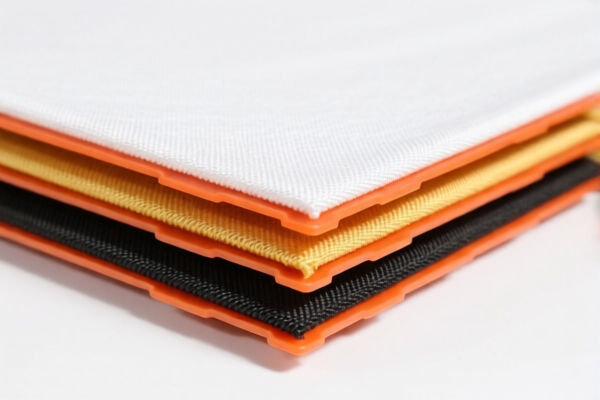
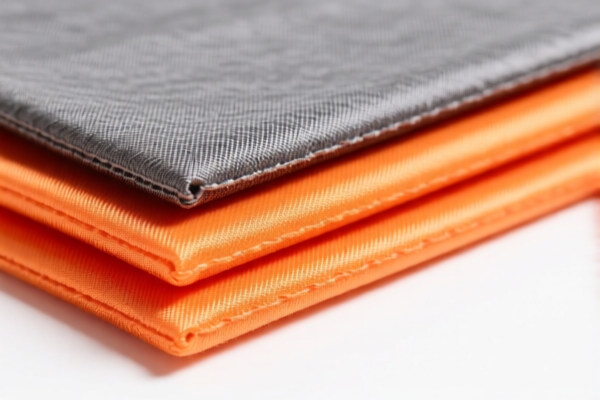
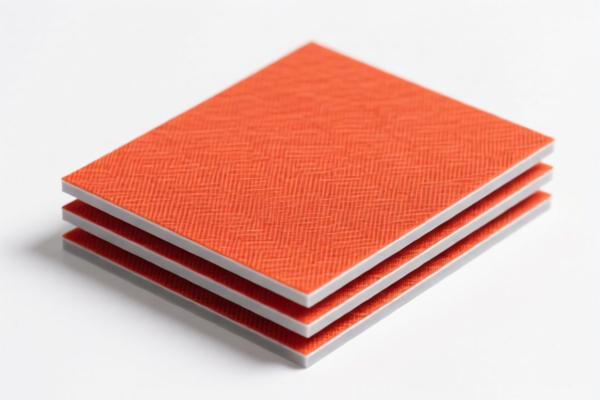
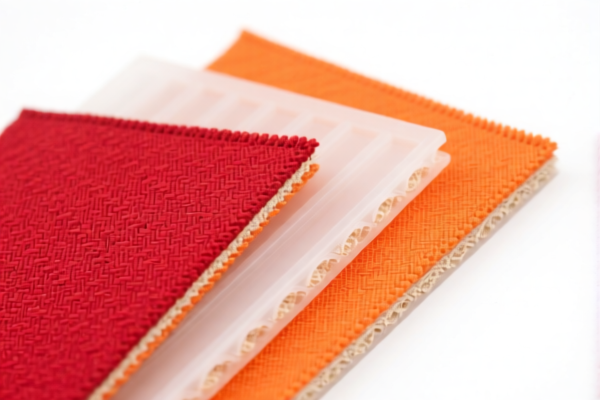
AI Analysis
🛡️ Textile Composite Plastic Fireproof Boards (Textile-Reinforced Polymer Sheets)
🌐 HS Code Reference & Customs Clearance Guide | 2026 Latest Tariff Analysis | Professional Entry Strategy
📌 I. Product Definition: What Exactly Are "Textile Composite Plastic Fireproof Boards"?
Textile composite plastic fireproof boards are advanced construction and industrial materials consisting of a plastic (polymer) matrix reinforced with textile fibers (such as fiberglass, carbon, or aramid). These materials are engineered for high strength, durability, and specific fire-resistant properties.
In international trade, these products are strictly classified under Chapter 39 (Plastics and Articles Thereof). The key determinant for classification is the form (boards, sheets, plates) and the composition (plastic matrix with reinforcement).
⚠️ Critical Distinction:
- If the product is a rigid board/plate made primarily of plastic (even with textile reinforcement) → Chapter 39
- If it is purely woven textile without a significant plastic matrix → Chapter 54/55 (Not applicable here as per user input "Plastic Fireproof Boards")
- If it is a pre-mixed construction material (like cement board) → Chapter 68 (Not applicable here as per "Plastic")
📦 II. HS Code Classification Details (2026 Latest Tariff Authority Match)
Based on the provided data, the following HS Codes are the most reasonable matches for Textile Composite Plastic Fireproof Boards.
| HS Code | Product Description | Application Scenario | Material/Form | Total Tax Rate (US Import from CN) |
|---|---|---|---|---|
| 3921.90.40.90 | Other plates, sheets, film, foil and strip, of plastics | General-purpose plastic composite boards; rigid panels for construction or industrial use | Plastic, Form: Board | 39.2% |
| 3921.90.50.50 | Plates, sheets, film, foil and strip, of plastics | Specific category for plastic boards/sheets under Chapter 39 | Plastic, Form: Board | 39.8% |
| 3920.99.20.00 | Plates, sheets, film, foil and strip, of plastics, not elsewhere specified | Laminated, supported, or similar composite materials where plastic is the main matrix | Plastic, Form: Composite Board | 39.2% |
🔍 Key Insight:
- All three codes fall under Chapter 39 (Plastics).
- The difference lies in the specific sub-heading: 3921 (Other plates/shets) vs. 3920 (Non-cellular plastics).
- 3921.90.40.90 and 3920.99.20.00 share the same total tax rate (39.2%), while 3921.90.50.50 is slightly higher at 39.8%.
💰 III. 2026 Latest Tariff Rate Breakdown (Including Surtaxes)
✅ Applicable Country: United States (US)
✅ Country of Origin: China (CN)
✅ Effective Date: November 10, 2025 (and subsequent imports)
🎯 1. HS Code 3921.90.40.90 — Plastic Composite Boards
| Item | Detail |
|---|---|
| Base Duty Rate | 4.2% (Standard MFN Rate) |
| Section 301 Surtax | +25.0% (Trade Act of 1974, Section 301) |
| IEEPA Surtax | +10.0% (International Emergency Economic Powers Act, 122 Clause) |
| Total Duty Rate | 39.2% |
| Tax Calculation | CIF Value × 39.2% |
| De Minimis Exemption | ❌ Not Available (deny_de_minimis) |
| Legal Basis Path | IEEPA:122 → USITC:3921.90.40.90 → FOOTNOTE:301.9921.90 |
📌 Explanation:
- The 4.2% is the base duty for plastic plates/sheets.
- The 25% is the standard Section 301 tariff for most Chinese plastics.
- The 10% is the additional IEEPA tariff applied to specific Chinese goods.
- Total: 39.2%. This is a high-cost import category.
🎯 2. HS Code 3921.90.50.50 — Plastic Boards/Sheets
| Item | Detail |
|---|---|
| Base Duty Rate | 4.8% |
| Section 301 Surtax | +25.0% |
| IEEPA Surtax | +10.0% |
| Total Duty Rate | 39.8% |
| Tax Calculation | CIF Value × 39.8% |
| De Minimis Exemption | ❌ Not Available |
| Legal Basis Path | IEEPA:122 → USITC:3921.90.50.50 → FOOTNOTE:301.9921.90 |
📌 Note:
- Slightly higher base duty (4.8% vs 4.2%) results in a total of 39.8%.
- Use this code only if the specific product characteristics (e.g., thickness, finish) align better with this sub-heading.
🎯 3. HS Code 3920.99.20.00 — Laminated/Composite Plastic Boards
| Item | Detail |
|---|---|
| Base Duty Rate | 4.2% |
| Section 301 Surtax | +25.0% |
| IEEPA Surtax | +10.0% |
| Total Duty Rate | 39.2% |
| Tax Calculation | CIF Value × 39.2% |
| De Minimis Exemption | ❌ Not Available |
| Legal Basis Path | IEEPA:122 → USITC:3920.99.20.00 → FOOTNOTE:301.9920.99 |
📌 Note:
- This code is suitable for laminated or supported composite materials.
- If your "textile composite" is a laminated structure (plastic layers with textile core), this code is highly appropriate.
- Total: 39.2%, same as3921.90.40.90.
🛠️ IV. Customs Clearance Practical Advice (Avoid Pitfalls)
✅ 1. Required Documentation Checklist
| Document | Mandatory? | Notes |
|---|---|---|
| ✅ Product Specification Sheet | ✔️ | Must detail: Base plastic, textile type, thickness, fire rating (UL94, ASTM E84) |
| ✅ Composition Analysis | ✔️ | Confirm % of plastic vs. textile to justify Chapter 39 |
| ✅ Fire Resistance Certificate | ✔️ | UL, FM, or ASTM E84 test reports required for "Fireproof" claims |
| ✅ Commercial Invoice | ✔️ | Clear description: "Plastic Composite Board, Textile-Reinforced" |
| ✅ Certificate of Origin (CO) | ✔️ | Critical for verifying Chinese origin and applying surtaxes |
| ✅ Packaging List | ✔️ | Show dimensions and weight to verify "Board" form |
✅ 2. Declaration Tips (Key Mantra)
🔥 "Plastic Matrix is Key, Fire Rating is Proof, No De Minimis, High Tax Applies!"
| Scenario | Correct Declaration | Wrong Approach |
|---|---|---|
| Textile-Reinforced Plastic Board | 3921.90.40.90 or 3920.99.20.00 |
Misdeclare as "Textile Fabric" (54.07) → Risk of Misclassification |
| Laminated Composite | 3920.99.20.00 |
Misdeclare as "Wood Composite" → Wrong Chapter |
| Small Samples (< $800) | ❌ No Exemption | Attempt De Minimis → Seizure & Penalty |
| Fire-Rated Product | Include UL/FM Cert # | "Generic Plastic Board" → Delays for Safety Review |
✅ 3. Special Cases
| Case | Handling Advice |
|---|---|
| OEM Custom Boards | Provide client’s technical drawings to prove specific plastic composition |
| Mixed Packaging (Boards + Accessories) | Declare boards separately; do not bundle with plastic fixtures |
| Fireproof Claim | Must provide certified test reports; otherwise, CBP may reclassify as "Non-fireproof" and increase scrutiny |
| Transshipment | If shipped from Vietnam/Malaysia, still subject to Chinese Surtax if origin is China |
🌍 V. Global Market Comparison (2026)
| Country/Region | Recommended HS Code | Duty Rate | Certification | Notes |
|---|---|---|---|---|
| 🇺🇸 USA | 3921.90.40.90 |
39.2% | UL, FM | High due to 301 + IEEPA |
| 🇨🇳 China | 3921.90.40.90 |
~4.2% | CCC (if applicable) | Base rate only |
| 🇪🇺 EU | 3921.90.40.90 |
~5-6% | CE, REACH | No Section 301 |
| 🇬🇧 UK | 3921.90.40.90 |
~5-6% | UKCA | Post-Brexit tariffs apply |
| 🇦🇺 Australia | 3921.90.40.90 |
~5% | ACCC | No surtaxes |
📌 Conclusion:
- USA imposes the highest barriers due to Section 301 (25%) and IEEPA (10%).
- Total duty of ~39.2% significantly impacts profitability.
- Consider origin diversification (e.g., produce in Southeast Asia) to mitigate tariffs.
📌 VI. Common Mistakes & Pitfalls (Lessons Learned)
❌ Mistake 1: Declaring as "Textile Fabric" (HS 5407)
👉 Consequence: CBP reclassifies to Chapter 39 → Back taxes + Penalties.
Truth: Plastic matrix > Textile → Chapter 39.
❌ Mistake 2: Claiming De Minimis for shipments < $800
👉 Consequence: Cargo Seized. Plastic boards are explicitly excluded from de minimis for Chinese imports.
❌ Mistake 3: Omitting Fire-Rating Certificates
👉 Consequence: CBP demands additional testing → Release Delay (2-4 weeks).
❌ Mistake 4: Using Generic Descriptions ("Plastic Board")
👉 Consequence: Lack of clarity leads to Manual Review → Higher chance of error.
✅ Correct Declaration Example:
"TEXTILE-REINFORCED PLASTIC COMPOSITE BOARD, FIRE-RATED UL94 V-0, POLYCARBONATE MATRIX, HS CODE 3921.90.40.90"
🎯 VII. Conclusion: Precision in Classification, Savings in Cost
🎯 Remember the Mantra:
🔹 "Plastic Matrix Rules, Chapter 39 Applies"
🔹 "39.2% Duty is Non-Negotiable for CN Origin"
🔹 "No De Minimis, No Loopholes for Plastic Boards"
🔹 "Fire Rating Docs Save Weeks of Delay"
📌 Pro Tip:
- If your product is 100% textile with minimal plastic coating, it might qualify for Chapter 54 (lower duty, no 301/IEEPA).
- However, for composite boards, Chapter 39 is likely unavoidable.
- Apply for Advance Ruling from CBP to lock in the HS code and avoid disputes.
📣 Immediate Action:
📞 Consult Customs Broker + Provide UL/FM Certs + Verify Plastic %
🚀 Optimize supply chain to avoid Chinese origin if possible, or factor 39.2% duty into pricing.
✨ Professional Clearance Starts with Accurate Classification!
💼 Every Percent of Duty Counts in the Bottom Line!
Customer Reviews
About HS Code Classification
The Harmonized System (HS) is an internationally standardized nomenclature developed by the World Customs Organization (WCO) to classify traded products. Over 200 countries use the HS system as the basis for customs tariffs, trade statistics, and import/export regulations.
Each HS code follows a hierarchical structure:
- Chapter (2 digits) — Broad category of goods (e.g., Chapter 84: Machinery and Mechanical Appliances)
- Heading (4 digits) — More specific grouping within the chapter
- Subheading (6 digits) — Internationally standardized breakdown, used by all WCO member countries
- National subdivisions (8-10 digits) — Country-specific extensions for further classification, such as US HTSUS 10-digit codes
Correct HS code classification is essential for smooth customs clearance, accurate duty payment, and compliance with trade regulations. Misclassification can lead to customs delays, overpayment of duties, or penalties.
When importing from CN to US, the applicable tariff rates may include:
- Most-Favored-Nation (MFN) rate — The standard duty rate applied to WTO members
- General rate — Applied to countries without trade agreements
- Trade remedy duties — Additional tariffs such as Section 301 (anti-dumping), Section 232 (national security), or countervailing duties
The information provided on this page is for reference purposes only. For official classification, please consult with your local customs authority or a licensed customs broker.