Textile Composite Plastic Foil
CN → US| HS Code | Tariff Rate | Origin | Destination | Doc |
|---|---|---|---|---|
| 3921901100 | 39.2% | CN | US | Official Doc |
| 3921902510 | 41.5% | CN | US | Official Doc |
| 3921901500 | 41.5% | CN | US | Official Doc |
| 3921901100 | 39.2% | CN | US | Official Doc |
| 3921905050 | 39.8% | CN | US | Official Doc |
Product Images
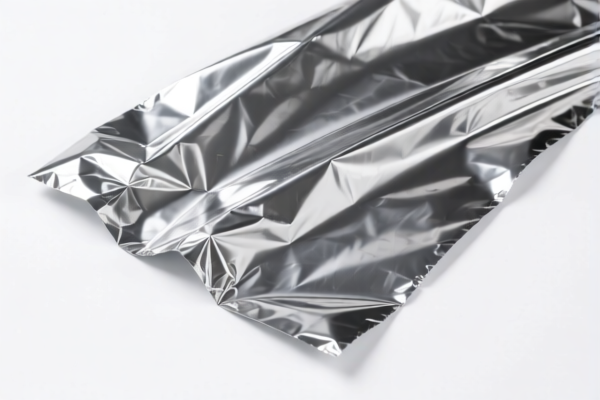

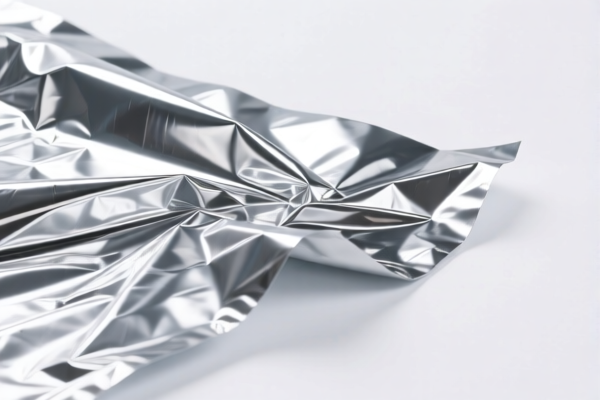
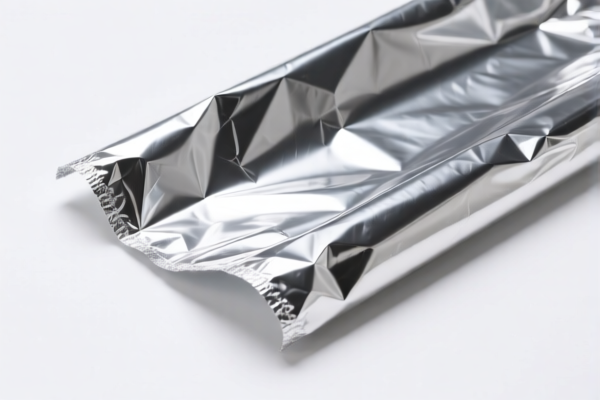
AI Analysis
🧵 Textile Composite Plastic Foil (复合塑料箔)
🌐 HS Code Reference & Customs Clearance Guide | 2026 Latest Tariff Analysis | Professional Level Clearance Strategy
📌 Part 1: Product Definition & Classification: Do You Truly Understand "Textile Composite Plastic Foil"?
"Textile Composite Plastic Foil" refers to a multi-layer material combining plastic polymers with textile fabrics. In international trade, its classification depends heavily on the primary material composition, specific structure, and intended application (e.g., indoor decoration vs. general packaging). The key distinction lies in whether it is classified under general composite foils, those specifically containing artificial fibers, or those designated for indoor decorative purposes.
⚠️ Key Distinction Points:
- If the product is a general composite of plastic and textiles without specific "indoor decoration" labeling, it may fall under general composite codes (3921.90.11.00).
- If it explicitly contains artificial fibers (synthetic/viscose) as a key component, it triggers a different subheading (3921.90.25.10).
- If marketed or used specifically for indoor decoration (wall coverings, furniture finishing), it may be classified under the specific "indoor decoration" catch-all (3921.90.15.00).
- If the product structure is rigid or semi-rigid like a board/panel rather than a flexible foil, it may be reclassified as a plastic board (3921.90.50.50).
📦 Part 2: HS Code Classification Details (2026 Latest Tariff Authority Comparison)
| HS Code | Product Description | Application Scenario | Key Characteristic | Total Tax Rate |
|---|---|---|---|---|
3921.90.11.00 |
Composite Plastic Foil, Plastic & Textile Combined | General industrial use, non-decorative composites | Plastic ratio high, general textile composite | 39.2% |
3921.90.25.10 |
Composite Plastic Foil, Plastic & Artificial Fiber | Textile-heavy composites using synthetic/man-made fibers | Contains "Artificial Fiber" explicitly | 41.5% |
3921.90.15.00 |
Indoor Decorative Textile Composite Plastic Foil | Wall coverings, furniture veneers, decorative finishes | Specifically for "Indoor Decoration" | 41.5% |
3921.90.50.50 |
Plastic Composite Board/Panel | Rigid or semi-rigid composite structures | Form factor is "Board/Panel" not just "Foil" | 39.8% |
🔍 Important Note:
-3921.90.11.00is the most common general classification for plastic-textile composites unless specific fiber content or decorative intent triggers higher rates.
-3921.90.25.10and3921.90.15.00carry higher base tariffs (6.5%) compared to the general category (4.2%), leading to a higher total tax burden.
-3921.90.50.50is used if the product is not a flexible foil but a rigid composite board. Misclassifying a board as a foil can lead to declaration errors.
💰 Part 3: 2026 Latest Tariff Rate Details (Including Surtaxes & Policy Additions)
✅ Applicable Country: United States (US)
✅ Origin: China (CN)
✅ Effective Date: November 10, 2025 onwards
🎯 1. 3921.90.11.00 —— General Composite Plastic Foil (Plastic & Textile)
| Item | Details |
|---|---|
| Base Tariff | 4.2% |
| Surtax (Section 301) | +25.0% |
| Section 122 Tariff | +10.0% |
| Total Tax Rate | 39.2% |
| Tax Calculation | CIF Value × 39.2% |
| De Minimis Exemption | ❌ Not Eligible |
| Legal Basis Path | USITC:3921.90.11.00 → Section 301: 25% → Section 122: 10% |
📌 Explanation:
- The 4.2% base rate is standard for general plastic articles not elsewhere specified.
- The 25% surtax is applied under US Trade Act Section 301 against Chinese imports.
- The 10% additional tariff is applied under Section 122 (if currently active/applicable per latest enforcement).
- Total 39.2% is a significant cost factor. Proper documentation proving the "general" nature (not decorative, not artificial fiber specific) is crucial to avoid the higher 41.5% bracket.
🎯 2. 3921.90.25.10 —— Composite Foil with Artificial Fibers
| Item | Details |
|---|---|
| Base Tariff | 6.5% |
| Surtax (Section 301) | +25.0% |
| Section 122 Tariff | +10.0% |
| Total Tax Rate | 41.5% |
| Tax Calculation | CIF Value × 41.5% |
| De Minimis Exemption | ❌ Not Eligible |
| Legal Basis Path | USITC:3921.90.25.10 → Section 301: 25% → Section 122: 10% |
📌 Note:
- The base rate is 6.5% (higher than 4.2%) because the classification specifically identifies "Artificial Fibers."
- Even though the surtaxes are the same, the higher base rate results in a 2.3% higher total tax compared to3921.90.11.00.
- Ensure the fiber content declaration is accurate; if it’s not primarily artificial fiber, do not use this code.
🎯 3. 3921.90.15.00 —— Indoor Decorative Textile Composite Foil
| Item | Details |
|---|---|
| Base Tariff | 6.5% |
| Surtax (Section 301) | +25.0% |
| Section 122 Tariff | +10.0% |
| Total Tax Rate | 41.5% |
| Tax Calculation | CIF Value × 41.5% |
| De Minimis Exemption | ❌ Not Eligible |
| Legal Basis Path | USITC:3921.90.15.00 → Section 301: 25% → Section 122: 10% |
📌 Note:
- This code is a "catch-all" for indoor decorative plastics combined with textiles.
- If your product is clearly for home decor (wallpaper, furniture lamination), you must use this code or risk misclassification.
- Tax rate is identical to the artificial fiber category due to the higher base rate (6.5%).
🎯 4. 3921.90.50.50 —— Plastic Composite Board/Panel
| Item | Details |
|---|---|
| Base Tariff | 4.8% |
| Surtax (Section 301) | +25.0% |
| Section 122 Tariff | +10.0% |
| Total Tax Rate | 39.8% |
| Tax Calculation | CIF Value × 39.8% |
| De Minimis Exemption | ❌ Not Eligible |
| Legal Basis Path | USITC:3921.90.50.50 → Section 301: 25% → Section 122: 10% |
📌 Note:
- Use this only if the product is structurally a board or panel (rigid).
- The base rate (4.8%) is higher than the general foil (4.2%) but lower than the decorative/artificial fiber codes.
- Misclassifying a flexible foil as a board, or vice versa, can lead to Customs detention.
🛠️ Part 4: Customs Clearance Practical Advice (Battle-Tested Pitfall Guide)
✅ 1. Required Documentation Checklist
| Document | Mandatory? | Description |
|---|---|---|
| ✅ Product Specification Sheet | ✔️ | Must detail layers: plastic type, textile type (natural vs. artificial), thickness, width. |
| ✅ Material Composition Report | ✔️ | Critical for distinguishing between 3921.90.11.00 (general) and 3921.90.25.10 (artificial fiber). |
| ✅ Product Photos (Labeled) | ✔️ | Show flexibility (foil) vs. rigidity (board) to distinguish 3921.90.11.00 from 3921.90.50.50. |
| ✅ Intended Use Statement | ✔️ | Explicitly state if for "Indoor Decoration" to justify 3921.90.15.00 or prove general use for 3921.90.11.00. |
| ✅ Commercial Invoice | ✔️ | Describe accurately: "Plastic-Textile Composite Foil" vs. "Decorative Wall Panel." |
| ✅ Packing List | ✔️ | Ensure weights/dimensions match the declared HS Code category. |
✅ 2. Declaration Tips (Key Mantras)
🔥 "Check the Fiber, Check the Use, Check the Rigidity!"
| Scenario | Correct HS Code | Mistake to Avoid |
|---|---|---|
| General Plastic-Textile Foil | 3921.90.11.00 |
Misdeclaring as Decorative → +2.3% extra tax |
| Foil with Synthetic/Artificial Fibers | 3921.90.25.10 |
Misdeclaring as General → Under-declaration of tax |
| Foil for Wall Covering/Decoration | 3921.90.15.00 |
Misdeclaring as General → Misclassification penalty |
| Rigid Composite Board | 3921.90.50.50 |
Misdeclaring as Foil → Structural mismatch error |
✅ 3. Special Case Handling
| Scenario | Handling Advice |
|---|---|
| Mixed Textile Types | If the textile is a mix, the presence of artificial fibers often pushes it to 3921.90.25.10. Be precise. |
| Sample vs. Bulk | Ensure bulk production matches the sample description. If samples are "decorative" but bulk is "industrial," Customs may investigate. |
| Lamination Process | If the textile and plastic are merely attached vs. fully laminated, this may affect classification. Provide manufacturing process details. |
| Origin Marking | Ensure "Made in China" is clearly marked on the foil rolls/panels to avoid origin disputes. |
🌍 Part 5: Global Market Clearance Comparison (2026 Latest)
| Country/Region | Recommended HS Code | Estimated Total Tariff (CN Origin) | Certification Requirements | Notes |
|---|---|---|---|---|
| 🇺🇸 USA | 3921.90.11.00 (or relevant) |
39.2% - 41.5% | None specific for foil, but FCC/UL if electronic components present | High surtaxes apply to all plastic composites from China. |
| 🇨🇳 China | 3921.90.11.00 |
~5% - 10% | CCC (if applicable) | Lower base tariffs, no Section 301. |
| 🇪🇺 EU | 3921.90.99 (General) |
~4% - 6% | REACH, RoHS | No Section 301 equivalent. |
| 🇬🇧 UK | 3921.90.90 |
~4% - 6% | UKCA, REACH | Post-Brexit rules apply. |
| 🇦🇺 Australia | 3921.90.90 |
~5% | RCM, GTS | Low tariffs, no major surtaxes. |
📌 Conclusion:
- The USA is the most challenging market due to the cumulative effect of Base Tariff + 25% Surtax + 10% Section 122.
- Total costs can exceed 40%, significantly impacting profit margins.
- Accurate classification is vital to avoid paying 41.5% when 39.2% might be applicable (or vice versa).
📌 Part 6: Common Errors & Pitfall Guide (Lessons Learned)
❌ Mistake 1: Declaring "Artificial Fiber Foil" as "General Composite Foil"
👉 Consequence: Underpayment of 2.3% tax rate → Back taxes + Penalties!
❌ Mistake 2: Declaring "Decorative Foil" as "General Foil" to save tax
👉 Consequence: Customs inspection reveals decorative use → Misclassification fine + Delays.
❌ Mistake 3: Confusing "Foil" (flexible) with "Board" (rigid)
👉 Consequence: Incorrect HS Code → Declaration Rejection or Re-inspection.
❌ Mistake 4: Ignoring Section 122 Tariff implications
👉 Consequence: Unprepared for the additional 10% levy → Cash flow issues.
✅ Correct Approach:
"Plastic-Textile Composite Foil, General Use, Flexible, 100 Micron Thickness, Material: PE/PP + Polyester Fabric, HS Code: 3921.90.11.00"
🎯 Part 7: Conclusion: Professional Declaration, Save Costs, Ensure Smooth Clearance!
🎯 Remember the Mantra:
🔹 "Fiber Type Dictates Base Rate, Decorative Use Triggers Higher Code, Rigidity Defines Foil vs. Board."
🔹 "Total Tax is Base + 25% + 10%, Always Verify Before Shipping!"
📌 Pro Tip:
- If your product is not made in China, you may avoid the 25% Section 301 surtax and 10% Section 122 tariff, drastically reducing the total tax to just the base rate (4.2% - 6.5%).
- Consider Supply Chain Diversification if US market entry is critical and margins are tight.
📣 Immediate Action:
📞 Contact a Professional Customs Broker + Provide Product Photos + Apply for Pre-Ruling (Advance Ruling) if volume is high.
🚀 Ensure your Textile Composite Plastic Foil clears customs smoothly, efficiently, and profitably!
✨ Professional Clearance Starts with Accurate Classification!
💼 Every Percent of Tax Saved is Pure Profit!
Customer Reviews
About HS Code Classification
The Harmonized System (HS) is an internationally standardized nomenclature developed by the World Customs Organization (WCO) to classify traded products. Over 200 countries use the HS system as the basis for customs tariffs, trade statistics, and import/export regulations.
Each HS code follows a hierarchical structure:
- Chapter (2 digits) — Broad category of goods (e.g., Chapter 84: Machinery and Mechanical Appliances)
- Heading (4 digits) — More specific grouping within the chapter
- Subheading (6 digits) — Internationally standardized breakdown, used by all WCO member countries
- National subdivisions (8-10 digits) — Country-specific extensions for further classification, such as US HTSUS 10-digit codes
Correct HS code classification is essential for smooth customs clearance, accurate duty payment, and compliance with trade regulations. Misclassification can lead to customs delays, overpayment of duties, or penalties.
When importing from CN to US, the applicable tariff rates may include:
- Most-Favored-Nation (MFN) rate — The standard duty rate applied to WTO members
- General rate — Applied to countries without trade agreements
- Trade remedy duties — Additional tariffs such as Section 301 (anti-dumping), Section 232 (national security), or countervailing duties
The information provided on this page is for reference purposes only. For official classification, please consult with your local customs authority or a licensed customs broker.