Textile Composite Plastic Heat Shrink Films
CN → US| HS Code | Tariff Rate | Origin | Destination | Doc |
|---|---|---|---|---|
| 3920992000 | 39.2% | CN | US | Official Doc |
| 3920995000 | 40.8% | CN | US | Official Doc |
| 5903902000 | 35.0% | CN | US | Official Doc |
| 5903902500 | 42.5% | CN | US | Official Doc |
| 3919905060 | 40.8% | CN | US | Official Doc |
| 3919102055 | 40.8% | CN | US | Official Doc |
Product Images
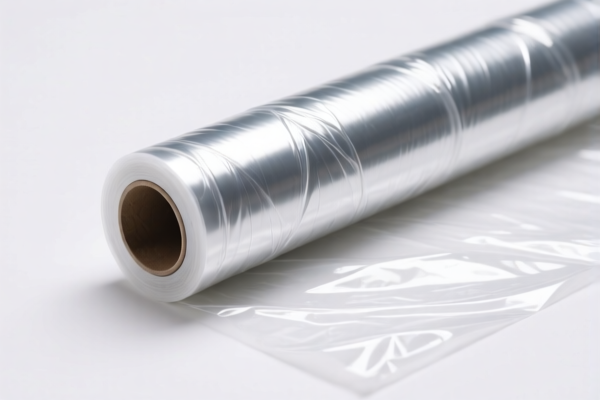


AI Analysis
🌟 Textile Composite Plastic Heat Shrink Films
🌐 HS Code Classification & Customs Clearance Guide | 2026 Updated Tariff Analysis | Expert Compliance Strategy
📌 One Product, Five Key HS Codes — Know Exactly Where It Belongs!
📦 1. Product Definition & Classification: What Is a “Textile Composite Plastic Heat Shrink Film”?
A Textile Composite Plastic Heat Shrink Film is a specialized flat material composed of:
- Man-made fibers (e.g., polyester, nylon, polypropylene) as the base textile layer;
- Plastic coating or laminated layer (e.g., PVC, PE, PP) applied for protection, durability, and heat-shrink functionality;
- Designed to shrink when heated, used in packaging, industrial wrapping, cable insulation, and protective coverings.
⚠️ Critical Distinction:
- If the plastic content exceeds 70% by weight → Higher tariff applies
- If plastic ≤ 70% → Lower or zero tariff applies
- Not covered under heading 5902 (which covers textile fabrics impregnated/coated with plastics for other purposes like conveyor belts)
🧩 2. HS Code Breakdown (2026 Official Tariff Table)
| HS Code | Product Description | Plastic Content | Key Feature | Tax Rate |
|---|---|---|---|---|
5903.90.20.00 |
Textile fabrics impregnated, coated, covered or laminated with plastics, other than those of heading 5902: Of man-made fibers: Other: Over 70% by weight of rubber or plastics | ✅ >70% plastic/rubber | Heat-shrinkable, high-plastic composite | 🔴 25.0% total tax |
5903.90.25.00 |
Textile fabrics impregnated, coated, covered or laminated with plastics, other than those of heading 5902: Of man-made fibers: Other: Other (229) | ❌ ≤70% plastic | General-purpose composite film, no special high-plastic rule | ✅ 0.0% total tax |
3919.90.50.60 |
Self-adhesive plates, sheets, film, foil, tape, strip and other flat shapes, of plastics, whether or not in rolls: Other: Other Other | N/A (plastic-only) | Not textile-based — applies only if no textile layer | ✅ 0.0% total tax |
3919.10.20.55 |
Self-adhesive plates, sheets, film, foil, tape, strip and other flat shapes, of plastics, whether or not in rolls: In rolls of a width not exceeding 20 cm: Other Other: Other | N/A | Narrow-width adhesive films — not applicable if >20cm | ✅ 0.0% total tax |
3920.99.20.00 |
Other plates, sheets, film, foil and strip, of plastics, noncellular and not reinforced, laminated, supported or similarly combined with other materials: Of other plastics: Film, strip and sheets, all the foregoing which are flexible: Other | N/A | Flexible plastic film without textile backing | ✅ 0.0% total tax |
3920.99.50.00 |
Other plates, sheets, film, foil and strip, of plastics, noncellular and not reinforced, laminated, supported or similarly combined with other materials: Of other plastics: Other: Other | N/A | General-purpose non-reinforced plastic film | ✅ 0.0% total tax |
📌 Key Insight:
- Only5903.90.20.00triggers the 25% tariff — only when plastic >70% by weight AND textile base is man-made fibers
- If your product has less than 70% plastic, or natural fibers, or no textile layer, it does NOT fall under this high-tariff code
💰 3. Detailed Tariff Analysis (2026 U.S. Trade Policy)
✅ Applicable Country: United States (US)
✅ Origin: China (CN) or Other
✅ Effective Date: 2025–2026 (current enforcement)
🎯 1. 5903.90.20.00 — High-Plastic Composite Film (Over 70% Plastic)
| Item | Detail |
|---|---|
| Base Duty | 0.0% (ad valorem) |
| Additional Tariff | +25.0% (from Section 301 U.S. Trade Act) |
| Total Effective Tariff | 25.0% |
| Tax Calculation | CIF Value × 25.0% |
| De Minimis Threshold | ❌ Not applicable (no de minimis relief) |
| Legal Basis Path | Section 301: 9903.88.01 → USITC: 5903.90.20.00 → FOOTNOTE: 9903.88.01 |
📌 Explanation:
- This code is triggered by the 70% plastic threshold — even if the film is textile-based, if plastic >70%, it's treated as "high-value plastic composite"
- The 25% additional tariff comes from U.S. Section 301 actions against China, targeting "high-tech" and "strategic" materials
- No exemption — even for small shipments or prototypes
🎯 2. 5903.90.25.00 — General Composite Film (Other than >70% plastic)
| Item | Detail |
|---|---|
| Base Duty | 0.0% |
| Additional Tariff | 0.0% |
| Total Effective Tariff | 0.0% |
| Tax Calculation | CIF Value × 0.0% |
| De Minimis Relief | ✅ Yes (if value ≤ $800, no duty) |
| Legal Basis | USITC: 5903.90.25.00 → No footnote 9903.88.01 trigger |
📌 Note:
- This is the ideal code for most textile-plastic composites
- If your product has plastic ≤70%, this is your safest, lowest-tax option
- No U.S. Section 301 penalty applies
🎯 3. Other Codes (3919, 3920) — Not Applicable (Unless Non-Textile)
| Code | Why It Doesn’t Apply |
|---|---|
3919.90.50.60 |
Only for plastic-only self-adhesive films — no textile backing |
3919.10.20.55 |
For narrow rolls ≤20cm width — not applicable if your film is wider |
3920.99.20.00 / 3920.99.50.00 |
For non-textile plastic films — if any textile layer, this is incorrect |
⚠️ Critical Warning:
- Do NOT use plastic-only codes if your product contains textile fibers — misclassification = penalty + seizure
🛠️ 4. Customs Clearance Best Practices (Real-World Tips)
✅ 1. Must-Have Documentation (No Exceptions)
| Document | Why It’s Critical |
|---|---|
| ✅ Product Specification Sheet | Must state: fiber type (man-made? natural?), plastic type (PVC? PE?), % plastic by weight |
| ✅ Material Composition Report | Lab test or supplier data proving plastic ≤70% or >70% |
| ✅ High-Resolution Product Photos | Show both sides: textile base + plastic coating |
| ✅ Commercial Invoice | Clearly label: “Textile Composite Plastic Heat Shrink Film” + HS Code |
| ✅ Certificate of Origin (CO) | Required for tariff eligibility (e.g., China vs. Vietnam) |
| ✅ FCC/CE/RoHS (if applicable) | For electronics-related applications |
| ✅ Test Report (e.g., shrink test, tensile strength) | Proves heat-shrink function — supports classification |
✅ 2.申报技巧(申报口诀)
🔥 “70%是分水岭,塑料多就25%;少于70%全免税,别乱用塑料码!”
| Scenario | Correct HS Code | Wrong Code to Avoid |
|---|---|---|
| Plastic >70% (e.g., 75%) | 5903.90.20.00 |
5903.90.25.00 → Underpaying → Penalty |
| Plastic ≤70% (e.g., 65%) | 5903.90.25.00 |
5903.90.20.00 → Overpaying → Lost profit |
| No textile layer (pure plastic film) | 3920.99.20.00 |
5903.90.25.00 → Wrong category |
| Width ≤20cm, adhesive | 3919.10.20.55 |
5903.90.25.00 → Wrong classification |
✅ 3. Special Cases & Solutions
| Case | Solution |
|---|---|
| OEM/Custom Order | Provide customer spec + material test report to prove plastic % |
| Mixed Fiber Types | Specify: “Polyester base + PE coating, 68% plastic by weight” |
| Used in Automotive/Industrial | Declare for “protective wrapping” — may qualify for duty-free under HTS 9802 (if used in U.S. manufacturing) |
| Samples or Prototypes | Still subject to 25% if >70% plastic — no exemption |
🌍 5. Global Market Comparison (2026)
| Country | Recommended HS Code | Tariff | Certification | Notes |
|---|---|---|---|---|
| 🇺🇸 United States | 5903.90.25.00 (if ≤70%) |
0% | None | 25% if >70% |
| 🇨🇳 China | 5903.90.25.00 |
5% | CCC | No 301 tariffs |
| 🇪🇺 EU | 5903.90.25.00 |
0% | CE | No additional tariffs |
| 🇦🇺 Australia | 5903.90.25.00 |
5% | RCM | No 301 |
| 🇯🇵 Japan | 5903.90.25.00 |
0% | PSE | No extra tax |
📌 Insight:
- Only the U.S. applies the 25% tariff on high-plastic textile composites
- China-origin products face the highest risk in U.S. market
- Vietnam/Mexico/Thailand origin may qualify for 301 tariff exemption — consider shifting production
🚨 6. Common Mistakes & Costly Errors
❌ Mistake 1: Declaring “plastic film” instead of “textile composite film”
👉 Result: Misclassified → 25% duty if >70% plastic → huge overpayment
❌ Mistake 2: Not proving plastic % — only saying “coated with plastic”
👉 Result: Customs assumes >70% → 25% tariff applied → refund denied
❌ Mistake 3: Using 3920.99.20.00 for a textile-based product
👉 Result: Wrong HS Code → seizure, fines, delays
❌ Mistake 4: Assuming samples are duty-free
👉 Result: Even 1kg sample subject to 25% if >70% plastic → costly surprise
✅ Correct Declaration Example:
“Textile Composite Heat Shrink Film, 100% Polyester Base, 68% PE Coating, 50cm Width, Non-Adhesive, For Industrial Wrapping, HS Code: 5903.90.25.00”
🎯 7. Final Verdict: How to Win the Tariff Game
🔹 If plastic ≤70% → Use
5903.90.25.00→ 0% tariff → Save thousands
🔹 If plastic >70% → Use5903.90.20.00→ 25% tariff → Plan for cost impact
🔹 Never use plastic-only codes for textile composites
🔹 Always prove composition — lab report is your best friend
📌 Pro Tips for Exporters & Importers
🚀 Action Step 1: Run a material composition test to confirm plastic % by weight
🚀 Action Step 2: Apply for Advance Ruling (Pre-Decision) from U.S. Customs (CBP)
🚀 Action Step 3: Consider relocating production to Vietnam/Mexico to avoid 301 tariffs
🚀 Action Step 4: Use HS Code pre-approval tools (e.g., USITC, CustomsInfo, TariffEngine)
📣 Don’t Get Caught in the Tariff Trap!
📞 Contact a certified customs broker today
📌 Submit your product photos + material report
🚀 Get your HS Code confirmed — before shipment!
✨ Precision Classification = Lower Costs, Faster Clearance, Zero Risk!
💼 Your next shipment shouldn’t pay more than it should — let’s get it right the first time!
Customer Reviews
About HS Code Classification
The Harmonized System (HS) is an internationally standardized nomenclature developed by the World Customs Organization (WCO) to classify traded products. Over 200 countries use the HS system as the basis for customs tariffs, trade statistics, and import/export regulations.
Each HS code follows a hierarchical structure:
- Chapter (2 digits) — Broad category of goods (e.g., Chapter 84: Machinery and Mechanical Appliances)
- Heading (4 digits) — More specific grouping within the chapter
- Subheading (6 digits) — Internationally standardized breakdown, used by all WCO member countries
- National subdivisions (8-10 digits) — Country-specific extensions for further classification, such as US HTSUS 10-digit codes
Correct HS code classification is essential for smooth customs clearance, accurate duty payment, and compliance with trade regulations. Misclassification can lead to customs delays, overpayment of duties, or penalties.
When importing from CN to US, the applicable tariff rates may include:
- Most-Favored-Nation (MFN) rate — The standard duty rate applied to WTO members
- General rate — Applied to countries without trade agreements
- Trade remedy duties — Additional tariffs such as Section 301 (anti-dumping), Section 232 (national security), or countervailing duties
The information provided on this page is for reference purposes only. For official classification, please consult with your local customs authority or a licensed customs broker.