Textile Composite Plastic Shading Boards
CN → US| HS Code | Tariff Rate | Origin | Destination | Doc |
|---|---|---|---|---|
| 6306120000 | 18.8% | CN | US | Official Doc |
| 3926905900 | 37.4% | CN | US | Official Doc |
| 3926909989 | 22.8% | CN | US | Official Doc |
Product Images
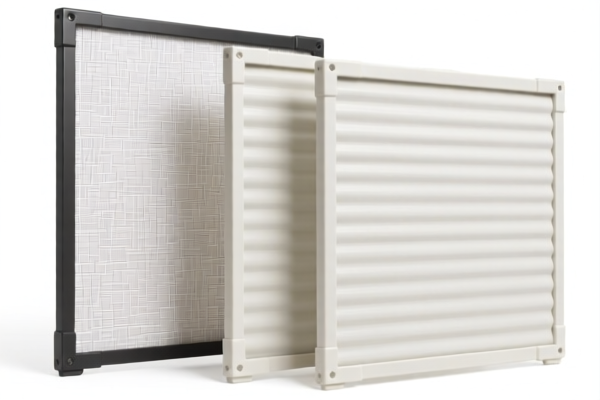
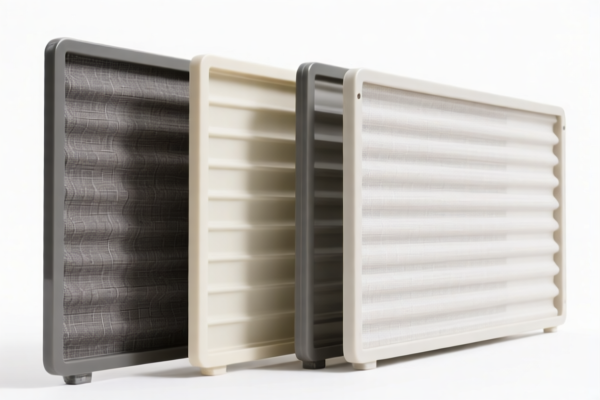
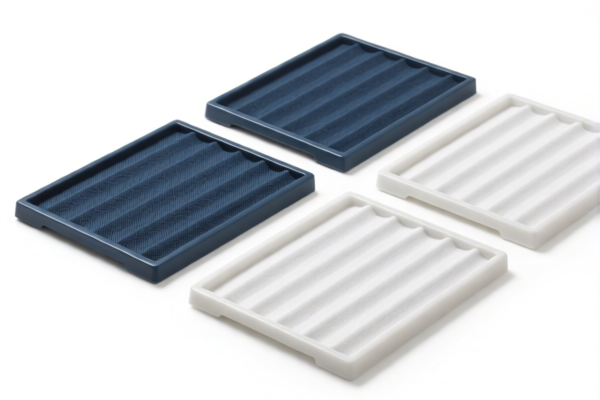
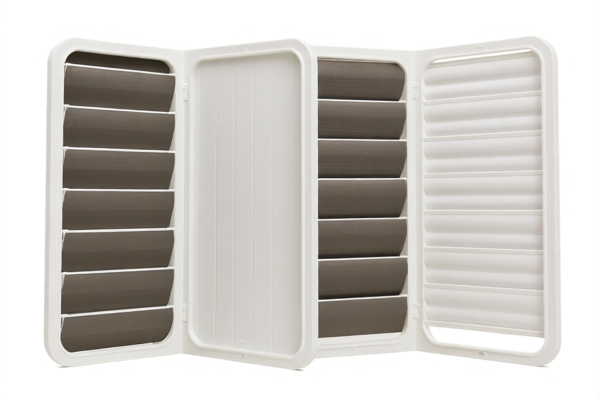
AI Analysis
🛡️ Textile Composite Plastic Shading Boards (遮阳板)
🌐 HS Code Reference & Customs Clearance Guide | 2026 Latest Tariff Analysis | Strategic Clearance Strategies
📌 I. Product Definition & Classification: What Exactly Are "Textile Composite Plastic Shading Boards"?
Textile Composite Plastic Shading Boards are multifunctional protective materials widely used in outdoor furniture, automotive interiors, architectural shading, and camping gear. They combine the durability and waterproofing of plastics with the flexibility and texture of textiles.
In international trade, the critical classification dilemma lies in determining whether the plastic component defines the character (Chapter 39) or if the shading function/material composition aligns better with textile/apparel accessories (Chapter 63).
⚠️ Key Distinction Point:
- If the product is viewed primarily as a composite good containing textile fibers and serving a shading purpose → 6306.12.00.00 (Lower Tax).
- If the product is viewed primarily as a plastic article containing textile fibers or a general plastic item → 3926.90.59.00 or 3926.90.99.89 (Higher Tax due to trade restrictions).
📦 II. HS Code Classification Details (2026 Latest Tariff Authority Comparison)
| HS Code | Product Description | Matching Logic | Total Tax Rate |
|---|---|---|---|
6306.12.00.00 |
Textile Shading Boards | Matches "Shading Board" usage + "Textile/Composite" material inference. Classified under "Other textiles made of synthetic fibers." | 18.8% |
3926.90.59.00 |
Other Plastic Articles Containing Textile Fibers | Matches "Plastic" + "Textile" features. Falls under "Other" residual category for plastic items with textile content. | 37.4% |
3926.90.99.89 |
Other Plastic Articles (Residual) | Matches "Plastic" material + "Shading Board" form. General plastic articles residual code. | 22.8% |
🔍 Critical Note:
- The 122 Clause Tariff (10%) applies to ALL three codes as a baseline additional tariff.
- The major cost difference comes from Base Tariffs and Section 301 (25%) surcharges.
- Misclassification Risk: Declaring as3926when it qualifies as6306can lead to severe underpayment penalties.
💰 III. 2026 Latest Tariff Rate Breakdown (Including Surcharges & Policy Add-ons)
✅ Applicable Country: United States (US)
✅ Origin: China (CN)
✅ Effective Time: Current Trade Policy (Post-2025 Adjustments)
🎯 1. 6306.12.00.00 —— The "Lowest Cost" Option (Textile Classification)
| Item | Content |
|---|---|
| Base Tariff | 8.8% (Ad Valorem) |
| Section 301 Surcharge | 0.0% (Exempt or Lower Tier) |
| 122 Clause Tariff | +10% |
| Total Effective Rate | 18.8% |
| Tax Calculation | CIF Value × 18.8% |
| De Minimis Eligibility | ❌ Not Eligible (Deemed High Tariff) |
| Legal Basis Path | HTSUS:6306.12.00 → 122Clause:10% |
📌 Explanation:
- This code is classified under Chapter 63 (Other Made Up Textile Articles).
- The "Shading Board" is interpreted as a textile-made accessory.
- Crucially, it does not attract the heavy 25% Section 301 tariff often applied to plastics (Chapter 39).
- Strategy: If the textile component is significant and gives the product its essential character, this is the optimal classification.
🎯 2. 3926.90.59.00 —— The "High Risk" Option (Plastic Classification)
| Item | Content |
|---|---|
| Base Tariff | 2.4% |
| Section 301 Surcharge | +25% (Heavy Penalty) |
| 122 Clause Tariff | +10% |
| Total Effective Rate | 37.4% |
| Tax Calculation | CIF Value × 37.4% |
| De Minimis Eligibility | ❌ Not Eligible |
| Legal Basis Path | HTSUS:3926.90.59 → USITC:301List → 122Clause:10% |
📌 Warning:
- Although the base tariff is low (2.4%), the 25% Section 301 tariff explodes the total cost.
- This code is often used as a "catch-all" for plastic items with textile fibers.
- Avoid this code unless the plastic component is overwhelmingly dominant and the textile is merely decorative/filler.
🎯 3. 3926.90.99.89 —— The "Middle Ground" Option (Plastic Residual)
| Item | Content |
|---|---|
| Base Tariff | 5.3% |
| Section 301 Surcharge | +7.5% (Reduced Tier) |
| 122 Clause Tariff | +10% |
| Total Effective Rate | 22.8% |
| Tax Calculation | CIF Value × 22.8% |
| De Minimis Eligibility | ❌ Not Eligible |
| Legal Basis Path | HTSUS:3926.90.99 → USITC:301List(Reduced) → 122Clause:10% |
📌 Analysis:
- This is a residual plastic code.
- It attracts a reduced 7.5% Section 301 tariff (instead of 25%), making it cheaper than3926.90.59.00.
- However, it is still more expensive than the textile classification (6306.12.00.00).
- Use only if the textile classification cannot be justified by Customs.
🛠️ IV. Customs Clearance Practical Advice (Battle-Tested Pitfall Avoidance)
✅ 1. Documentation Checklist (Non-Negotiable)
| Document | Required? | Purpose |
|---|---|---|
| ✅ Product Specification Sheet | ✔️ | Must detail material composition (e.g., "60% Polyester, 40% PVC Coating"). |
| ✅ Photos (Clear & Labeled) | ✔️ | Show texture (textile look) vs. smoothness (plastic look). Highlight seams/layers. |
| ✅ Commercial Invoice | ✔️ | Describe as "Textile Composite Shading Cover" or "Plastic-Coated Textile Shade." Avoid ambiguous "Plastic Board." |
| ✅ Bill of Lading | ✔️ | Ensure weight/volume matches declaration. |
| ✅ Material Composition Statement | ✔️ | Explicitly state which material imparts the essential character. |
✅ 2. Declaration Strategy (Key Mnemonic)
🔥 "Essential Character is King: Textile? Go 6306. Plastic? Watch out for 301!"
| Scenario | Recommended HS Code | Why? |
|---|---|---|
| Textile dominates (e.g., fabric base with thin plastic coating) | 6306.12.00.00 |
Lowest Tax (18.8%). Justify "Textile Essential Character." |
| Plastic dominates (e.g., thick PVC sheet with printed textile pattern) | 3926.90.99.89 |
Medium Tax (22.8%). Acceptable if textile is minor. |
| Ambiguous/Mixed (Risk of Audit) | Pre-Ruling Recommended | Do not guess. File an Advance Ruling to lock in the classification. |
| Misclassified as Pure Plastic | 3926.90.59.00 |
AVOID (37.4%). High risk of penalty if challenged. |
✅ 3. Special Handling for "Composite" Goods
| Situation | Recommendation |
|---|---|
| Layered Structure | Provide cross-section photos. If textile is the outer layer/visible side, argue for 6306. |
| Functionality | If the product is sold as "Shade Cloth" or "Sun Protection Cover," emphasize the textile/apparel accessory nature. |
| Packaging | If sold as part of an outdoor furniture set, ensure the invoice highlights the shading/textile aspect, not just the plastic frame. |
🌍 V. Global Market Clearance Comparison (2026 Latest)
| Country/Region | Recommended HS Code | Total Tax Rate | Certification | Notes |
|---|---|---|---|---|
| 🇺🇸 USA | 6306.12.00.00 |
18.8% | None specific | Best option. Avoid 3926 codes due to Section 301. |
| 🇨🇳 China | 6306.12.00.00 |
~5-8% | N/A | Import duty lower, but VAT applies. |
| 🇪🇺 EU | 6306.12.00 |
0-4% | CE (if applicable) | EU prefers textile classification for shading fabrics. |
| 🇦🇺 Australia | 6306.12.00 |
5% | N/A | Similar to US, but no Section 301. |
| 🇯🇵 Japan | 6306.12.00 |
8.3% | N/A | Textile classification is standard. |
📌 Conclusion:
- The USA is the most critical market for classification due to the Section 301 tariffs on plastics.
-6306.12.00.00is the strategic winner for US exports from China, saving ~14-18% in total duties compared to plastic codes.
📌 VI. Common Mistakes & Pitfalls (Blood Lessons)
❌ Mistake 1: Declaring "Plastic Shading Board" when it's clearly textile-based.
👉 Consequence: Customs reclassifies to 3926 → 37.4% tax → Back taxes + Penalties.
❌ Mistake 2: Ignoring the "122 Clause" (10%).
👉 Consequence: Even the "cheap" code (6306) has a 10% add-on. If you miss this, you underpay by 10%.
❌ Mistake 3: Using "Plastic" in the description for 6306 goods.
👉 Consequence: Raises red flags for customs officers.
✅ Fix: Use terms like "Polyester-coated fabric," "Textile shade cover," or "Composite textile panel."
✅ Correct Declaration Example:
"Textile Composite Shading Board, 100% Polyester with PVC Coating, for Outdoor Furniture Use, Model XYZ."
🎯 VII. Conclusion: Precise Classification, Maximize Profit!
🎯 Remember the Mnemonic:
🔹 "Textile Character? Go 6306 (18.8%). Plastic Character? Beware 3926 (22.8%-37.4%)."
🔹 "Section 301 is the enemy of Plastic. Use Textile to Save."
📌 Pro Tip:
If your product is 50/50 textile/plastic, file for an Advance Ruling (CBP Ruling) with photos and material specs. Lock in the 6306 classification before shipping to avoid detention and audits.
📣 Immediate Action:
📞 Contact your customs broker + Provide cross-section photos + Justify "Textile Essential Character."
🚀 Minimize duty costs, ensure smooth clearance, and boost margins!
✨ Professional clearance starts with precise classification!
💼 Your bottom line depends on the HS Code you choose!
Customer Reviews
About HS Code Classification
The Harmonized System (HS) is an internationally standardized nomenclature developed by the World Customs Organization (WCO) to classify traded products. Over 200 countries use the HS system as the basis for customs tariffs, trade statistics, and import/export regulations.
Each HS code follows a hierarchical structure:
- Chapter (2 digits) — Broad category of goods (e.g., Chapter 84: Machinery and Mechanical Appliances)
- Heading (4 digits) — More specific grouping within the chapter
- Subheading (6 digits) — Internationally standardized breakdown, used by all WCO member countries
- National subdivisions (8-10 digits) — Country-specific extensions for further classification, such as US HTSUS 10-digit codes
Correct HS code classification is essential for smooth customs clearance, accurate duty payment, and compliance with trade regulations. Misclassification can lead to customs delays, overpayment of duties, or penalties.
When importing from CN to US, the applicable tariff rates may include:
- Most-Favored-Nation (MFN) rate — The standard duty rate applied to WTO members
- General rate — Applied to countries without trade agreements
- Trade remedy duties — Additional tariffs such as Section 301 (anti-dumping), Section 232 (national security), or countervailing duties
The information provided on this page is for reference purposes only. For official classification, please consult with your local customs authority or a licensed customs broker.