Textile Composite Plastic Sheets for Industrial Use
CN → US| HS Code | Tariff Rate | Origin | Destination | Doc |
|---|---|---|---|---|
| 6815130000 | 35.0% | CN | US | Official Doc |
| 6815994110 | 35.0% | CN | US | Official Doc |
| 3921902510 | 41.5% | CN | US | Official Doc |
| 3921902550 | 41.5% | CN | US | Official Doc |
Product Images
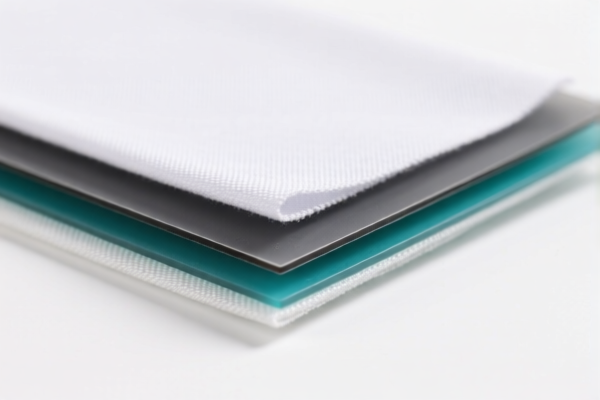
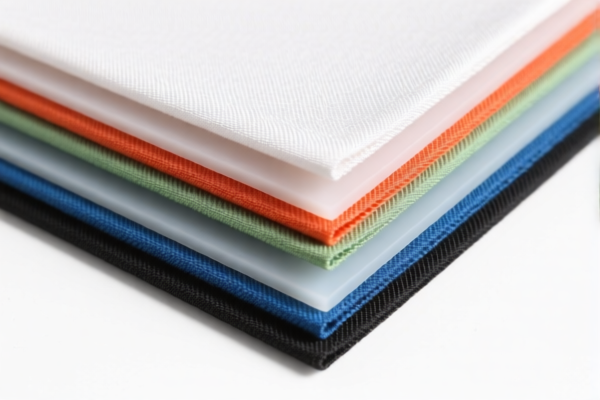
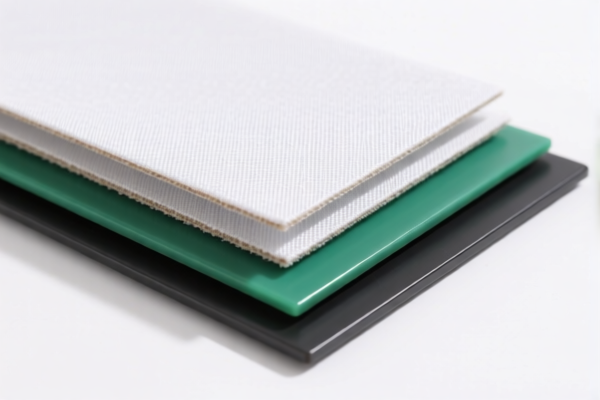
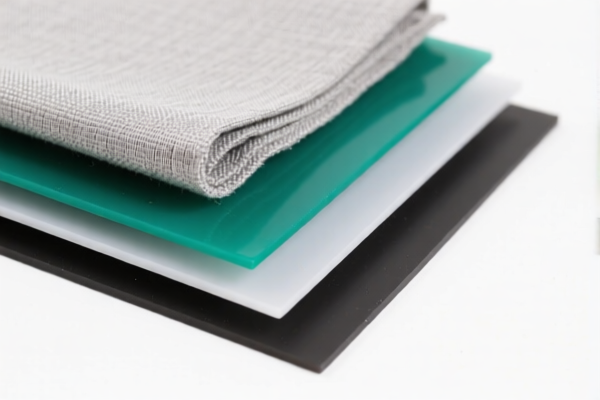
AI Analysis
🧱 Industrial Textile Composite Plastic Sheets & Carbon Fiber Articles
🌐 HS Code Reference & Customs Clearance Guide | 2026 Latest Tariff Analysis | Professional通关 Strategy
📌 I. Product Definition & Classification: Are You Categorizing Correctly?
"Textile Composite Plastic Sheets" and "Carbon Fiber Articles" represent two distinct categories in international trade, often confused due to their advanced material properties. However, their regulatory treatment differs significantly based on composition, weight, and end-use.
- Plastic-Textile Composites: These are hybrid materials where plastic (resin/film) is combined with textile materials. The critical classification factor is areal weight (>1.492 kg/m²) and fiber dominance.
- Carbon Fiber Articles: Non-electrical components made from carbon fibers or graphite. These are high-value, high-tariff items subject to specific trade remedies.
⚠️ Critical Distinction:
- If the product is a plastic sheet reinforced with fabric weighing >1.492 kg/m², it falls under Chapter 39 (Plastics).
- If the product is a structural component made of carbon fibers for non-electrical use, it falls under Chapter 68 (Articles of Stone/Mineral Substances).
📦 II. HS Code Classification Matrix (2026 Latest Tariff Authoritative Mapping)
| HS Code | Product Description | Applicable Scenario | Key Classification Criteria |
|---|---|---|---|
3921.90.25.10 |
Other plates, sheets, film, foil, and strip of plastics: Combined with textile materials, weighing >1.492 kg/m². Products with textile components where man-made fibers predominate by weight (>70% of plastics content is man-made fiber). | Heavy-duty industrial liners, composite panels for construction, reinforced packaging. | ✅ Man-made fibers >70% of textile weight; Areal weight >1.492 kg/m² |
3921.90.25.50 |
Other plates, sheets, film, foil, and strip of plastics: Combined with textile materials, weighing >1.492 kg/m². Products with textile components where other fibers predominate (e.g., natural fibers like cotton/wool) or mixed blends not fitting the >70% man-made rule. | Heavy fabric-reinforced plastic sheets, industrial mats, composite boards using natural fiber blends. | ✅ Other textile predominance; Areal weight >1.492 kg/m² |
6815.13.00.00 |
Articles of stone or other mineral substances: Carbon fibers; articles of carbon fibers for non-electrical uses; other articles of graphite or other carbon for non-electrical uses. Other articles of carbon fibers. | Structural parts, automotive components, sports equipment bodies, industrial casings (non-conductive). | ✅ Made of carbon fiber; Non-electrical application |
6815.99.41.10 |
Articles of stone or other mineral substances: Other articles. Other: Containing by weight >70% magnesia (MgO), with carbon content from trace amounts to <30%, and chemically bonded by resin or pitch. | Refractory bricks, kiln linings, high-temperature insulation plates. | ✅ >70% MgO; Chemical bond (resin/pitch); Non-electrical |
🔍 Key Reminder:
- Plastic-Textile Composites must strictly adhere to the 1.492 kg/m² threshold. If weight is lower, they fall under different subheadings (not listed in this dataset).
- Carbon Fiber items must be explicitly non-electrical. Electrical carbon articles may fall under Chapter 85.
- Magnesia-Carbon Refractories require precise chemical analysis (MgO >70%, C <30%) to qualify for6815.99.41.10.
💰 III. 2026 Latest Tariff Rate Breakdown (Including Additional Duties)
✅ Applicable Country: United States (US)
✅ Origin: China (CN)
✅ Effective Time: Current Trade Policy (Includes Section 301 & IEEPA measures)
🎯 1. 3921.90.25.10 & 3921.90.25.50 —— Plastic-Textile Composite Sheets (>1.492 kg/m²)
| Item | Content |
|---|---|
| Base Duty Rate | 0.0% (ad valorem) |
| USITC Additional Duty | 0.0% |
| IEEPA Additional Duty | 0.0% |
| Total Tax Rate | 0.0% |
| Tax Calculation | CIF Value × 0% = $0 |
| De Minimis Exemption Eligible? | ✅ Yes (Usually, unless other restrictions apply) |
| Legal Basis Path | USITC:3921.90.25.10 / 3921.90.25.50 → No Section 301 or IEEPA footnote applies to these specific subheadings in this dataset. |
📌 Interpretation:
- These composite plastic sheets enjoy zero tariff entry.
- This is a low-risk, high-opportunity category for importers, provided the weight and fiber composition criteria are met.
- No additional penalties apply under current USITC/IEEPA frameworks for these specific codes.
🎯 2. 6815.13.00.00 —— Carbon Fiber Articles (Non-Electrical)
| Item | Content |
|---|---|
| Base Duty Rate | 0.0% |
| USITC Additional Duty | +25.0% |
| IEEPA Additional Duty | 0.0% (Note: Dataset shows total 25%, implying only USITC 301 applies here) |
| Total Tax Rate | 25.0% |
| Tax Calculation | CIF Value × 25% |
| De Minimis Exemption Eligible? | ❌ No (High-value items typically excluded from de minimis) |
| Legal Basis Path | USITC:6815.13.00.00 → FOOTNOTE:301 (Section 301 Tariffs) |
📌 Warning:
- Carbon fiber articles are subject to a 25% surcharge under US Trade Law Section 301.
- This is a significant cost driver. Importers must budget for this 25% tax on top of shipping and handling.
- Misclassification as "plastic sheets" to avoid this duty can lead to severe penalties.
🎯 3. 6815.99.41.10 —— Magnesia-Carbon Refractory Articles
| Item | Content |
|---|---|
| Base Duty Rate | 0.0% |
| USITC Additional Duty | +25.0% |
| IEEPA Additional Duty | 0.0% |
| Total Tax Rate | 25.0% |
| Tax Calculation | CIF Value × 25% |
| De Minimis Exemption Eligible? | ❌ No |
| Legal Basis Path | USITC:6815.99.41.10 → FOOTNOTE:301 |
📌 Warning:
- Similar to carbon fiber, these refractory materials incur a 25% tariff.
- Strict chemical composition proof (>70% MgO, <30% Carbon, Resin/Pitch bond) is required to support this classification.
🛠️ IV. Customs Clearance Practical Advice (Avoiding Pitfalls)
✅ 1. Documentation Checklist (Mandatory)
| Document | Required? | Explanation |
|---|---|---|
| ✅ Technical Data Sheet | ✔️ | Must specify areal weight (kg/m²) for plastic composites. |
| ✅ Fiber Composition Analysis | ✔️ | For 3921.90.25.10/50, proof that man-made fibers >70% (or other) is critical. |
| ✅ Certificate of Analysis (COA) | ✔️ | For 6815.99.41.10, lab report proving >70% MgO and carbon content <30%. |
| ✅ Product Photos | ✔️ | Clear images showing texture, thickness, and any labeling. |
| ✅ Commercial Invoice | ✔️ | Detailed description matching HS Code text exactly. |
| ✅ Bill of Lading/Air Waybill | ✔️ | Standard shipping docs. |
| ✅ End-Use Declaration | ✔️ | For carbon fibers (6815.13.00.00), confirm non-electrical use. |
✅ 2. Classification Tips (Key Mnemonics)
🔥 "Weight Matters for Plastics, Chemistry Rules for Carbon!"
| Scenario | Correct HS Code | Risk if Misclassified |
|---|---|---|
| Plastic sheet + Fabric, Heavy (>1.492 kg/m²), Man-made fibers | 3921.90.25.10 |
0% Tax |
| Plastic sheet + Fabric, Heavy (>1.492 kg/m²), Natural/Mixed fibers | 3921.90.25.50 |
0% Tax |
| Carbon Fiber Part (e.g., Bike Frame, Drone Body) | 6815.13.00.00 |
25% Tax |
| Refractory Brick (>70% MgO) | 6815.99.41.10 |
25% Tax |
✅ 3. Special Case Handling
| Situation | Handling Suggestion |
|---|---|
| OEM Plastic Composites | Provide material safety data sheets (MSDS) and layer breakdown diagrams to prove >1.492 kg/m². |
| Carbon Fiber Electrical Components | DO NOT use 6815.13.00.00. These likely fall under Chapter 85 (Electrical Machinery) and may have different tariffs. Ensure strict "Non-Electrical" declaration for 6815.13.00.00. |
| Magnesia-Carbon Bricks | Include a lab test report from an accredited third party showing MgO and Carbon percentages. Customs may request this for verification. |
| Mixed Shipments | Clearly separate plastic composites and carbon fiber items on the invoice. Do not bundle different HS Codes to simplify, as it increases scrutiny. |
🌍 V. Global Market Comparison (2026 Latest)
| Country/Region | Recommended HS Code | Tariff Rate | Certification/Remarks |
|---|---|---|---|
| 🇺🇸 USA | 3921.90.25.10 / 3921.90.25.50 |
0% | No additional duties. Easy clearance. |
| 🇺🇸 USA | 6815.13.00.00 / 6815.99.41.10 |
25% | Section 301 Tariff. High cost. |
| 🇨🇳 China | Same HS Codes | Varies | Check CBTA for import duties. Usually low for plastics, moderate for refractories. |
| 🇪🇺 EU | Varies | Varies | EU uses TARIC. Carbon fiber may face anti-dumping duties. Check local TARIC code. |
| 🇬🇧 UK | Varies | Varies | Post-Brexit UK Global Tariff applies. Similar to EU but check specific GB codes. |
📌 Conclusion:
- USA offers 0% duty for heavy plastic-textile composites, making them highly competitive.
- Carbon and Magnesia-Carbon items face a flat 25% duty in the USA, which must be factored into pricing strategies.
- Chemical and physical proof is the key to avoiding disputes for both categories.
📌 VI. Common Mistakes & Pitfalls (Blood & Tears Lessons)
❌ Mistake 1: Claiming a 1.0 kg/m² plastic sheet is "Heavy Composite" to qualify for 3921.90.25.10.
👉 Consequence: Customs rejects classification, reassessing under a higher-duty general plastic code. Penalty + Back Taxes!
❌ Mistake 2: Declaring "Carbon Fiber Parts" as "Plastic Sheets" to avoid 25% duty.
👉 Consequence: Customs lab test confirms carbon content. Fraud accusation, seizure, and fines.
❌ Mistake 3: Ignoring the "Non-Electrical" requirement for 6815.13.00.00.
👉 Consequence: If the carbon part is used in an electrical application (e.g., electrode), it may be misclassified. Rejection of entry.
❌ Mistake 4: Forgetting to provide MgO analysis for refractory bricks.
👉 Consequence: Customs delays clearance for verification, leading to demurrage charges.
✅ Correct Practice:
"Heavy-Duty Textile-Reinforced Plastic Sheet, Areal Weight 1.6 kg/m², 80% Polyester, 20% PVC, Industrial Lining Application"
"Non-Conductive Carbon Fiber Structural Bracket, For Automotive Body Panel, Not for Electrical Use"
🎯 VII. Conclusion: Precise Classification Saves Millions!
🎯 Remember the Mnemonic:
🔹 "Heavy Plastic >1.5kg? Zero Tax!"
🔹 "Carbon & Magnesia? Prepare 25%!"
🔹 "Proof is King: Lab Reports & Weight Tests!"
📌 Pro Tip:
For plastic composites, always verify the areal weight and fiber composition before shipment.
For carbon/magnesia articles, ensure the end-use is clearly non-electrical and chemical specs are documented.
Consider applying for a Binding Tariff Information (BTI) or US CBP Advance Ruling if volumes are high, to lock in the 0% or 25% rate legally.
📣 Immediate Action:
📞 Consult with a certified customs broker.
📄 Prepare technical data sheets and lab reports.
🚀 Ensure your commercial invoice matches the HS Code description word-for-word.
✨ Professional Clearance Starts with Accurate Classification!
💼 Your Profit Margin Depends on Your HS Code!
Customer Reviews
About HS Code Classification
The Harmonized System (HS) is an internationally standardized nomenclature developed by the World Customs Organization (WCO) to classify traded products. Over 200 countries use the HS system as the basis for customs tariffs, trade statistics, and import/export regulations.
Each HS code follows a hierarchical structure:
- Chapter (2 digits) — Broad category of goods (e.g., Chapter 84: Machinery and Mechanical Appliances)
- Heading (4 digits) — More specific grouping within the chapter
- Subheading (6 digits) — Internationally standardized breakdown, used by all WCO member countries
- National subdivisions (8-10 digits) — Country-specific extensions for further classification, such as US HTSUS 10-digit codes
Correct HS code classification is essential for smooth customs clearance, accurate duty payment, and compliance with trade regulations. Misclassification can lead to customs delays, overpayment of duties, or penalties.
When importing from CN to US, the applicable tariff rates may include:
- Most-Favored-Nation (MFN) rate — The standard duty rate applied to WTO members
- General rate — Applied to countries without trade agreements
- Trade remedy duties — Additional tariffs such as Section 301 (anti-dumping), Section 232 (national security), or countervailing duties
The information provided on this page is for reference purposes only. For official classification, please consult with your local customs authority or a licensed customs broker.