Textile Composite Plastic Strips for Luggage
CN → US| HS Code | Tariff Rate | Origin | Destination | Doc |
|---|---|---|---|---|
| 6307909891 | 24.5% | CN | US | Official Doc |
| 5903102010 | 35.0% | CN | US | Official Doc |
| 5903102090 | 35.0% | CN | US | Official Doc |
| 6307909875 | 24.5% | CN | US | Official Doc |
Product Images

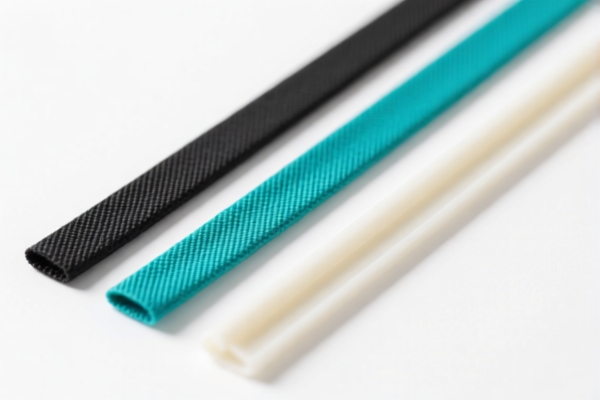
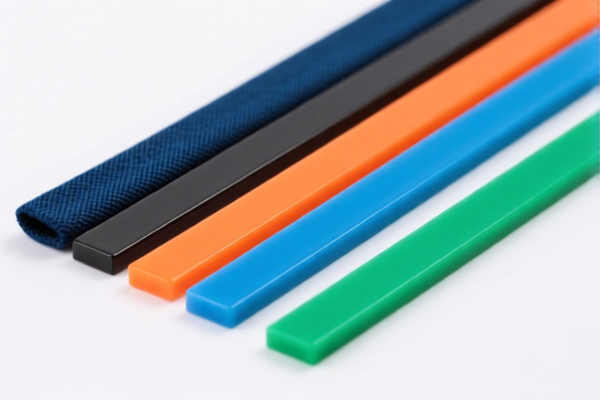
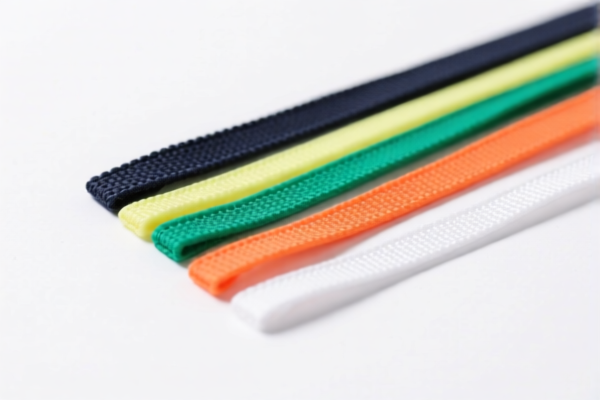
AI Analysis
🧳 Textile Composite Plastic Strips for Luggage
🌐 HS Code Reference & Customs Clearance Guide | 2026 Latest Tariff Analysis | Professional Compliance Strategy
📌 I. Product Definition & Classification: What Are "Textile Composite Plastic Strips"?
Textile composite plastic strips (often referred to as PVC-coated webbing, laminated tape, or composite straps) are essential accessories for luggage manufacturing. They combine the tensile strength of textile fabric (nylon/polyester) with the durability and weather resistance of plastic (PVC/PU/PE).
In international trade, their classification hinges on how the materials are combined: * Impregnated/Coated Fabric: If the plastic is impregnated, coated, or covered with textile fabric → Classified under Chapter 59. * Finished Articles: If they are specifically shaped or finished for a specific use (like luggage straps) without being "fabric" per se → Classified under Chapter 63.
⚠️ Key Distinction Point:
- If the item is viewed as a "Textile Material" modified by plastic → HS 5903
- If the item is viewed as a "Other Made-up Article" (finished accessory) → HS 6307
📦 II. HS Code Classification Details (2026 Latest Tariff Authority对照)
Based on the provided data, here are the precise classifications for Textile Composite Plastic Strips for Luggage:
| HS Code | Product Description | Application Context | Material Form |
|---|---|---|---|
6307.90.98.91 |
Other made-up articles, other than clothing accessories; Plastic composite textile strips for luggage | Luggage accessories, general made-up articles | Plastic-based composite |
5903.10.20.10 |
Textile fabrics impregnated, coated, covered or laminated with PVC; Plastic composite textile strips for luggage | Viewed as coated textile fabric | PVC-coated/Laminated |
5903.10.20.90 |
Other textile fabrics impregnated, coated, covered or laminated with plastics; Plastic composite textile strips for luggage | General plastic-coated textile, unspecified plastic type | Plastic-coated/Laminated |
6307.90.98.75 |
Other made-up articles, other than clothing accessories; Plastic composite textile strips for luggage (specifically for luggage) | Specific luggage accessory use | Luggage-specific accessory |
🔍 Critical Note:
- The classification into Chapter 59 vs. Chapter 63 is the most critical decision.
- Chapter 59 items (5903...) are taxed at a higher total rate (35.0%).
- Chapter 63 items (6307...) are taxed at a lower total rate (24.5%).
- Misclassification between these two can lead to significant duty discrepancies and customs delays.
💰 III. 2026 Latest Tariff Rate Breakdown (Including Additional Duties & Policy Surcharges)
✅ Applicable Country: USA (US)
✅ Origin: China (CN)
✅ Effective Date: 2025 onwards (including subsequent imports)
🎯 1. 6307.90.98.91 & 6307.90.98.75 —— Other Made-up Articles (Lower Tax Bracket)
| Item | Detail |
|---|---|
| Basic Duty | 7.0% |
| Section 301 Additional Duty | 7.5% |
| Section 122 Tariff | 10.0% |
| Total Tariff Rate | 24.5% |
| Calculation Method | CIF Value × 24.5% |
| De Minimis Exemption | ❌ Not Applicable (Standard trade, not Section 321) |
| Legal Basis Path | USITC:6307.90.98.91 → Section 301: 7.5% → Section 122: 10% |
📌 Explanation:
- These codes fall under "Other Made-up Articles."
- The Section 122 Tariff (often related to specific agricultural or textile safeguards) adds 10%.
- Total 24.5% is moderate but still significant for high-volume luggage components.
🎯 2. 5903.10.20.10 & 5903.10.20.90 —— Impregnated/Coated Textile Fabrics (Higher Tax Bracket)
| Item | Detail |
|---|---|
| Basic Duty | 0.0% |
| Section 301 Additional Duty | 25.0% |
| Section 122 Tariff | 10.0% |
| Total Tariff Rate | 35.0% |
| Calculation Method | CIF Value × 35.0% |
| De Minimis Exemption | ❌ Not Applicable |
| Legal Basis Path | USITC:5903.10.20.10 → Section 301: 25.0% → Section 122: 10% |
📌 Important:
- Although the Basic Duty is 0%, the Section 301 Additional Duty is 25% (higher than the 7.5% in Chapter 63).
- Total 35.0% is 10.5% higher than the Chapter 63 classification.
- This makes correct classification crucial for cost optimization.
🛠️ IV. Customs Clearance Practical Advice (Real-World Pitfall Avoidance)
✅ 1. Documentation Checklist (Essential)
| Document | Required | Notes |
|---|---|---|
| ✅ Product Specification Sheet | ✔️ | Clearly state: Base fabric type, Plastic type (PVC/PU), Coating weight (g/m²). |
| ✅ Composition Analysis | ✔️ | Must clarify if it's "fabric coated with plastic" (Ch 59) or "finished strap" (Ch 63). |
| ✅ Product Photos | ✔️ | Show cross-section if possible, to demonstrate coating/lamination. |
| ✅ Commercial Invoice | ✔️ | Describe as "Luggage Straps" or "Coated Webbing" consistently with HS code. |
| ✅ Packing List | ✔️ | Ensure quantities match invoice. |
| ✅ Origin Certificate | ✔️ | For US-China trade, origin is critical for Section 301/122 application. |
✅ 2. Classification Strategy (Key Tips)
🔥 “Know Your Form: Coated Fabric vs. Finished Strap!”
| Scenario | Recommended HS Code | Reason |
|---|---|---|
| Bulk Rolls of Coated Webbing | 5903.10.20.10 or 5903.10.20.90 |
If sold as raw material (rolls) for cutting, it’s "fabric." |
| Pre-cut/Pre-sewn Luggage Straps | 6307.90.98.91 or 6307.90.98.75 |
If sold as finished accessories (buckled, cut to size), it’s "made-up article." |
| Customized Luggage Accessories | 6307.90.98.75 |
Specifically designed for luggage, supports the "luggage accessory" argument. |
📌 Strategic Recommendation:
- If you can argue the product is a finished accessory (e.g., has buckles, specific shapes, ready for assembly), classify under6307.90.98.75or6307.90.98.91to save 10.5% in duties.
- If the product is plain coated fabric in rolls, you may be forced into5903.10.20.10/90(35% duty).
✅ 3. Special Cases & Handling
| Situation | Handling Advice |
|---|---|
| Mixed Materials | If the plastic coating is very thin (<5% by weight), still likely Ch 59. If thick/laminated, Ch 59. |
| OEM Customization | Provide design drawings showing "finished product" status to support Ch 63 classification. |
| Section 122 Applicable? | Yes, for both Ch 59 and Ch 63 in this dataset. Ensure no exemptions apply. |
| De Minimis (Section 321) | ❌ Not Eligible. Luggage components from China are subject to full duty. |
🌍 V. Global Market Comparison (2026 Outlook)
| Market | Recommended HS Code | Est. Duty | Notes |
|---|---|---|---|
| 🇺🇸 USA | 6307.90.98.75 |
24.5% | Best Option if classified as made-up article. |
| 🇪🇺 EU | 5903.10.20 |
~6.5% | No Section 301/122 equivalent; lower base duty. |
| 🇨🇳 China | 5903.10.20 |
0-10% | Depends on specific import policy. |
| 🇬🇧 UK | 5903.10.20 |
~6.5% | Post-Brexit tariffs generally mirror EU for textiles. |
📌 Conclusion:
- The US market is the most critical due to high additional tariffs (301 + 122).
- Classification as "Made-up Article" (Ch 63) is strongly recommended if the product is finished, to avoid the 25% Section 301 duty on coated fabrics.
📌 VI. Common Mistakes & Pitfalls (Lessons Learned)
❌ Mistake 1: Classifying finished luggage straps as "Coated Fabric" (5903...)
👉 Result: You pay 35% instead of 24.5%. Overpaying 10.5% unnecessarily.
❌ Mistake 2: Claiming De Minimis for commercial shipments
👉 Result: Goods detained, fines, and forced payment of 24.5-35% duty.
❌ Mistake 3: Ambiguous product description ("Plastic Tape")
👉 Result: Customs may reclassify to the higher duty bracket due to uncertainty.
✅ Correct Practice:
“Finished Luggage Straps, Polyester Base, PVC Coated, with Metal Buckles, HS 6307.90.98.75”
🎯 VII. Conclusion: Optimize Classification, Maximize Profit
🎯 Key Takeaway:
🔹 “Finished Product = Chapter 63 (24.5%)”
🔹 “Raw Coated Fabric = Chapter 59 (35.0%)”
🔹 Difference = 10.5% Duty Savings!
📌 Action Plan:
1. Audit Your Product Form: Is it a roll of fabric or a finished strap?
2. Document the "Finished" State: Include photos of buckles, cut sizes, and end-use.
3. Pre-Apply for Ruling: If unsure, file an Advance Ruling with US Customs to lock in the lower 24.5% rate.
4. Clear Communication: Ensure your supplier and broker use the same HS Code and description.
📣 Immediate Action:
📞 Consult with a licensed customs broker
📄 Prepare product specifications highlighting "finished accessory" features
🚀 Secure the 24.5% Rate and Keep Your Margins Healthy!
✨ Precise Classification is Your Best Cost-Saving Tool!
💼 Don’t let a 10.5% difference erase your profit!
Customer Reviews
About HS Code Classification
The Harmonized System (HS) is an internationally standardized nomenclature developed by the World Customs Organization (WCO) to classify traded products. Over 200 countries use the HS system as the basis for customs tariffs, trade statistics, and import/export regulations.
Each HS code follows a hierarchical structure:
- Chapter (2 digits) — Broad category of goods (e.g., Chapter 84: Machinery and Mechanical Appliances)
- Heading (4 digits) — More specific grouping within the chapter
- Subheading (6 digits) — Internationally standardized breakdown, used by all WCO member countries
- National subdivisions (8-10 digits) — Country-specific extensions for further classification, such as US HTSUS 10-digit codes
Correct HS code classification is essential for smooth customs clearance, accurate duty payment, and compliance with trade regulations. Misclassification can lead to customs delays, overpayment of duties, or penalties.
When importing from CN to US, the applicable tariff rates may include:
- Most-Favored-Nation (MFN) rate — The standard duty rate applied to WTO members
- General rate — Applied to countries without trade agreements
- Trade remedy duties — Additional tariffs such as Section 301 (anti-dumping), Section 232 (national security), or countervailing duties
The information provided on this page is for reference purposes only. For official classification, please consult with your local customs authority or a licensed customs broker.