Textile Composite Plastic Tape for Packaging
CN → US| HS Code | Tariff Rate | Origin | Destination | Doc |
|---|---|---|---|---|
| 5911900080 | 38.8% | CN | US | Official Doc |
| 5911900040 | 38.8% | CN | US | Official Doc |
| 3921901100 | 39.2% | CN | US | Official Doc |
| 3921902510 | 41.5% | CN | US | Official Doc |
| 3926905900 | 37.4% | CN | US | Official Doc |
| 3926905700 | 41.5% | CN | US | Official Doc |
Product Images
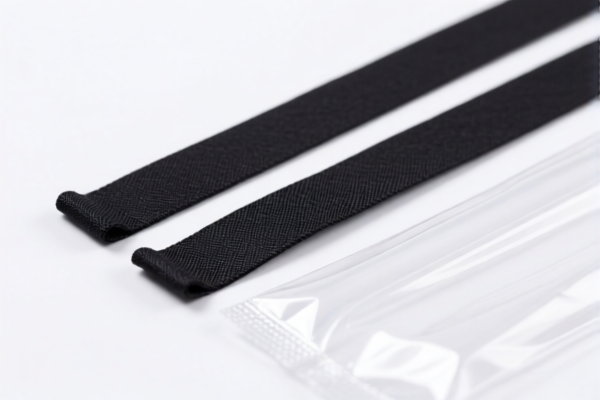
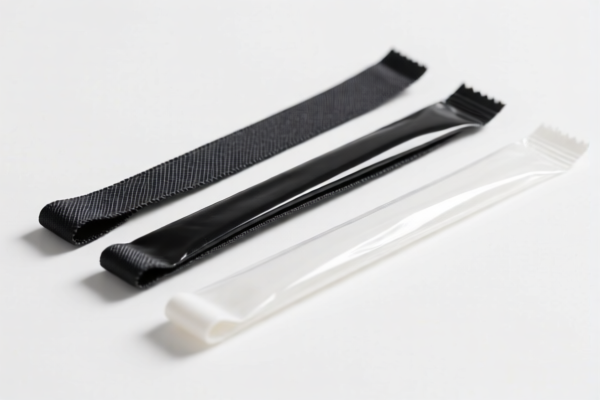
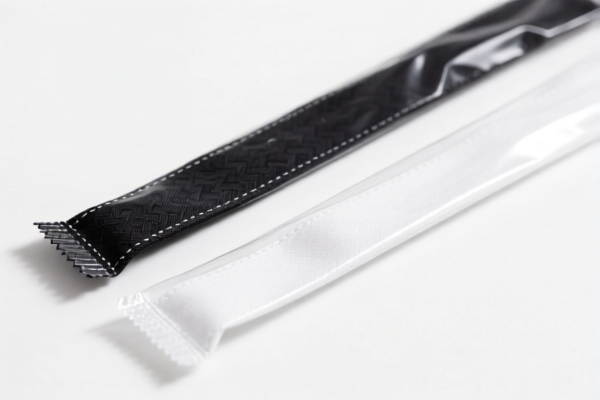
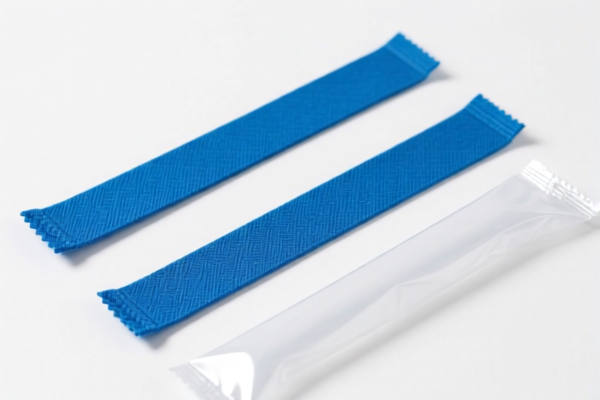
AI Analysis
📦 Textile Composite Plastic Tape for Packaging (Packaging Tape)
🌐 HS Code Reference & Customs Clearance Guide | 2026 Latest Tariff Analysis | Professional Classification Strategy
📌 I. Product Definition & Classification: What Exactly Is "Textile Composite Plastic Tape"?
Textile Composite Plastic Tape for Packaging is a versatile packaging material that combines the tensile strength of textiles with the sealing and moisture resistance of plastics. In international trade, its classification depends heavily on how the plastic and textile are combined (impregnated, coated, covered, or laminated) and the specific type of textile material used.
Key Distinction: * Section 59 (Impregnated/Coated Textiles): If the plastic is applied as a layer, coating, or impregnation onto the textile fabric (creating a composite structure), it typically falls under Chapter 59. * Section 63 (Made-up Articles): If it is considered a finished "made-up" article specifically designed for packaging (like a bag or heavy-duty sack material often classified under 6305), it may fall under Chapter 63.
⚠️ Critical Classification Point:
- If the tape is primarily a plastic-fabric composite (plastic layered on fabric) → 5903.10
- If it is a made-up packaging article (often heavy-duty sacks or specific packaging forms) → 6305.33 / 6305.39
- Note: The provided data indicates four distinct HS codes based on these nuanced definitions.
📦 II. HS Code Classification Details (2026 Latest Tariff Authority Comparison)
Based on the provided data, here are the four relevant HS Codes for "Textile Composite Plastic Tape for Packaging":
| HS Code | Product Description | Application Scenario | Classification Logic |
|---|---|---|---|
5903.10.20.90 |
Plastic-impregnated/coated/laminated textile materials (Other) | Industrial composite tapes, heavy-duty packaging tapes where plastic is the primary functional layer on textile | ✅ Matches "Impregnated/Coated/Laminated" |
5903.10.20.10 |
Plastic-impregnated/coated/laminated textile materials (Other) | Specific variant of composite tape, often distinguished by finer technical specifications or specific "other" categorization within Ch 59 | ✅ Matches "Impregnated/Coated/Laminated" |
6305.33.00.80 |
Made-up sacks and bags, of man-made textile materials | Packaging materials made from synthetic textiles (e.g., woven polypropylene with plastic coating), classified as "packaging goods" | ✅ Matches "Man-made textile material for packaging" |
6305.39.00.00 |
Other made-up sacks and bags, of textile materials | Broad category for packaging sacks/bags of textile origin not specified elsewhere, often includes composite plastic-textile packaging forms | ✅ Matches "Packaging goods" |
🔍 Key Insight:
- Ch 59 (5903.10): Focuses on the material structure (plastic + textile composite).
- Ch 63 (6305): Focuses on the function/form (packaging sacks/bags made of textile).
- Risk: Misclassifying a Ch 63 product as Ch 59 (or vice versa) can lead to significant tariff differences due to different "Additional Duties" structures.
💰 III. 2026 Latest Tariff Rate Breakdown (Including Surcharges & Policy Add-ons)
✅ Applicable Country: USA (US)
✅ Origin: China (CN)
✅ Effective Date: 2025/2026 (Current Data)
🎯 1. 5903.10.20.90 & 5903.10.20.10 —— Plastic-Textile Composite Materials
These codes classify the composite material itself (plastic-coated/impregnated textile).
| Item | Detail |
|---|---|
| Base Duty Rate | 0.0% (Ad valorem) |
| Section 301 Surcharge (USITC) | +25.0% (25% additional duty on Chinese goods) |
| Section 122 Surcharge | +10.0% (Specific additional duty, likely under specific trade enforcement clauses) |
| Total Effective Rate | 35.0% |
| Tax Calculation | CIF Value × 35% |
| De Minimis Exemption | ❌ Not Applicable (Denied) |
| Legal Basis Path | USITC:5903.10.20 → Footnote: Section 301 (25%) + Section 122 (10%) |
📌 Explanation:
- The 25% is the standard Section 301 tariff on many Chinese industrial goods.
- The 10% is an additional layer of tariff, often linked to specific trade remedy actions or legislative provisions (e.g., Section 122 of the Trade Act of 1974, or specific enforcement clauses).
- Total 35% is a high tariff burden. Importers must account for this in cost structures.
🎯 2. 6305.33.00.80 & 6305.39.00.00 —— Made-up Packaging Articles (Textile)
These codes classify the finished packaging articles (sacks/bags) made from textile materials.
| Item | Detail |
|---|---|
| Base Duty Rate | 8.4% (Ad valorem) |
| Section 301 Surcharge (USITC) | +7.5% (Note: This is lower than the 25% on Ch 59, reflecting different policy treatment for made-up articles) |
| Section 122 Surcharge | +10.0% (Consistent with other codes in this dataset) |
| Total Effective Rate | 25.9% |
| Tax Calculation | CIF Value × 25.9% |
| De Minimis Exemption | ❌ Not Applicable (Denied) |
| Legal Basis Path | USITC:6305.33/39 → Footnote: Section 301 (7.5%) + Section 122 (10%) |
📌 Explanation:
- The Base Rate 8.4% is significantly higher than the 0% for Ch 59.
- However, the Section 301 surcharge is only 7.5%, not 25%. This suggests that "made-up textile articles" may enjoy a reduced penalty rate under current trade policies compared to raw/semi-finished composite materials.
- Total 25.9% is still high but ~9.1 percentage points lower than the 5903 codes. This makes classification under Chapter 63 potentially more cost-effective if legally justified.
🛠️ IV. Customs Clearance Practical Advice (Avoid Pitfalls)
✅ 1. Required Documentation Checklist
| Document | Required | Explanation |
|---|---|---|
| ✅ Product Specification Sheet | ✔️ | Must detail: Textile fiber type (polypropylene, polyester, etc.), Plastic type (PE, PVC), Weaving density, Lamination method. |
| ✅ Product Photos (Clear) | ✔️ | Show the cross-section (to prove composite structure), finished tape form, and any branding. |
| ✅ Commercial Invoice | ✔️ | Clearly state: "Textile Composite Plastic Tape for Packaging" or "Woven Polypropylene Bags with PE Coating". Avoid vague terms like "Plastic Tape". |
| ✅ Packing List | ✔️ | Include gross/net weight, dimensions, and packaging units (rolls, bags). |
| ✅ Certificate of Origin (CO) | ✔️ | Required to verify Chinese origin and apply accurate Section 301/122 duties. |
✅ 2. Declaration Tips (Crucial for Cost Optimization)
🔥 “Material vs. Product: Choose Wisely!”
| Scenario | Recommended HS Code | Why? |
|---|---|---|
| Raw/Unfinished Composite Tape (rolls, used for further manufacturing) | 5903.10.20.10 / 5903.10.20.90 |
Classified as "Textile Material", lower base duty (0%), but higher surcharge (25%+10%=35%). |
| Finished Packaging Sacks/Bags (e.g., woven PP bags with PE lining) | 6305.33.00.80 / 6305.39.00.00 |
Classified as "Made-up Article", higher base duty (8.4%), but lower surcharge (7.5%+10%=25.9%). |
| Custom-Printed Packaging Bags | 6305.33.00.80 |
Specific subcategory for man-made textile packaging, often preferred for branded packaging. |
⚠️ Critical Warning:
- Do NOT declare "Plastic Tape" if it is actually a textile composite.
- Do NOT declare "Textile Fabric" if it is a finished packaging bag.
- Misclassification Risk: If Customs determines your Ch 63 product is actually Ch 59, you may face retroactive duties + penalties. Conversely, declaring Ch 59 when Ch 63 is appropriate may lead to underpayment if the surcharge rates differ. Verify the final form of the product.
✅ 3. Special Circumstances
| Situation | Handling Advice |
|---|---|
| Is the plastic layer > 50% by weight? | May shift classification towards Ch 39 (Plastics) or Ch 59 (Impregnated). Consult a customs broker. |
| Is it a "woven sack" vs. "tape"? | "Tape" implies narrow strips for strapping/bundling → Leans towards Ch 59. "Sack/Bag" implies volumetric packaging → Leans towards Ch 63. |
| Small Quantity Samples | Even samples are subject to these tariffs; no De Minimis exemption for these HS codes. |
🌍 V. Global Market Comparison (2026 Overview)
| Country/Region | Recommended HS Code | Est. Total Duty (China Origin) | Key Requirements | Notes |
|---|---|---|---|---|
| 🇺🇸 USA | 5903.10.20.90 / 6305.33.00.80 |
25.9% – 35.0% | Section 301 + 122 Apply | High tariff environment; precise classification is critical. |
| 🇨🇳 China | 5903.10.20.90 / 6305.33.00.80 |
Varies (0-9%) | No US Surcharges | Standard MFN rates apply. |
| 🇪🇺 EU | 5903.10.20 / 6305.33 |
~4-6% | CE/RoHS if applicable | No Section 301/122. |
| 🇬🇧 UK | 5903.10.20 / 6305.33 |
~4-6% | UKCA Mark if applicable | Post-Brexit rules apply. |
| 🇦🇺 Australia | 5903.10.20 / 6305.33 |
~5% | A-TExM compliance | Generally lower duties. |
📌 Conclusion:
- The USA imposes the highest barriers due to the combination of base tariffs and Section 301/122 surcharges.
- Cost Optimization Strategy: If your product is a finished bag/sack,6305.33.00.80(25.9%) is cheaper than5903.10.20.90(35.0%). However, ensure the product meets the definition of a "made-up article" to avoid penalties.
📌 VI. Common Mistakes & Pitfalls (Lessons Learned)
❌ Mistake 1: Calling all plastic-textile products "Plastic Tape" and declaring under Ch 39.
👉 Consequence: Misclassification. Ch 39 may have different duties, and Customs may reject the declaration for lacking textile components disclosure.
❌ Mistake 2: Declaring a finished sack as "Textile Fabric" (Ch 59) to avoid the "made-up" category.
👉 Consequence: If the form is clearly a sack/bag, Customs will reclassify it to Ch 63, potentially leading to delays, audits, or penalties for false declaration.
❌ Mistake 3: Ignoring the Section 122 10% Surcharge.
👉 Consequence: Underpaying duties. This 10% is applied across all four HS codes in the provided data. Failing to include it leads to underpayment claims.
❌ Mistake 4: Assuming "De Minimis" (Section 321) applies.
👉 Consequence: These HS codes are explicitly not eligible for the $800 de minimis exemption for China-origin goods. Every shipment, regardless of value, is subject to duties.
✅ Correct Practice:
"Woven Polypropylene Bags with PE Lining, 50cm x 100cm, for Packaging Industrial Goods, Model XYZ, Origin: China"
🎯 VII. Conclusion: Precise Classification Saves Money!
🎯 Remember the Key Formula:
🔹 Composite Material (Ch 59) = 0% Base + 25% 301 + 10% 122 = 35% Total
🔹 Made-up Packaging (Ch 63) = 8.4% Base + 7.5% 301 + 10% 122 = 25.9% Total
🔹 "If it's a bag, choose Ch 63. If it's raw tape, expect Ch 59. But verify the form!"
🔹 "Section 122 10% is universal in this dataset. Never forget it!"
📌 Pro Tip:
If your supply chain is not China-origin, Section 301 and Section 122 surcharges may not apply, drastically reducing costs.
- Vietnam, Thailand, Malaysia: May benefit from lower or zero Section 301 duties (check specific country exclusions).
- Action: Request Country of Origin Certificates carefully. If possible, consider third-country manufacturing to avoid the high US tariff structure.
📣 Immediate Action:
📞 Contact a Licensed Customs Broker to review your product samples.
📋 Request a US CBP Binding Ruling for your specific product form.
🚀 Optimize Your Supply Chain to mitigate the 25.9%-35% tariff impact.
✨ Professional clearance starts with accurate classification!
💼 Every percentage point counts in your profit margin!
Customer Reviews
About HS Code Classification
The Harmonized System (HS) is an internationally standardized nomenclature developed by the World Customs Organization (WCO) to classify traded products. Over 200 countries use the HS system as the basis for customs tariffs, trade statistics, and import/export regulations.
Each HS code follows a hierarchical structure:
- Chapter (2 digits) — Broad category of goods (e.g., Chapter 84: Machinery and Mechanical Appliances)
- Heading (4 digits) — More specific grouping within the chapter
- Subheading (6 digits) — Internationally standardized breakdown, used by all WCO member countries
- National subdivisions (8-10 digits) — Country-specific extensions for further classification, such as US HTSUS 10-digit codes
Correct HS code classification is essential for smooth customs clearance, accurate duty payment, and compliance with trade regulations. Misclassification can lead to customs delays, overpayment of duties, or penalties.
When importing from CN to US, the applicable tariff rates may include:
- Most-Favored-Nation (MFN) rate — The standard duty rate applied to WTO members
- General rate — Applied to countries without trade agreements
- Trade remedy duties — Additional tariffs such as Section 301 (anti-dumping), Section 232 (national security), or countervailing duties
The information provided on this page is for reference purposes only. For official classification, please consult with your local customs authority or a licensed customs broker.