Textile Composite Polyurethane Tear Resistant Board
CN → US| HS Code | Tariff Rate | Origin | Destination | Doc |
|---|---|---|---|---|
| 6810195000 | 38.9% | CN | US | Official Doc |
| 5903202000 | 35.0% | CN | US | Official Doc |
| 3921131950 | 40.3% | CN | US | Official Doc |
| 6810990080 | 35.0% | CN | US | Official Doc |
Product Images
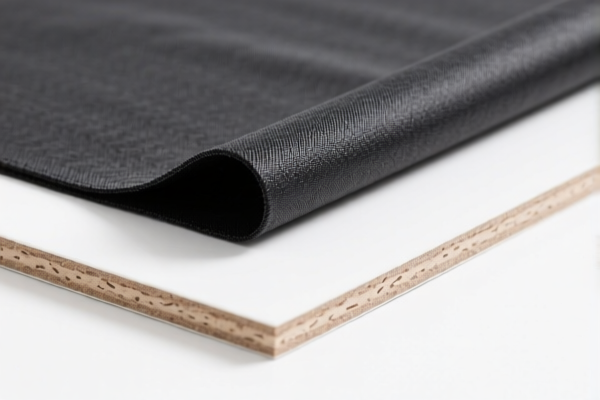
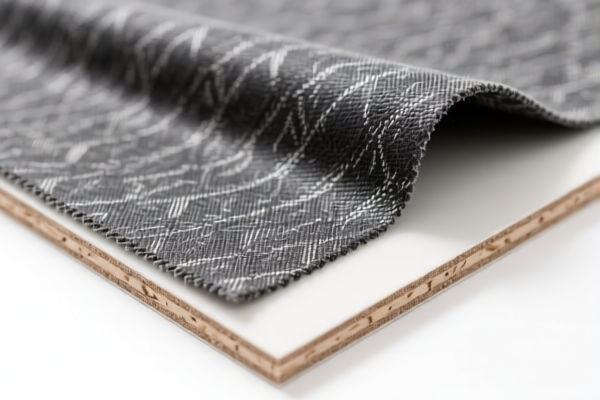
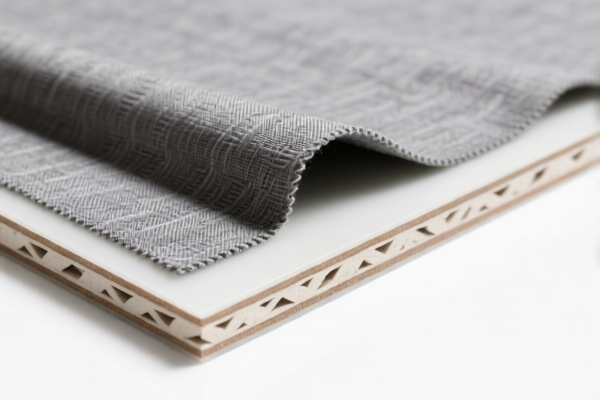

AI Analysis
🧱 Textile Composite Polyurethane Tear Resistant Board
Alternative Names: PVC/PU Composite Board, Textile-Reinforced Laminated Sheet, Architectural Composite Panel
Product Definition: A high-strength building material consisting of a textile fabric (such as polyester or fiberglass) impregnated, coated, or laminated with polyurethane (PU) or similar polymers, designed for architectural, roofing, or construction applications. It combines the tear resistance of the textile with the waterproofing and durability of the polymer.
🌐 HS Code Reference & Customs Clearance Guide | 2026 Latest Tariff Analysis | Professional Compliance Strategy
📌 I. Product Definition & Classification: Understanding the Nature of the Product
Textile Composite Polyurethane Tear Resistant Board is a hybrid material used in construction. Its classification depends heavily on whether customs authorities view it primarily as a textile product or a plastic/concrete product. This ambiguity often leads to different tariff liabilities.
Key Distinction Criteria:
- Textile-Based Classification: If the textile provides the essential character (strength/structure) and the PU is merely a coating/impregnation for weather resistance, it may fall under Chapter 59.
- Plastic/Chemical-Based Classification: If the plastic content dominates or the product is considered a general-purpose plastic sheet/board, it may fall under Chapter 39.
- Concrete/Stone-Based Classification: If the product is claimed to contain cementitious materials or stone aggregates for structural building purposes, it may be misclassified under Chapter 68.
⚠️ Critical Warning:
- Misclassification can lead to duty shocks due to varying "Section XI" (Textiles) vs. "Section VII" (Plastics) vs. "Section XIV" (Stone/Concrete) duties.
- US Trade Remedies (Section 301 & 122) apply heavily to these goods from China.
📦 II. HS Code Classification Matrix (2026 Latest Tariff Authority Comparison)
Based on the provided data, here are the four possible HS Code classifications for Textile Composite Polyurethane Tear Resistant Board:
| HS Code | Product Description | Application Scenario | Primary Material Character |
|---|---|---|---|
6810.19.50.00 |
Cement/Concrete/Artificial Stone Boards | Construction boards where cementitious or stone elements are present or claimed. | Stone/Cement-based (Misclassification Risk) |
5903.20.20.00 |
Textile Fabrics Impregnated/Laminated | Most Accurate for PU-Coated Textile. Fabrics coated with plastics (PU/PVC) for building use. | Textile + Plastic Coating |
3921.13.19.50 |
Polyurethane Plates/Sheets/Films | If classified as a plastic plate made of PU, regardless of textile reinforcement. | Plastic (PU) Dominant |
6810.99.00.80 |
Other Cement/Concrete/Stone Articles | Non-specific quartz-aggregate boards or other stone-like composite boards. | Stone/Cement-based (Misclassification Risk) |
🔍 Key Insight:
-5903.20.20.00is typically the most technically correct classification for a textile composite board with polyurethane coating, as Chapter 59 covers impregnated/coated textile fabrics.
-3921.13.19.50applies if the board is viewed purely as a plastic plate/sheet.
-6810.xx.xxcodes should generally be avoided unless the product explicitly contains cement, concrete, or stone aggregates, which is uncommon for standard PU-textile boards.
💰 III. 2026 Latest Tariff Rate Breakdown (Including Additional Duties)
✅ Applicable Country: United States (US)
✅ Country of Origin: China (CN)
✅ Effective Date: From November 10, 2025 (and subsequent imports)
🎯 1. 6810.19.50.00 – Cement/Concrete/Artificial Stone Boards
| Item | Content |
|---|---|
| Base Duty Rate | 3.9% (ad valorem) |
| Section 301 Duty | +25.0% (Additional Duty under USITC Footnote) |
| Section 122 Duty | +10.0% (Additional Duty under 122 Provision) |
| Total Duty Rate | 38.9% |
| Tax Calculation | CIF Value × 38.9% |
| De Minimis Exemption | ❌ Not Eligible (deny_de_minimis) |
| Legal Path | Base: 3.9% → Sec 301: +25% → Sec 122: +10% |
📌 Explanation:
- The 38.9% total rate is high.
- This classification is risky because the product is not a cement/stone product. Customs may flag this as false declaration, leading to penalties.
- Do not use this code unless the product contains concrete/stone.
🎯 2. 5903.20.20.00 – Impregnated/Coated Textile Fabrics (Building Application)
| Item | Content |
|---|---|
| Base Duty Rate | 0.0% (ad valorem) |
| Section 301 Duty | +25.0% (Additional Duty) |
| Section 122 Duty | +10.0% (Additional Duty) |
| Total Duty Rate | 35.0% |
| Tax Calculation | CIF Value × 35.0% |
| De Minimis Exemption | ❌ Not Eligible (deny_de_minimis) |
| Legal Path | Base: 0% → Sec 301: +25% → Sec 122: +10% |
📌 Explanation:
- Lowest Base Duty (0%) among all options.
- Most technically accurate for PU-coated textile boards.
- Total Effective Rate: 35%.
- Recommendation: This is the preferred classification if the product is primarily a textile composite.
🎯 3. 3921.13.19.50 – Polyurethane Plates/Sheets/Films
| Item | Content |
|---|---|
| Base Duty Rate | 5.3% (ad valorem) |
| Section 301 Duty | +25.0% (Additional Duty) |
| Section 122 Duty | +10.0% (Additional Duty) |
| Total Duty Rate | 40.3% |
| Tax Calculation | CIF Value × 40.3% |
| De Minimis Exemption | ❌ Not Eligible (deny_de_minimis) |
| Legal Path | Base: 5.3% → Sec 301: +25% → Sec 122: +10% |
📌 Explanation:
- If customs views the PU content as dominant, this code applies.
- Total Effective Rate: 40.3% (Highest Base Duty).
- Use only if the textile reinforcement is negligible or the product is marketed as a "plastic board."
🎯 4. 6810.99.00.80 – Other Cement/Concrete/Stone Articles
| Item | Content |
|---|---|
| Base Duty Rate | 0.0% (ad valorem) |
| Section 301 Duty | +25.0% (Additional Duty) |
| Section 122 Duty | +10.0% (Additional Duty) |
| Total Duty Rate | 35.0% |
| Tax Calculation | CIF Value × 35.0% |
| De Minimis Exemption | ❌ Not Eligible (deny_de_minimis) |
| Legal Path | Base: 0% → Sec 301: +25% → Sec 122: +10% |
📌 Explanation:
- Same 35.0% total rate as5903.20.20.00.
- High Risk: This code is for non-specific quartz or stone products. If your product is PU-textile, using this code is misclassification.
- Consequence: Potential customs audit, fines, or seizure for false declaration.
🛠️ IV. Customs Clearance Practical Advice (Operational Pitfall Guide)
✅ 1. Document Preparation Checklist (Mandatory)
| Document | Required? | Explanation |
|---|---|---|
| ✅ Product Specification Sheet | ✔️ | Must clearly state composition: % of textile, % of PU, thickness, dimensions. |
| ✅ Technical Data Sheet (TDS) | ✔️ | Shows tensile strength, tear resistance, and PU coating weight. |
| ✅ Composition Proof | ✔️ | Lab report or manufacturer certificate confirming textile/polymer ratio. |
| ✅ Commercial Invoice | ✔️ | Must describe as "Textile Composite Board" or "PU-Coated Textile Panel," NOT "Concrete Board." |
| ✅ Packing List | ✔️ | Standard commercial packing list. |
| ✅ Certificate of Origin (CO) | ✔️ | Required for duty calculation and trade remedy verification. |
| ✅ Photos of Product | ✔️ | Clear images showing the textile texture and PU coating. |
✅ 2. Declaration Strategy (Key Tips)
🔥 "Correct Description, Correct Code, Avoid Misclassification!"
| Scenario | Correct Declaration | Risk if Incorrect |
|---|---|---|
| Textile + PU Coating | 5903.20.20.00 |
If declared as 3921 → 40.3% duty; if 6810 → 35% but risk of penalty. |
| PU Plastic Sheet | 3921.13.19.50 |
If declared as 5903 → 35% duty (saving 5.3% base), but might be challenged. |
| Claiming Concrete Content | 6810.19.50.00 |
ONLY IF it contains cement/stone. If not, this is fraud. |
| General Building Panel | Avoid 6810.99.00.80 |
Unless it’s a stone-aggregate board. |
📌 Note:
- Base Duty Difference:5903(0%) vs3921(5.3%) vs6810(0-3.9%).
- Total Duty Difference:5903and6810.99are 35%, while3921is 40.3%, and6810.19is 38.9%.
- Best Option:5903.20.20.00offers the lowest risk and competitive rate (35%) if the product is truly textile-based.
✅ 3. Special Circumstances
| Situation | Handling Advice |
|---|---|
| OEM Custom Board | Provide customer PO and technical specs. Ensure description matches actual composition. |
| Mixed Shipment | If shipping both PU-textile and concrete boards, separate HS Codes to avoid cross-contamination of duty rates. |
| Pre-Ruling Request | Highly recommended. File an Advance Ruling with US CBP using 5903.20.20.00 if applicable. |
| Origin Verification | Ensure origin is China. If from Vietnam/Mexico, IEEPA duties may be waived, lowering total rate significantly. |
🌍 V. Global Market Comparison (2026 Update)
| Country/Region | Recommended HS Code | Base Duty | Additional Duties (China) | Total Effective Rate | Notes |
|---|---|---|---|---|---|
| 🇺🇸 USA | 5903.20.20.00 |
0% | +25% (301) +10% (122) | 35.0% | Most common classification for PU-textile. |
| 🇺🇸 USA | 3921.13.19.50 |
5.3% | +25% (301) +10% (122) | 40.3% | Higher base, same additional. |
| 🇨🇳 China | 5903.20.20.00 |
0% | None | 0% | Import duty-free for Chinese manufacturing. |
| 🇪🇺 EU | 5903.20.20.00 |
6.5% | None (typically) | 6.5% | Check local VAT. No Section 301 equivalent. |
| 🇬🇧 UK | 5903.20.20.00 |
6.5% | None (typically) | 6.5% | Post-Brexit tariffs may vary. |
📌 Conclusion:
- The USA imposes significant additional duties (35-40.3%) on these products from China.
- No De Minimis Exemption applies.
- EU/UK tariffs are much lower (~6.5%), making these products highly competitive in Europe.
📌 VI. Common Mistakes & Pitfalls (Lessons Learned)
❌ Mistake 1: Classifying PU-textile board as 6810 (Concrete) to claim 0% base duty.
👉 Consequence: Customs audit → Penalty for misdeclaration → Goods detained.
✅ Fix: Use 5903.20.20.00 if textile-based.
❌ Mistake 2: Ignoring Section 122 Duties (+10%).
👉 Consequence: Unexpected cost increase of 10% on top of Section 301.
✅ Fix: Always calculate Base + 301 + 122.
❌ Mistake 3: Using "Plastic Board" generic description.
👉 Consequence: Customs may classify under 3921 (40.3%) or challenge the description.
✅ Fix: Use precise terms: "Textile Composite Board, PU-Coated."
❌ Mistake 4: Assuming De Minimis (800 USD) applies.
👉 Consequence: Package seized at border.
✅ Fix: No De Minimis for these HS codes from China.
🎯 VII. Conclusion: Professional Compliance Saves Costs!
🎯 Remember:
🔹 "Textile Character →
5903(35%)
🔹 "Plastic Character →3921(40.3%)
🔹 "Concrete Claim →6810(35-38.9%) RISKY"
🔹 "Always Include Section 301 + 122 in Costing!"**
📌 Pro Tip:
If your product is shipped from Vietnam, Mexico, or Thailand, you may be exempt from IEEPA/301 duties, reducing total duty to Base Rate Only (e.g., 0% for 5903).
Recommendation:
📞 Consult a Customs Broker
📝 Apply for Advance Ruling with US CBP
📊 Accurate Declaration = Predictable Costs = Profit Protection
📣 Action Required:
🚀 Verify Composition → Select Correct HS Code → Calculate Total Duty → Clear Customs Smoothly
✨ Precision in Classification, Profit in Clearance!
💼 Your Supply Chain, Our Expertise.
Customer Reviews
About HS Code Classification
The Harmonized System (HS) is an internationally standardized nomenclature developed by the World Customs Organization (WCO) to classify traded products. Over 200 countries use the HS system as the basis for customs tariffs, trade statistics, and import/export regulations.
Each HS code follows a hierarchical structure:
- Chapter (2 digits) — Broad category of goods (e.g., Chapter 84: Machinery and Mechanical Appliances)
- Heading (4 digits) — More specific grouping within the chapter
- Subheading (6 digits) — Internationally standardized breakdown, used by all WCO member countries
- National subdivisions (8-10 digits) — Country-specific extensions for further classification, such as US HTSUS 10-digit codes
Correct HS code classification is essential for smooth customs clearance, accurate duty payment, and compliance with trade regulations. Misclassification can lead to customs delays, overpayment of duties, or penalties.
When importing from CN to US, the applicable tariff rates may include:
- Most-Favored-Nation (MFN) rate — The standard duty rate applied to WTO members
- General rate — Applied to countries without trade agreements
- Trade remedy duties — Additional tariffs such as Section 301 (anti-dumping), Section 232 (national security), or countervailing duties
The information provided on this page is for reference purposes only. For official classification, please consult with your local customs authority or a licensed customs broker.