Textile Composite V Belts
CN → US| HS Code | Tariff Rate | Origin | Destination | Doc |
|---|---|---|---|---|
| 5910001010 | 39.0% | CN | US | Official Doc |
| 4010313000 | 38.4% | CN | US | Official Doc |
| 4010323000 | 38.4% | CN | US | Official Doc |
| 5910001010 | 39.0% | CN | US | Official Doc |
| 4010313000 | 38.4% | CN | US | Official Doc |
Product Images
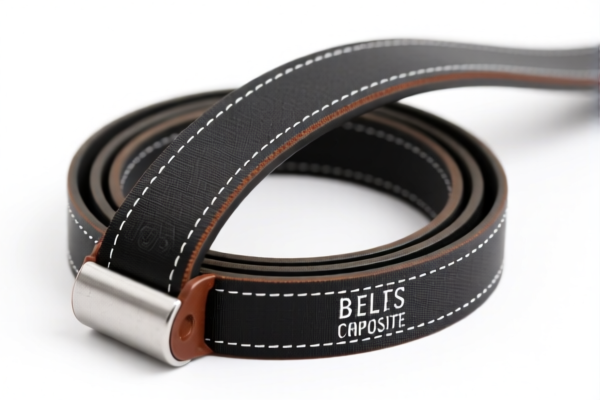
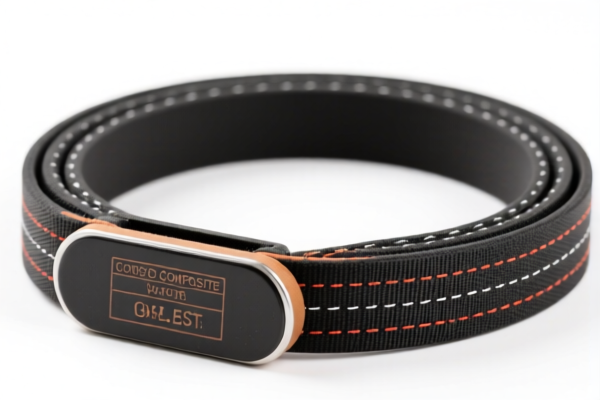
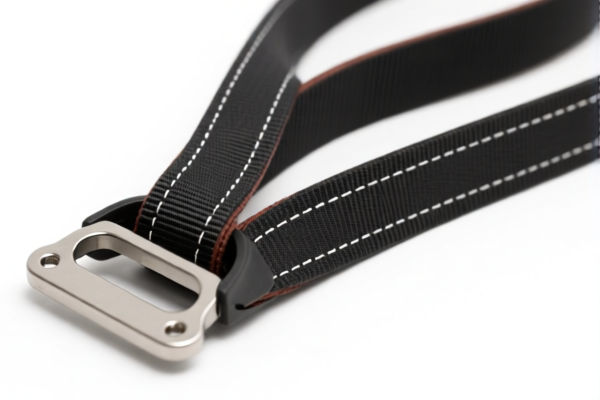
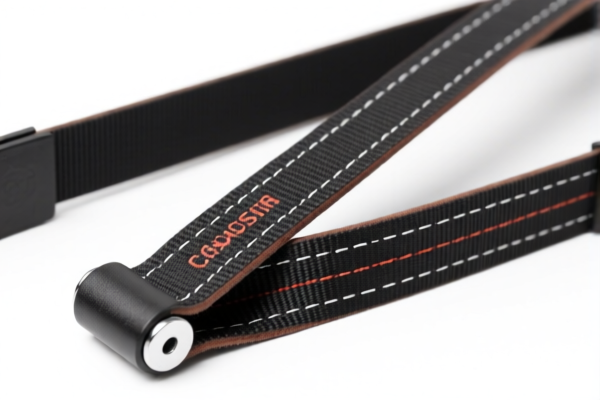
AI Analysis
🏎️ Textile Composite V Belts
🌐 HS Code Reference & Customs Clearance Guide | 2026 Latest Tariff Analysis | Professional Strategy for Power Transmission
📌 I. Product Definition & Classification: Understanding "Textile Composite V Belts"
Textile Composite V Belts are critical power transmission components used primarily in automotive engines, industrial machinery, and HVAC systems. They combine rubber or synthetic compounds with high-strength textile cords (such as polyester, nylon, or aramid) to provide torque transmission with minimal slip and elongation.
In international trade, the classification hinges on two key factors: 1. Material Composition: Is it primarily Rubber/Plastic (Chapter 40) or Fabric/Textile-Reinforced (Chapter 59)? 2. Structure: Is it an endless belt with a specific cross-section (V-shape)?
⚠️ Critical Distinction:
- If the belt is considered "Rubber Goods Reinforced with Textile Materials" → It falls under Chapter 40 (Plastics/Rubber).
- If the belt is considered "Textile Articles Reinforced with Rubber/Plastic" → It falls under Chapter 59 (Impregnated/Coated Textiles).
Note: In US customs practice, V-belts are often classified under Chapter 40 if the rubber constitutes the essential character, but Chapter 59 if the textile reinforcement is deemed primary. The data below reflects specific interpretations provided in the input.
📦 II. HS Code Classification Details (Based on Provided Data)
| HS Code | Product Description | Matching Logic (From Data) | Total Tax Rate |
|---|---|---|---|
| 4010.31.30.00 | V-belts, of rubber, with textile reinforcement | ✅ "V-belt" shape matches trapezoidal cross-section; "Textile reinforced" matches material composition. | 38.4% |
| 4010.32.30.00 | V-belts, of rubber, with textile reinforcement (other) | ✅ "Textile reinforced" = "Combined with textile materials"; "V-belt" matches shape. | 38.4% |
| 5910.00.10.10 | Textile-reinforced V-belts (Rubber/Fabric composite) | ✅ "V-belt" form matches; "Textile reinforced" implies fabric/fiber material; Automotive use fits power transmission scope. | 39.0% |
🔍 Key Insight from Data:
- The classification splits between Chapter 40 (Rubber-based) and Chapter 59 (Textile-based).
- Chapter 40 codes have a slightly lower total tax rate (38.4%) compared to Chapter 59 (39.0%).
- The term "Textile Composite" in the product name triggers both possibilities, requiring careful substantiation based on manufacturing process and material weight ratio.
💰 III. 2026 Latest Tariff Rate Breakdown (Including Surcharges & Policies)
✅ Applicable Country: United States (US)
✅ Origin: China (CN)
✅ Effective Date: November 10, 2025 onwards (for subsequent imports)
🎯 1. 4010.31.30.00 & 4010.32.30.00 — Rubber V-Belts with Textile Reinforcement
| Item | Detail |
|---|---|
| Base Tariff | 3.4% (ad valorem) |
| Section 301 Tariff (USITC) | +25.0% (Retaliatory tariff on Chinese goods) |
| IEEPA Tariff (Section 122) | +10.0% (Additional surcharge on Chinese products) |
| Total Tax Rate | 38.4% |
| Tax Calculation | CIF Value × 38.4% |
| De Minimis Exemption | ❌ Not Eligible (deny_de_minimis) |
| Legal Basis Path | IEEPA:9903.01.25 → USITC:4010.31.30.00 → FOOTNOTE:301 |
📌 Explanation:
- The 25% Section 301 tariff is the primary driver of cost for Chinese-origin rubber goods.
- The 10% IEEPA tariff is an additional layer applied to specific Chinese imports.
- Total 38.4% is significantly high, impacting profit margins for automotive parts distributors.
🎯 2. 5910.00.10.10 — Textile-Reinforced V-Belts (Fabric/Rubber Composite)
| Item | Detail |
|---|---|
| Base Tariff | 4.0% (ad valorem) |
| Section 301 Tariff (USITC) | +25.0% (Retaliatory tariff on Chinese goods) |
| IEEPA Tariff (Section 122) | +10.0% (Additional surcharge on Chinese products) |
| Total Tax Rate | 39.0% |
| Tax Calculation | CIF Value × 39.0% |
| De Minimis Exemption | ❌ Not Eligible (deny_de_minimis) |
| Legal Basis Path | IEEPA:9903.01.25 → USITC:5910.00.10.10 → FOOTNOTE:301 |
📌 Explanation:
- Slightly higher base rate (4.0% vs 3.4%) results in a 0.6% higher total tax compared to Chapter 40 codes.
- This classification is often used when the textile reinforcement is deemed the essential character of the article.
🛠️ IV. Customs Clearance Practical Advice (Risk Mitigation Guide)
✅ 1. Required Documentation Checklist (Non-Negotiable)
| Document | Must Provide | Explanation |
|---|---|---|
| ✅ Product Specification Sheet | ✔️ | Must detail material composition (rubber % vs. textile %), tensile strength, and cross-section dimensions. |
| ✅ Manufacturing Process Description | ✔️ | Clarifies if rubber is the base matrix (Chapter 40) or fabric is the base (Chapter 59). |
| ✅ Product Photos (Clear Labels) | ✔️ | Show belt marking (e.g., "3L450"), brand, and "Made in China" label. |
| ✅ Commercial Invoice | ✔️ | Must clearly state "Textile Reinforced V-Belt" and HS Code. Avoid vague terms like "Machine Parts." |
| ✅ Packing List | ✔️ | Detail quantities and weights per carton. |
| ✅ Certificate of Origin | ✔️ | Mandatory for proving Chinese origin and applying (or disputing) surcharges. |
✅ 2. Declaration Tips (Key Strategy)
🔥 "Clarify Material Priority: Rubber Matrix or Fabric Base?"
| Scenario | Recommended HS Code | Rationale | Risk if Incorrect |
|---|---|---|---|
| Rubber is the main body, textile is reinforcement | 4010.31.30.00 | Rubber defines the essential character. | Lower Tax (38.4%) vs 39.0%. |
| Fabric is the main body, rubber is coating | 5910.00.10.10 | Textile defines the essential character. | Higher Tax (39.0%). |
| Undeclared "Composite" | Risk of Rejection | Customs may assign a higher duty or reject the entry. | Delay, Penalty, or Re-import. |
📌 Critical Advice:
- If the belt is primarily rubber with textile cords embedded, 4010.31.30.00 is generally more favorable due to the 38.4% total rate.
- Ensure the invoice does not contradict the HS code. For example, if using 4010, avoid emphasizing "Fabric Belt" in the description.
✅ 3. Special Case Handling
| Situation | Handling Advice |
|---|---|
| Automotive OEM Parts | Provide OEM Approval Letters or BOM (Bill of Materials) to prove intended use, though this does not change HS Code, it aids in customs audits. |
| Mixed Shipments | If shipping with other rubber goods, ensure V-belts are separately declared to avoid commingling issues. |
| Counterfeit Risk | Ensure belts have legitimate branding. Counterfeit V-belts are heavily scrutinized and subject to seizure. |
| Origin Marking | Every belt or package must clearly state "Made in China" to avoid Section 301 disputes. |
🌍 V. Global Market Comparison (2026 Outlook)
| Country/Region | Recommended HS Code | Tariff (China Origin) | Notes |
|---|---|---|---|
| 🇺🇸 USA | 4010.31.30.00 / 5910.00.10.10 |
38.4% - 39.0% | High tariffs due to Section 301 + IEEPA. |
| 🇨🇳 China | 4010.31.10.00 |
~5-10% | Lower import duties for re-export. |
| 🇪🇺 EU | 4010.31.00 / 5910.00.20 |
0-4% | No major retaliatory tariffs on V-belts. |
| 🇲🇽 Mexico | 4010.31.01 |
0-5% (USMCA eligible) | If processed in Mexico, potential duty-free access to US. |
📌 Strategic Note:
- US Market: High cost burden. Consider supply chain diversification (e.g., Vietnam, Thailand) to avoid Section 301 tariffs if volume is large.
- EU/Global: Competitive pricing due to lower tariffs.
📌 VI. Common Errors & Pitfalls (Lessons Learned)
❌ Error 1: Declaring as "Rubber Bands" or "Elastic Belts"
👉 Consequence: Wrong HS Code, leading to penalties and back-taxes.
❌ Error 2: Ignoring the "Textile" aspect in description
👉 Consequence: Customs may reject the Chapter 40 classification and move to Chapter 59 or higher-duty categories.
❌ Error 3: Failing to mark "Made in China"
👉 Consequence: Section 301 tariffs cannot be applied correctly, leading to audits and potential double taxation.
❌ Error 4: Assuming De Minimis applies
👉 Consequence: 10% IEEPA tax still applies; small shipments are not exempt.
✅ Correct Practice:
"V-Belt, Textile Reinforced, Rubber Compound, Cross-Section: 10mm, Length: 1200mm, OEM Part #XYZ, Made in China"
🎯 VII. Conclusion: Optimize for Profit and Compliance
🎯 Remember the Rule:
🔹 "Rubber Base = 38.4% | Fabric Base = 39.0%"
🔹 "Section 301 + IEEPA = Non-Negotiable for CN Origin"
🔹 "Clear Description Prevents Delays"
📌 Pro Tip:
If your V-belts are imported from Vietnam, Thailand, or Malaysia, you may qualify for lower Section 301 rates or exemptions. Verify origin certificates carefully.
📣 Immediate Action:
📞 Pre-Arrival Review: Submit documentation to your broker 48 hours before arrival.
📄 Request Advance Ruling: If volumes are high, apply for an HS Code Pre-Ruling from CBP to lock in the 38.4% rate.
🚀 Diversify Sourcing: Consider non-China sources to mitigate tariff risks.
✨ Precision in Classification = Savings in Taxes!
💼 Every Percentage Point Counts in Global Trade!
Customer Reviews
About HS Code Classification
The Harmonized System (HS) is an internationally standardized nomenclature developed by the World Customs Organization (WCO) to classify traded products. Over 200 countries use the HS system as the basis for customs tariffs, trade statistics, and import/export regulations.
Each HS code follows a hierarchical structure:
- Chapter (2 digits) — Broad category of goods (e.g., Chapter 84: Machinery and Mechanical Appliances)
- Heading (4 digits) — More specific grouping within the chapter
- Subheading (6 digits) — Internationally standardized breakdown, used by all WCO member countries
- National subdivisions (8-10 digits) — Country-specific extensions for further classification, such as US HTSUS 10-digit codes
Correct HS code classification is essential for smooth customs clearance, accurate duty payment, and compliance with trade regulations. Misclassification can lead to customs delays, overpayment of duties, or penalties.
When importing from CN to US, the applicable tariff rates may include:
- Most-Favored-Nation (MFN) rate — The standard duty rate applied to WTO members
- General rate — Applied to countries without trade agreements
- Trade remedy duties — Additional tariffs such as Section 301 (anti-dumping), Section 232 (national security), or countervailing duties
The information provided on this page is for reference purposes only. For official classification, please consult with your local customs authority or a licensed customs broker.