Textile Costume
CN → US| HS Code | Tariff Rate | Origin | Destination | Doc |
|---|---|---|---|---|
| 6109100004 | 34.0% | CN | US | Official Doc |
| 6109100027 | 34.0% | CN | US | Official Doc |
| 5501190000 | 42.5% | CN | US | Official Doc |
| 5203000500 | 40.0% | CN | US | Official Doc |
Product Images
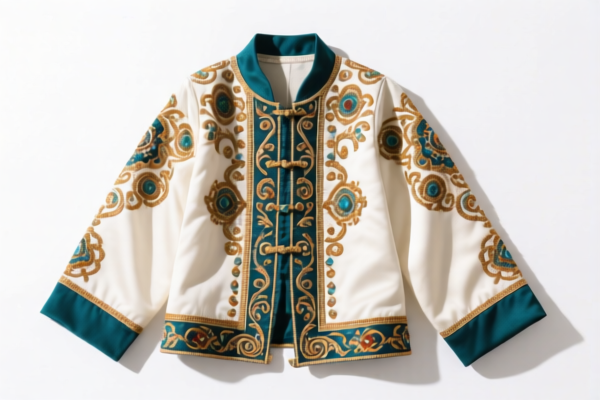
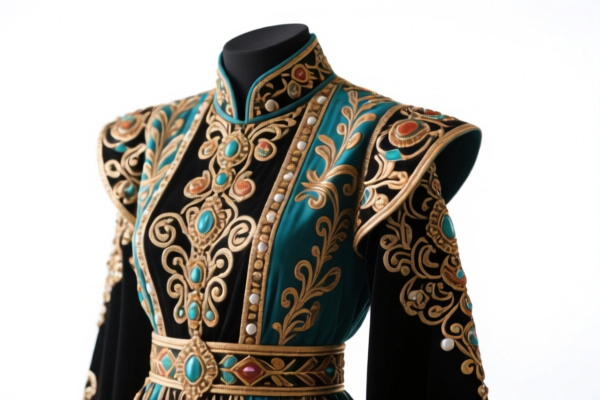
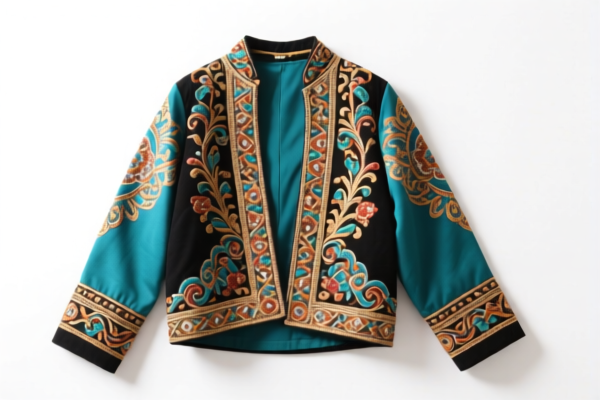
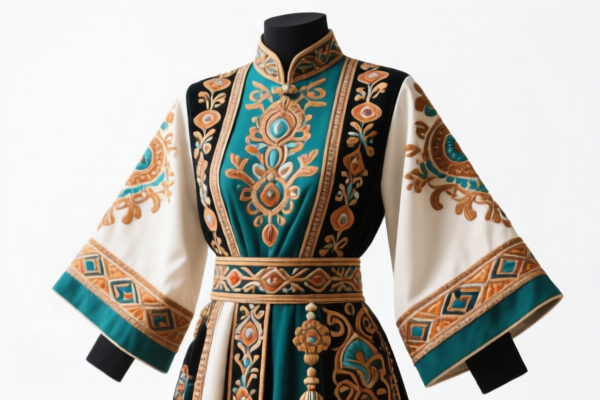
AI Analysis
🧵 Textile Costume (Costume Apparel)
🌐 HS Code Reference & Customs Clearance Guide | 2026 Latest Tariff Analysis | Professional Entry Strategy
📌 I. Product Definition & Classification: Do You Really Understand "Textile Costume"?
Textile Costumes fall under the category of finished consumer goods, specifically designed for performance, theatrical use, or cross-dressing purposes. In international trade, they are broadly classified based on material composition (knitted vs. woven) and functionality.
Key Distinctions: * Knitted/Crocheted Garments: Loose-fitting tops, tank tops, or bodysuits made from knit fabric (e.g., Cotton T-shirts, Polyester blends). These often fall under Heading 6109. * Woven/Other Textile Fibers: Raw materials, yarns, or specific woven fabrics that may be mistaken for finished goods but are actually inputs (e.g., Nylon filament, Combed Cotton). These fall under Headings 5501 or 5203.
⚠️ Critical Distinction Point:
- If the item is a finished garment (cut and sewn, ready to wear) → Look at 6109 (Knitted Tees/Tanks) or 6117 (Other Accessories).
- If the item is raw material/yarn (not yet a garment) → Look at 5501 (Synthetic Filament) or 5203 (Processed Cotton).
- Misclassification Risk: Declaring a finished costume as "yarn" or vice versa leads to severe duty penalties and customs holds.
📦 II. HS Code Classification Details (2026 Latest Tariff Authority Alignment)
Based on the provided data, here are the specific HS Codes relevant to "Textile Costume" components and similar items:
| HS Code | Product Description | Applicability & Summary | Material/State |
|---|---|---|---|
6109.10.00.04 |
T-shirts, singlets, and similar garments, knitted or crocheted, of cotton | Final Apparel: Fits the "costume" category if it is a basic top/tank. No material conflict with cotton or gender-specific use. | Knitted/Crocheted Cotton |
6109.10.00.27 |
Other T-shirts, singlets, and similar garments, knitted or crocheted | Final Apparel: Broad category for knitted costumes/tops. No conflict with cotton or male/child use. | Knitted/Crocheted |
5501.19.00.00 |
Filaments of nylon or other polyamides, in primaries shapes | Raw Material: Not a finished costume. Represents the synthetic fiber base (e.g., Nylon/Polyamide) used to make synthetic costumes. | Synthetic Filament (Raw) |
5203.00.05.00 |
Cotton fibres, combed | Raw Material: Processed cotton fiber (carded or combed), not yet spun into yarn. Represents the cotton base for natural fiber costumes. | Combed Cotton Fiber |
🔍 Key Insight:
- If your "Textile Costume" is a finished T-shirt or tank top, refer to6109.10.00.04or.27.
- If your product is raw nylon yarn or combed cotton, refer to5501.19.00.00or5203.00.05.00.
- Do not mix finished goods with raw materials. A costume is a finished good; nylon filament is a raw material.
💰 III. 2026 Latest Tariff Rate Breakdown (Including Add-on Taxes)
✅ Applicable Country: United States (US)
✅ Origin: China (CN)
✅ Effective Date: 2025/2026 Import Cycle
🎯 1. 6109.10.00.04 & 6109.10.00.27 —— Knitted T-Shirts/Singlets (Finished Costumes)
| Item | Content |
|---|---|
| Basic Tariff | 16.5% |
| Section 301 Add-on Tax | 7.5% |
| Section 122 Tariff | 10% |
| Total Tax Rate | 34.0% |
| Tax Calculation | CIF Value × 34% |
| De Minimis Exemption | ❌ Not Eligible |
| Legal Basis Path | Standard Section 301 + Section 122 Application |
📌 Explanation:
- Basic Tariff (16.5%): Standard MFN rate for knitted cotton garments.
- Section 301 (7.5%): Additional tariff on Chinese textile imports under Trade Act Section 301.
- Section 122 (10%): Specific tariff applied under Section 122 of the Trade Expansion Act of 1962 (often used for national security or supply chain controls).
- Total 34%: This is a high-cost item. Ensure your profit margin accounts for this significant duty burden.
🎯 2. 5501.19.00.00 —— Nylon/Polyamide Filaments (Raw Material)
| Item | Content |
|---|---|
| Basic Tariff | 7.5% |
| Section 301 Add-on Tax | 25.0% |
| Section 122 Tariff | 10% |
| Total Tax Rate | 42.5% |
| Tax Calculation | CIF Value × 42.5% |
| De Minimis Exemption | ❌ Not Eligible |
| Legal Basis Path | Section 301: 25% + Section 122: 10% + MFN: 7.5% |
📌 Explanation:
- Synthetic filament yarns face even higher duties due to strategic material classifications.
- The 25% Section 301 tax is a major cost driver.
- Note: This applies only if you are importing raw nylon filament, not the finished costume.
🎯 3. 5203.00.05.00 —— Combed Cotton Fibers (Raw Material)
| Item | Content |
|---|---|
| Basic Tariff | 5.0% |
| Section 301 Add-on Tax | 25.0% |
| Section 122 Tariff | 10% |
| Total Tax Rate | 40.0% |
| Tax Calculation | CIF Value × 40% |
| De Minimis Exemption | ❌ Not Eligible |
| Legal Basis Path | Section 301: 25% + Section 122: 10% + MFN: 5.0% |
📌 Explanation:
- Combed cotton fiber is a critical agricultural/textile input.
- Despite a lower basic rate (5%), the 25% Section 301 tax pushes the total to 40%.
- Warning: Do not declare raw cotton fiber as finished cotton garments (6109) to avoid penalties.
🛠️ IV. Customs Clearance Practical Advice (Real-World Pitfall Avoidance)
✅ 1. Documentation Checklist (Mandatory)
| Document | Required | Notes |
|---|---|---|
| ✅ Commercial Invoice | ✔️ | Must clearly state "Textile Costume" or specific garment type (e.g., "Cotton T-Shirt"). |
| ✅ Packing List | ✔️ | Detail quantity, weight, and material composition (e.g., 100% Cotton). |
| ✅ Product Photos | ✔️ | Show front/back of garment, labels, and any unique features. |
| ✅ Material Certificate | ✔️ | Proof of fiber content (Critical for 6109 vs. 5501/5203 distinction). |
| ✅ Origin Certificate | ✔️ | To confirm Chinese origin (triggers Section 301/122 taxes). |
| ✅ HTS Code Declaration | ✔️ | Self-classification or broker-prepared code (e.g., 6109.10.00.04). |
✅ 2. Declaration Tips (Key Mnemonics)
🔥 "Material First, Finish Second. Raw vs. Made, Duty Differs!"
| Situation | Correct Declaration | Error to Avoid |
|---|---|---|
| Finished T-Shirt/Costume | 6109.10.00.04 / .27 |
Declaring as "Nylon Filament" (5501) → 42.5% Duty + Penalty |
| Raw Nylon Yarn | 5501.19.00.00 |
Declaring as "T-Shirt" (6109) → 34% Duty + Misdeclaration Fine |
| Combed Cotton Fiber | 5203.00.05.00 |
Declaring as "Cotton Garment" (6109) → 34% Duty + Compliance Risk |
| Mixed Material Costume | Determine Principal Material | Vague description "Textile Item" → Customs Hold & Re-classification |
✅ 3. Special Cases
| Scenario | Handling Advice |
|---|---|
| OEM Custom Costumes | Provide design specs + fabric composition label. Ensure label matches invoice. |
| Sample vs. Bulk | Samples still incur duty. Declare as "Sample" but expect full tax unless under specific low-value thresholds (which are excluded here due to Section 301/122). |
| Hybrid Products | If costume contains non-textile parts (e.g., plastic zippers, metal buttons), it still generally classifies under the textile heading unless non-textile is the essential character. |
🌍 V. Global Market Comparison (2026 Latest)
| Country/Region | Recommended HS Code | Duty Rate | Certification | Notes |
|---|---|---|---|---|
| 🇺🇸 USA | 6109.10.00.04 |
34% | N/A | High duty due to Section 301 + 122. |
| 🇨🇳 China | 6109.10.00.04 |
5-15% | N/A | Lower basic rate, no Section 301/122. |
| 🇪🇺 EU | 6109.10.00 |
0-4% | REACH, OEKO-TEX | No Section 301/122 equivalent. |
| 🇬🇧 UK | 6109.10.00 |
0-12% | UKCA | Post-Brexit tariffs apply. |
📌 Conclusion:
- USA imposes the highest total tariff (34-42.5%) due to punitive trade policies.
- EU/UK are more favorable for textile imports.
- Cost Optimization: If possible, consider sourcing from or transshipping through non-China countries (e.g., Vietnam, Bangladesh) to avoid Section 301 taxes, but ensure Rules of Origin are strictly met.
📌 VI. Common Errors & Pitfalls (Lessons Learned)
❌ Error 1: Declaring a finished cotton T-shirt costume as "Nylon Filament" (5501)
👉 Consequence: 42.5% duty applies + Misdeclaration Penalty.
✅ Fix: Correctly classify as 6109.10.00.04 (34% duty).
❌ Error 2: Declaring Raw Combed Cotton (5203) as "Finished Cotton Garments" (6109)
👉 Consequence: 34% duty applies + Potential Fraud Allegation for under-declaring raw material nature.
✅ Fix: Use 5203.00.05.00 (40% duty) but be prepared for higher scrutiny on raw material imports.
❌ Error 3: Ignoring Section 122 Tariffs
👉 Consequence: Underestimating total cost by 10%.
✅ Fix: Always include Section 122 (10%) in cost calculations for Chinese textiles.
❌ Error 4: Vague Description "Textile Costume"
👉 Consequence: Customs无法 (unable) to classify → Delay in clearance, storage fees, and re-classification fees.
✅ Fix: Use precise descriptions: "Knitted Cotton T-Shirt, Men's, White, Size M".
🎯 VII. Conclusion: Professional Declaration, Cost Control, Efficient Clearance!
🎯 Remember the Mnemonic:
🔹 "Finished Goods: 34% Duty (6109). Raw Materials: 40-42.5% Duty (5501/5203). Don't Mix Them!"
🔹 "Section 301 + Section 122 = High Cost. Know Your Code, Save Your Profit."
📌 Pro Tip:
If your costume is high-value or high-volume, consider applying for a Pre-Ruling (Advance Ruling) from US Customs and Border Protection (CBP). This ensures your HS Code (
6109.10.00.04vs.6109.10.00.27) is validated before shipment, avoiding unexpected delays.
📣 Take Action Now:
📞 Contact a Licensed Customs Broker + Provide Material Composition Certificates + Apply for Pre-Ruling
🚀 Ensure Your Textile Costumes Clear Customs Smoothly, Avoid Penalties, and Maximize Profit!
✨ Professional Customs Clearance Starts with Accurate Classification!
💼 Every Percent of Duty Counts!
Customer Reviews
About HS Code Classification
The Harmonized System (HS) is an internationally standardized nomenclature developed by the World Customs Organization (WCO) to classify traded products. Over 200 countries use the HS system as the basis for customs tariffs, trade statistics, and import/export regulations.
Each HS code follows a hierarchical structure:
- Chapter (2 digits) — Broad category of goods (e.g., Chapter 84: Machinery and Mechanical Appliances)
- Heading (4 digits) — More specific grouping within the chapter
- Subheading (6 digits) — Internationally standardized breakdown, used by all WCO member countries
- National subdivisions (8-10 digits) — Country-specific extensions for further classification, such as US HTSUS 10-digit codes
Correct HS code classification is essential for smooth customs clearance, accurate duty payment, and compliance with trade regulations. Misclassification can lead to customs delays, overpayment of duties, or penalties.
When importing from CN to US, the applicable tariff rates may include:
- Most-Favored-Nation (MFN) rate — The standard duty rate applied to WTO members
- General rate — Applied to countries without trade agreements
- Trade remedy duties — Additional tariffs such as Section 301 (anti-dumping), Section 232 (national security), or countervailing duties
The information provided on this page is for reference purposes only. For official classification, please consult with your local customs authority or a licensed customs broker.