Textile Cotton Linters Pulp
CN → US| HS Code | Tariff Rate | Origin | Destination | Doc |
|---|---|---|---|---|
| 3912900010 | 40.2% | CN | US | Official Doc |
| 4706100000 | 35.0% | CN | US | Official Doc |
| 3912900090 | 40.2% | CN | US | Official Doc |
Product Images
AI Analysis
🌿 Cotton Linters Pulp (Textile Grade)
🌐 HS Code Reference & Customs Clearance Guide | 2026 Latest Tariff Analysis | Professional Entry Strategies
📌 I. Product Definition & Classification: Do You Understand "Cotton Linters Pulp"?
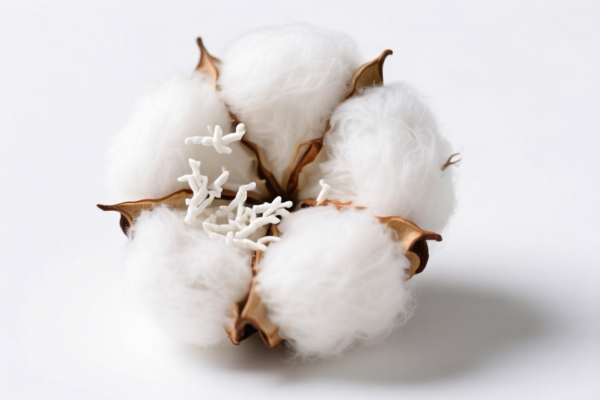
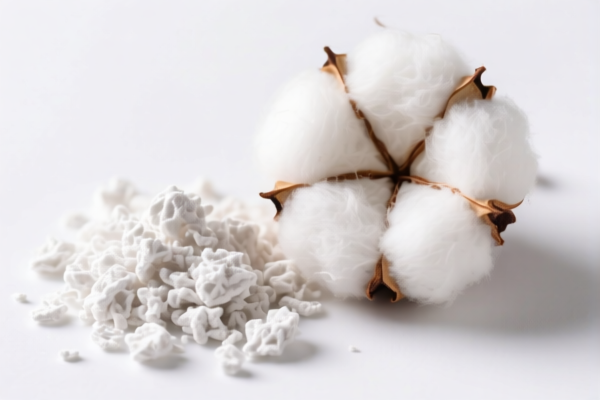
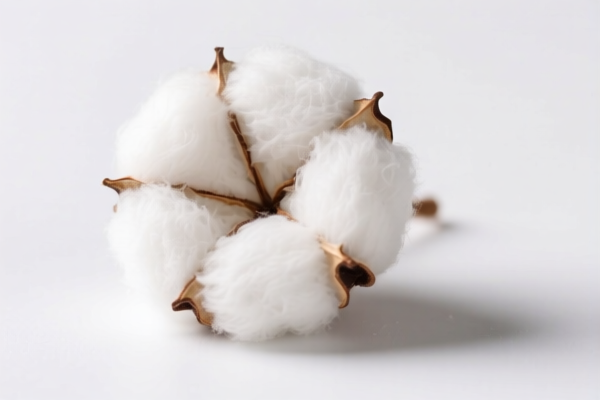
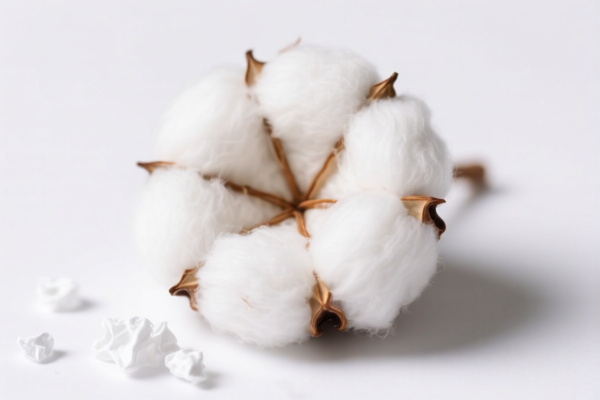
Cotton Linters Pulp is a key raw material in the chemical fiber and textile industry, obtained by removing short fibers (linters) from cotton seeds. It is primarily used to produce regenerated cellulose fibers (like viscose/rayon) and chemical derivatives. In international trade, its classification depends on its physical form and chemical nature.
According to the provided data, it is categorized into three main HS Codes based on its specific form and description:
⚠️ Key Distinction Points:
- Primary Shape/Form: If it is described as a "derivative" or "powder," it falls under 3912.90.00.10 or 3912.90.00.90.
- Pure Material Match: If it is described strictly as "Cotton Linters Pulp" with material and form matching standard pulp, it falls under 4706.10.00.00.
📦 II. HS Code Classification Details (2026 Latest Tariff Authority Comparison)
| HS Code | Product Description | Application Scenario | Key Characteristics |
|---|---|---|---|
3912.90.00.10 |
Cotton Linters Pulp, Cellulose Derivative, Powder/Form | Chemical manufacturing, specialized cellulose derivatives | ✅ Powder form / Primary shape |
4706.10.00.00 |
Cotton Linters Pulp, Material & Form Fully Matched | Standard pulp production, textile raw materials | ✅ Material/Form Match |
3912.90.00.90 |
Cotton Linters Pulp, Cellulose & Chemical Derivatives Original Shape | General cellulose derivatives, non-specific form | ✅ Original Form |
🔍 Important Reminder:
-4706.10.00.00is the most direct match for "Cotton Linters Pulp" if the product is pure pulp without being classified as a specific chemical derivative powder.
-3912.90.00.10and3912.90.00.90apply if the product is specifically identified as a "derivative" or in "powder" form.
- Misclassification Risk: Declaring pure pulp as a "derivative" unnecessarily triggers higher base tariffs (5.2% vs 0.0%).
💰 III. 2026 Latest Tariff Rate Breakdown (Including Surtaxes & Policy Add-ons)
✅ Applicable Country: United States (US)
✅ Origin: China (CN)
✅ Effective Date: 2025/2026 (Current Import Period)
🎯 1. 4706.10.00.00 —— Cotton Linters Pulp (Material & Form Match)
| Item | Content |
|---|---|
| Base Tariff | 0.0% (Ad Valorem) |
| Section 301 Surtax | +25.0% |
| Section 122 Tariff | +10.0% |
| Total Tax Rate | 35.0% |
| Tax Calculation | CIF Value × 35.0% |
| De Minimis Eligibility | ❌ Not Eligible (Section 301 & 122 taxes usually exclude de minimis) |
| Legal Basis Path | USITC:4706.10.00.00 → Section 301: +25% → Section 122: +10% |
📌 Explanation:
- Base Tariff 0.0%: This is the lowest base rate among the three options, making this HS Code the most tax-efficient for pure pulp.
- Section 301 (+25%): Standard punitive tariff on Chinese goods.
- Section 122 (+10%): Additional surtax targeting specific industrial materials.
- Total 35%: This is the minimum effective tariff for this product category under current US trade policies.
🎯 2. 3912.90.00.10 —— Cotton Linters Pulp, Derivative/Powder
| Item | Content |
|---|---|
| Base Tariff | 5.2% |
| Section 301 Surtax | +25.0% |
| Section 122 Tariff | +10.0% |
| Total Tax Rate | 40.2% |
| Tax Calculation | CIF Value × 40.2% |
| De Minimis Eligibility | ❌ Not Eligible |
| Legal Basis Path | USITC:3912.90.00.10 → Section 301: +25% → Section 122: +10% |
📌 Note:
- The 5.2% base tariff significantly increases the total cost compared to4706.10.00.00.
- This code is only suitable if the product is explicitly a "derivative" or in "powder form" and cannot be classified as standard pulp.
🎯 3. 3912.90.00.90 —— Cotton Linters Pulp, Other Derivatives
| Item | Content |
|---|---|
| Base Tariff | 5.2% |
| Section 301 Surtax | +25.0% |
| Section 122 Tariff | +10.0% |
| Total Tax Rate | 40.2% |
| Tax Calculation | CIF Value × 40.2% |
| De Minimis Eligibility | ❌ Not Eligible |
| Legal Basis Path | USITC:3912.90.00.90 → Section 301: +25% → Section 122: +10% |
📌 Note:
- Same tax rate as3912.90.00.10.
- Use this only if the product is a cellulose derivative that doesn't fit the "powder" description of.10but still falls under Chapter 39.
🛠️ IV. Customs Clearance Practical Advice (Avoid Pitfalls)
✅ 1. Documentation Checklist (Mandatory)
| Document | Required? | Notes |
|---|---|---|
| ✅ Product Specification Sheet | Yes | Must clearly state: "Cotton Linters Pulp," physical form (sheet/powder), and chemical composition. |
| ✅ Material Composition Analysis | Yes | Prove it is >90% cellulose to justify HS Code 4706. |
| ✅ Certificate of Origin (CO) | Yes | Required for origin verification. |
| ✅ Commercial Invoice | Yes | Clearly describe as "Cotton Linters Pulp" NOT "Chemical Derivative" unless true. |
| ✅ Packing List | Yes | Detail weight, volume, and packaging type. |
| ✅ Bill of Lading/Air Waybill | Yes | Standard shipping document. |
✅ 2. Declaration Strategy (Key Mantra)
🔥 "Pure Pulp goes to 4706, Derivatives go to 3912, Avoid the 5.2% Base!"
| Scenario | Correct Declaration | Incorrect Declaration |
|---|---|---|
| Standard Cotton Linters Pulp (sheets/rolls) | 4706.10.00.00 (35%) |
3912.90.00.10 (40.2%) → Overpay 5.2% |
| Powdered Cellulose Derivative | 3912.90.00.10 (40.2%) |
4706.10.00.00 → Misclassification Risk |
| Mixed/Unknown Form | Apply for Advance Ruling | Guessing → Customs Delay/Fine |
✅ 3. Special Cases Handling
| Case | Recommendation |
|---|---|
| Powder Form | If the product is definitely powder, you must use 3912.90.00.10. Do not force it into 4706 as it may be rejected by CBP. |
| Blended Materials | If mixed with other fibers, the classification may change. Provide a detailed blend ratio. |
| OEM/Contract Manufacturing | Ensure the invoice reflects the true product name, not just the brand. |
🌍 V. Global Market Comparison (2026 Latest)
| Country/Region | Recommended HS Code | Tariff Rate (China Origin) | Notes |
|---|---|---|---|
| 🇺🇸 USA | 4706.10.00.00 |
35% (0% base + 25% 301 + 10% 122) | Best option for pure pulp. Avoid 3912 codes due to 5.2% base. |
| 🇨🇳 China | 4706.10.00.00 |
~5-8% | Lower base tariff, no Section 301/122. |
| 🇪🇺 EU | 4706.10.00.00 |
~5-8% | No Section 301/122. Check for anti-dumping duties. |
| 🇬🇧 UK | 4706.10.00.00 |
~5-8% | Post-Brexit tariffs may vary. |
📌 Conclusion:
- USA is the most expensive market due to Section 301 and Section 122 tariffs.
- Selecting4706.10.00.00saves 5.2% compared to the3912codes. This is a significant cost-saving opportunity.
📌 VI. Common Errors & Pitfalls (Lessons Learned)
❌ Error 1: Declaring pure pulp as "Cellulose Derivative" (3912.90.00.90)
👉 Consequence: Pay 40.2% instead of 35.0%. Overpay 5.2% on every shipment!
❌ Error 2: Using "Powder" description for sheet/pulp form
👉 Consequence: Forced into 3912.90.00.10, higher base tariff, potential customs scrutiny for misdescription.
❌ Error 3: Not providing Material Composition Analysis
👉 Consequence: Customs may reject 4706 classification, forcing reclassification to a higher duty code.
✅ Correct Approach:
"Cotton Linters Pulp, Chemical Grade, 98% Cellulose, Sheet Form, Model XYZ, for Textile Use"
🎯 VII. Conclusion: Precise Classification for Cost Optimization
🎯 Remember the Mantra:
🔹 "Pulp is 4706 (35%), Derivative is 3912 (40.2%). Choose wisely!"
🔹 "5.2% base tariff matters. Save it by using the correct HS Code."
📌 Pro Tip:
If your product is exactly "Cotton Linters Pulp" and not a chemical derivative, insist on 4706.10.00.00. This reduces your total tariff from 40.2% to 35.0%, saving 5.2% on the CIF value. This is a substantial saving for large-volume shipments.
📣 Immediate Action:
📞 Consult with your customs broker to confirm if your product qualifies as "Primary Form Pulp" (
4706) or "Derivative" (3912).
🚀 Optimize your tariff rate by choosing the right HS Code!
✨ Professional Customs Clearance Starts with Accurate Classification!
💼 Every Percentage Point Saved is Pure Profit!
Customer Reviews
About HS Code Classification
The Harmonized System (HS) is an internationally standardized nomenclature developed by the World Customs Organization (WCO) to classify traded products. Over 200 countries use the HS system as the basis for customs tariffs, trade statistics, and import/export regulations.
Each HS code follows a hierarchical structure:
- Chapter (2 digits) — Broad category of goods (e.g., Chapter 84: Machinery and Mechanical Appliances)
- Heading (4 digits) — More specific grouping within the chapter
- Subheading (6 digits) — Internationally standardized breakdown, used by all WCO member countries
- National subdivisions (8-10 digits) — Country-specific extensions for further classification, such as US HTSUS 10-digit codes
Correct HS code classification is essential for smooth customs clearance, accurate duty payment, and compliance with trade regulations. Misclassification can lead to customs delays, overpayment of duties, or penalties.
When importing from CN to US, the applicable tariff rates may include:
- Most-Favored-Nation (MFN) rate — The standard duty rate applied to WTO members
- General rate — Applied to countries without trade agreements
- Trade remedy duties — Additional tariffs such as Section 301 (anti-dumping), Section 232 (national security), or countervailing duties
The information provided on this page is for reference purposes only. For official classification, please consult with your local customs authority or a licensed customs broker.