Textile Felt for Paper Production
CN → US| HS Code | Tariff Rate | Origin | Destination | Doc |
|---|---|---|---|---|
| 5911310010 | 38.8% | CN | US | Official Doc |
| 5911310030 | 38.8% | CN | US | Official Doc |
Product Images
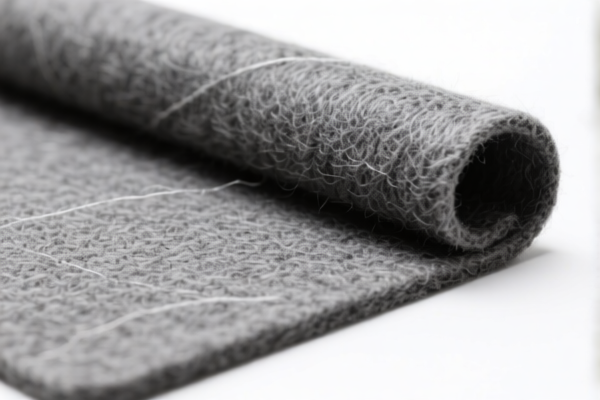
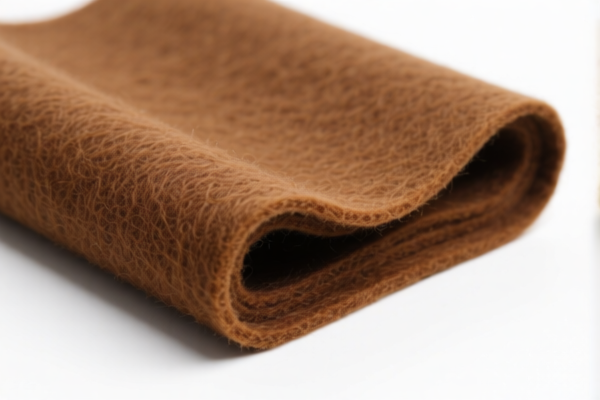
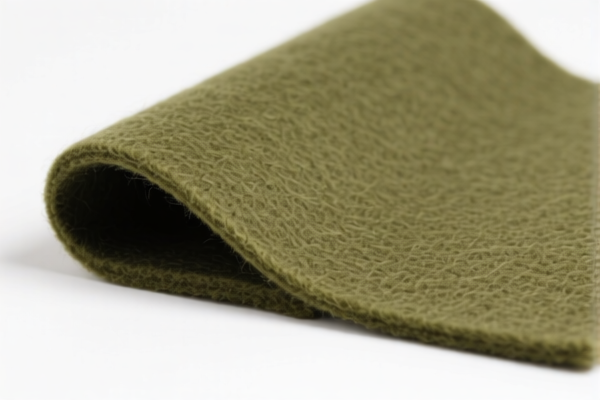
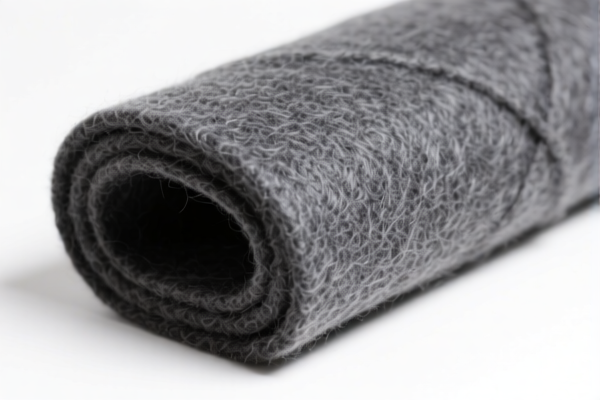
AI Analysis
🏭 Textile Felt for Paper Production (Papermaking Felts & Press Felts)
🌐 HS Code Reference & Customs Clearance Guide | 2026 Latest Tariff Analysis | Technical Textile Compliance Strategy
📌 I. Product Definition & Classification: What Exactly Are "Papermaking Felts"?
Textile felts for paper production are highly specialized technical textiles used in the wet-end section of papermaking machines. They are not ordinary fabrics; they are engineered structures designed to remove water from the paper web and support its movement through the machine.
In international trade, these products fall under Chapter 59 (Impregnated, coated, covered or laminated textile fabrics; textile articles for technical uses). Specifically, they are classified based on their weight and specific function within the paper machine.
⚠️ Key Distinction:
- Press Felts (5911.31.00.10): Used in the press section to squeeze water out of the paper sheet. Must weigh < 650 g/m².
- Paper-Forming Fabrics (5911.31.00.30): Used in the forming section to create the paper sheet from the pulp slurry. Must weigh < 650 g/m².
- Both must be "endless" (seamless loops) or fitted with linking devices.
📦 II. HS Code Classification Details (2026 Latest Tariff Authority)
Based on the provided data, here are the two specific HS codes for textile felts weighing less than 650 g/m²:
| HS Code | Product Description | Application in Paper Machine | Weight Limit | Structure Requirement |
|---|---|---|---|---|
5911.31.00.10 |
Press Felts | Press Section (Dewatering under pressure) | < 650 g/m² | Endless or with linking devices |
5911.31.00.30 |
Paper-Forming Fabrics | Forming Section (Sheet formation from pulp) | < 650 g/m² | Endless or with linking devices |
🔍 Critical Note:
- Both codes fall under Note 8 to Chapter 59, which defines "Textile products and articles for technical uses."
- The weight threshold of 650 g/m² is strict. If the fabric weighs ≥ 650 g/m², it may fall under different subheadings (e.g.,5911.32or other technical textile categories), which could have different tax implications.
- These are not general industrial fabrics; they must be explicitly of the kind used in papermaking or similar machines (e.g., pulp processing, asbestos-cement).
💰 III. 2026 Latest Tariff Rate Breakdown (China Origin)
✅ Applicable Country: United States (US)
✅ Origin: China (CN)
✅ Effective Date: Current rates as per provided data (Note: 2026 rates may include future policy changes, but current base data shows 0% total tax)
🎯 1. 5911.31.00.10 —— Press Felts (< 650 g/m²)
| Item | Content |
|---|---|
| Base Tariff Rate | 0.0% |
| Additional Tariff (Section 301 / IEEPA) | 0.0% (As per provided data) |
| Total Tax Rate | 0.0% |
| Tax Calculation | CIF Value × 0% = $0.00 |
| De Minimis Eligibility | N/A (Usually commercial import, but rate is 0%) |
| Legal Basis Path | HS:5911.31.00.10 → Chapter 59 Note 8 → Technical Textiles |
📌 Interpretation:
- According to the provided dataset, no additional tariffs (such as Section 301 or IEEPA) are currently listed for these specific HS codes.
- This is a low-risk, low-cost classification for customs purposes.
- Caution: While the base tax is 0%, always verify if new trade restrictions or anti-dumping duties apply to specific manufacturers or regions not covered in this general data.
🎯 2. 5911.31.00.30 —— Paper-Forming Fabrics (< 650 g/m²)
| Item | Content |
|---|---|
| Base Tariff Rate | 0.0% |
| Additional Tariff (Section 301 / IEEPA) | 0.0% (As per provided data) |
| Total Tax Rate | 0.0% |
| Tax Calculation | CIF Value × 0% = $0.00 |
| De Minimis Eligibility | N/A |
| Legal Basis Path | HS:5911.31.00.30 → Chapter 59 Note 8 → Technical Textiles |
📌 Interpretation:
- Identical tax treatment to Press Felts.
- The 0% total tax rate makes these products highly competitive in the US market from a tariff perspective.
🛠️ IV. Customs Clearance Practical Advice (Real-World Pitfall Guide)
✅ 1. Required Documentation Checklist (Non-Negotiable)
| Document | Mandatory? | Purpose |
|---|---|---|
| ✅ Product Specification Sheet | ✔️ | Must explicitly state: "Used for Papermaking Machine," "Press Felt" or "Forming Fabric," and Weight < 650 g/m². |
| ✅ Technical Drawing / Cross-Section | ✔️ | To prove the fabric is "endless" (seamless loop) or has linking devices. |
| ✅ Test Report (Weight Confirmation) | ✔️ | Independent lab report confirming areal weight is strictly less than 650 g/m². |
| ✅ Commercial Invoice | ✔️ | Description must match HS code precisely (e.g., "Textile Press Felt for Paper Machine, 600g/m²"). |
| ✅ Packing List | ✔️ | Detailing rolls/lengths. Ensure no misleading "fabric roll" descriptions without technical context. |
✅ 2. Declaration Strategy (Key Mnemonic)
🔥 "Specify Use, Weigh it Right, Loop or Link, Clear the Night!"
| Scenario | Correct Declaration | Wrong Practice | Consequence |
|---|---|---|---|
| Weight = 600 g/m² | HS 5911.31.00.10/30 |
Declare as "Industrial Fabric" (5911.40) |
Potential re-classification, audit, delay |
| Weight = 700 g/m² | HS 5911.32.00.00 (if applicable) or other tech textile |
Declare as <650 |
Customs Penalty! Overstating weight eligibility |
| Seamless Loop | "Endless Press Felt" | "Fabric Roll" | Misleading description → Inspection |
| With Linking Devices | "Felt with Links" | "Woven Fabric" | Misclassification |
✅ 3. Special Circumstances Handling
| Situation | Handling Advice |
|---|---|
| OEM for Paper Machine Manufacturer | Provide letter from paper machine OEM confirming the part is for their machine. |
| Mixed Weight in Shipment | If some rolls are <650 and some ≥650, separate them in documentation. Do not mix in one line item. |
| Used/Refurbished Felts | May be subject to different regulations. Ensure "New" status is declared if claiming 0% tax under new goods rules. |
| Samples | Even samples must declare correct HS and weight. |
🌍 V. Global Market Customs Comparison (2026 Overview)
| Country/Region | Recommended HS Code | Tariff (CN Origin) | Certification/Notes |
|---|---|---|---|
| 🇺🇸 USA | 5911.31.00.10 / .30 |
0.0% | Must prove weight <650g/m². No major S301 on these specific codes per data. |
| 🇨🇳 China | 5911.31 |
~5-8% | Import duty for machinery parts. |
| 🇪🇺 EU | 5911.31 |
0-6.5% | Varies by member state. May require REACH compliance. |
| 🇬🇧 UK | 5911.31 |
0-6.5% | Post-Brexit tariffs. Check UK Global Tariff. |
| 🇯🇵 Japan | 5911.31 |
0% | Generally duty-free for technical textiles. |
📌 Conclusion:
- The USA currently offers a 0% tariff for these specific products, making it a favorable market.
- The critical risk is not tariff, but classification accuracy. Misdeclaring weight or use can lead to audits.
📌 VI. Common Mistakes & Pitfalls (Lessons Learned)
❌ Mistake 1: Declaring "Textile Fabric" generally
👉 Result: CBP may reclassify under 5911.40 or 6002 with higher duties.
✅ Fix: Use precise description: "Papermaking Press Felt, 550 g/m², Endless."
❌ Mistake 2: Ignoring the 650 g/m² Weight Limit
👉 Result: If actual weight is 651 g/m², HS Code is wrong.
✅ Fix: Provide third-party lab test report confirming weight strictly below 650 g/m².
❌ Mistake 3: Failing to Specify "Endless" or "Linking Devices"
👉 Result: May be seen as general woven fabric (5911.10).
✅ Fix: Include photos of the joint/linkage or certificate of seamless construction.
❌ Mistake 4: Not Proving "Technical Use"
👉 Result: CBP may question if it’s really for papermaking.
✅ Fix: Include invoice note: "For use in Paper Machine [Model], Section: [Press/Forming]."
🎯 VII. Conclusion: Precision in Technical Textiles Means Zero Duty
🎯 Remember the Golden Rules:
🔹 "Weight under 650, Tax is zero!"
🔹 "Use must be papermaking, be specific!"
🔹 "Endless or linked, keep it clear!"
📌 Pro Tip:
- Request a Binding Ruling (CBP Ruling Letter) from US Customs if you are importing large volumes. This provides legal certainty on the HS code and 0% duty rate.
- Keep lab test reports for every batch to prove weight compliance during any customs audit.
📣 Immediate Action:
📞 Verify Weight: Ensure your supplier provides a test report <650 g/m².
📄 Document: Clearly state "Papermaking Felt" on all commercial invoices.
🚀 Ship with Confidence: With 0% duty, your cost advantage is maximized!
✨ Technical Textiles, Technical Classification!
💼 Every Gram Counts in Chapter 59!
Customer Reviews
About HS Code Classification
The Harmonized System (HS) is an internationally standardized nomenclature developed by the World Customs Organization (WCO) to classify traded products. Over 200 countries use the HS system as the basis for customs tariffs, trade statistics, and import/export regulations.
Each HS code follows a hierarchical structure:
- Chapter (2 digits) — Broad category of goods (e.g., Chapter 84: Machinery and Mechanical Appliances)
- Heading (4 digits) — More specific grouping within the chapter
- Subheading (6 digits) — Internationally standardized breakdown, used by all WCO member countries
- National subdivisions (8-10 digits) — Country-specific extensions for further classification, such as US HTSUS 10-digit codes
Correct HS code classification is essential for smooth customs clearance, accurate duty payment, and compliance with trade regulations. Misclassification can lead to customs delays, overpayment of duties, or penalties.
When importing from CN to US, the applicable tariff rates may include:
- Most-Favored-Nation (MFN) rate — The standard duty rate applied to WTO members
- General rate — Applied to countries without trade agreements
- Trade remedy duties — Additional tariffs such as Section 301 (anti-dumping), Section 232 (national security), or countervailing duties
The information provided on this page is for reference purposes only. For official classification, please consult with your local customs authority or a licensed customs broker.