Textile Fiber V Belt for Electrical Equipment
CN → US| HS Code | Tariff Rate | Origin | Destination | Doc |
|---|---|---|---|---|
| 5910001010 | 39.0% | CN | US | Official Doc |
| 4010313000 | 38.4% | CN | US | Official Doc |
| 4010391000 | 38.4% | CN | US | Official Doc |
Product Images
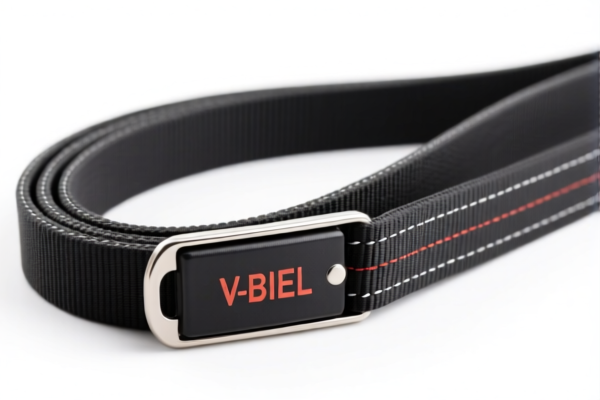
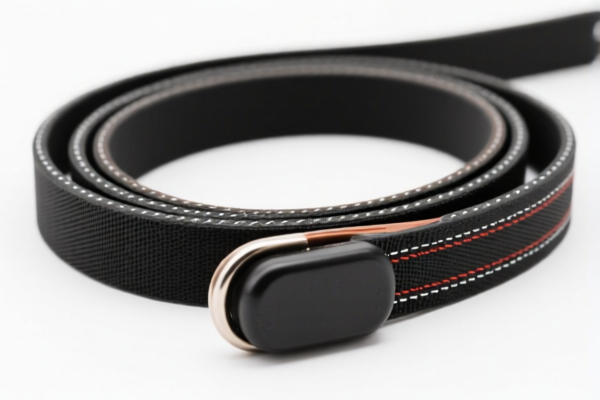
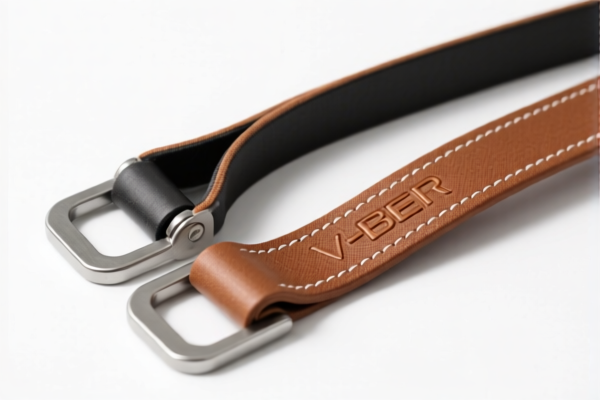
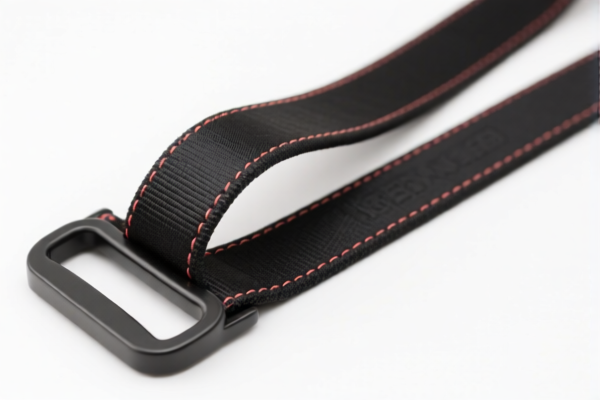
AI Analysis
🧵 Textile Fiber V-Belt for Electrical Equipment
🌐 HS Code Reference & Customs Clearance Guide | 2026 Latest Tariff Analysis | Professional Strategy
📌 I. Product Definition & Classification: Do You Really Understand "Fiber V-Belts"?
A Textile Fiber V-Belt is a transmission belt made primarily of woven textile materials (such as polyester, nylon, or cotton) and rubber compounds, designed in a trapezoidal cross-section. It is widely used in electrical equipment, industrial machinery, and HVAC systems to transmit power from motors to driven components.
In international trade, classification depends heavily on the primary material composition and structural integrity:
- Vulcanized Rubber Belts (HS Chapter 40): If the belt is primarily composed of rubber/textile blends and classified under "Rubber Belts," it falls under HS Code 4010.
- Artificial Fiber Belts (HS Chapter 59): If the belt is constructed specifically as an "Artificial Fiber" product (often implying higher synthetic fiber content or specific manufacturing standards for "Fiber V-Belts"), it falls under HS Code 5910.
⚠️ Key Distinction Point:
- If the product is described as "Textile Material" or generic "Rubber/Textile V-Belt" → Often classified under Chapter 40 (4010).
- If the product is explicitly labeled "Artificial Fiber" or "Synthetic Fiber V-Belt" → Classified under Chapter 59 (5910).
📦 II. HS Code Classification Details (2026 Latest Tariff Authority Comparison)
Based on the provided <DATA>, here are the two primary HS Codes applicable to Textile Fiber V-Belts, with their corresponding tax implications.
| HS Code | Product Description | Material Composition | Primary Application |
|---|---|---|---|
5910.00.10.10 |
Fiber V-Belt | Artificial Fiber (Synthetic) | High-performance electrical equipment, industrial drives |
4010.31.30.00 |
Fiber V-Belt | Textile Material (Natural/General Textile) | Standard electrical equipment, general machinery |
4010.39.10.00 |
Fiber V-Belt | Textile Material (Trapezoidal Cross-Section) | Specific trapezoidal section applications, electrical motors |
🔍 Important Note:
- All three codes refer to V-Belts matching the V-shaped cross-section. - The difference lies in the sub-category of material: "Artificial Fiber" vs. "Textile Material." - Misclassification Risk: Declaring a "Textile Material" belt as "Artificial Fiber" (or vice versa) can lead to duty discrepancies and customs penalties.
💰 III. 2026 Latest Tariff Rate Breakdown (Including Surtaxes & Policy Add-ons)
✅ Applicable Country: United States (US)
✅ Origin: China (CN)
✅ Effective Date: From November 10, 2025 (and subsequent imports)
🎯 1. 5910.00.10.10 — Fiber V-Belt (Artificial Fiber)
| Item | Details |
|---|---|
| Base Duty Rate | 4.0% |
| Section 301 Surcharge | +25.0% |
| Section 122 Tariff | +10.0% |
| Total Tax Rate | 39.0% |
| Tax Calculation | CIF Value × 39.0% |
| De Minimis Eligibility | ❌ No (Not eligible for low-value shipment exemption) |
| Legal Basis Path | Base Tariff → Section 301 (Footnote) → Section 122 |
📌 Explanation:
- Base 4.0%: Standard MFN (Most Favored Nation) duty for artificial fiber belts.
- 301 Surtax 25%: Added under US Trade Law Section 301 for Chinese goods.
- 122 Tariff 10%: Additional surcharge under Section 122 regulations.
- Total: 39% is a high-duty tier, significantly impacting profit margins.
🎯 2. 4010.31.30.00 — Fiber V-Belt (Textile Material, V-Shape)
| Item | Details |
|---|---|
| Base Duty Rate | 3.4% |
| Section 301 Surcharge | +25.0% |
| Section 122 Tariff | +10.0% |
| Total Tax Rate | 38.4% |
| Tax Calculation | CIF Value × 38.4% |
| De Minimis Eligibility | ❌ No |
| Legal Basis Path | Base Tariff → Section 301 (Footnote) → Section 122 |
📌 Note:
- Base 3.4%: Standard duty for textile/rubber V-belts.
- Total: 38.4% is slightly lower than the artificial fiber category but still substantial.
🎯 3. 4010.39.10.00 — Fiber V-Belt (Textile Material, Trapezoidal Section)
| Item | Details |
|---|---|
| Base Duty Rate | 3.4% |
| Section 301 Surcharge | +25.0% |
| Section 122 Tariff | +10.0% |
| Total Tax Rate | 38.4% |
| Tax Calculation | CIF Value × 38.4% |
| De Minimis Eligibility | ❌ No |
| Legal Basis Path | Base Tariff → Section 301 (Footnote) → Section 122 |
📌 Note:
- Applies to V-belts with trapezoidal cross-sections made of textile materials.
- Tax structure is identical to4010.31.30.00.
🛠️ IV. Customs Clearance Operational Advice (Practical Pitfall Avoidance)
✅ 1. Required Documentation Checklist (Mandatory)
| Document | Mandatory? | Description |
|---|---|---|
| ✅ Product Specification Sheet | ✔️ | Must specify: Material (Artificial Fiber vs. Textile), Cross-section (V/Trapezoidal), Dimensions, Load Capacity. |
| ✅ Material Composition Certificate | ✔️ | Crucial for distinguishing between HS 5910 (Artificial Fiber) and HS 4010 (Textile). |
| ✅ Commercial Invoice | ✔️ | Must clearly state: "Fiber V-Belt," "For Electrical Equipment," and accurate HS Code. |
| ✅ Packing List | ✔️ | Detail quantities, weights, and dimensions. |
| ✅ Origin Certificate | ✔️ | Proves Chinese origin, triggering surtaxes. |
| ✅ Photos of Product & Label | ✔️ | Clear view of branding, model number, and any material tags. |
✅ 2. Declaration Strategy (Key Tips)
🔥 "Material Defines Code, Cross-Section Defines Sub-code, Accuracy Saves Money!"
| Scenario | Correct HS Code | Incorrect Approach | Consequence |
|---|---|---|---|
| Belt is Synthetic/Artificial Fiber | 5910.00.10.10 |
Declare as "Textile" → 4010 |
Potential audit, possible fine for under-declaration. |
| Belt is General Textile/Rubber | 4010.31.30.00 |
Declare as "Artificial" → 5910 |
Over-declaration risk, though less common. |
| Belt has Trapezoidal Section | 4010.39.10.00 |
Declare as "Standard V" → 4010.31 |
Mismatch in physical description, customs hold. |
| Any V-Belt from China | All codes above | Assume "De Minimis" exemption | ❌ Not eligible. 38.4%-39.0% duty applies. |
✅ 3. Special Circumstances Handling
| Situation | Handling Advice |
|---|---|
| Mixed Materials | If the belt contains both rubber and textile, consult the "essential character" rule. Usually, rubber content may push it to Chapter 40, but fiber-specific manufacturing may keep it in Chapter 59. Provide lab test results. |
| OEM Custom Belts | Provide customer design drawings to prove the "Artificial Fiber" construction if claiming 5910. |
| High-Volume Imports | Consider applying for an HTS Exclusion (if applicable for Section 301) or utilize FTZ (Foreign Trade Zone) to defer duties. |
| Re-export | If re-exporting from a third country, ensure proper proof of origin to avoid double taxation, though Section 122 may still apply. |
🌍 V. Global Market Comparison (2026 Latest)
| Country/Region | Recommended HS Code | Base Duty | Additional Surtax | Total Effective Duty | Notes |
|---|---|---|---|---|---|
| 🇺🇸 USA | 5910.00.10.10 or 4010.31.30.00 |
3.4% - 4.0% | +25% (301) +10% (122) | 38.4% - 39.0% | High tariff barrier. No de minimis. |
| 🇨🇳 China | 5910.00.10.10 or 4010.31.30.00 |
~5-6% | None | ~5-6% | Lower domestic/import duty for non-US markets. |
| 🇪🇺 EU | 4010.31.00 |
4.5% | None | 4.5% | No Section 122/301 equivalents for Chinese goods generally. |
| 🇬🇧 UK | 4010.31.00 |
4.5% | None | 4.5% | Post-Brexit tariff, no US-style surtaxes. |
📌 Conclusion:
- The US market imposes a ~39% effective duty on these products due to Section 301 and Section 122.
- This makes US-bound shipments significantly less competitive compared to EU/UK markets.
- Cost Optimization: Consider pricing strategies that absorb part of the duty or explore supply chain diversification (e.g., manufacturing in Southeast Asia) to mitigate US tariffs.
📌 VI. Common Mistakes & Pitfall Guide (Blood & Tears Lessons)
❌ Mistake 1: Assuming "Textile" means "Low Duty"
👉 Result: Still subject to 25% + 10% surtaxes. Total cost remains high.
❌ Mistake 2: Misclassifying "Artificial Fiber" as "Textile" to get a lower base rate (3.4% vs 4.0%)
👉 Result: Customs Audit. If the product is synthetically woven, it must be 5910. False declaration leads to penalties and seizure.
❌ Mistake 3: Omitting "Section 122 Tariff" in cost calculations
👉 Result: Underquoting by 10%. Unexpected bills upon entry.
❌ Mistake 4: Assuming De Minimis applies
👉 Result: Rejection. These are industrial goods, not low-value consumer items. All shipments are taxable.
✅ Correct Practice:
"Fiber V-Belt, Artificial Fiber, V-Section, for Electrical Motors, Model XYZ, HS Code 5910.00.10.10, Origin: China"
🎯 VII. Conclusion: Precision Classification, Cost Control!
🎯 Remember These Key Points:
🔹 "Material Matters: Artificial Fiber = 39%, Textile = 38.4%."
🔹 "No De Minimis: All shipments are taxable."
🔹 "Include All Surtaxes: Base + 301 + 122 = Total Landed Cost."
📌 Pro Tip:
If your V-Belts contain significant rubber content, ensure the label reflects "Rubber Textile Composite" to support 4010 classification if beneficial. Conversely, if they are high-synthetic, stick to 5910.
Always verify with a licensed customs broker before shipping, as tariff codes can change.
📣 Immediate Action Required:
📞 Contact your customs broker with material composition details.
📊 Calculate Landed Cost including 38.4%-39.0% duty.
🚀 Optimize pricing or explore alternative manufacturing bases to remain competitive in the US market.
✨ Professional Customs Clearance Starts with Accurate Classification!
💼 Every percentage point of duty counts towards your bottom line!
Customer Reviews
About HS Code Classification
The Harmonized System (HS) is an internationally standardized nomenclature developed by the World Customs Organization (WCO) to classify traded products. Over 200 countries use the HS system as the basis for customs tariffs, trade statistics, and import/export regulations.
Each HS code follows a hierarchical structure:
- Chapter (2 digits) — Broad category of goods (e.g., Chapter 84: Machinery and Mechanical Appliances)
- Heading (4 digits) — More specific grouping within the chapter
- Subheading (6 digits) — Internationally standardized breakdown, used by all WCO member countries
- National subdivisions (8-10 digits) — Country-specific extensions for further classification, such as US HTSUS 10-digit codes
Correct HS code classification is essential for smooth customs clearance, accurate duty payment, and compliance with trade regulations. Misclassification can lead to customs delays, overpayment of duties, or penalties.
When importing from CN to US, the applicable tariff rates may include:
- Most-Favored-Nation (MFN) rate — The standard duty rate applied to WTO members
- General rate — Applied to countries without trade agreements
- Trade remedy duties — Additional tariffs such as Section 301 (anti-dumping), Section 232 (national security), or countervailing duties
The information provided on this page is for reference purposes only. For official classification, please consult with your local customs authority or a licensed customs broker.