Textile Labels and Hang Tags
CN → US| HS Code | Tariff Rate | Origin | Destination | Doc |
|---|---|---|---|---|
| 4823908000 | 35.0% | CN | US | Official Doc |
| 4823902000 | 35.0% | CN | US | Official Doc |
| 560900 | 0.0% | CN | US | Official Doc |
| 392690 | 0.0% | CN | US | Official Doc |
Product Images
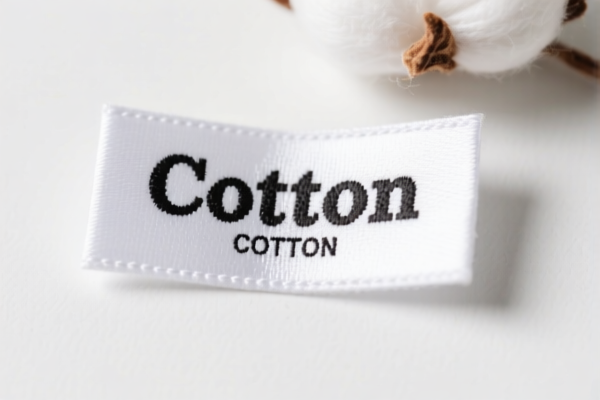
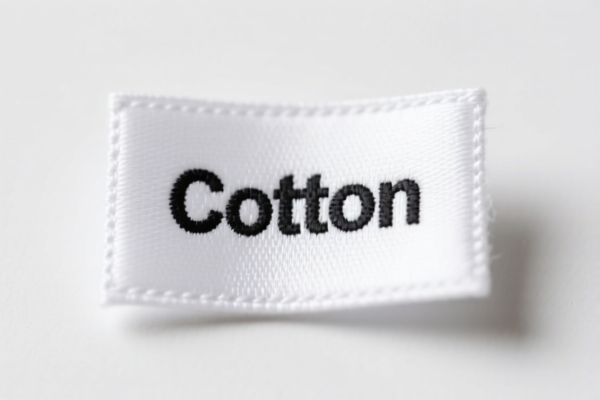


AI Analysis
🏷️ Textile Labels and Hang Tags | The Silent Salesmen of Fashion
🌐 HS Code Reference & Customs Clearance Guide | 2026 Latest Tariff Analysis | Professional Strategy for Apparel Accessories
📌 I. Product Definition & Classification: Do You Know Your Labels?
Textile labels and hang tags are the critical identity markers for garments, bags, and home textiles. They serve dual purposes: compliance (fiber content, care instructions) and marketing (branding, price, aesthetics). In international trade, their classification depends heavily on their material composition and function.
Key Distinction:
- Textile Labels: Made of fabric (woven, printed, or embroidered tags).
- Hang Tags/Labels: Often made of paper, cardboard, or plastic, attached via string, rivet, or glue.
⚠️ Critical Classification Point:
- If made of textile materials (fabric) → Likely 5609.00
- If made of plastic materials (PVC, PET, etc.) → Likely 3926.90
- Note: Paper tags are often classified under Chapter 48, but based on the provided data, we focus on the specific codes listed below.
📦 II. HS Code Classification Details (Based on Provided Data)
| HS Code | Product Description | Material | Tax Rate (Total) | Tax Details |
|---|---|---|---|---|
5609.00 |
Textile labels and hang tags, made of textile materials, used for identifying or decorating garments | Textile | Error | Failed to retrieve tax information |
3926.90 |
Plastic hang tags and labels, made of plastic materials, intended for identification or decoration of garments | Plastic | Error | Failed to retrieve tax information |
🔍 Key Observation:
- For Textile Labels (5609.00): The system reportsFailed to retrieve tax information. This may indicate a need for country-specific lookup (e.g., HTSUS for USA, TARIC for EU) or potential duty-free status in certain contexts, but no definitive rate is available in this dataset.
- For Plastic Hang Tags (3926.90): Similarly, tax information is unavailable in the provided data.
- Warning: Do NOT assume 0% or default rates. You must consult local customs authorities or a licensed broker for precise duty calculations for these codes.
💰 III. Tax Rate Analysis (Based on Provided Data Only)
✅ Applicable Country: Not specified in data (assume General International Trade)
✅ Oridin: Not specified
✅ Status: Tax Information Missing
🚫 1. 5609.00 —— Textile Labels & Hang Tags
| Item | Content |
|---|---|
| Base Duty | ❌ Unknown |
| Additional Duty | ❌ Unknown |
| Total Tax Rate | Error |
| Tax Calculation | Cannot be calculated |
| De Minimis Exemption | Uncertain |
| Legal Basis | Data retrieval failed |
📌 Explanation:
- The provided data does not contain any tax details for HS Code5609.00.
- This is a common scenario for "other made-up articles of textile materials." Duties vary significantly by country (e.g., 0% in many FTA partners, 5-10% in US/EU).
- Action Required: You must verify the duty rate with your destination country’s customs tariff schedule.
🚫 2. 3926.90 —— Plastic Hang Tags & Labels
| Item | Content |
|---|---|
| Base Duty | ❌ Unknown |
| Additional Duty | ❌ Unknown |
| Total Tax Rate | Error |
| Tax Calculation | Cannot be calculated |
| De Minimis Exemption | Uncertain |
| Legal Basis | Data retrieval failed |
📌 Explanation:
- The provided data does not contain any tax details for HS Code3926.90.
- This code covers "other articles of plastics." Duties are often moderate (e.g., 3-6% in US) but can be higher for specific materials.
- Action Required: You must verify the duty rate with your destination country’s customs tariff schedule.
🛠️ IV. Customs Clearance Practical Advice (Avoiding Pitfalls)
✅ 1. Documentation Checklist (Critical for Labels/Tags)
| Document | Mandatory? | Notes |
|---|---|---|
| ✅ Product Specification | ✔️ | Must specify material (e.g., "100% Polyester Woven Label" vs. "350gsm Cardboard Hang Tag") |
| ✅ Material Declaration | ✔️ | Crucial for correct HS Code assignment. Misdeclaration leads to penalties. |
| ✅ Product Photos | ✔️ | Clear images showing attachment method (string, rivet, glued) and content |
| ✅ Commercial Invoice | ✔️ | Must clearly state "Textile Labels" or "Plastic Hang Tags" |
| ✅ Packing List | ✔️ | Quantity per carton, total weight |
| ✅ Customs Declaration | ✔️ | Accurate HS Code and description |
⚠️ Critical Tip:
- Do NOT mix textile and plastic labels in one declaration without clear segregation.
- If labels are attached to garments, they may be considered accessories and classified with the garment itself (e.g., under Chapter 61/62). Standalone labels/tags fall under Chapters 56/39/48.
✅ 2. Classification Strategy (Key Mantra)
🔥 "Material Determines Code, Function Determines Duty!"
| Scenario | Correct HS Code | Risk if Misclassified |
|---|---|---|
| Fabric Labels (Woven/Printed) | 5609.00 |
Risk of being classified as "Other textiles" (higher duty) |
| Plastic Tags (PVC/PET) | 3926.90 |
Risk of being classified as "General plastic articles" (variable duty) |
| Paper Tags | 4823.90 (Not in tax data) |
Often duty-free or low duty in many countries |
| Labels Attached to Garments | Classify with Garment | Separate classification may lead to rejection or additional duty |
📌 Important:
- If labels are sewn into garments, they are usually not declared separately.
- If labels are sold separately (e.g., bulk labels for local application), they must be declared under5609.00or3926.90.
✅ 3. Special Cases & Recommendations
| Case | Recommendation |
|---|---|
| Bulk Label Purchase | Declare as "Textile Labels, HS 5609.00" or "Plastic Hang Tags, HS 3926.90" |
| Labels with Brand Name | Ensure brand authorization documents are available to avoid IP issues |
| Recycled Plastic Tags | May qualify for green tariff preferences in some countries (e.g., EU, Canada) |
| Eco-friendly Paper Tags | Consider 4823.90 if applicable, as it may have lower duties than plastic |
🌍 V. Global Market Comparison (General Guidance)
| Country/Region | Likely HS Code | Estimated Duty | Notes |
|---|---|---|---|
| 🇺🇸 USA | 5609.00.00.00 / 3926.90.90.80 |
Varies (0-6%) | Check USITC HTS for exact rates. No 25% tariff mentioned in data. |
| 🇪🇺 EU | 5609.00 / 3926.90 |
0-4% | Generally low duty for textile/plastic accessories. |
| 🇨🇳 China | 5609.00 / 3926.90 |
0-5% | Often low duty for these accessories. |
| 🇬🇧 UK | 5609.00 / 3926.90 |
0-4% | Post-Brexit, check UK Tariff. |
📌 Conclusion:
- Duties for labels/tags are generally low compared to finished garments.
- However, tax data is missing in this dataset, so verify with local customs.
- Plastic tags may face stricter environmental regulations (e.g., EU Single-Use Plastics Directive).
📌 VI. Common Mistakes & Pitfalls (Learn from Others)
❌ Mistake 1: Declaring plastic hang tags as "textile labels"
👉 Consequence: Misclassification → Customs delay, fines, or incorrect duty assessment.
❌ Mistake 2: Assuming 0% duty because "they are small"
👉 Consequence: No! All goods are dutiable unless specifically exempted. Verify the rate!
❌ Mistake 3: Mixing labels with garments in the same HS Code
👉 Consequence: If sold separately, they must be classified separately. If attached, they should not be declared separately.
❌ Mistake 4: Ignoring material composition
👉 Consequence: "Textile" vs. "Plastic" has different HS codes. Declare accurately!
✅ Correct Practice:
"Textile Woven Labels, 100% Polyester, HS 5609.00, for Garment Branding"
"Plastic PVC Hang Tags, HS 3926.90, for Retail Price Display"
🎯 VII. Conclusion: Precision in Classification, Profit in Clearance
🎯 Remember the Mantra:
🔹 "Material First, Code Second, Duty Third!"
🔹 "Labels are small, but duties matter!"
🔹 "Verify, Verify, Verify!"
📌 Pro Tip:
- Since tax information is missing for 5609.00 and 3926.90 in this dataset, you must:
1. Consult a customs broker in the destination country.
2. Check the official tariff database (e.g., USITC, EU TARIC, China Customs).
3. Request a binding tariff information (BTI) ruling if high volume.
📣 Immediate Action:
📞 Contact your customs broker + Provide material specs + Verify HS Code & Duty
🚀 Ensure smooth clearance, avoid delays, and maximize profit!
✨ Precision in Classification, Success in Clearance!
💼 Every label counts, but every duty point matters!
Customer Reviews
About HS Code Classification
The Harmonized System (HS) is an internationally standardized nomenclature developed by the World Customs Organization (WCO) to classify traded products. Over 200 countries use the HS system as the basis for customs tariffs, trade statistics, and import/export regulations.
Each HS code follows a hierarchical structure:
- Chapter (2 digits) — Broad category of goods (e.g., Chapter 84: Machinery and Mechanical Appliances)
- Heading (4 digits) — More specific grouping within the chapter
- Subheading (6 digits) — Internationally standardized breakdown, used by all WCO member countries
- National subdivisions (8-10 digits) — Country-specific extensions for further classification, such as US HTSUS 10-digit codes
Correct HS code classification is essential for smooth customs clearance, accurate duty payment, and compliance with trade regulations. Misclassification can lead to customs delays, overpayment of duties, or penalties.
When importing from CN to US, the applicable tariff rates may include:
- Most-Favored-Nation (MFN) rate — The standard duty rate applied to WTO members
- General rate — Applied to countries without trade agreements
- Trade remedy duties — Additional tariffs such as Section 301 (anti-dumping), Section 232 (national security), or countervailing duties
The information provided on this page is for reference purposes only. For official classification, please consult with your local customs authority or a licensed customs broker.