Textile Machinery for Processing Textiles
CN → US| HS Code | Tariff Rate | Origin | Destination | Doc |
|---|---|---|---|---|
| 8479909596 | 85.0% | CN | US | Official Doc |
| 8448595000 | 17.0% | CN | US | Official Doc |
| 8479899599 | 87.5% | CN | US | Official Doc |
| 8446305030 | 38.7% | CN | US | Official Doc |
Product Images
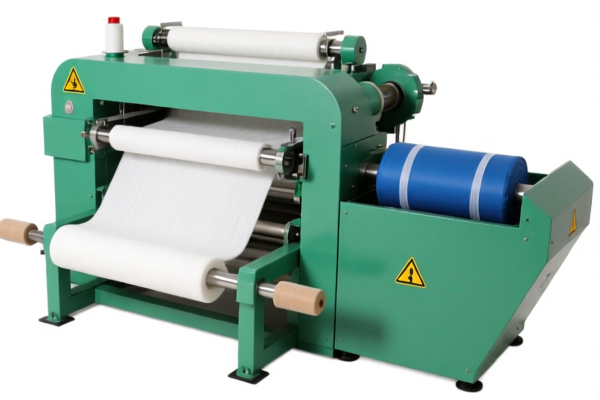
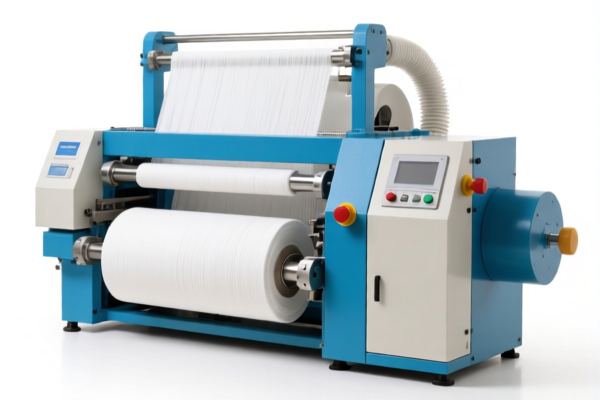
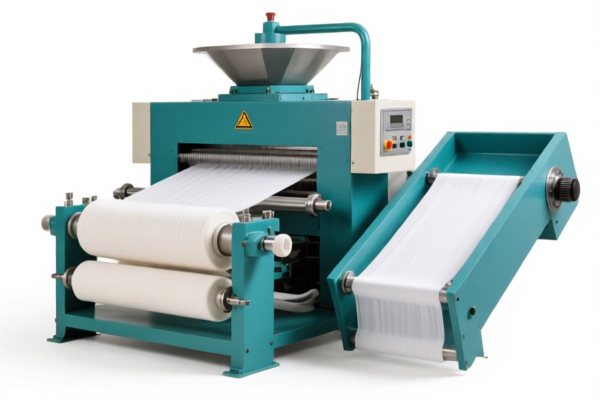
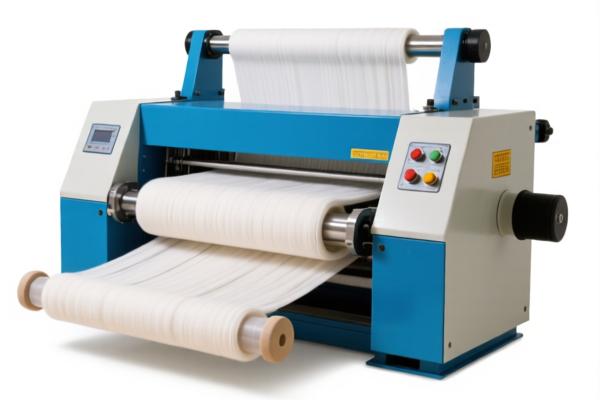
AI Analysis
🧵 Textile Machinery for Processing Textiles
🌐 HS Code Reference & Customs Clearance Guide | 2026 Latest Tariff Analysis | Professional Clearance Strategy
📌 1. Product Definition & Classification: What Exactly Is "Textile Machinery"?
Textile machinery is a broad category encompassing equipment used in the spinning, weaving, knitting, and processing of fibers and yarns. In international trade, accurate classification is critical because tariffs vary wildly depending on whether the item is a complete machine or a machine part.
Key Distinction: * Complete Machines (e.g., Looms, Spinning Frames): These are classified under specific chapters (like Chapter 84, Heading 8446 or 8448) describing the primary function. * Parts & Accessories: These are classified under headings specific to the machine they serve (e.g., parts of heading 8447) or general "parts" headings (e.g., 8479) if no specific heading exists.
⚠️ Critical Classification Point:
- If it is a complete weaving machine (especially shuttleless): Look at 8446.
- If it is a part/attachment for a machine in Heading 8447: Look at 8448.
- If it is a general industrial part not specifically covered above: Look at 8479 (the "catch-all" for independent function machines).
📦 2. HS Code Classification Matrix (2026 Authorized Data)
The following codes are derived directly from the provided dataset. Note that duplicate entries in the source data have been consolidated for clarity.
| HS Code | Product Description & Summary | Applicable Scenario | Total Tax Rate |
|---|---|---|---|
| 8446.30.50.30 | Textile Machinery (Weaving/Spinning): Shuttleless Looms. High functional alignment. | Complete shuttleless weaving machines. | 38.7% |
| 8448.59.50.00 | Textile Machinery Parts: Parts & accessories for machinery of heading 8447. Fits general functional attributes. | Parts for knitting/weaving machines in Hdg 8447. | 17.0% |
| 8479.90.95.96 | Textile Machinery Parts: Independent function machine parts. General "catch-all" category. | Generic parts with independent function, not specific to Hdg 8447/8446. | 85.0% |
| 8479.89.95.99 | Textile Machinery Parts: Other machines/independent function machinery parts. General catch-all. | General industrial parts, potentially including steel/aluminum/copper components. | 87.5% |
🔍 Focus Note:
- 8446.30.50.30 applies to complete machines.
- 8448.59.50.00 applies to specific parts of machinery under Heading 8447.
- 8479.90.95.96 and 8479.89.95.99 are general parts categories, often attracting higher "catch-all" tariffs.
💰 3. Detailed Tariff Breakdown (2026 Data)
✅ Source Data Constraints:
The provided<DATA>contains specific tax details. We will analyze these strictly without external assumptions.
🎯 1. 8446.30.50.30 — Shuttleless Looms (Complete Machine)
| Item | Detail |
|---|---|
| Summary | Textile machinery (spinning, weaving, knitting); specifically Shuttleless Looms. |
| Base Tariff | 3.7% |
| Additional Tariff | 25.0% |
| Section 301 / 122 Clause Tariff | 10% |
| Total Effective Rate | 38.7% |
| Tax Calculation | Sum of Base + Additional + 122 Clause Tariffs. |
| Legal Basis Path | Base: 3.7% → Additional: 25.0% → 122 Clause: 10%. |
📌 Explanation:
- This code is for complete weaving machines (shuttleless).
- The 25% additional tariff is likely a Section 301 or similar trade remedy tariff.
- The 10% "122 Clause" tariff is an additional surcharge specifically mentioned for this category.
- Total: 3.7 + 25 + 10 = 38.7%.
🎯 2. 8448.59.50.00 — Parts of Machinery Heading 8447
| Item | Detail |
|---|---|
| Summary | Textile machinery parts; parts & accessories for machines of heading 8447. |
| Base Tariff | 0.0% |
| Additional Tariff | 7.0% |
| Section 301 / 122 Clause Tariff | 10% |
| Total Effective Rate | 17.0% |
| Tax Calculation | Sum of Base + Additional + 122 Clause Tariffs. |
| Legal Basis Path | Base: 0.0% → Additional: 7.0% → 122 Clause: 10%. |
📌 Explanation:
- This code is for parts specifically for machinery in Heading 8447 (Knitting machines, etc.).
- Lower base rate (0%) but still subject to an additional 7% and the 122 Clause 10%.
- Total: 0 + 7 + 10 = 17.0%. This is significantly cheaper than complete machines or general parts.
🎯 3. 8479.90.95.96 — General Machine Parts (Catch-All)
| Item | Detail |
|---|---|
| Summary | Textile machinery parts; parts of machines with independent function. General "other" category. |
| Base Tariff | 0.0% |
| Additional Tariff | 25.0% |
| Section 301 / 122 Clause Tariff | 10% |
| Section 232 (Steel/Aluminum/Copper) Tariff | 50% |
| Total Effective Rate | 85.0% |
| Tax Calculation | Sum of Base + Additional + 122 Clause + 232 Clause. |
| Legal Basis Path | Base: 0.0% → Additional: 25.0% → 122 Clause: 10% → Section 232: 50%. |
📌 Explanation:
- This is a general catch-all for parts not specifically classified elsewhere.
- It incurs a high additional tariff (25%) plus the 122 Clause (10%).
- CRITICAL: If the part contains Steel, Aluminum, or Copper, it triggers an additional 50% Section 232 tariff.
- Total: 0 + 25 + 10 + 50 = 85.0%.
🎯 4. 8479.89.95.99 — Other Independent Function Machine Parts
| Item | Detail |
|---|---|
| Summary | Textile machinery parts; other machines/independent function machinery parts. |
| Base Tariff | 2.5% |
| Additional Tariff | 25.0% |
| Section 301 / 122 Clause Tariff | 10% |
| Section 232 (Steel/Aluminum/Copper) Tariff | 50% |
| Total Effective Rate | 87.5% |
| Tax Calculation | Sum of Base + Additional + 122 Clause + 232 Clause. |
| Legal Basis Path | Base: 2.5% → Additional: 25.0% → 122 Clause: 10% → Section 232: 50%. |
📌 Explanation:
- Similar to the previous code, this is a general catch-all but with a higher base rate.
- Incurs Base 2.5% + Additional 25% + 122 Clause 10%.
- CRITICAL: If the part contains Steel, Aluminum, or Copper, it triggers an additional 50% Section 232 tariff.
- Total: 2.5 + 25 + 10 + 50 = 87.5%. This is the highest tariff in the dataset.
🛠️ 4. Customs Clearance Operational Advice (Practical Pitfall Avoidance)
✅ 1. Preparation Checklist (Non-Negotiable)
| Document | Required | Explanation |
|---|---|---|
| Product Specification Sheet | ✅ Yes | Must clearly define if it is a "Complete Machine" or "Part". |
| Functional Description | ✅ Yes | For parts: Must prove it is specifically for a machine in Heading 8447 (to qualify for 17%) vs. general use (85-87.5%). |
| Material Composition Statement | ✅ Yes | Crucial for 8479 codes. Must specify if the part contains Steel, Aluminum, or Copper to confirm/deny the 50% Section 232 tariff. |
| Commercial Invoice | ✅ Yes | Clearly state HS Code and description. |
| Packing List | ✅ Yes | Show relationship between machines and parts. |
| Photos | ✅ Yes | Clear images of the machine/part to aid classification. |
✅ 2. Classification Strategy (Key Takeaway)
🔥 "Classify Parts Specifically to Save 70%!"
| Scenario | Correct HS Code | Tariff | Wrong Classification | Wrong Tariff | Savings |
|---|---|---|---|---|---|
| Complete Shuttleless Loom | 8446.30.50.30 |
38.7% | 8479.89.95.99 |
87.5% | ~48.8% |
| Part for 8447 Machine | 8448.59.50.00 |
17.0% | 8479.90.95.96 |
85.0% | ~68.0% |
| General Part (Non-Metal) | 8479.90.95.96 |
85.0% | 8479.89.95.99 |
87.5% | 2.5% |
| General Part (Steel/Metal) | 8479.89.95.99 |
87.5% | N/A | N/A | N/A |
📌 Key Insight:
- If your item is a part for a knitting/weaving machine (Heading 8447), ALWAYS try to classify it under 8448.59.50.00 (17% tariff).
- If you misclassify a specific part as a "general machine part" (8479...), you risk paying 85-87.5% instead of 17%.
- Material matters: For 8479 codes, if the part is made of steel/aluminum/copper, the 50% Section 232 tariff applies. Ensure your documentation clearly states material composition.
✅ 3. Special Considerations
| Situation | Recommendation |
|---|---|
| Parts with Independent Function | If the part can function independently (e.g., a specific motor or control unit), it might still fall under 8479. However, if it is exclusively for a 8447 machine, 8448.59.50.00 is preferred. |
| Mixed Shipments | Do not mix complete machines (8446) with parts (8448/8479) in a single line item. Declare separately to avoid misclassification. |
| Section 232 Tariff (Steel/Aluminum/Copper) | For 8479 codes, if the part contains these metals, the 50% tariff is automatic. Consider sourcing non-metallic alternatives if possible to avoid this surcharge. |
| 122 Clause Tariff (10%) | This applies to ALL codes in the dataset. No exemption. Budget for this 10% surcharge in all cases. |
🌍 5. Global Market Comparison (Hypothetical Based on Dataset)
| Market | HS Code | Tariff | Notes |
|---|---|---|---|
| USA (China Origin) | 8446.30.50.30 |
38.7% | Includes 25% Additional + 10% 122 Clause. |
| USA (China Origin) | 8448.59.50.00 |
17.0% | Includes 7% Additional + 10% 122 Clause. |
| USA (China Origin) | 8479.90.95.96 |
85.0% | Includes 25% Additional + 10% 122 Clause + 50% Section 232 (if metal). |
| USA (China Origin) | 8479.89.95.99 |
87.5% | Includes 25% Additional + 10% 122 Clause + 50% Section 232 (if metal). |
📌 Conclusion:
- The USA imposes high tariffs on textile machinery and parts.
- Parts for Heading 8447 machines (8448.59.50.00) offer the lowest tariff (17%).
- General parts (8479) are penalized heavily, especially if they contain metals (Steel/Aluminum/Copper).
- Complete machines (8446) are in the middle (38.7%).
📌 6. Common Errors & Pitfall Avoidance (Lessons Learned)
❌ Error 1: Classifying a specific part for a 8447 machine as a "general part" (8479...).
👉 Consequence: Tax jumps from 17% to 85-87.5%.
✅ Fix: Provide evidence that the part is exclusively for machinery in Heading 8447.
❌ Error 2: Ignoring material composition for 8479 codes.
👉 Consequence: Unexpected 50% Section 232 tariff if steel/aluminum/copper is present.
✅ Fix: Clearly state material composition on the invoice.
❌ Error 3: Confusing "Complete Machine" with "Part".
👉 Consequence: Misclassification leads to delays, penalties, and incorrect tax calculation.
✅ Fix: Define clearly: Does it have independent function and complete structure? If yes, it’s a machine (8446). If it’s an attachment/part, it’s a part (8448 or 8479).
🎯 7. Conclusion: Precision Classification Saves Money
🎯 Key Takeaway:
🔹 "Parts for 8447? Use 8448 (17%)!"
🔹 "General Parts? Expect 85-87.5%, especially if metallic!"
🔹 "Complete Looms? Pay 38.7%."
🔹 "Always budget for the 10% 122 Clause Tariff!"
📌 Pro Tip:
If you are importing parts, ensure your supplier provides a detailed technical manual specifying the machine heading (e.g., 8447) they are intended for. This can help justify classification under 8448.59.50.00 (17%) instead of the much higher 8479 rates.
📣 Immediate Action:
📞 Contact Customs Broker + Provide Technical Specs + Verify Material Composition
🚀 Minimize Tariff Exposure by Choosing the Correct HS Code!
✨ Professional Customs Clearance Starts with Accurate Classification!
💼 Every Percentage Point Saved is Pure Profit!
Customer Reviews
About HS Code Classification
The Harmonized System (HS) is an internationally standardized nomenclature developed by the World Customs Organization (WCO) to classify traded products. Over 200 countries use the HS system as the basis for customs tariffs, trade statistics, and import/export regulations.
Each HS code follows a hierarchical structure:
- Chapter (2 digits) — Broad category of goods (e.g., Chapter 84: Machinery and Mechanical Appliances)
- Heading (4 digits) — More specific grouping within the chapter
- Subheading (6 digits) — Internationally standardized breakdown, used by all WCO member countries
- National subdivisions (8-10 digits) — Country-specific extensions for further classification, such as US HTSUS 10-digit codes
Correct HS code classification is essential for smooth customs clearance, accurate duty payment, and compliance with trade regulations. Misclassification can lead to customs delays, overpayment of duties, or penalties.
When importing from CN to US, the applicable tariff rates may include:
- Most-Favored-Nation (MFN) rate — The standard duty rate applied to WTO members
- General rate — Applied to countries without trade agreements
- Trade remedy duties — Additional tariffs such as Section 301 (anti-dumping), Section 232 (national security), or countervailing duties
The information provided on this page is for reference purposes only. For official classification, please consult with your local customs authority or a licensed customs broker.