Textile Printing and Dyeing Leveling Agent (Powder)
CN → US| HS Code | Tariff Rate | Origin | Destination | Doc |
|---|---|---|---|---|
| 38089400 | 0.0% | CN | US | Official Doc |
| 38119000 | 0.0% | CN | US | Official Doc |
Product Images
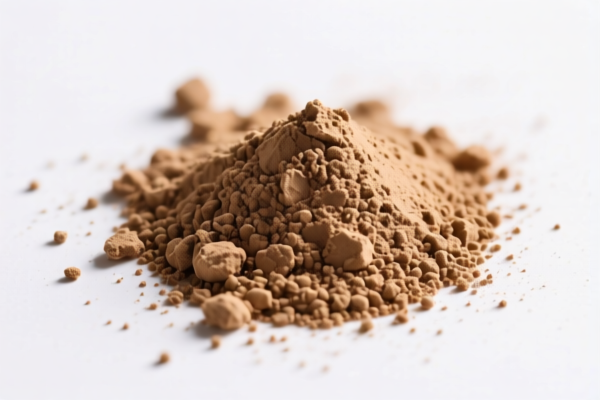
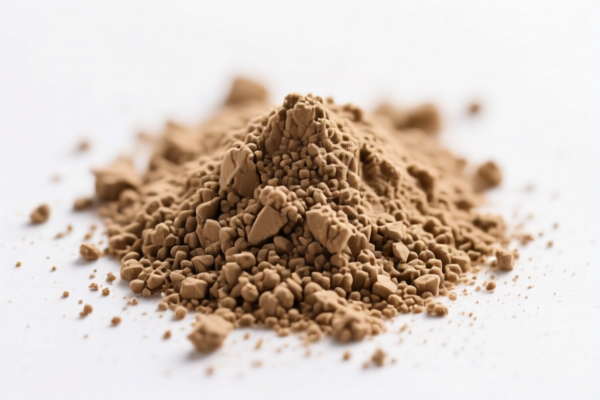
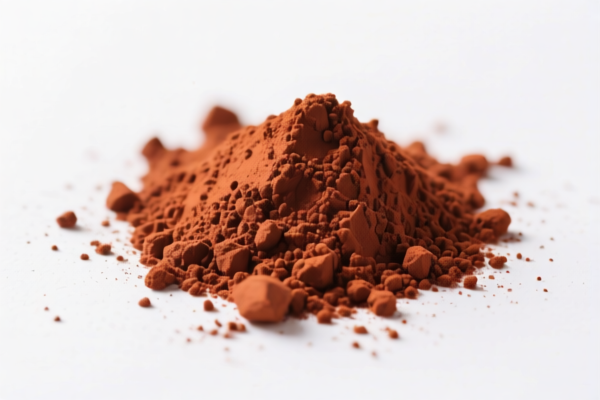
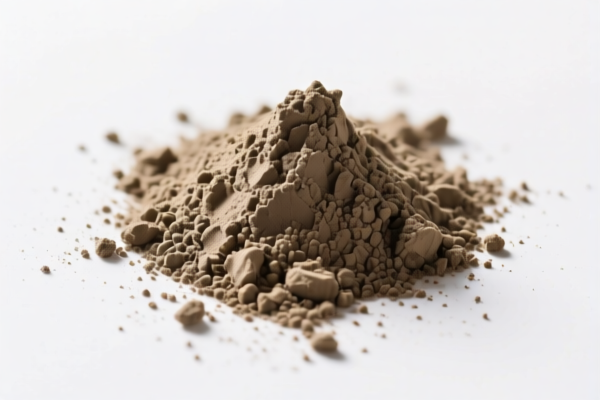
AI Analysis
🧪 Textile Printing & Dyeing Leveling Agent (Powder)
🌐 HS Code Reference & Customs Clearance Guide | 2026 Latest Tariff Analysis | Professional-Level Clearance Strategy
📌 I. Product Definition & Classification: Do You Really Know "Leveling Agents"?
Textile printing and dyeing leveling agents are essential auxiliary chemicals used in the textile industry to ensure even dye distribution, prevent defects (like uneven color or spots), and improve the quality of the final fabric. In international trade, these chemical products are generally classified under Chapter 38: Miscellaneous Chemical Products.
Since the input explicitly states "Powder Form" and "Leveling Agents for Textile Printing and Dyeing," the classification depends heavily on the specific function and composition of the product. Two primary HS Codes are relevant based on the provided data:
⚠️ Key Distinction Point:
- If the product is a general chemical product not specifically listed elsewhere (including leveling agents) → Likely 3808.94.00 (or similar subheading under 3808).
- If the product is specifically used in the textile industry (e.g., as a leveling agent, wetting agent, etc.) → Likely 3811.90.00 (Preparations for the textile industry).
📦 II. HS Code Classification Details (2026 Latest Tariff Authority Comparison)
| HS Code | Product Description | Applicable Scenario | Key Characteristics |
|---|---|---|---|
3808.94.00 |
Other chemical products, not elsewhere specified or included, including leveling agents for textile printing and dyeing, in powder form | General chemical additives used in textile processes, not exclusively formulated for textile application | ✅ General chemical product ✅ Includes leveling agents ✅ Powder form |
3811.90.00 |
Other chemical products, not elsewhere specified or included, used in the textile industry, such as leveling agents, in powder form | Specifically formulated preparations for the textile industry (e.g., dyeing auxiliaries) | ✅ Used specifically in textile industry ✅ Examples: Leveling agents, wetting agents ✅ Powder form |
🔍 Important Reminder:
- 3808.94.00 is broader and may apply if the product is a generic chemical that happens to be used as a leveling agent.
- 3811.90.00 is more specific to textile industry preparations. If the product is explicitly marketed and formulated for textile dyeing/printing, this code is often preferred.
- Both codes are for POWDER FORM products. If liquid, the codes would differ.
💰 III. 2026 Latest Tariff Rate Details (Including Additional Taxes, Policy Add-ons)
✅ Note: The provided data indicates "Failed to retrieve tax information" for both HS Codes. Therefore, exact tariff rates cannot be provided from the source data.
⚠️ However, here is the general principle:
- Most chemical products (Chapter 38) have base tariffs ranging from 0% to 10% depending on the country.
- Additional taxes (e.g., US Section 301 tariffs, EU anti-dumping duties) may apply depending on the origin and destination country.
- You must consult a local customs broker or tariff database (e.g., USITC, EU TARIC, China Customs) for exact rates for your specific shipment.📌 Explanation:
- Since tax data is unavailable in the source, do not assume zero tariff.
- For US imports from China, many Chapter 38 products are subject to 25% Section 301 tariffs.
- For EU imports, check for anti-dumping duties if applicable.
- Always verify with official customs databases before shipping.
🛠️ IV. Customs Clearance Practical Advice (Real-World Pitfall Avoidance Guide)
✅ 1. Required Documentation Checklist (All are Mandatory)
| Document | Must Provide | Description |
|---|---|---|
| ✅ Product Specification Sheet | ✔️ | Chemical composition, concentration, formulation, intended use |
| ✅ Safety Data Sheet (SDS) | ✔️ | Critical for chemical products. Must indicate if hazardous |
| ✅ Certificate of Analysis (COA) | ✔️ | Confirms quality and composition matches description |
| ✅ Commercial Invoice | ✔️ | Must clearly state: "Textile Printing & Dyeing Leveling Agent (Powder)" |
| ✅ Packing List | ✔️ | Net/Gross weight, number of packages, material of packaging |
| ✅ Proof of Origin | ✔️ | May be required for preferential tariffs (if applicable) |
| ✅ Usage Declaration | ✔️ | Specify: "For use in textile dyeing/printing industry" |
✅ 2. Declaration Tips (Key Mantra)
🔥 "Be Specific, Declare Function, Avoid General Terms!"
| Scenario | Correct Declaration | Incorrect Declaration |
|---|---|---|
| Product is a leveling agent for textiles | 3811.90.00 - "Leveling agents for textile printing and dyeing, powder form" |
"Chemical powder" or "Miscellaneous chemicals" |
| Product is a general chemical used as a leveling agent | 3808.94.00 - "Other chemical products, including leveling agents, powder form" |
Too vague → Risk of reclassification |
| Liquid form (if misdeclared as powder) | ❌ High Risk of Penalty | Must specify physical state (Powder vs. Liquid) |
📌 Warning:
- Do not use generic terms like "Chemical" or "Additive."
- Clearly state "Leveling Agent" and "Textile Industry Use."
- Misdeclaration can lead to customs delays, fines, or reclassification with higher tariffs.
✅ 3. Special Cases Handling
| Case | Handling Advice |
|---|---|
| Hazmat Classification | Check SDS. If flammable, corrosive, or toxic, declare as Dangerous Goods (DG) and comply with IATA/IMDG regulations. |
| Mixed Shipments | If leveling agents are packed with non-chemical items, declare separately. Do not bundle. |
| Re-imports/Returns | Provide original export documents to prove prior classification. |
| Private Label/OEM | Provide formula sheet to confirm chemical composition and intended use. |
🌍 V. Global Market Customs Comparison (2026 Latest)
| Country/Region | Recommended HS Code | Estimated Tariff Range | Certification Requirements | Notes |
|---|---|---|---|---|
| 🇺🇸 USA | 3811.90.00 or 3808.94.00 |
0-10% Base + Up to 25% Section 301 (if from China) | EPA/CPSC Compliance (if consumer-facing) | Check HTSUS for latest rate |
| 🇨🇳 China | 3811.90.00 or 3808.94.00 |
5-10% | No special certification for B2B chemicals | Verify with China Customs |
| 🇪🇺 EU | 3811.90.00 or 3808.90.00 |
0-6.5% | REACH Registration Required | Must have REACH compliance |
| 🇦🇺 Australia | 3811.90.00 |
5% | AICIS Notification Required | Check if exempt from notification |
| 🇯🇵 Japan | 3811.90.00 |
0-5% | Chemical Substances Control Law (CSCL) | Verify PRTR notification if applicable |
📌 Conclusion:
- REACH (EU) and AICIS (Australia) have strict chemical registration requirements.
- US Section 301 can add 25% for Chinese-origin goods.
- Always verify REACH/AICIS compliance before shipping chemicals to EU/Australia.
📌 VI. Common Errors & Pitfall Guide (Lessons Learned)
❌ Error 1: Declaring as "Chemical Powder" without specifying function
👉 Consequence: Customs may reclassify to a higher tariff code or request additional info.
❌ Error 2: Failing to declare Hazmat status
👉 Consequence: Shipment detained, fined, or returned. Air freight bans on certain chemicals.
❌ Error 3: Ignoring REACH/AICIS requirements
👉 Consequence: Goods seized in EU/Australia due to non-compliance.
❌ Error 4: Using incorrect physical state (Liquid vs. Powder)
👉 Consequence: HS Code misclassification → Different tariff rates.
✅ Correct Practice:
"Textile Printing & Dyeing Leveling Agent, Powder Form, Chemical Composition: [Detail], HS Code: 3811.90.00, Non-Hazardous (if applicable), REACH Registered (if EU)."
🎯 VII. Conclusion: Professional Declaration, Save Time, Reduce Costs!
🎯 Remember the Mantra:
🔹 "Specify Function, Declare State, Check Hazmat, Verify Compliance!"
🔹 "HS Code 3811 for Textile Auxiliaries, 3808 for General Chemicals!"
📌 Tip:
- For US imports: Check if your product is on the Section 301 Exclusion List.
- For EU imports: Ensure REACH registration is completed before shipment.
- Always consult a licensed customs broker for pre-shipment classification.
📣 Immediate Action:
📞 Contact a professional customs broker + Provide SDS + Verify REACH/AICIS compliance
🚀 Ensure smooth customs clearance, avoid penalties, and optimize costs!
✨ Professional Clearance Starts with Accurate Classification!
💼 Every chemical shipment deserves precision!
Customer Reviews
About HS Code Classification
The Harmonized System (HS) is an internationally standardized nomenclature developed by the World Customs Organization (WCO) to classify traded products. Over 200 countries use the HS system as the basis for customs tariffs, trade statistics, and import/export regulations.
Each HS code follows a hierarchical structure:
- Chapter (2 digits) — Broad category of goods (e.g., Chapter 84: Machinery and Mechanical Appliances)
- Heading (4 digits) — More specific grouping within the chapter
- Subheading (6 digits) — Internationally standardized breakdown, used by all WCO member countries
- National subdivisions (8-10 digits) — Country-specific extensions for further classification, such as US HTSUS 10-digit codes
Correct HS code classification is essential for smooth customs clearance, accurate duty payment, and compliance with trade regulations. Misclassification can lead to customs delays, overpayment of duties, or penalties.
When importing from CN to US, the applicable tariff rates may include:
- Most-Favored-Nation (MFN) rate — The standard duty rate applied to WTO members
- General rate — Applied to countries without trade agreements
- Trade remedy duties — Additional tariffs such as Section 301 (anti-dumping), Section 232 (national security), or countervailing duties
The information provided on this page is for reference purposes only. For official classification, please consult with your local customs authority or a licensed customs broker.