Textile Printing and Dyeing Penetrating Agent (Concentrated Liquid)
CN → US| HS Code | Tariff Rate | Origin | Destination | Doc |
|---|---|---|---|---|
| 38089490 | 0.0% | CN | US | Official Doc |
| 38119090 | 0.0% | CN | US | Official Doc |
| 3910000000 | 38.0% | CN | US | Official Doc |
| 3808940000 | 0.0% | CN | US | Official Doc |
| 3402422010 | 39.0% | CN | US | Official Doc |
| 3402422050 | 39.0% | CN | US | Official Doc |
Product Images
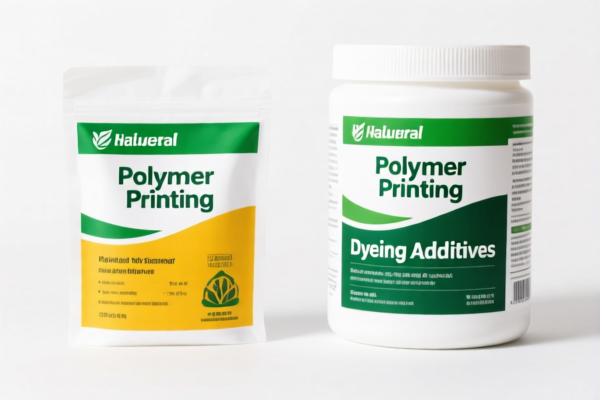
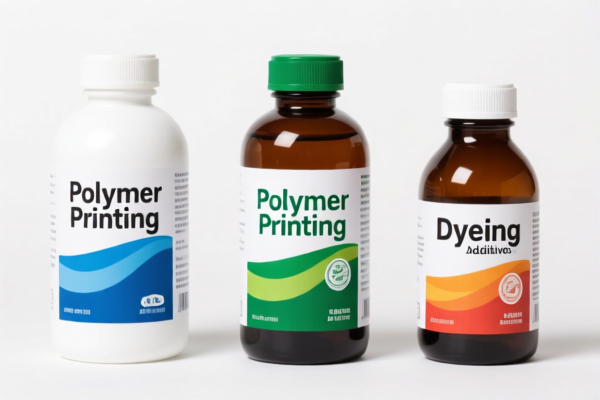
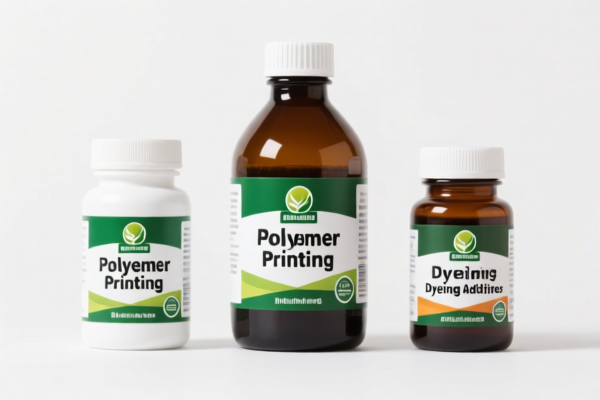
AI Analysis
🧪 Textile Printing & Dyeing Penetrating Agent (Concentrated Liquid)
🌐 HS Code Reference & Customs Clearance Guide | 2026 Latest Tariff Analysis | Professional Clearance Strategy
📌 I. Product Definition & Classification: Do You Really Understand "Penetrating Agents"?
Textile Printing and Dyeing Penetrating Agents are critical chemical auxiliaries used to reduce surface tension, allowing dyeing and printing liquors to penetrate fibers uniformly. In international trade, they are primarily classified based on their chemical composition (ionic vs. non-ionic) and specific functional use.
1. Non-Ionic Surfactants (Polyethers/Fatty Substances)
These are typically ethoxylated fatty alcohols or amines. They are highly effective in cold-pad-batch processes and require precise HS codes based on their chemical structure.
2. Concentrated Liquid Industrial Chemicals
If the product is a generic penetrating agent not specifically defined as a surfactant under Heading 3402, or if it fails specific surfactant definitions, it may fall under "Other Chemical Products" in Heading 3808 or 3811.
⚠️ Key Distinction Point:
- If the product is chemically defined as an organic surface-active agent (non-ionic), it must be classified under Heading 3402.
- If the product is a generic industrial chemical aid (e.g., specific penetrating agents for textile processing) that does not fit the strict definition of Heading 3402 surfactants, it may fall under 3808.94 or 3811.90.
- ⚠️ Critical Warning: Many agents listed under 3808/3811 currently show "Failed to retrieve tax information" in our database, indicating a high risk of manual assessment or classification disputes by customs.
📦 II. HS Code Classification Details (2026 Latest Tariff Authority Comparison)
| HS Code | Product Description | Applicability | Tax Status |
|---|---|---|---|
3910.00.00.00 |
Silicones in primary forms | Silicone-based penetrating agents (emulsions/silicones) | ✅ Tax Available |
3402.42.20.10 |
Other organic surface-active agents: Non-ionic: Fatty substances... Polyethers | Non-ionic surfactants containing polyether groups derived from fatty substances | ✅ Tax Available |
3402.42.20.50 |
Other organic surface-active agents: Non-ionic: Fatty substances... Other | Other non-ionic surfactants derived from fatty substances (not polyethers) | ✅ Tax Available |
3808.94.00.00 |
Other chemical products... including surface-active agents in primary forms | Generic penetrating agents classified here due to ambiguous surfactant status | ❌ Tax Error |
3808.94.90 |
Other chemical products... used in textile processing (concentrated liquid penetrating agents) | Specific textile processing aids, concentrated liquid form | ❌ Tax Error |
3811.90.90 |
Other chemical products for industrial use... textile processing aids | General industrial textile aids | ❌ Tax Error |
🔍 Focus Reminder:
- Silicones (3910) have a clear tax path.
- Surfactants (3402) have clear tax paths and are often the preferred classification for chemical penetrating agents if they meet the definition.
- Generic Industrial Aids (3808/3811) carry significant risk because tax information is currently unavailable (Error). This often leads to customs delaying clearance to manually determine the correct duty rate, potentially applying a default higher rate or requiring additional documentation.
💰 III. 2026 Latest Tariff Rate Details (Detailed Tax Breakdown)
✅ Applicable Market: United States (US)
✅ Origin: China (CN)
✅ Effective Date: Current rates include additional levies.
🎯 1. 3910.00.00.00 – Silicones in Primary Forms
| Item | Content |
|---|---|
| Base Duty Rate | 3.0% |
| Additional Duty (Section 301) | +25.0% |
| Total Tax Rate | 28.0% |
| Tax Calculation | CIF Value × 28.0% |
| De Minimis Exemption | ❌ Not Applicable (Section 301 goods are generally exempt from de minimis relief if value exceeds thresholds, but typically high-value industrial chemicals are fully declared) |
| Legal Basis Path | HTSUS: 3910.00.00.00 → Section 301: 9903.88.02 |
📌 Explanation:
- Silicone-based penetrating agents (e.g., polydimethylsiloxane emulsions) are explicitly classified here.
- The 28% total rate is fixed and predictable. No surprise additions unless specific anti-dumping duties apply (check for AD/CVD orders separately).
🎯 2. 3402.42.20.10 – Non-Ionic Surfactants: Polyethers
| Item | Content |
|---|---|
| Base Duty Rate | 4.0% |
| Additional Duty (Section 301) | +25.0% |
| Total Tax Rate | 29.0% |
| Tax Calculation | CIF Value × 29.0% |
| De Minimis Exemption | ❌ Not Applicable |
| Legal Basis Path | HTSUS: 3402.42.20.10 → Section 301: 9903.88.02 |
📌 Explanation:
- If your penetrating agent is chemically a polyether derived from fatty alcohols/amines, this is the correct code.
- Rate is 29%, which is 1% higher than silicones. Ensure chemical documentation supports this classification.
🎯 3. 3402.42.20.50 – Non-Ionic Surfactants: Other Fatty Substances
| Item | Content |
|---|---|
| Base Duty Rate | 4.0% |
| Additional Duty (Section 301) | +25.0% |
| Total Tax Rate | 29.0% |
| Tax Calculation | CIF Value × 29.0% |
| De Minimis Exemption | ❌ Not Applicable |
| Legal Basis Path | HTSUS: 3402.42.20.50 → Section 301: 9903.88.02 |
📌 Explanation:
- Use this if the agent is a non-ionic surfactant based on fatty substances but not a polyether.
- Same rate as above (29%).
🚨 4. 3808.94.00.00, 3808.94.90, 3811.90.90 – Other Chemical Products / Industrial Aids
| Item | Content |
|---|---|
| Base Duty Rate | Unknown / Error |
| Additional Duty | Unknown / Error |
| Total Tax Rate | ERROR (Failed to Retrieve) |
| Risk Level | 🔴 HIGH |
| Legal Basis Path | N/A (Data Missing) |
⚠️ Critical Warning:
- Do not rely on these codes for cost estimation.
- Customs may apply a default rate (often 3.0% - 6.5% base + 25% Section 301 = ~28-31%) OR may delay clearance to request manual classification.
- Recommendation: Avoid these codes if a more specific3402or3910classification is chemically accurate. Using an "Error" code increases the risk of audits, penalties, and storage fees at the port.
🛠️ IV. Customs Clearance Practical Advice (Real-World Pitfall Avoidance Guide)
✅ 1. Required Documentation Checklist (Non-Negotiable)
| Document | Must Provide | Explanation |
|---|---|---|
| ✅ Technical Data Sheet (TDS) | ✔️ | Must clearly state chemical composition (e.g., "Polyether," "Silicone-based") to justify 3402 vs 3910. |
| ✅ Formula/Ingredient List | ✔️ | Percentage of active ingredients. Crucial for distinguishing between 3402.42.20.10 (Polyether) and 3402.42.20.50 (Other). |
| ✅ Product Photos | ✔️ | Label showing "Non-ionic," "Penetrating Agent," and any hazard symbols (if applicable). |
| ✅ Safety Data Sheet (SDS) | ✔️ | Confirm it is not classified as a hazardous substance that triggers additional EPA/IMO regulations. |
| ✅ Commercial Invoice | ✔️ | Must explicitly state: "Textile Penetrating Agent, Non-Ionic Surfactant, Form: Concentrated Liquid." Avoid vague terms like "Chemical Mix." |
| ✅ Certificate of Analysis (COA) | ✔️ | Proves consistency with the declared HS Code chemical profile. |
✅ 2. Declaration Tips (Key Mantra)
🔥 "Silicones are 3910, Surfactants are 3402, Generic 3808 is Risk!"
| Scenario | Correct Declaration | Wrong Declaration |
|---|---|---|
| Silicone-based agent | HS 3910.00.00.00 |
Misclassified as 3402 → Potential penalty |
| Polyether surfactant | HS 3402.42.20.10 |
Misclassified as 3808.94 → Tax Error & Delay |
| General textile aid | Avoid 3808/3811 if possible. Try to justify under 3402. |
Using 3808.94.90 → Customs Audit Risk |
| Concentrated Liquid | Specify concentration in TDS | Generic "Liquid Chemical" → Unclear classification |
✅ 3. Special Situation Handling
| Situation | Handling Advice |
|---|---|
| Mixed Chemical Composition | If the product contains both silicones and surfactants, classify based on the principal function or essential character. If it's primarily a surfactant, use 3402. |
Customs Inquiry on 3808 Codes |
If you must use 3808, be prepared to provide a binding ruling or pre-classification confirmation, as tax data is unavailable. |
| Anti-Dumping Duties (AD) | Check if specific organic surfactants or silicones from China are subject to separate AD/CVD orders. This is independent of the HS Code duty. |
| EPA Registration | If the penetrating agent has biocidal properties (kills bacteria in the textile), it may require EPA registration, which is separate from customs duty. |
🌍 V. Global Market Comparison (2026 Latest)
| Country/Region | Recommended HS Code | Estimated Duty (China Origin) | Certification Requirements | Notes |
|---|---|---|---|---|
| 🇺🇸 United States | 3402.42.20.10 / 3910.00.00.00 |
28% - 29% (+ Section 301) | None specific for duty, but SDS required | Avoid 3808 codes due to tax errors. |
| 🇨🇳 China (Import) | 3402.42.20.10 |
~4-5% (VAT 13%) | None | Standard import duty. |
| 🇪🇺 European Union | 3402.42.20 |
~6.5% (Rebate possible) | REACH Registration | REACH compliance is critical. |
| 🇬🇧 United Kingdom | 3402.42.20 |
~6.5% | UK REACH | Post-Brexit regulatory changes. |
| 🇮🇳 India | 3402.42 |
~7.5% - 12% | BIS Certification (if applicable) | High GST (18%) applies. |
📌 Conclusion:
- The US market is the most complex due to the 25% Section 301 tariff on top of base duties, totaling 28-29%.
- Data Gaps: The "Error" status for3808and3811codes in the US system suggests that customs is actively reviewing or updating these classifications. Using3402(Surfactants) or3910(Silicones) is safer and more predictable.
📌 VI. Common Mistakes & Pitfall Guide (Lessons Learned)
❌ Mistake 1: Using "Chemical Auxiliary" or "Textile Aid" as the product name without specifying "Surfactant" or "Silicone."
👉 Consequence: Customs may classify under 3808 or 3811, leading to tax retrieval errors and shipment delays.
❌ Mistake 2: Declaring a Polyether surfactant as 3910 (Silicones).
👉 Consequence: Misclassification. While the rate might be similar (28% vs 29%), it triggers an audit for chemical inconsistency.
❌ Mistake 3: Ignoring the "Concentrated Liquid" aspect.
👉 Consequence: If the product is diluted for import but declared as concentrate, it may be deemed false declaration. Ensure the active content percentage matches the technical sheet.
❌ Mistake 4: Assuming 3808.94.00.00 has a standard duty rate.
👉 Consequence: High Risk. The system shows "Error." Customs will likely assign a rate manually, which could be higher than the standard 3-6%, plus potential penalties for inaccurate declaration.
✅ Correct Approach:
"Non-Ionic Surfactant Penetrating Agent, Polyether Type, Concentrated Liquid, CAS No: [Insert CAS], HS Code: 3402.42.20.10"
🎯 VII. Conclusion: Precise Classification Saves Costs!
🎯 Remember the Mantra:
🔹 "Silicones = 3910 (28%), Surfactants = 3402 (29%), Generic 3808 = ERROR/RISK!
🔹 "Provide TDS & CAS, Avoid Vague Names, Stick to 3402/3910!"
📌 Pro Tip:
If your penetrating agent is a complex mixture that doesn't fit neatly into 3402.42.20, consider applying for a US CBP Binding Ruling before shipment. This provides legal certainty and prevents costly delays at the US border.
📣 Immediate Action:
📞 Consult a Customs Broker: Verify if your specific CAS number fits
3402.42.20.10or3402.42.20.50.
📄 Prepare TDS & SDS: Ensure chemical descriptions match the HS Code definition exactly.
🚀 Avoid3808Codes: Unless you have a pre-approved ruling, they are a "Black Hole" for tax data and clearance speed.
✨ Professional Clearance, Start with Precise Classification!
💼 Your Bottom Line Depends on Accurate HS Codes!
Customer Reviews
About HS Code Classification
The Harmonized System (HS) is an internationally standardized nomenclature developed by the World Customs Organization (WCO) to classify traded products. Over 200 countries use the HS system as the basis for customs tariffs, trade statistics, and import/export regulations.
Each HS code follows a hierarchical structure:
- Chapter (2 digits) — Broad category of goods (e.g., Chapter 84: Machinery and Mechanical Appliances)
- Heading (4 digits) — More specific grouping within the chapter
- Subheading (6 digits) — Internationally standardized breakdown, used by all WCO member countries
- National subdivisions (8-10 digits) — Country-specific extensions for further classification, such as US HTSUS 10-digit codes
Correct HS code classification is essential for smooth customs clearance, accurate duty payment, and compliance with trade regulations. Misclassification can lead to customs delays, overpayment of duties, or penalties.
When importing from CN to US, the applicable tariff rates may include:
- Most-Favored-Nation (MFN) rate — The standard duty rate applied to WTO members
- General rate — Applied to countries without trade agreements
- Trade remedy duties — Additional tariffs such as Section 301 (anti-dumping), Section 232 (national security), or countervailing duties
The information provided on this page is for reference purposes only. For official classification, please consult with your local customs authority or a licensed customs broker.