Textile Printing and Dyeing Penetrating Agent Concentrate
CN → US| HS Code | Tariff Rate | Origin | Destination | Doc |
|---|---|---|---|---|
| 3824994900 | 41.5% | CN | US | Official Doc |
| 3824997510 | 38.7% | CN | US | Official Doc |
| 3402421000 | 39.0% | CN | US | Official Doc |
| 3402901000 | 38.8% | CN | US | Official Doc |
| 3824994900 | 41.5% | CN | US | Official Doc |
Product Images
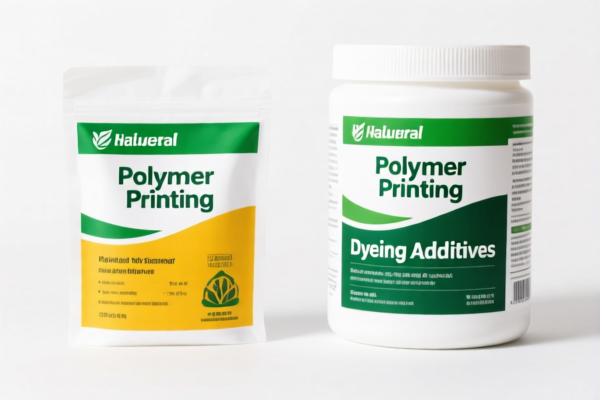
AI Analysis
🧪 Textile Printing & Dyeing Penetrating Agent (Concentrate)
🌐 HS Code Classification & Customs Clearance Guide | 2024 Latest Tariff Analysis | Professional Level Strategy
📌 I. Product Definition & Chemical Nature: What is "Penetrating Agent"?
Textile Printing and Dyeing Penetrating Agent (Concentrate) is a critical chemical auxiliary agent used in the textile industry. Its primary function is to reduce surface tension, allowing dyeing liquids and auxiliaries to rapidly and uniformly penetrate fabric fibers.
- Physical State: Liquid concentrate.
- Chemical Nature: Primarily composed of non-ionic surfactants, mixed with other chemical additives.
- Trade Context: Classified under Chapter 38 (Miscellaneous Chemical Products) or Chapter 34 (Soap, Organic Surface-Active Agents), depending on the specific dominant function and composition declared.
⚠️ Key Distinction:
- Is it a pure surfactant for cleaning/wetting? → Likely Chapter 34 (e.g., 3402).
- Is it a mixed chemical formulation for industrial processing? → Likely Chapter 38 (e.g., 3824).
- Note: Under US Customs rules, misclassification between 3402 and 3824 can lead to significant duty discrepancies due to different "Section 301" and "Section 122" tariff treatments.
📦 II. HS Code Classification Details (Based on Provided Data)
The following table outlines the four most likely HS Code classifications for "Textile Printing and Dyeing Penetrating Agent (Concentrate)," along with their tax implications. All scenarios include US Tariffs (Base + Section 301 + Section 122).
| HS Code | Product Description & Classification Logic | Total Tax Rate* | Tax Breakdown (US Import from CN) |
|---|---|---|---|
3824.99.49.00 |
Chemical Preparations Not Elsewhere Specified (NES). Classified as a general chemical industrial preparation/liquid concentrate. | 41.5% | Base: 6.5% Sec 301: 25.0% Sec 122: 10.0% |
3824.99.75.10 |
Chemical Auxiliaries/Raw Materials. Classified as a chemical aid/agent, fitting the "chemical/liquid" attribute profile. | 38.7% | Base: 3.7% Sec 301: 25.0% Sec 122: 10.0% |
3402.42.10.00 |
Non-ionic Surface Active Agents. Classified specifically as a non-ionic surfactant (chemical auxiliary). | 39.0% | Base: 4.0% Sec 301: 25.0% Sec 122: 10.0% |
3402.90.10.00 |
Other Surface Active Agents / Synthetic Cleaners. Classified as a synthetic detergent/chemical aid with surface-active properties. | 38.8% | Base: 3.8% Sec 301: 25.0% Sec 122: 10.0% |
* Total Tax Rate = Sum of Base Duty + Section 301 Tariff + Section 122 Tariff. Rates apply to imports from China.
💰 III. Detailed Tariff Analysis & Legal Basis
All four HS Codes share a common structure for US imports from China: 1. Section 301 Tariff: A flat 25% additional duty on most Chinese-origin goods. 2. Section 122 Tariff: A 10% additional duty (often associated with specific trade remedies or retaliatory measures depending on the current regulatory cycle). 3. Base Duty: Varies by HS Code (3.7% – 6.5%).
🎯 Scenario 1: HS Code 3824.99.49.00 (Highest Base Duty)
- Total Duty: 41.5%
- Breakdown: 6.5% (Base) + 25% (301) + 10% (122)
- Risk: This code attracts the highest base duty (6.5%). While the additional tariffs are fixed, the base rate is the highest among the options.
- Best For: General chemical mixtures where the "surfactant" nature is not the primary defining feature for customs purposes.
🎯 Scenario 2: HS Code 3824.99.75.10 (Lowest Total Duty)
- Total Duty: 38.7%
- Breakdown: 3.7% (Base) + 25% (301) + 10% (122)
- Advantage: This is the most cost-effective option among the four, with the lowest base duty (3.7%).
- Best For: Chemical auxiliaries/agents that fit the "other chemical preparations" category but have a low base rate.
🎯 Scenario 3: HS Code 3402.42.10.00 (Surfactant-Specific)
- Total Duty: 39.0%
- Breakdown: 4.0% (Base) + 25% (301) + 10% (122)
- Context: If the product is predominantly a non-ionic surfactant, this is the technically accurate classification for Chapter 34.
- Note: Requires strong technical data to prove it is a "non-ionic" agent specifically.
🎯 Scenario 4: HS Code 3402.90.10.00 (Other Surfactants)
- Total Duty: 38.8%
- Breakdown: 3.8% (Base) + 25% (301) + 10% (122)
- Context: For surface-active agents that don't fit the "non-ionic" specific subheading or are mixed synthetic cleaners.
🛠️ IV. Customs Clearance Practical Advice (Avoiding Pitfalls)
✅ 1. Documentation Requirements (Critical)
| Document | Requirement | Why It Matters |
|---|---|---|
| Technical Data Sheet (TDS) | Mandatory | Must explicitly state the chemical composition, percentage of active ingredients, and physical state (liquid concentrate). |
| Safety Data Sheet (SDS) | Mandatory | Must comply with OSHA/GHS standards. Helps customs determine if it's hazardous (which affects handling codes). |
| Product Specification | Highly Recommended | Clearly define: "Non-ionic surfactant content > X%", "Used for textile wetting/penetration". |
| Commercial Invoice | Mandatory | Must match the HS Code. Description should be precise: "Textile Chemical Auxiliary: Non-ionic Penetrating Agent Concentrate." |
| Certificate of Origin | Mandatory | To apply the correct Section 301/122 rates. |
✅ 2. Classification Strategy & Tips
🔥 "Function Over Form: Define the 'Active' Ingredient!"
| Situation | Recommended HS Code | Reason |
|---|---|---|
| Product is >50% Non-ionic Surfactant | 3402.42.10.00 |
Chapter 34 is preferred for specific surfactants. |
| Product is a Complex Chemical Mix | 3824.99.75.10 |
If it contains binders, thickeners, or other non-surfactant chemicals that define its industrial use. |
| Unclear Composition | 3824.99.49.00 |
Fallback "Chemical Preparation" code, but higher base duty. |
| Mixed Surfactant Type | 3402.90.10.00 |
If it's not purely non-ionic. |
✅ 3. Common Errors & How to Avoid Them
❌ Error 1: Vague Description ("Dyeing Agent")
👉 Consequence: Customs may reclassify to a higher duty code or request additional info, causing delays.
✅ Fix: Use precise chemical terms: "Non-ionic Surfactant Concentrate for Textile Wetting."
❌ Error 2: Ignoring Section 122 & 301
👉 Consequence: Underpayment of duties. Remember, the Base Duty is low, but the Total Duty is ~39-41% due to trade wars.
✅ Fix: Always calculate Base + 25% + 10%.
❌ Error 3: Misidentifying "Surfactant" vs. "Chemical Preparation"
👉 Consequence: If you claim 3402 (Surfactant) but the product is a complex blend, Customs may argue for 3824 (Chemical Prep).
✅ Fix: Provide lab analysis showing surfactant dominance if using Chapter 34.
🌍 V. Global Market Comparison (2024/2025 Context)
| Country | HS Code (Likely) | Total Duty (CN Origin) | Key Requirement |
|---|---|---|---|
| 🇺🇸 USA | 3824.99.75.10 or 3402.42.10.00 |
38.7% - 39.0% | SDS, TDS, Section 301/122 compliance |
| 🇨🇳 China (Import) | 3824.99.99 or 3402.90.90 |
~6-9% | No significant additional tariffs |
| 🇪🇺 EU | 3824.99 or 3402.90 |
~6.5% | REACH Registration is CRITICAL |
| 🇮🇳 India | 3824.99 or 3402.90 |
~10-15% | BIS Certification may be required |
📌 Key Insight:
- The USA imposes the highest burden due to Section 301 and 122 tariffs.
- The EU has lower tariffs but strict REACH compliance requirements for chemical imports.
- Always check if the specific surfactant compounds are registered under local chemical laws (e.g., REACH in EU, TSCA in US).
📌 VI. Conclusion & Action Plan
🎯 Final Recommendation:
For "Textile Printing and Dyeing Penetrating Agent (Concentrate)," HS Code 3824.99.75.10 offers the lowest total duty at 38.7% (3.7% Base + 25% + 10%). However, ensure your product fits the "Chemical Auxiliary" definition. If it is purely a non-ionic surfactant, 3402.42.10.00 (39.0%) is also a strong candidate and may be more technically accurate.
✅ Action Items: 1. Review Chemical Composition: Determine if surfactant content is dominant. 2. Prepare SDS & TDS: Ensure they clearly state "Non-ionic Surfactant" or "Chemical Auxiliary." 3. Calculate Landed Cost: Use 38.7% or 39.0% for US imports. 4. Consult Customs Broker: Before shipment, request a Binding Tariff Information (BTI) or Advance Ruling if possible.
📣 Pro Tip:
💡 "Chemical Auxiliaries, High Tariffs, Precise Docs, Avoid Delays!"
💡 "3824.99.75.10 is your budget-friendly hero (38.7%), but 3402 is your technical accuracy choice (39.0%)."
✨ Clear Classification, Clear Profit!
💼 Don't let hidden tariffs eat your margin!
Customer Reviews
About HS Code Classification
The Harmonized System (HS) is an internationally standardized nomenclature developed by the World Customs Organization (WCO) to classify traded products. Over 200 countries use the HS system as the basis for customs tariffs, trade statistics, and import/export regulations.
Each HS code follows a hierarchical structure:
- Chapter (2 digits) — Broad category of goods (e.g., Chapter 84: Machinery and Mechanical Appliances)
- Heading (4 digits) — More specific grouping within the chapter
- Subheading (6 digits) — Internationally standardized breakdown, used by all WCO member countries
- National subdivisions (8-10 digits) — Country-specific extensions for further classification, such as US HTSUS 10-digit codes
Correct HS code classification is essential for smooth customs clearance, accurate duty payment, and compliance with trade regulations. Misclassification can lead to customs delays, overpayment of duties, or penalties.
When importing from CN to US, the applicable tariff rates may include:
- Most-Favored-Nation (MFN) rate — The standard duty rate applied to WTO members
- General rate — Applied to countries without trade agreements
- Trade remedy duties — Additional tariffs such as Section 301 (anti-dumping), Section 232 (national security), or countervailing duties
The information provided on this page is for reference purposes only. For official classification, please consult with your local customs authority or a licensed customs broker.