Textile Printing and Dyeing Penetrating Agent Concentrated Liquid
CN → US| HS Code | Tariff Rate | Origin | Destination | Doc |
|---|---|---|---|---|
| 3402422050 | 39.0% | CN | US | Official Doc |
| 3402422010 | 39.0% | CN | US | Official Doc |
| 38089490 | 0.0% | CN | US | Official Doc |
| 38119090 | 0.0% | CN | US | Official Doc |
| 3824991100 | 35.0% | CN | US | Official Doc |
| 3824405000 | 40.0% | CN | US | Official Doc |
Product Images
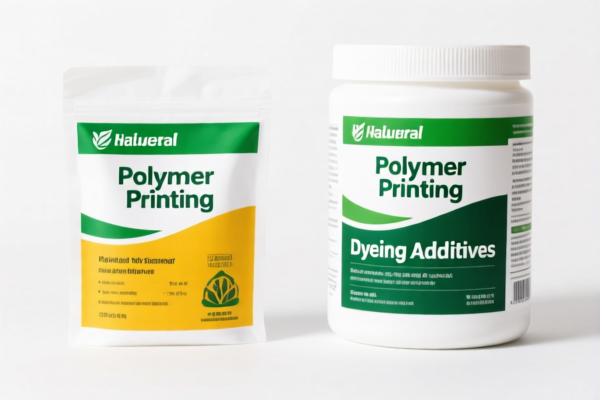
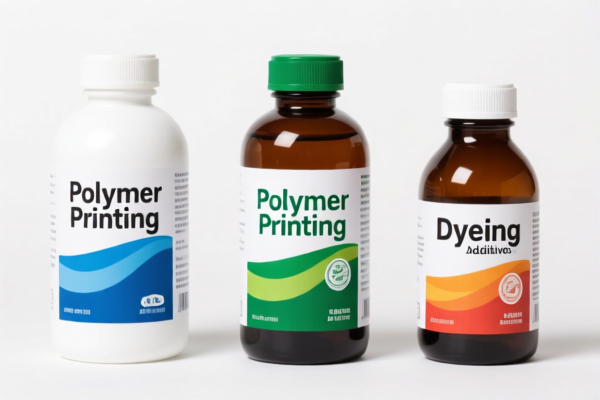
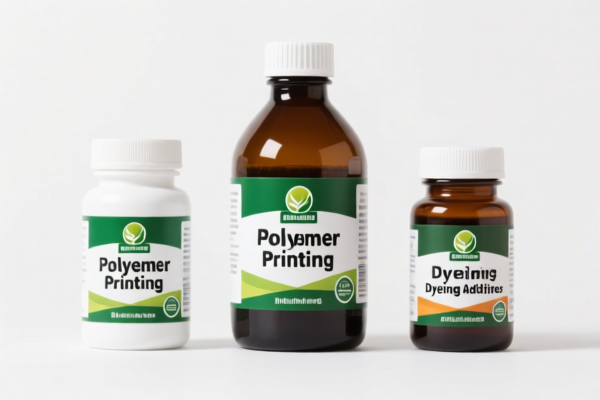
AI Analysis
🧪 Textile Printing & Dyeing Penetrating Agent Concentrated Liquid
🌐 HS Code Reference & Customs Clearance Guide | 2026 Latest Tariff Analysis | Professional Clearance Strategy
📌 I. Product Definition & Classification: What Exactly Is This?
Textile Printing and Dyeing Penetrating Agents (Concentrated Liquid) are critical auxiliary chemical reagents used in the textile industry. Their primary function is to rapidly reduce surface tension, allowing dyes, pigments, or finishes to penetrate deep into fiber structures (cotton, polyester, blends, etc.) uniformly and quickly.
In international trade, these agents are classified based on their chemical nature (ionic vs. non-ionic) and specific function (general surfactant vs. specific textile auxiliary).
⚠️ Key Distinction Point:
- If the product is a general-purpose non-ionic surfactant (e.g., polyether fatty alcohols) not specifically formulated for textiles → It may fall under 3402.
- If the product is specifically formulated or mixed for textile processing (including penetration, dyeing, printing) → It falls under 3808.94.90 or 3811.90.90.
- Crucial Note: Many "penetrating agents" are actually polyethers or fatty substance derivatives. If the HS code provided in the data does not explicitly mention "textile auxiliary," but the description says "fatty substances... polyethers," it might be classified as a raw material (3402). However, if it is a preparation for textile use, 3808 or 3811 is more appropriate.
- Based on the provided DATA, we have two distinct paths: 3402.42.20 (Surfactants/Raw Materials) and 3808.94.90 / 3811.90.90 (Prepared Textile Auxiliaries). The classification depends on whether the product is a pure chemical component or a prepared formulation.
📦 II. HS Code Classification Details (2026 Latest Tariff Authority Comparison)
| HS Code | Product Description | Applicable Scenario | Tax Status |
|---|---|---|---|
3402.42.20.50 |
Other organic surface-active agents (non-ionic); Fatty substances of animal, vegetable or microbial origin Other | Pure Non-ionic Surfactants (e.g., fatty alcohol ethoxylates) not specifically packaged for retail or specialized textile use. Raw material stage. | ⚠️ 29.0% |
3402.42.20.10 |
Other organic surface-active agents (non-ionic); Fatty substances... Polyethers | Polyether-based Surfactants (common penetrating agents like Nonylphenol Ethoxylate derivatives). Often used as raw inputs for textile auxiliaries. | ⚠️ 29.0% |
3808.94.90 |
Other chemical products not elsewhere specified or included, used in textile processing, including concentrated penetrating agents for printing and dyeing | Specifically Formulated Textile Auxiliaries. This is the most likely correct classification for "Concentrated Penetrating Agents" sold as ready-to-use textile chemicals. | ❓ Error (Check Local) |
3811.90.90 |
Other chemical products for use in textile processing, including concentrated agents for dyeing and printing, not elsewhere specified | Alternative Textile Auxiliaries. Use if the product does not fit the specific "binding/preparation" definition of 3808 but is still a textile chemical prep. | ❓ Error (Check Local) |
🔍 Critical Reminder:
- Heading 3402 covers "Surface-active agents." If your penetrating agent is a pure chemical compound (like a specific polyether fatty substance), use 3402.42.20.
- Heading 3808/3811 covers "Prepared" chemical products for textile processing. If your liquid is a mixture/formulation marketed specifically for textile dyeing/printing penetration, 3808.94.90 is the most accurate description per the DATA text ("including concentrated penetrating agents").
- ⚠️ Tax Retrieval Error: The DATA shows "Failed to retrieve tax information" for 3808.94.90 and 3811.90.90. This does NOT mean 0% tax. It usually means the specific sub-heading requires manual verification or has variable rates based on specific country agreements. Do not assume free entry.
💰 III. 2026 Latest Tariff Rate Details (Including Surcharges & Policy Add-ons)
✅ Applicable Country: USA (US)
✅ Country of Origin: China (CN)
✅ Effective Time: 2025-11-10 onwards (including subsequent imports)
🎯 1. 3402.42.20.10 & 3402.42.20.50 —— Non-ionic Surfactants (Raw Materials/Polyethers)
| Item | Content |
|---|---|
| Base Tariff | 4.0% (Ad Valorem) |
| Additional Tariff (Section 301) | +25.0% (List 4A/4B Chinese Goods) |
| Total Effective Rate | 29.0% |
| Tax Calculation | CIF Value × 29% |
| De Minimis Exemption | ❌ Not Available (Deny de minimis for goods subject to 301 tariffs) |
| Legal Basis Path | HTSUS:3402.42.20 → USITC Footnote 9903.88.01 → Section 301 Tariff |
📌 Explanation:
- The 4% is the standard MFN duty for surface-active agents.
- The 25% is the punitive tariff imposed on Chinese goods under Section 301.
- Total 29% is a significant cost driver. These products are often considered "intermediate goods" with high tariff exposure.
🎯 2. 3808.94.90 & 3811.90.90 —— Prepared Textile Chemicals (Formulated Auxiliaries)
| Item | Content |
|---|---|
| Base Tariff | Varies (Usually 0%-5%) (Data shows Error) |
| Additional Tariff (Section 301) | +25.0% (Likely, as most chemical auxiliaries are on the 301 list) |
| Total Effective Rate | Estimated 25%-30% (Must Verify) |
| Tax Calculation | CIF Value × (Base Rate + 25%) |
| De Minimis Exemption | ❌ Not Available (If subject to 301) |
| Legal Basis Path | HTSUS:3808.94.90 → USITC Decision |
📌 Crucial Warning:
- Do not rely on the "Error" status. Most chemical preparations for textile processing from China are subject to the 25% Section 301 surcharge.
- The base duty for 3808.94.90 is often 0% or 2.5%, but with the 25% surcharge, the total rate is likely ~25-27.5%.
- Verification Required: You must check the USTR Exclusion List or consult a customs broker to confirm if this specific formulation has an exclusion. If not excluded, assume 25% surcharge.
🛠️ IV. Customs Clearance Practical Advice (Battle-Tested Pitfall Guide)
✅ 1. Document Preparation Checklist (All Items Mandatory)
| Document | Must Provide? | Explanation |
|---|---|---|
| ✅ Product Specification Sheet (TDS) | ✔️ | Must detail active ingredients, concentration, pH, and intended use (e.g., "For textile dyeing penetration"). |
| ✅ Formula/Composition List | ✔️ | Critical for distinguishing between 3402 (pure surfactant) and 3808 (prepared mixture). |
| ✅ Safety Data Sheet (SDS) | ✔️ | Required for chemical imports. Must classify correctly for hazmat transport. |
| ✅ Commercial Invoice | ✔️ | Must clearly state: "Textile Auxiliary - Penetrating Agent for Dyeing/Printing, Formulated Mixture, Not for Retail." |
| ✅ Certificate of Origin (CO) | ✔️ | To prove Chinese origin (for 301 tariff application) or potential free trade benefits if re-routed. |
| ✅ Labeling | ✔️ | English labels with ingredient highlights and handling instructions. |
✅ 2. Declaration Strategy (Key Mnemonics)
🔥 "Pure Surfactant? Go 3402. Formulated Mix? Go 3808. Both Pay 25% Extra!"
| Scenario | Correct HS Code Declaration | Common Mistake |
|---|---|---|
| Pure Fatty Alcohol Ethoxylate (Raw Material) | 3402.42.20.10 or .50 |
Declaring as "Textile Chemical" → Misclassification risk |
| Ready-to-Use Penetrating Agent (Concentrated Liquid for Textiles) | 3808.94.90 (Best Match) |
Declaring as 3402 → May be accepted if no specific textile claim, but 3808 is more precise per DATA |
| Generic Non-Ionic Surfactant (No textile claim) | 3402.42.20 |
Over-declaring textile function to avoid higher base duty? → Risky |
📌 Note on 3808.94.90: The DATA explicitly states: "including concentrated penetrating agents for printing and dyeing." This makes 3808.94.90 the most textually accurate code for a "concentrated penetrating agent" if it is a prepared product. However, due to the tax retrieval error, verify the base rate.
✅ 3. Special Case Handling
| Scenario | Handling Advice |
|---|---|
| OEM Formulated Liquid | Provide the client’s formula agreement. If the formula is unique, emphasize "Prepared for Textile Use" to support 3808. |
| Mixed with Water | If diluted for export, check if it still qualifies as "Concentrated." Highly diluted products might fall under different sub-headings. |
| Hazmat Classification | Penetrating agents often contain alkyl phenols or amines. Ensure proper IMDG/IATA classification for sea/air freight. |
| EPA/TSCA Compliance | For US import, ensure all ingredients are listed on the TSCA Inventory. Failure to do so will result in seizure. |
🌍 V. Global Market Clearance Comparison (2026 Latest)
| Country/Region | Recommended HS Code | Estimated Tariff (China Origin) | Certification Requirements | Notes |
|---|---|---|---|---|
| 🇺🇸 USA | 3808.94.90 or 3402.42.20 |
25-29% (301 Surcharge Applies) | TSCA Inventory + SDS | High tariff cost. Verify 3808 base rate. |
| 🇨🇳 China | 3808.94.90 |
0-5% (Import Duty) | REACH-like compliance (China RoHS) | Lower duty, but strict environmental checks. |
| 🇪🇺 EU | 3808.94.90 |
0% (Most MFN) | REACH Registration + CLP Labeling | No 25% surcharge, but high REACH compliance cost. |
| 🇮🇳 India | 3808.94.90 |
10-15% | BIS Standards | High anti-dumping duties may apply to some surfactants. |
📌 Conclusion:
- USA: Highest cost due to 25% Section 301 surcharge.
- EU: No extra surcharge, but REACH compliance is expensive and time-consuming.
- Strategy: If exporting to the US, consider TSCA compliance early. For EU, focus on chemical registration.
📌 VI. Common Errors & Pitfall Guide (Blood & Tears Lessons)
❌ Error 1: Declaring a "Textile Auxiliary" as "Detergent" (3401)
👉 Consequence: Incorrect heading. 3401 is for soap/detergents. Penetrating agents are auxiliaries.
👉 Result: Customs rejection or penalty.
❌ Error 2: Ignoring the 301 Tariff for 3808 codes
👉 Consequence: Assuming 0% duty because it's a "chemical product."
👉 Result: 25% underpayment + Back taxes + Penalties.
❌ Error 3: Using "Penetrating Agent" without specifying "Textile" in description
👉 Consequence: Ambiguity. May be classified as industrial cleaner or other chemical.
👉 Result: Delayed clearance for clarification.
❌ Error 4: Missing TSCA Compliance for US Import
👉 Consequence: Seizure at border.
👉 Result: Total loss of goods.
✅ Correct Practice:
"Prepared Textile Auxiliary, Non-Ionic Penetrating Agent, Concentrated Liquid, for Dyeing/Printing Process, Contains [Chemical Name], TSCA Compliant, Model XYZ."
🎯 VII. Conclusion: Professional Declaration, Cost Control, Risk Mitigation
🎯 Remember the Mnemonic:
🔹 "Surfactant Pure? 3402 Pay 29%. Textile Mix? 3808 Pay 25%+. Always Check 301!"
🔹 "TSCA is King for US, REACH is Queen for EU. No Compliance, No Entry!"
📌 Pro Tip:
If your penetrating agent is a simple polyether fatty substance, use 3402.42.20.10 (29% total).
If it is a complex formulated mixture specifically for textiles, use 3808.94.90 (Base 0-5% + 25% Surcharge = ~25-30%).
Verify the base rate for 3808.94.90 with a customs broker, as the DATA shows an error. Do not assume it is free.
📣 Immediate Action:
📞 Contact a Customs Broker + Provide TDS/SDS + Verify TSCA Status
🚀 Ensure your penetrating agent clears smoothly, avoids fines, and maximizes profit!
✨ Professional Clearance Starts with Accurate Classification!
💼 Every percentage point of duty matters in the chemical trade!
Customer Reviews
About HS Code Classification
The Harmonized System (HS) is an internationally standardized nomenclature developed by the World Customs Organization (WCO) to classify traded products. Over 200 countries use the HS system as the basis for customs tariffs, trade statistics, and import/export regulations.
Each HS code follows a hierarchical structure:
- Chapter (2 digits) — Broad category of goods (e.g., Chapter 84: Machinery and Mechanical Appliances)
- Heading (4 digits) — More specific grouping within the chapter
- Subheading (6 digits) — Internationally standardized breakdown, used by all WCO member countries
- National subdivisions (8-10 digits) — Country-specific extensions for further classification, such as US HTSUS 10-digit codes
Correct HS code classification is essential for smooth customs clearance, accurate duty payment, and compliance with trade regulations. Misclassification can lead to customs delays, overpayment of duties, or penalties.
When importing from CN to US, the applicable tariff rates may include:
- Most-Favored-Nation (MFN) rate — The standard duty rate applied to WTO members
- General rate — Applied to countries without trade agreements
- Trade remedy duties — Additional tariffs such as Section 301 (anti-dumping), Section 232 (national security), or countervailing duties
The information provided on this page is for reference purposes only. For official classification, please consult with your local customs authority or a licensed customs broker.