Textile Processing Machines
CN → US| HS Code | Tariff Rate | Origin | Destination | Doc |
|---|---|---|---|---|
| 8479909596 | 85.0% | CN | US | Official Doc |
| 8448595000 | 17.0% | CN | US | Official Doc |
| 8479899599 | 87.5% | CN | US | Official Doc |
| 8446305030 | 38.7% | CN | US | Official Doc |
Product Images
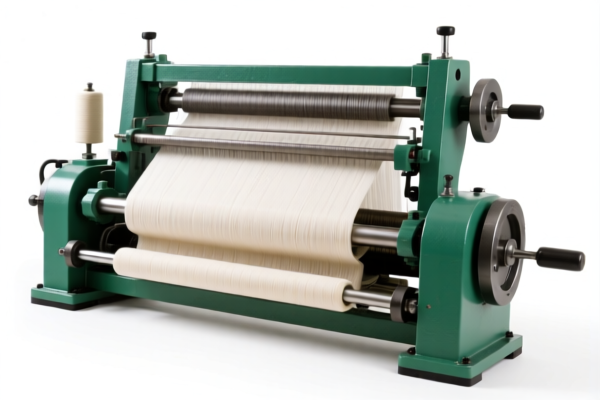
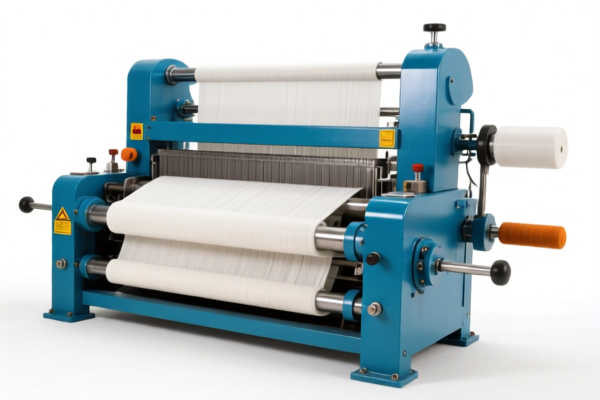
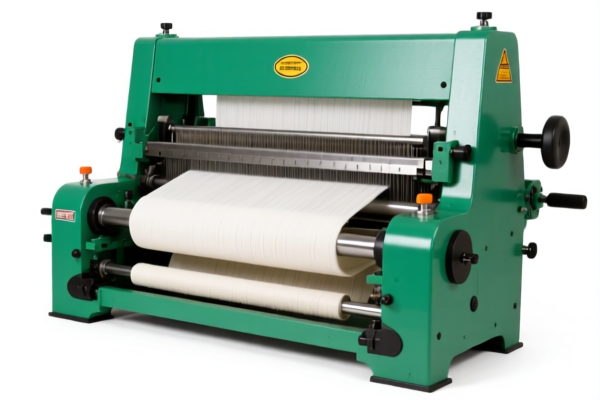
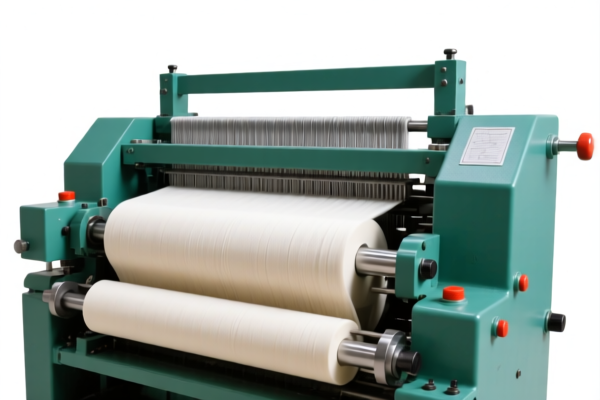
AI Analysis
🧵 Textile Processing Machines (纺织机械)
🌐 HS Code Reference & Customs Clearance Guide | 2026 Latest Tariff Analysis | Professional Strategy
📌 I. Product Definition & Classification: What Exactly Are "Textile Processing Machines"?
Textile processing machines encompass a broad range of industrial equipment used in the manufacturing of textiles, including spinning, weaving, knitting, and finishing processes. In international trade, these goods are primarily classified under Chapter 84 (Nuclear reactors, boilers, machinery and mechanical appliances).
The classification depends heavily on the specific function and component status of the machine: 1. Complete Machines (e.g., Looms, Spinning Frames): Dedicated machinery for specific textile processes (weaving, knitting, etc.) usually falls under headings 8446 or 8447. 2. Parts & Accessories: Components designed specifically for the machines above may fall under headings 8448 or 8449. 3. General-Purpose or Multi-Function Machinery: If a machine does not fit specific textile headings or is a general-purpose part with independent function, it often falls under the "other" or "parts" categories like 8479.
⚠️ Key Distinction Point:
- Specific Function (Weaving/Knitting): If it is a dedicated loom or knitting machine → 8446 / 8447.
- Parts for Specific Machines: Spare parts designed exclusively for 8446/8447 machines → 8448.
- General Parts / Other Machinery: Independent mechanical parts or machines not specifically described elsewhere → 8479.
📦 II. HS Code Classification Details (2026 Latest Tariff Authority Comparison)
| HS Code | Product Description | Application Scenario | Functionality |
|---|---|---|---|
8446.30.50.30 |
Textile Machinery: Shuttleless Looms (Weaving) | Specific weaving machines, high precision, industrial use | ✅ Specific (Weaving) |
8448.59.50.00 |
Parts & Accessories for Machinery of 8447 | Parts for knitting/weaving auxiliary machines | ✅ Specific (Parts for 8447) |
8479.90.95.96 |
Parts of Machines with Individual Function (Other) | General textile parts, independent function, "catch-all" | ❌ General / Independent |
8479.89.95.99 |
Other Machines & Mechanical Appliances (Other) | General mechanical parts, non-specific textile function | ❌ General / Catch-all |
🔍 Key Reminder:
-8446.30.50.30applies specifically to shuttleless looms (high-end weaving).
-8448.59.50.00is for parts of knitting/weaving auxiliary machinery (under 8447).
-8479codes are "Catch-All" Categories. Use these only when the item does not fit specific textile headings (8446/8447/8448) or is a general mechanical part. Beware of higher tariffs on 8479 items.
💰 III. 2026 Latest Tariff Rate Details (Including Surcharges & Policy Additions)
✅ Applicable Country: United States (US)
✅ Country of Origin: China (CN)
✅ Effective Time: Ongoing (Subject to Section 301 & IEEPA regulations)
🎯 1. 8446.30.50.30 —— Textile Machinery (Shuttleless Looms)
| Item | Details |
|---|---|
| Product Summary | Textile machinery (weaving), specifically shuttleless looms, highly consistent with use and classification. |
| Base Tariff | 3.7% (ad valorem) |
| Surtax (Sec. 301) | +25.0% |
| 122 Clause Surtax | +10.0% |
| Total Tariff Rate | 38.7% |
| Tax Calculation | CIF Value × 38.7% |
| Legal Path | Base Duty + Section 301 + 122 Clause |
📌 Interpretation:
- This is a specific textile machine classification.
- The total tax burden is 38.7%, comprising a low base duty (3.7%) plus significant surcharges (25% + 10%).
- Note: While lower than the "catch-all" 8479 categories, it is still subject to heavy US surcharges.
🎯 2. 8448.59.50.00 —— Parts for Textile Machinery (8447)
| Item | Details |
|---|---|
| Product Summary | Textile machinery parts, belonging to parts and accessories for machinery of 8447 (knitting/weaving auxiliary), fits "other" functional attributes. |
| Base Tariff | 0.0% (ad valorem) |
| Surtax (Sec. 301) | +7.0% |
| 122 Clause Surtax | +10.0% |
| Total Tariff Rate | 17.0% |
| Tax Calculation | CIF Value × 17.0% |
| Legal Path | Base Duty (0%) + Section 301 (7%) + 122 Clause (10%) |
📌 Interpretation:
- This is the most cost-effective classification among the listed codes for specific textile parts.
- Total Rate: 17.0% is significantly lower than general machinery parts.
- Condition: Must be clearly identifiable as parts for 8447 machinery. Misclassification here leads to higher rates.
🎯 3. 8479.90.95.96 —— Other Machine Parts (Catch-All)
| Item | Details |
|---|---|
| Product Summary | Textile machinery parts, classified as parts of machines with individual functions, under "other" catch-all category. |
| Base Tariff | 0.0% (ad valorem) |
| Surtax (Sec. 301) | +25.0% |
| 122 Clause Surtax | +10.0% |
| Steel/Aluminum/Copper Surcharge | +50.0% (If applicable) |
| Total Tariff Rate | 85.0% (or higher if metals involved) |
| Tax Calculation | CIF Value × 85.0% |
| Legal Path | Base Duty (0%) + Section 301 (25%) + 122 Clause (10%) + Steel/Al/Cu (50%) |
📌 Interpretation:
- HIGH RISK: This is a "catch-all" category for parts that don't fit specific textile headings.
- Total Rate: 85.0% is extremely high.
- Critical Warning: If the part is made of steel, aluminum, or copper, an additional 50% surcharge may apply, potentially pushing the effective rate even higher depending on interpretation.
- Avoid this code if a more specific textile part code (like 8448) is available.
🎯 4. 8479.89.95.99 —— Other Machines (Catch-All)
| Item | Details |
|---|---|
| Product Summary | Textile machinery parts, classified under other machines and independent mechanical appliances, "other" catch-all classification. |
| Base Tariff | 2.5% (ad valorem) |
| Surtax (Sec. 301) | +25.0% |
| 122 Clause Surtax | +10.0% |
| Steel/Aluminum/Copper Surcharge | +50.0% (If applicable) |
| Total Tariff Rate | 87.5% (or higher if metals involved) |
| Tax Calculation | CIF Value × 87.5% |
| Legal Path | Base Duty (2.5%) + Section 301 (25%) + 122 Clause (10%) + Steel/Al/Cu (50%) |
📌 Interpretation:
- HIGHEST TAX RATE: This is the worst-case scenario for classification.
- Total Rate: 87.5% reflects a higher base duty (2.5%) plus full surcharges.
- Recommendation: Do not use this code for standard textile parts unless no other classification fits. It results in nearly double the tax of8448.59.50.00.
🛠️ IV. Customs Clearance Practical Advice (Real-World Pitfall Guide)
✅ 1. Preparation Checklist (Non-Negotiable)
| Document | Required | Explanation |
|---|---|---|
| ✅ Product Spec Sheet | ✔️ | Must detail machine model, function, and part number. |
| ✅ Technical Drawings | ✔️ | Crucial to prove if it is a "specific part" (8448) or "general part" (8479). |
| ✅ Product Photos | ✔️ | Clear images of labels, serial numbers, and key components. |
| ✅ Commercial Invoice | ✔️ | Must clearly state "Parts for Textile Machinery Model XYZ" not just "Machine Parts". |
| ✅ Certificate of Origin | ✔️ | Required for US import; verify origin to confirm USIPEA applicability. |
| ✅ Bill of Lading | ✔️ | Ensure commodity description matches invoice and HS Code. |
✅ 2. Classification Strategy (Key Mnemonics)
🔥 "Specific Function, Low Tax; General Part, High Tax!"
| Scenario | Correct HS Code | Incorrect Code | Risk |
|---|---|---|---|
| Shuttleless Loom | 8446.30.50.30 (38.7%) |
8479.90.95.96 (85.0%) |
Overpaying by ~46%! |
| Part for Knitting Machine | 8448.59.50.00 (17.0%) |
8479.89.95.99 (87.5%) |
Overpaying by ~70%! |
| General Mechanical Part | 8479.90.95.96 (85.0%) |
N/A | High tax, but correct if generic. |
| Steel/Aluminum Part | Any 8479 Code | N/A | Add +50% surcharge on top! |
📌 Critical Tip:
- Avoid 8479 codes whenever possible. They are "dumping grounds" for classification and attract the highest surcharges.
- Prove Specificity: Use technical documents to show the part is exclusively used for 8446/8447 machinery to qualify for8448.59.50.00.
✅ 3. Special Case Handling
| Scenario | Handling Advice |
|---|---|
| Mixed Shipment (Machine + Parts) | Separate Declaration: Declare machine under 8446 and parts under 8448. Do not bundle, as it may trigger incorrect classification for the whole lot. |
| Parts Made of Steel/Aluminum | Declare Material: If using 8479 codes, be prepared for the 50% Steel/Al/Cu surcharge. Check if the part qualifies for exemption. |
| OEM/Custom Parts | Provide OEM Proof: Submit client orders and design specs to prove the part is specific to a particular machine, supporting 8448 classification. |
| Used Equipment | Disclose Condition: Used textile machinery may face additional scrutiny. Ensure clean history and proper maintenance records. |
🌍 V. Global Market Clearance Comparison (2026 Latest)
| Country/Region | Recommended HS Code | Tariff (China Origin) | Certification | Remarks |
|---|---|---|---|---|
| 🇺🇸 USA | 8448.59.50.00 |
17.0% | None specific | Avoid 8479 (85%+). 301 + 122 Clause applies. |
| 🇨🇳 China | 8448.59.50.00 |
~5-10% | CCC (if applicable) | Lower base duty, no surcharges. |
| 🇪🇺 EU | 8448.59.50.00 |
~0-4% | CE Mark | No surcharges. Check EPR regulations. |
| 🇬🇧 UK | 8448.59.50.00 |
~0-4% | UKCA | Post-Brexit rules apply. |
| 🇯🇵 Japan | 8448.59.50.00 |
~0-5% | PSE (if electric) | No surcharges. |
📌 Conclusion:
- USA is the most expensive market due to Section 301 and 122 Clause surcharges.
- Classification Accuracy is Critical: Misclassifying8448parts as8479parts can quintuple your tax bill.
- Strategy: Always aim for8448(Parts) or8446(Specific Machines) to minimize the 25%+ surcharges.
📌 VI. Common Mistakes & Pitfall Guide (Lessons Learned)
❌ Mistake 1: Declaring all textile parts under 8479.90.95.96
👉 Consequence: Paying 85.0% instead of 17.0% on parts. Loss of 68% in profit!
❌ Mistake 2: Ignoring the 50% Steel/Al/Cu Surcharge on 8479 items
👉 Consequence: Unexpected tax bill increase by 50% if the part is metallic. Audit risk!
❌ Mistake 3: Using generic terms like "Machine Part" on Invoice
👉 Consequence: Customs may default to the highest-rated code (8479). Delays and penalties.
❌ Mistake 4: Combining Specific Machinery (8446) with General Parts (8479) in one shipment without separation
👉 Consequence: Risk of misclassification for the entire batch. Higher tax on the whole shipment.
✅ Correct Practice:
Description: "Textile Machinery Parts, Specifically for Knitting Machine Model ABC, Made of Steel, HS 8448.59.50.00"
Strategy: Use technical drawings to prove specificity. Avoid8479unless absolutely necessary.
🎯 VII. Conclusion: Professional Classification Saves Money!
🎯 Remember the Mantra:
🔹 "Specific Parts = 17%; General Parts = 85%! Pick the right code!"
🔹 "301 + 122 = High Tax; Avoid8479to Stay Alive!"
📌 Pro Tip:
- If your parts are not made of steel/aluminum/copper, ensure this is documented to avoid the 50% surcharge on 8479 codes.
- Request an Advance Ruling from US Customs if the classification is borderline. It provides legal certainty.
📣 Immediate Action:
📞 Consult a Customs Broker: Provide technical specs and photos.
📄 Apply for Pre-Ruling: For large volumes, get an HS Code binding ruling.
🚀 Optimize Your Supply Chain: Consider sourcing from non-USIPEA countries if taxes are prohibitive.
✨ Professional Clearance Starts with Precise Classification!
💼 Every Percentage Point in Tax is a Percentage Point in Profit Lost!
Customer Reviews
About HS Code Classification
The Harmonized System (HS) is an internationally standardized nomenclature developed by the World Customs Organization (WCO) to classify traded products. Over 200 countries use the HS system as the basis for customs tariffs, trade statistics, and import/export regulations.
Each HS code follows a hierarchical structure:
- Chapter (2 digits) — Broad category of goods (e.g., Chapter 84: Machinery and Mechanical Appliances)
- Heading (4 digits) — More specific grouping within the chapter
- Subheading (6 digits) — Internationally standardized breakdown, used by all WCO member countries
- National subdivisions (8-10 digits) — Country-specific extensions for further classification, such as US HTSUS 10-digit codes
Correct HS code classification is essential for smooth customs clearance, accurate duty payment, and compliance with trade regulations. Misclassification can lead to customs delays, overpayment of duties, or penalties.
When importing from CN to US, the applicable tariff rates may include:
- Most-Favored-Nation (MFN) rate — The standard duty rate applied to WTO members
- General rate — Applied to countries without trade agreements
- Trade remedy duties — Additional tariffs such as Section 301 (anti-dumping), Section 232 (national security), or countervailing duties
The information provided on this page is for reference purposes only. For official classification, please consult with your local customs authority or a licensed customs broker.