Textile Products (HS Code 6113009060)
CN → US| HS Code | Tariff Rate | Origin | Destination | Doc |
|---|---|---|---|---|
| 6113001005 | 21.3% | CN | US | Official Doc |
| 6113001010 | 21.3% | CN | US | Official Doc |
| 6210500300 | 13.8% | CN | US | Official Doc |
| 6210309010 | 23.7% | CN | US | Official Doc |
| 6210402960 | 23.7% | CN | US | Official Doc |
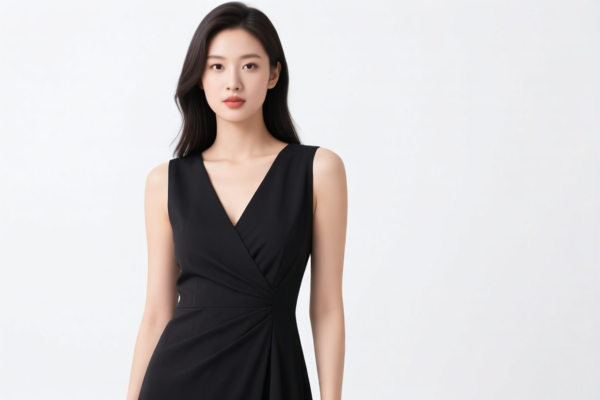
Product Images



AI Analysis
🧵 Textile Products (HS Code 6113009060)
🌐 HS Code Reference & Customs Clearance Guide | 2026 Latest Tariff Analysis | Professional Clearance Strategy
📌 I. Product Definition & Classification: Do You Really Know "Textile Products"?
"Textile Products" is a broad category in international trade. In the context of the provided data, these items generally refer to garments or fabric items made from knitted or crocheted fabrics, specifically those falling under Chapter 61 (Articles of Apparel and Clothing Accessories, Knitted or Crocheted) or Chapter 62 (Articles of Apparel and Clothing Accessories, Not Knitted or Crocheted).
The specific HS Code 6113.00.90.60 (and similar codes like 6113.00.10.10, 6210.x.x, 6213.x.x) usually points to textile garments or fabric items that are NOT specifically named elsewhere in Chapters 61 or 62. This is often a "catch-all" or residual category for: 1. Knitted/Crocheted Garments: Not classified as suits, coats, jackets, trousers, etc., but perhaps as other tops, dresses, or specialized wear. 2. Fabric-Based Items: Articles made of textile fabrics, which may include non-apparel items or specific types of outerwear not covered by more specific headings.
⚠️ Key Distinction:
- If the item is a standard men’s/boys’ jacket or coat made of knitted fabric → It likely falls under 6101/6103 (e.g., 6113.00.10.05 as seen in data).
- If the item is not specifically named (e.g., a unique textile accessory, a non-standard outerwear, or a specific fabric product) → It falls under 6113.00.90 or 6210.x.x.
- Crucial Note: The provided data shows multiple HS codes with different tax rates. The specific classification depends on the exact material, construction, and use of the product.
📦 II. HS Code Classification Details (2026 Latest Tariff Reference)
Based strictly on the provided <DATA>, here are the relevant HS Codes and their characteristics:
| HS Code | Product Description | Key Characteristics | Total Tax Rate |
|---|---|---|---|
6113.00.10.05 |
Men’s or boys’ coats/jackets (Knitted/Crocheted) | Specific garment type: Outerwear for males/children | 21.3% |
6113.00.10.10 |
Textile products (Knitted/Crocheted fabric attribute) | Broad category for knitted/crocheted textile items not elsewhere specified | 21.3% |
6210.50.03.00 |
Textile products (Man-made fiber/Fabric form) | Non-knitted, made of synthetic/man-made fibers | 13.8% |
6210.30.90.10 |
Fabric products (Linen material attribute) | Non-knitted, Linen-based clothing/textiles | 23.7% |
6210.40.29.60 |
Textiles (Other residual/Entertainment outerwear) | Non-knitted, Other unspecified textile garments/accessories | 23.7% |
🔍 Critical Insight:
- Knitted Items (6113): Generally incur higher taxes (21.3%) due to the combination of base tariffs and additional duties.
- Non-Knitted Items (6210): Vary significantly (13.8% to 23.7%) depending on the material (e.g., linen vs. synthetic) and specific sub-heading.
- 6113.00.90.60 is not explicitly listed in the data, but it falls under the same family as 6113.00.10 (Knitted/Crocheted textile articles). Therefore, it is highly likely subject to the 21.3% rate if classified similarly to 6113.00.10.10.
💰 III. 2026 Latest Tariff Rate Breakdown (Including Surtaxes & Policy Surcharges)
✅ Applicable Market: United States (US)
✅ Origin: China (CN)
✅ Effective Date: Ongoing (Based on 2025/2026 policy frameworks)
🎯 1. For Knitted/Crocheted Textile Articles (e.g., 6113.00.10.05 / .10)
| Item | Details |
|---|---|
| Base Tariff | 3.8% (Ad valorem) |
| Section 301 Surcharge | +7.5% (Specific to certain textile categories) |
| Section 122 Tariff | +10% (Specific legislative surcharge) |
| Total Tariff Rate | 21.3% |
| Calculation | CIF Value × 21.3% |
| De Minimis Eligibility | ❌ Not Eligible (Due to Section 301 and other surcharges, items >$800 are subject to full duties) |
| Legal Basis | HTSUS 6113.00.10 + USITC Footnotes + IEEPA Section 122 provisions |
📌 Explanation:
- The 3.8% base rate is the standard MFN (Most Favored Nation) rate for these textile articles.
- The 7.5% Section 301 surcharge is applied due to the item's classification under specific Chinese export categories.
- The 10% Section 122 surcharge is a separate legislative action targeting specific textile imports.
- Total: 21.3%. This is a significant cost burden. Accurate classification is vital to avoid misclassification penalties.
🎯 2. For Non-Knitted Textile Products (e.g., 6210.50.03.00)
| Item | Details |
|---|---|
| Base Tariff | 3.8% (Ad valorem) |
| Section 301 Surcharge | 0.0% (Not applied to this specific subheading) |
| Section 122 Tariff | +10% |
| Total Tariff Rate | 13.8% |
| Calculation | CIF Value × 13.8% |
| De Minimis Eligibility | ❌ Not Eligible |
📌 Explanation:
- This category benefits from no Section 301 surcharge, resulting in a lower total rate (13.8%) compared to knitted items (21.3%).
- However, the 10% Section 122 tariff still applies.
🎯 3. For Linen & Other Specific Non-Knitted Textiles (e.g., 6210.30.90.10 / 6210.40.29.60)
| Item | Details |
|---|---|
| Base Tariff | 6.2% (Ad valorem) |
| Section 301 Surcharge | +7.5% |
| Section 122 Tariff | +10% |
| Total Tariff Rate | 23.7% |
| Calculation | CIF Value × 23.7% |
| De Minimis Eligibility | ❌ Not Eligible |
📌 Explanation:
- These items have a higher base rate (6.2%) plus both surcharges (7.5% + 10%).
- Total: 23.7%. This is the highest tax burden among the listed codes.
- Linen products (6210.30.90.10) and other specific outerwear/accessories (6210.40.29.60) fall into this high-tax category.
🛠️ IV. Customs Clearance Practical Advice (Avoid Pitfalls)
✅ 1. Documentation Checklist (Mandatory)
| Document | Required | Notes |
|---|---|---|
| Product Specification Sheet | ✔️ | Must detail: Material composition (e.g., 100% Linen, 100% Polyester), Knitted/Crocheted status, Construction method. |
| Commercial Invoice | ✔️ | Must clearly state: "Textile Products," HS Code, Country of Origin (China), CIF Value. |
| Packing List | ✔️ | Item counts, weights, dimensions. |
| Bill of Lading/Air Waybill | ✔️ | Standard shipping document. |
| Material Test Report | ✔️ | Recommended to prove material composition (e.g., Lab test confirming Linen content). |
| Certificate of Origin (CO) | ✔️ | If claiming any potential preferential treatment (though unlikely for China under current US policies). |
✅ 2. Classification Strategy (Key Tips)
🔥 “Material is King, Knitting is Key, Name it Right, Tax is Light!”
| Scenario | Correct HS Code | Risk of Misclassification |
|---|---|---|
| Knitted Jacket/Coat (Men’s/Boys’ | 6113.00.10.05 |
High Risk: If misclassified as non-knitted, tax drops to 13.8% or 23.7%, but customs will audit and penalize. |
| Generic Knitted Textile Item | 6113.00.10.10 |
Medium Risk: Ensure it’s truly knitted/crocheted. If woven, it belongs to Chapter 62. |
| Synthetic Non-Knitted Garment | 6210.50.03.00 |
Low Risk: Lower tax (13.8%), but ensure it’s not a specific named garment (e.g., suit) which might have a different code. |
| Linen Garment | 6210.30.90.10 |
High Risk: High tax (23.7%). Ensure material is indeed Linen. If blend, classify based on dominant fiber. |
| Other Textile Outerwear/Accessory | 6210.40.29.60 |
High Risk: High tax (23.7%). Use only if no other specific code applies. |
📌 Critical Warning:
- Do NOT assume "Textile Products" is a single category. The tax difference between 13.8% and 23.7% is nearly 10 percentage points, which can significantly impact profitability.
- Knitted vs. Woven: This is the primary divider. If the fabric is knitted, it’s Chapter 61 (likely 6113). If woven, it’s Chapter 62 (6210).
- Section 122 Tariff: Applies to all listed categories. Do not forget to include it in cost calculations.
✅ 3. Special Considerations
| Issue | Recommendation |
|---|---|
| De Minimis ($800) | ❌ Not Applicable. Due to Section 301 and Section 122 tariffs, shipments under $800 from China are still subject to full duties. |
| Labeling | Ensure products are labeled with Fiber Content, Care Instructions, and Country of Origin as per US labeling laws. |
| Antidumping/Countervailing Duties (AD/CVD) | Check if any specific textile products are subject to AD/CVD. While not in the provided data, it’s a critical step for textiles. |
| Pre-Ruling | For high-value shipments, consider requesting a US Customs Border Protection (CBP) Binding Ruling to confirm the HS Code and duty rate. |
🌍 V. Global Market Comparison (2026 Latest)
| Market | Recommended HS Code (Example) | Estimated Duty Rate | Notes |
|---|---|---|---|
| 🇺🇸 USA | 6113.00.10.10 / 6210.x.x |
13.8% - 23.7% | Includes Base + Sec 301 + Sec 122. High complexity. |
| 🇨🇳 China | 6113.00.10.10 / 6210.x.x |
8% - 15% | Lower base rates. No Section 301/122. |
| 🇪🇺 EU | 6113.00 / 6210 |
0% - 12% | Varies by material. No Section 301/122. May require EPR compliance. |
| 🇬🇧 UK | 6113.00 / 6210 |
0% - 12% | Post-Brexit tariffs apply. Similar to EU. |
| 🇨🇦 Canada | 6113.00 / 6210 |
0% - 17% | CUSMA (USMCA) benefits may apply if rules of origin are met. |
📌 Conclusion:
- The US market is the most challenging due to the叠加 of Base Tariffs, Section 301, and Section 122 tariffs.
- Cost Optimization: If possible, explore sourcing from countries with FTAs (Free Trade Agreements) with the US (e.g., Mexico, Canada, Australia, Korea) to avoid Section 301 and 122 tariffs.
📌 VI. Common Mistakes & Pitfalls (Blood Lessons)
❌ Mistake 1: Treating all "Textile Products" as a single HS Code.
👉 Consequence: Overpayment or underpayment of duties, leading to customs audits and penalties.
❌ Mistake 2: Ignoring the Knitted vs. Woven distinction.
👉 Consequence: Misclassification between Chapter 61 and 62. For example, classifying a woven linen shirt as knitted could lead to incorrect tax application.
❌ Mistake 3: Assuming De Minimis ($800) exemption applies.
👉 Consequence: Shipments under $800 are still taxed at 13.8%-23.7%. Ignoring this leads to unexpected costs.
❌ Mistake 4: Omitting Section 122 Tariff in cost calculations.
👉 Consequence: Underestimating landed cost by 10%, hurting profit margins.
✅ Correct Approach:
"Precise Classification + Full Duty Calculation + Professional Clearance."
🎯 VII. Conclusion: Professional Classification, Save Costs, Ensure Compliance!
🎯 Remember the Mantra:
🔹 "Knitted is 21.3%, Synthetic Woven is 13.8%, Linen is 23.7%."
🔹 "Section 301 + Section 122 = High Cost. Get it Right!"
📌 Pro Tip:
- If your product is not Knitted/Crocheted, check if it qualifies for 6210.50.03.00 (13.8%) instead of the higher 23.7% categories.
- Always verify the material composition with lab tests to support your HS Code classification.
- Consider HS Code Pre-Ruling from US CBP for new products to mitigate risk.
📣 Immediate Action:
📞 Consult with a licensed customs broker + Provide detailed product specs + Verify material composition
🚀 Ensure smooth customs clearance, accurate duty calculation, and optimized supply chain costs!
✨ Professional Customs Clearance Starts with Accurate Classification!
💼 Every Percent of Duty Saves Money!
Customer Reviews
About HS Code Classification
The Harmonized System (HS) is an internationally standardized nomenclature developed by the World Customs Organization (WCO) to classify traded products. Over 200 countries use the HS system as the basis for customs tariffs, trade statistics, and import/export regulations.
Each HS code follows a hierarchical structure:
- Chapter (2 digits) — Broad category of goods (e.g., Chapter 84: Machinery and Mechanical Appliances)
- Heading (4 digits) — More specific grouping within the chapter
- Subheading (6 digits) — Internationally standardized breakdown, used by all WCO member countries
- National subdivisions (8-10 digits) — Country-specific extensions for further classification, such as US HTSUS 10-digit codes
Correct HS code classification is essential for smooth customs clearance, accurate duty payment, and compliance with trade regulations. Misclassification can lead to customs delays, overpayment of duties, or penalties.
When importing from CN to US, the applicable tariff rates may include:
- Most-Favored-Nation (MFN) rate — The standard duty rate applied to WTO members
- General rate — Applied to countries without trade agreements
- Trade remedy duties — Additional tariffs such as Section 301 (anti-dumping), Section 232 (national security), or countervailing duties
The information provided on this page is for reference purposes only. For official classification, please consult with your local customs authority or a licensed customs broker.