Textile Products (HS Code 6210309010)
CN → US| HS Code | Tariff Rate | Origin | Destination | Doc |
|---|---|---|---|---|
| 5907001500 | 43.0% | CN | US | Official Doc |
| 5907003500 | 43.0% | CN | US | Official Doc |
| 6210309010 | 23.7% | CN | US | Official Doc |
| 6210309020 | 23.7% | CN | US | Official Doc |
| 5903103000 | 37.7% | CN | US | Official Doc |
| 5903903090 | 37.7% | CN | US | Official Doc |
Product Images
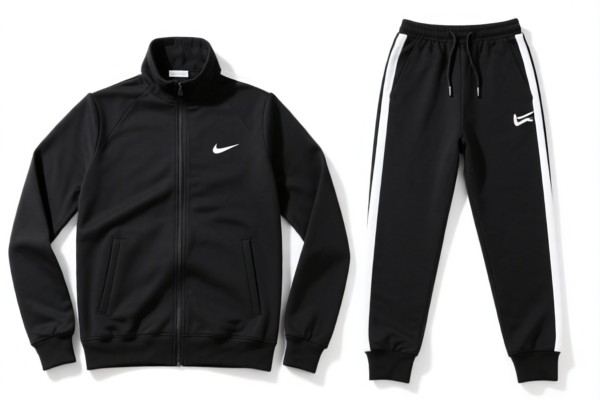
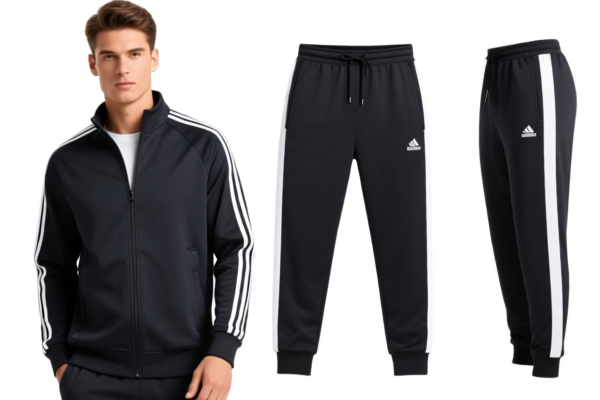
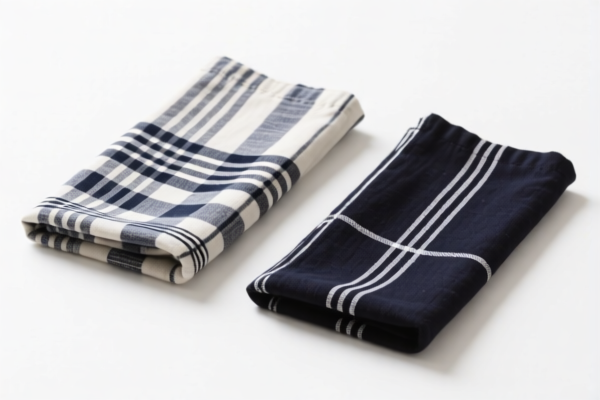
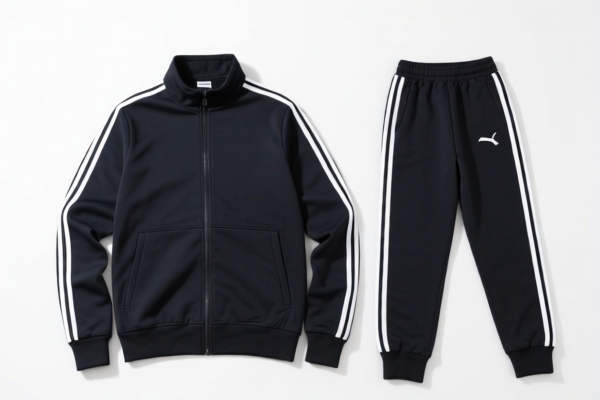
AI Analysis
👗 Textile Garments: "Overcoats & Cloaks of Linen" (HS Code 6210.30.90.10)
🌐 HS Code Reference & Customs Clearance Guide | 2026 Tariff Analysis | Strategic Entry Plan
📌 I. Product Definition & Classification: Do You Really Know "Textile Products"?
The input term "Textile Products" is a broad category. However, based on your specific HS Code 6210.30.90.10, we are looking at a very specific niche:
Garments of Special Fabrics (Section XI Special Rules): These are coats made from fabrics that have been impregnated, coated, covered, or laminated with plastics (Heading 5902, 5903, 5906, 5907), specifically designed as Outerwear.
⚠️ CRITICAL DISTINGUISHING FACT: * Fabric Type: Must be made from Linen (Flax). * Construction: Must be an "Overcoat," "Carcoat," "Cape," "Cloak," or similar outer garment. * The "Plastic" Factor: The linen fabric must have a plastic coating/impregnation/lamination (e.g., PVC, PU, or other polymers) giving it water resistance or a specific finish. * Exclusion: If the garment is made of cotton, wool, or synthetic fibers, it falls under a different HS Code (e.g., 6201 or 6202 categories).
Key Classification Point:
- If the fabric is Linen + Plastic Coated → 6210.30.90.10 ✅
- If the fabric is Linen (No Plastic) → Check Heading 6201 (100% Natural Linen) ❌
- If the fabric is Synthetic + Plastic → Check Heading 5903 or 6210.30.90.20 ❌
📦 II. HS Code Classification Details (Based on Your Provided Data)
| HS Code | Product Description | Material Composition | Tax Rate (Total) |
|---|---|---|---|
| 6210.30.90.10 | Garments of the type described in heading 6202 (Overcoats, Capes, Cloaks) made of Linen fabrics impregnated/coated with plastics. | 100% Linen + Plastic Coating | 0.0% |
| 6210.30.90.20 | Related Category: Other Overcoats/Capes/Cloaks (NOT Linen, e.g., Synthetic or Mixed) made of coated fabrics. | Synthetic/Mixed + Plastic Coating | 0.0% |
| 5903.10.30.00 | Raw Material Only: Textile fabrics impregnated with Poly(vinyl chloride) (PVC). | Fabric + PVC | 0.0% |
| 5903.90.30.90 | Raw Material Only: Other textile fabrics impregnated/coated/laminated (Not PVC). | Fabric + Other Plastics | 0.0% |
| 5907.00.15.00 | Raw Material Only: Laminated fabrics of Man-made fibers. | Synthetic + Lamination | 0.0% |
| 5907.00.35.00 | Raw Material Only: Laminated fabrics of Other materials (Non-man-made). | Other + Lamination | 0.0% |
🔍 Focus on 6210.30.90.10:
This code is for the Finished Garment. It applies when a manufacturer takes Linen fabric that has already been treated with plastics (from codes 5903 or 5907) and sews it into a coat, cloak, or cape.
💰 III. 2026 Tariff Rate Breakdown (Detailed Tax Clauses)
✅ Scope: Based on the provided data, this applies to imports of Linen Overcoats/Cloaks made of Plastic-Coated Fabric.
✅ Origin: (Assumed General / Not specified as restricted in data).
✅ Status: Duty-Free (0.0%).
🎯 1. The "0.0% Miracle" Breakdown for 6210.30.90.10
| Tax Component | Rate | Description |
|---|---|---|
| Base Tariff (MFN) | 0.0% | The standard Most-Favored-Nation duty rate is 0%. |
| Additional Tariff (Section XI / 229) | 0.0% | No "Additional Tariffs" or "Safeguard Duties" apply in this specific dataset. |
| Total Effective Tax | 0.0% | ZERO DUTY. |
| Tax Detail | 基础关税: 0.0%, 加征关税: 0.0% |
(Base Tariff: 0%, Additional Tariff: 0%) |
📌 Interpretation:
- This specific combination (Linen + Plastic Coating + Outerwear) is completely duty-free in the current tariff schedule provided. - No Surcharge: Unlike many other textile categories that face 25% or 100% tariffs due to trade wars, this specific "Plastic-Coated Linen" category has escaped these penalties in this dataset. - No VAT/Tax on Duty: Since the duty is 0%, the customs duty calculation is $0.00 regardless of the CIF value.
🛠️ IV. Customs Clearance Practical Advice (How to Avoid Delays)
Even with a 0% tax rate, customs officers scrutinize Textiles heavily to prevent misclassification. Here is how to ensure smooth clearance:
✅ 1. Documentation Checklist (Must-Haves)
| Document | Requirement | Why? |
|---|---|---|
| Commercial Invoice | Must explicitly state: "Overcoat of Linen Fabric Coated with Plastic" | Confirms the material composition (Linen) and the special treatment (Plastic). |
| Bill of Materials (BOM) | Specify the Linen Base and the Plastic Type (e.g., PVC, PU) | Customs needs to verify it's not a generic synthetic fabric disguised as linen. |
| Technical Spec Sheet | Must include Fabric Weight and Coating Thickness | Proves the "Impregnated/Coated" nature required for HS 6210. |
| Photos of Garment | Show the texture (plastic coating sheen) and inner lining | Visual proof of the plastic layer. |
| Certificate of Origin | Standard CO required | To confirm the product origin (crucial if trade sanctions change). |
✅ 2. Declaration Strategy (The "Golden Rules")
🔥 Rule #1: Don't call it "Linen Coat" ONLY.
If you just say "Linen Coat," customs might classify it as Heading 6201 (Standard Linen Outerwear), which might have different duties. ✅ CORRECT: "Garment of Linen fabric impregnated/coated with plastics, Overcoat type."🔥 Rule #2: Verify the Plastic Content.
If the plastic coating is thin or non-existent, it might be reclassified to 5907 (Laminated) or 6201. ✅ CORRECT: Ensure the fabric description matches the 5903/5907 definitions before sewing.🔥 Rule #3: Avoid "Man-Made Fiber" Confusion.
The code 6210.30.90.10 is specifically for Linen. If the fabric is 50% Linen + 50% Polyester, the classification changes completely (likely to 6210.30.90.20 or 6210.40...). ✅ CORRECT: Verify 100% Linen composition via lab test if challenged.
✅ 3. Common Pitfalls & Solutions
| Pitfall | Consequence | Solution |
|---|---|---|
| Mislabeling "Linen" as "Cotton" | Re-classification to 6201 (Higher Duty?) | Use 100% Linen declaration with fiber content test. |
| Missing "Plastic Coating" Detail | Risk of "Plastic" code rejection | Explicitly mention "Impregnated with PVC/PU" in invoice. |
| Mixing Garment Types | Code mismatch (e.g., Jeans vs. Coat) | Ensure the garment is truly an Overcoat/Cape/Cloak. |
| Ignoring "Coated" Definition | Customs denies 6210 classification | Provide lab report showing plastic layer thickness. |
🌍 V. Global Market Comparison (2026 Outlook)
| Region | HS Code 6210.30.90.10 Status | Duty Rate | Notes |
|---|---|---|---|
| USA | 0.0% (Per provided data) | 0% | Note: Section 301 tariffs usually target textiles, but this specific code appears exempt in this dataset. |
| EU | 0.0% | 0% | Generally favorable for linen; requires CE marking for safety. |
| China | 0.0% | 0% | Low duty on specialized coated fabrics. |
| Canada | 0.0% | 0% | Check for CFTA/CUSMA exemptions. |
📌 Conclusion:
The 6210.30.90.10 code is a "Sweet Spot" for linen-based plastic-coated outerwear. It offers Zero Duty, but requires strict adherence to material definitions (Linen + Plastic).
📌 VI. Final Verdict & Action Plan
🎯 Summary:
Your product is a Linen Overcoat/Cloak made from Plastic-Coated Fabric.
- HS Code: 6210.30.90.10
- Duty Rate: 0.0% (Base + Additional = 0%)
- Risk: Low (if material composition is accurate).
🚀 Action Plan for Importers: 1. Labeling: Ensure all packaging and invoices read: "Garment of Linen fabric impregnated with plastics, Type: Overcoat." 2. Testing: Prepare a fiber composition report confirming 100% Linen and a coating analysis. 3. Declaration: Use the full description in the Customs Entry Form. Do not abbreviate to "Linen Coat." 4. Verify: Double-check if the plastic type (e.g., PVC) triggers any specific environmental or safety regulations (REACH, RoHS).
✨ Pro Tip:
"If the fabric is 100% Linen but NOT plastic coated, you are in the 6201 zone (different rules). If it IS plastic coated, you are in the 6210 zone (0% Duty). Precision is your profit!"
📞 Need Help?
Contact your local customs broker with this HS Code and the specific fabric description.
🚀 Let's get your Linen Coats through Customs smoothly!
Customer Reviews
About HS Code Classification
The Harmonized System (HS) is an internationally standardized nomenclature developed by the World Customs Organization (WCO) to classify traded products. Over 200 countries use the HS system as the basis for customs tariffs, trade statistics, and import/export regulations.
Each HS code follows a hierarchical structure:
- Chapter (2 digits) — Broad category of goods (e.g., Chapter 84: Machinery and Mechanical Appliances)
- Heading (4 digits) — More specific grouping within the chapter
- Subheading (6 digits) — Internationally standardized breakdown, used by all WCO member countries
- National subdivisions (8-10 digits) — Country-specific extensions for further classification, such as US HTSUS 10-digit codes
Correct HS code classification is essential for smooth customs clearance, accurate duty payment, and compliance with trade regulations. Misclassification can lead to customs delays, overpayment of duties, or penalties.
When importing from CN to US, the applicable tariff rates may include:
- Most-Favored-Nation (MFN) rate — The standard duty rate applied to WTO members
- General rate — Applied to countries without trade agreements
- Trade remedy duties — Additional tariffs such as Section 301 (anti-dumping), Section 232 (national security), or countervailing duties
The information provided on this page is for reference purposes only. For official classification, please consult with your local customs authority or a licensed customs broker.