Textile Reinforced Plastic Board
CN → US| HS Code | Tariff Rate | Origin | Destination | Doc |
|---|---|---|---|---|
| 3921902510 | 41.5% | CN | US | Official Doc |
| 3926905600 | 40.1% | CN | US | Official Doc |
| 3926905700 | 41.5% | CN | US | Official Doc |
| 3921904010 | 39.2% | CN | US | Official Doc |
| 5903102090 | 35.0% | CN | US | Official Doc |
Product Images
AI Analysis
🛡️ Textile Reinforced Plastic Board (TRP)
🌐 HS Code Reference & Customs Clearance Guide | 2026 Latest Tariff Analysis | Professional Clearance Strategy
📌 Part I: Product Definition & Classification: What is a "Textile Reinforced Plastic Board"?
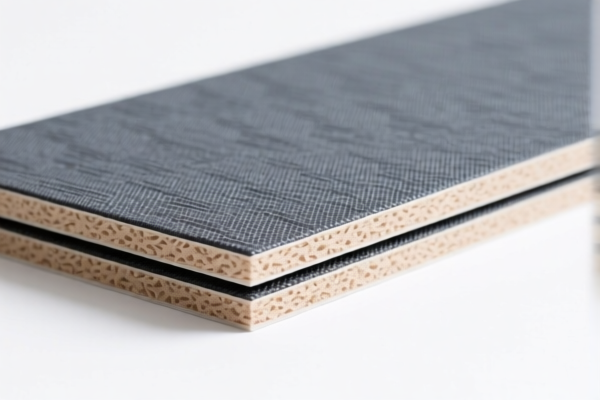
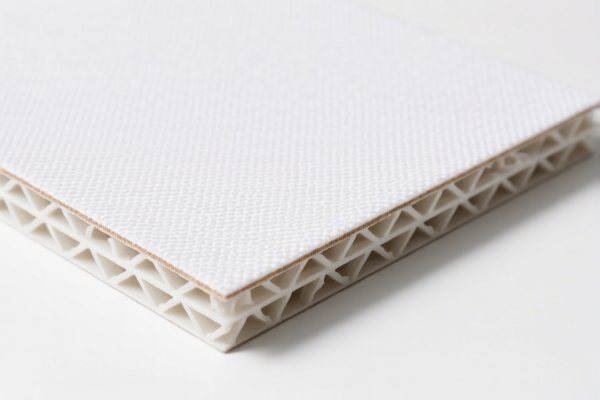
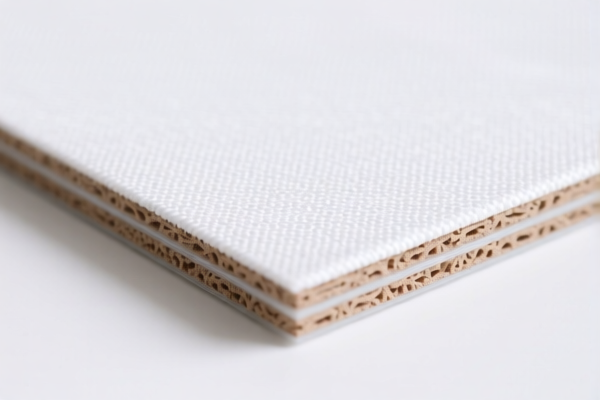
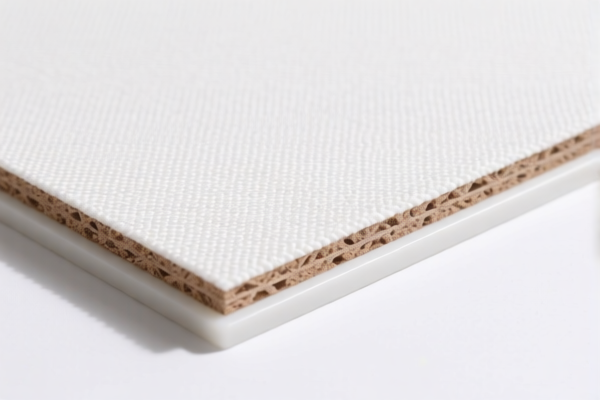
Textile Reinforced Plastic (TRP) boards are high-performance composite materials where textile fibers (such as glass, carbon, or aramid) are embedded in a plastic matrix to provide structural strength. In international trade, the classification depends heavily on whether the textile or the plastic is considered the essential character of the good, and how the "board" form is interpreted under Chapter 39 (Plastics) or Chapter 59 (Textile Impregnated Products).
Key Classification Dilemmas: * Plastic-Dominated (Chapter 39): If the plastic is the main constituent by weight or volume, and the textile is merely for reinforcement, it may fall under heading 39.21 (Other plates, sheets, film, foil and strip, of plastics). * Textile-Dominated (Chapter 59): If the product is essentially a fabric that has been impregnated, coated, covered, or laminated with plastic to a point where it has acquired specific properties (like rigidity for a "board"), it may fall under heading 59.03 (Textile fabrics impregnated, coated, covered or laminated with plastic).
📦 Part II: HS Code Classification Details (2026 Latest Tariff Authority Comparison)
Based on the provided data, here are the five potential HS Codes for "Textile Reinforced Plastic Board" imported into the United States from China.
| HS Code | Product Description & Logic | Total Tax Rate | Tax Breakdown (China Origin) |
|---|---|---|---|
| 3921.90.25.10 | High-Strength Textile-Reinforced Plastic Board. Classified as a plastic plate/sheet. Plastic content is dominant. Fits the composite of textile components and plastic. | 41.5% | Base: 6.5% Section 301: 25.0% Section 122: 10% |
| 3926.90.56.00 | High-Strength Textile-Reinforced Plastic Board. Classified as a general plastic article. Contains textile fibers but no material conflict identified under this broader "other articles" category. | 40.1% | Base: 5.1% Section 301: 25.0% Section 122: 10% |
| 3926.90.57.00 | High-Strength Textile-Reinforced Plastic Board. Classified as a plastic article category. Explicitly notes inclusion of textile fiber characteristics. | 41.5% | Base: 6.5% Section 301: 25.0% Section 122: 10% |
| 3921.90.40.10 | High-Strength Textile-Reinforced Plastic Board. Logic similar to "paper-reinforced" plastic plates. No material conflict. Generally lower base rate for this subheading. | 39.2% | Base: 4.2% Section 301: 25.0% Section 122: 10% |
| 5903.10.20.90 | Plastic-Enhanced Textile Sculpture Board. Form is a "board," but high plastic ratio is viewed as an extension of textile fabric processing/finishing. | 35.0% | Base: 0.0% Section 301: 25.0% Section 122: 10% |
🔍 Critical Distinction:
- Codes 3921 and 3926 treat the item primarily as a Plastic Product (Chapter 39).
- Code 5903 treats the item primarily as a Textile Product (Chapter 59) that has been plastic-impregnated.
- The "Section 122" (10%) and "Section 301" (25%) tariffs apply to all these codes for Chinese origin goods, significantly impacting the total landed cost.
💰 Part III: 2026 Latest Tariff Rate Detail (With Additional Taxes & Policy Surcharges)
✅ Applicable Country: United States (US)
✅ Country of Origin: China (CN)
✅ Effective Date: 2025-11-10 onwards (including subsequent imports)
🎯 1. 3921.90.25.10 —— Plastic Plates/Sheets (Dominant Plastic Character)
| Item | Content |
|---|---|
| Base Tariff | 6.5% (ad valorem) |
| USITC Supplementary Tariff (Sec. 301) | +25% |
| IEEPA Supplementary Tariff (Sec. 122) | +10% (Targeting China/HK products) |
| Total Effective Rate | 41.5% |
| Tax Calculation | CIF Value × 41.5% |
| De Minimis Eligibility | ❌ Not Eligible (deny_de_minimis) |
| Legal Path | IEEPA:9903.01.25 → IEEPA:9903.01.24 → USITC:3921.90.25.10 → FOOTNOTE:9903.88.01 |
📌 Explanation:
- The Base Rate (6.5%) applies to general plastic plates/sheets. - The 25% Section 301 tariff is applied due to the product's origin (China). - The 10% Section 122 tariff is an additional levy under the International Emergency Economic Powers Act. - Total 41.5% is a very high tariff. Accurate classification is crucial to avoid overpayment or penalties.
🎯 2. 3926.90.56.00 —— Other Plastic Articles (General Category)
| Item | Content |
|---|---|
| Base Tariff | 5.1% |
| USITC Supplementary Tariff (Sec. 301) | +25% |
| IEEPA Supplementary Tariff (Sec. 122) | +10% |
| Total Effective Rate | 40.1% |
| Tax Calculation | CIF × 40.1% |
| De Minimis Eligibility | ❌ Not Eligible |
| Legal Path | IEEPA:9901.25 → IEEPA:9903.01.24 → USITC:3926.90.56.00 → FOOTNOTE:9903.88.01 |
📌 Note:
- This code is often used when the specific "plate/sheet" definition of 3921 is contested, or when the item is considered an "article" rather than a raw sheet. - The base rate is slightly lower (5.1%) than 3921.90.25.10 (6.5%), resulting in a 1.4% savings on the total effective rate.
🎯 3. 3926.90.57.00 —— Other Plastic Articles (Textile-included)
| Item | Content |
|---|---|
| Base Tariff | 6.5% |
| USITC Supplementary Tariff (Sec. 301) | +25% |
| IEEPA Supplementary Tariff (Sec. 122) | +10% |
| Total Effective Rate | 41.5% |
| Tax Calculation | CIF × 41.5% |
| De Minimis Eligibility | ❌ Not Eligible |
| Legal Path | IEEPA:9901.25 → IEEPA:9903.01.24 → USITC:3926.90.57.00 → FOOTNOTE:9903.88.01 |
📌 Note:
- Similar to 3921.90.25.10, this code explicitly acknowledges the "textile fiber characteristics" but classifies the item under general plastic articles. - Same total tax (41.5%) as the first code. Use only if 3921.90.25.10 is rejected by customs for specific structural reasons.
🎯 4. 3921.90.40.10 —— Plastic Plates (Lowest Base Rate Option)
| Item | Content |
|---|---|
| Base Tariff | 4.2% |
| USITC Supplementary Tariff (Sec. 301) | +25% |
| IEEPA Supplementary Tariff (Sec. 122) | +10% |
| Total Effective Rate | 39.2% |
| Tax Calculation | CIF × 39.2% |
| De Minimis Eligibility | ❌ Not Eligible |
| Legal Path | IEEPA:9901.25 → IEEPA:9903.01.24 → USITC:3921.90.40.10 → FOOTNOTE:9903.88.01 |
📌 Strategic Advantage:
- This code offers the lowest total tax rate (39.2%) among the plastic classifications. - The logic is that the board is similar to "paper-reinforced" plastic plates, allowing for a lower base tariff. - Recommendation: If the physical structure supports this classification (i.e., it looks and functions like a reinforced plate/sheet), this is the optimal HS Code for cost savings.
🎯 5. 5903.10.20.90 —— Textile Fabric Impregnated with Plastic (Sculpture Board Form)
| Item | Content |
|---|---|
| Base Tariff | 0.0% |
| USITC Supplementary Tariff (Sec. 301) | +25% |
| IEEPA Supplementary Tariff (Sec. 122) | +10% |
| Total Effective Rate | 35.0% |
| Tax Calculation | CIF × 35.0% |
| De Minimis Eligibility | ❌ Not Eligible |
| Legal Path | IEEPA:9901.25 → IEEPA:9903.01.24 → USITC:5903.10.20.90 → FOOTNOTE:9903.88.01 |
📌 Critical Warning:
- This code offers the lowest overall tax (35.0%) because the Base Tariff is 0%. - However, the risk is high. Customs may argue that a rigid "board" is not a "fabric" (Chapter 59) but a "plastic plate" (Chapter 39). - If classified as 5903, you save 6.5% compared to the next best plastic code (3921.90.40.10). - Only use this if: The product is clearly a textile fabric that has been stiffened/impregnated, and not a plastic sheet with textile woven into it. Documentation must prove the "textile" is the essential character.
🛠️ Part IV: Customs Clearance Practical Advice (Battle-Tested Pitfall Guide)
✅ 1. Preparation Checklist (Required Documents)
| Document | Mandatory | Purpose |
|---|---|---|
| ✅ Technical Specification Sheet | ✔️ | Must detail: Plastic % vs. Textile %, Lamination process, Rigidity, Thickness. |
| ✅ Product Photographs | ✔️ | Clear shots showing the cross-section (plastic vs. textile layers) and the board form. |
| ✅ Commercial Invoice | ✔️ | Must explicitly state: "Textile Reinforced Plastic Board" and intended use. |
| ✅ Packing List | ✔️ | Details weight, dimensions, and packaging to prove it is shipped as a "board/plate." |
| ✅ Material Declaration | ✔️ | Detailed breakdown of composite materials (e.g., "PET Resin 60%, Fiberglass 40%"). |
| ✅ Third-Party Test Report | ✔️ | Proof of material composition (FTIR analysis, tensile strength tests) to support HS Code selection. |
✅ 2. Declaration Strategy (Key Mnemonics)
🔥 "Plastic Dominant = Ch 39, Textile Dominant = Ch 59, Base Rate Rules All!"
| Scenario | Recommended HS Code | Risk Level | Reasoning |
|---|---|---|---|
| Rigid Board, Plastic is Main Weight/Volume | 3921.90.40.10 |
🟢 Low Cost Risk | Lowest base tariff (4.2%) for plastic plates. |
| Rigid Board, Plastic is Main, but Structure Complex | 3926.90.56.00 |
🟡 Medium Cost Risk | Slightly higher base (5.1%) but safer if "plate" definition is contested. |
| Soft/Flexible Sheet, Heavily Impregnated, Then Stiffened | 5903.10.20.90 |
🔴 High Classification Risk | Lowest total tax (35.0%), but high chance of reclassification by CBP to Ch 39. |
| Any Code | Avoid "De Minimis" | ✅ Mandatory | All these codes are subject to Section 301/122, so small shipments are NOT exempt. |
⚠️ Key Reminder:
- Do not use "De Minimis" (Section 321) to avoid tariffs. The data shows deny_de_minimis for all these codes. - If you attempt to bypass using a lower-value invoice for de minimis, you will face fraud penalties and potential seizure.
✅ 3. Special Case Handling
| Situation | Handling Advice |
|---|---|
| OEM Custom Boards | Provide client orders + design drawings. Proves "custom" nature, supporting 3926 (articles) over generic 3921. |
| Mixed Shipments (Plastic + Textile) | Declare as the composite good. Do not split shipment unless logically distinct (e.g., separate rolls of fabric vs. finished boards). |
| High Plastic Content (>70%) | Strongly argue for Chapter 39 (Plastics). CBP is more likely to accept 3921.90.40.10 if plastic is clearly the matrix. |
| High Textile Content (>70%) | Argue for Chapter 59 (Textiles). Use 5903.10.20.90 to save on base tariffs, but be prepared for dispute. |
| Used in Automotive/Aerospace | Provide end-use documentation. While it doesn't change the HS code directly, it helps justify the "high performance" and composite nature in case of audit. |
🌍 Part V: Global Market Comparison (2026 Latest)
| Country/Region | Recommended HS Code | Est. Tariff (China Origin) | Key Certification | Notes |
|---|---|---|---|---|
| 🇺🇸 USA | 3921.90.40.10 or 5903.10.20.90 |
35.0% - 39.2% | No specific tech cert, but accurate classification critical | High tariffs due to Sec 301 & 122. |
| 🇨🇳 China | 3921 or 5903 |
5% - 8% | CCC (if applicable) | Low base tariffs, no Section 301/122. |
| 🇪🇺 EU | 3921 or 5903 |
0% - 6% | CE, REACH | No Section 301/122. Lower overall cost. |
| 🇦🇺 Australia | 3921 or 5903 |
5% - 10% | RCM | Moderate tariffs, no US-style punitive taxes. |
| 🇯🇵 Japan | 3921 or 5903 |
0% - 5% | PSE | Generally low tariffs for composites. |
📌 Conclusion:
- The USA is the most expensive market for this product due to the 35% - 41.5% effective tariff. - Cost Savings Strategy: Prioritize3921.90.40.10(39.2%) if classified as a plastic plate. Consider5903.10.20.90(35.0%) only if the textile character is undeniable and defensible. - Diversification: If possible, consider sourcing from Vietnam, Mexico, or Thailand to potentially avoid Section 301/122 tariffs (though rules of origin must be strictly met).
📌 Part VI: Common Mistakes & Pitfall Guide (Lessons Learned)
❌ Mistake 1: Declaring as "Plastic Sheet" with a low base rate but ignoring Section 301/122.
👉 Consequence: Underpayment of duties, leading to back taxes, fines, and potential seizure.
❌ Mistake 2: Using 5903 (Textile) for a rigid plastic board to save 6.5%.
👉 Consequence: CBP reclassifies to 3921 or 3926, imposing additional duties + interest + penalties.
❌ Mistake 3: Claiming De Minimis for small samples.
👉 Consequence: Denied entry or audit flag for all future shipments from this supplier.
❌ Mistake 4: Vague Description: "Composite Board".
👉 Consequence: Customs holds the shipment for further examination, causing delays and storage fees.
✅ Correct Approach:
"Textile-Reinforced Plastic Board, 10mm thick, PET Matrix with Fiberglass Reinforcement, for Industrial Use, Model XYZ, HS Code 3921.90.40.10"
🎯 Part VII: Conclusion: Professional Declaration, Time & Cost Saving!
🎯 Remember the Mantra:
🔹 "Plastic Dominant = Ch 39, Textile Dominant = Ch 59, Base Rate is King!"
🔹 "HS Code Determines Life or Death of Margin, 6.5% Difference = Thousands Saved!"
📌 Pro Tip:
If your TRP board is originating from Vietnam, Mexico, Thailand, or Malaysia, you may qualify for IEEPA Exemptions, reducing the total tariff to 0%~10%.
Recommendation: Apply for an Advance Ruling (Pre-classification) with CBP before shipping large volumes. This provides legal certainty and avoids post-import audits.
📣 Immediate Action:
📞 Contact a licensed customs broker + Provide Product Photos + Apply for HS Code Advance Ruling
🚀 Ensure your Textile Reinforced Plastic Boards clear customs smoothly, efficiently, and with maximum profit retention!
✨ Professional Clearance Starts with Precise Classification!
💼 Every cent of your cost deserves precise calculation!
Customer Reviews
About HS Code Classification
The Harmonized System (HS) is an internationally standardized nomenclature developed by the World Customs Organization (WCO) to classify traded products. Over 200 countries use the HS system as the basis for customs tariffs, trade statistics, and import/export regulations.
Each HS code follows a hierarchical structure:
- Chapter (2 digits) — Broad category of goods (e.g., Chapter 84: Machinery and Mechanical Appliances)
- Heading (4 digits) — More specific grouping within the chapter
- Subheading (6 digits) — Internationally standardized breakdown, used by all WCO member countries
- National subdivisions (8-10 digits) — Country-specific extensions for further classification, such as US HTSUS 10-digit codes
Correct HS code classification is essential for smooth customs clearance, accurate duty payment, and compliance with trade regulations. Misclassification can lead to customs delays, overpayment of duties, or penalties.
When importing from CN to US, the applicable tariff rates may include:
- Most-Favored-Nation (MFN) rate — The standard duty rate applied to WTO members
- General rate — Applied to countries without trade agreements
- Trade remedy duties — Additional tariffs such as Section 301 (anti-dumping), Section 232 (national security), or countervailing duties
The information provided on this page is for reference purposes only. For official classification, please consult with your local customs authority or a licensed customs broker.