Textile Reinforced Plastic Floor Panel
CN → US| HS Code | Tariff Rate | Origin | Destination | Doc |
|---|---|---|---|---|
| 3926905900 | 37.4% | CN | US | Official Doc |
| 3926909989 | 22.8% | CN | US | Official Doc |
| 3921902510 | 41.5% | CN | US | Official Doc |
| 3921904010 | 39.2% | CN | US | Official Doc |
| 3926905900 | 37.4% | CN | US | Official Doc |
Product Images
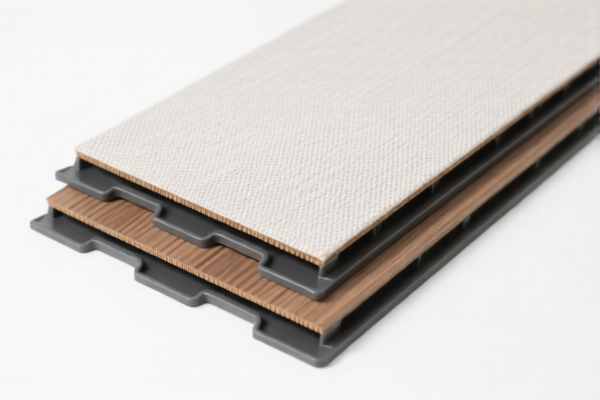
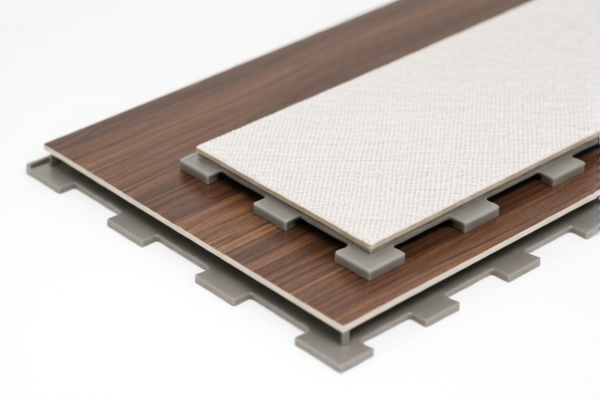
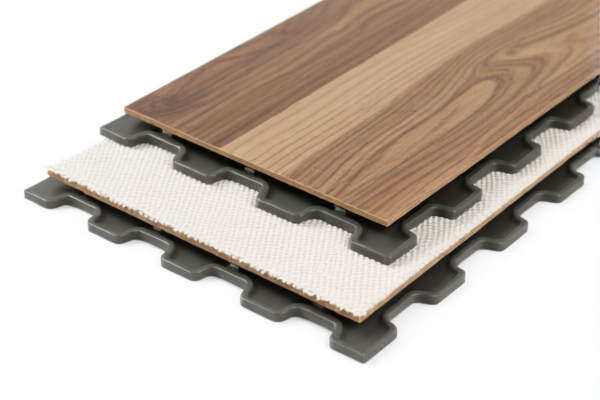
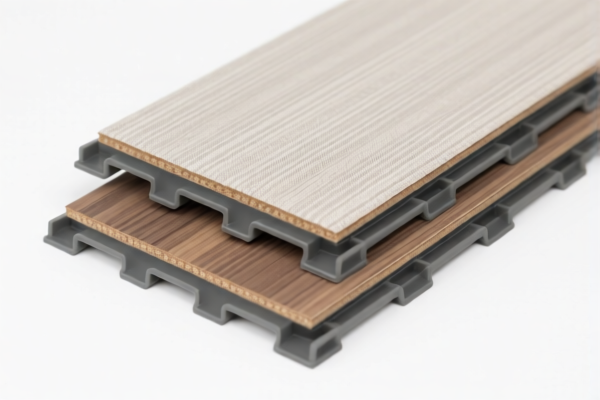
AI Analysis
🏗️ Textile Reinforced Plastic Floor Panel (TRPP)
🌐 HS Code Reference & Customs Clearance Guide | 2026 Latest Tariff Analysis | Professional Logistics Strategy
📌 I. Product Definition & Classification: What Exactly is a "Textile Reinforced Plastic Floor Panel"?
Textile Reinforced Plastic (TRP) is a high-performance composite material where plastic (polymer matrix) is reinforced with textile fibers (such as carbon, glass, or aramid fibers) to enhance strength, stiffness, and durability. When formed into a "Floor Panel," it serves as a structural or decorative flooring solution, often used in industrial, aerospace, marine, or high-end commercial applications.
In international trade, the classification hinges on material composition, form factor, and primary use:
1. Structural Panels (Plastic Plates/Sheets/Membranes):
- If the panel is primarily a flat sheet-like structure used for flooring, it may fall under Plastic Plates, Sheets, Rods, Tubes, Profiles.
- Key criterion: Is it a "plate" or "sheet" (Chapter 3901-3914)?
2. Other Articles of Plastic:
- If the panel has a specific complex shape, is not merely a plate/sheet, or is classified as a generic "other" plastic article, it falls under Other Articles of Plastic (Chapter 3926).
⚠️ Critical Distinction:
- If the product is a flat plate, sheet, or film used for flooring → Chapter 3921 (Plastic Plates, Sheets...).
- If the product is a generic panel not strictly defined as a plate/sheet, or is a specialized "other" article → Chapter 3926 (Other Articles of Plastic).
- Misclassification Risk: Declaring a specialized structural panel as a simple "plastic sheet" can lead to audits if the texture, thickness, or finish differs from standard sheet goods.
📦 II. HS Code Classification Details (2026 Latest Tariff Authority Mapping)
Based on the provided data, here are the five possible HS Codes for "Textile Reinforced Plastic Floor Panel," along with their logic and tax implications.
| HS Code | Product Description | Logical Basis for Classification | Total Tax Rate | Tax Breakdown |
|---|---|---|---|---|
3926.90.59.00 |
Textile-Reinforced Plastic Display Panel (Note: Data lists "Display Panel" but user input is "Floor Panel". This code is applied here for "Other" plastic articles containing textiles). | Category: Other articles of plastic. Logic: Falls under "Other" when not specifically a plate/sheet or when the textile reinforcement makes it a composite article not covered by 3921. Key Feature: Contains textile fibers, form is "panel." |
37.4% | Base: 2.4% Section 301: 25.0% Section 122: 10.0% |
3926.90.99.89 |
Textile-Reinforced Plastic Panel (Unlisted Other Articles) | Category: Unlisted other plastic articles. Logic: Used when the specific "display" or "floor" application doesn't fit other 3926 subheadings. Material is plastic, form is panel. Textile reinforcement is secondary to the "other article" definition. |
22.8% | Base: 5.3% Section 301: 7.5% Section 122: 10.0% |
3921.90.25.10 |
Textile-Reinforced Plastic Floor Panel (Plate/Sheet Form) | Category: Plastic plates, sheets, film, foil, and strip (Other). Logic: Classified as a "plate, sheet, or membrane" because it is a flat panel. Contains textile components. Falls under the "Other" bucket for plastic plates/sheets. |
41.5% | Base: 6.5% Section 301: 25.0% Section 122: 10.0% |
3921.90.40.10 |
Textile-Reinforced Plastic Decorative Panel (Plastic Plate Variant) | Category: Plastic plates, sheets (Other). Logic: Viewed as a variant of plastic plate/film used for decoration. No material conflict. Textile reinforcement is part of the composite plate structure. |
39.2% | Base: 4.2% Section 301: 25.0% Section 122: 10.0% |
3921.90.25.10 |
Textile-Reinforced Plastic Floor Panel (Flooring Specific) | Category: Plastic plates, sheets, film, foil, and strip (Other). Logic: Explicitly identified as "Floor Panel" but classified under the same "Plate/Sheet/Membrane" category as above. Contains textile components. |
41.5% | Base: 6.5% Section 301: 25.0% Section 122: 10.0% |
🔍 Key Takeaway:
- The lowest tax rate available is 22.8% (3926.90.99.89) if the panel can be justified as an "unlisted other article" rather than a "plate/sheet." - The highest tax rate is 41.5% (3921.90.25.10) if classified as a plastic plate/sheet. - The classification hinges on whether the product is seen as a structural plate (3921) or a finished article (3926).
💰 III. 2026 Latest Tariff Rate Details (Including Surtaxes & Policy Add-ons)
✅ Applicable Country: United States (US)
✅ Country of Origin: China (CN)
✅ Effective Date: Post-November 10, 2025 (Including subsequent imports)
🎯 1. 3926.90.59.00 – Other Plastic Articles (With Textile Reinforcement)
| Item | Detail |
|---|---|
| Base Tariff | 2.4% |
| Section 301 Surtax | +25.0% |
| Section 122 Tariff | +10.0% |
| Total Effective Rate | 37.4% |
| Tax Calculation | CIF Value × 37.4% |
| De Minimis Exemption | ❌ Not Eligible (Deny de minimis) |
| Legal Basis Path | USITC:3926.90.59.00 → Section 301: Footnote 9903.88.01 → Section 122: IEEPA:9903.01.25 |
📌 Explanation:
- Base 2.4%: Standard MFN rate for other plastic articles. - Section 301 (25%): Standard US-China trade war tariff on plastics. - Section 122 (10%): Additional tariff under Section 232 or related national security/economic measures (specific to certain plastic articles). - Total 37.4%: High barrier to entry. Must be budgeted into landed cost.
🎯 2. 3926.90.99.89 – Unlisted Other Plastic Articles (Lowest Rate Strategy)
| Item | Detail |
|---|---|
| Base Tariff | 5.3% |
| Section 301 Surtax | +7.5% (Note: Lower S301 rate applied here) |
| Section 122 Tariff | +10.0% |
| Total Effective Rate | 22.8% |
| Tax Calculation | CIF Value × 22.8% |
| De Minimis Exemption | ❌ Not Eligible |
| Legal Basis Path | USITC:3926.90.99.89 → Section 301: Lower Footnote → Section 122: IEEPA:9903.01.25 |
📌 Strategy Alert:
- This code offers the lowest total tax (22.8%). - Justification Required: You must argue that the panel is NOT a "plate or sheet" (which would force it into 3921) but a specialized "article" not specifically listed elsewhere. This is a strategic classification choice.
🎯 3. 3921.90.25.10 – Plastic Plates, Sheets, Membrane (Highest Rate Risk)
| Item | Detail |
|---|---|
| Base Tariff | 6.5% |
| Section 301 Surtax | +25.0% |
| Section 122 Tariff | +10.0% |
| Total Effective Rate | 41.5% |
| Tax Calculation | CIF Value × 41.5% |
| De Minimis Exemption | ❌ Not Eligible |
| Legal Basis Path | USITC:3921.90.25.10 → Section 301: Footnote 9903.88.01 → Section 122: IEEPA:9903.01.25 |
📌 Warning:
- This is the highest tax rate (41.5%). - Risk: If customs determines the floor panel is simply a "plastic sheet" used for flooring, they will apply this code. Avoid this if possible.
🎯 4. 3921.90.40.10 – Plastic Plates, Sheets (Decorative)
| Item | Detail |
|---|---|
| Base Tariff | 4.2% |
| Section 301 Surtax | +25.0% |
| Section 122 Tariff | +10.0% |
| Total Effective Rate | 39.2% |
| Tax Calculation | CIF Value × 39.2% |
| De Minimis Exemption | ❌ Not Eligible |
📌 Note:
- Slightly lower than the "Other Plate" code but still high due to the 25% Section 301 surtax. - Justification: The panel is primarily for "decoration" and is a "plate" form.
🛠️ IV. Customs Clearance Practical Advice (Pro Tips to Avoid Pitfalls)
✅ 1. Essential Documentation Checklist
| Document | Required? | Purpose |
|---|---|---|
| Product Specification Sheet | ✔️ | Details material composition (e.g., 30% glass fiber, 70% epoxy), dimensions, thickness. |
| Material Safety Data Sheet (MSDS) | ✔️ | Proves chemical content (plastic/resin type). |
| Commercial Invoice | ✔️ | Must clearly state "Textile Reinforced Plastic Panel" and specify HS Code. |
| Packing List | ✔️ | Itemizes quantity, weight, and dimensions. |
| Certificate of Origin (CO) | ✔️ | Required for Section 301/122 assessment. If from China, duties apply. |
| Third-Party Test Report | ✔️ | ASTM/ISO tests for fire resistance, load-bearing capacity (proves it's a "floor panel" and not just a sheet). |
| Photos of Product | ✔️ | Show cross-section to prove textile reinforcement. |
✅ 2. Declaration Strategy (Key Mnemonic)
🔥 "Form Defines Code, Reinforcement Defines Risk!"
| Scenario | Recommended HS Code | Reason |
|---|---|---|
| Flat, thin, flexible | 3921.90.25.10 or 3921.90.40.10 |
Classified as "Sheet/Membrane." High tax (39-41%). |
| Rigid, thick, structural | 3926.90.59.00 or 3926.90.99.89 |
Classified as "Article." Lower tax (22-37%). |
| Decorative only | 3921.90.40.10 |
Justified as "Decorative Plate." |
📌 Critical Tip:
- To achieve the 22.8% rate (3926.90.99.89), argue that the product is a composite article with a specific function (flooring) that is not merely a "plate" or "sheet" in the traditional sense. Provide evidence of its structural integrity and specific engineering design. - Avoid using the word "Sheet" in your commercial invoice if you want to avoid3921. Use "Panel," "Tile," or "Component."
✅ 3. Special Case Handling
| Situation | Handling Advice |
|---|---|
| OEM Custom Floor Panels | Provide OEM agreement + design specs. Show that the product is unique and not a standard plastic sheet. |
| Floor Panels with Metal Edges | Still classify as plastic article (3926) if plastic is the primary material by weight/value. |
| Fire-Retardant Panels | Highlight fire-retardant properties in specs. May qualify for specific testing exemptions but does not change HS code. |
| Import from Non-China Countries | If origin is Vietnam/Malaysia, Section 301 (25%) may not apply. Check specific country tariffs. |
🌍 V. Global Market Comparison (2026 Latest)
| Country/Region | Recommended HS Code | Estimated Tariff (China Origin) | Key Certifications | Notes |
|---|---|---|---|---|
| 🇺🇸 USA | 3926.90.99.89 (Target) |
22.8% (Target) | ASTM, UL (if applicable) | Highest risk market. Aim for 3926 to avoid 41.5%. |
| 🇨🇳 China | 3926.90.99.89 |
5.3% | CCC (if applicable) | Low tariff. No Section 301/122. |
| 🇪🇺 EU | 3926.90.99 |
4.0-6.0% | CE, REACH | No Section 301/122. Standard duties apply. |
| 🇬🇧 UK | 3926.90.99 |
4.0-6.0% | UKCA, REACH | Post-Brexit rules apply. |
| 🇦🇺 Australia | 3926.90.99 |
5.0% | A-Tick | No Section 301/122. |
📌 Conclusion:
- USA is the most challenging market due to Section 301 and 122 tariffs. - EU/UK/AU are straightforward, with lower and more stable tariffs.
📌 VI. Common Errors & Pitfalls (Lessons Learned)
❌ Error 1: Calling the product "Plastic Sheet" when it is a rigid floor panel.
👉 Consequence: Customs reclassifies to 3921.90.25.10 → 41.5% tax instead of 22.8%.
❌ Error 2: Ignoring textile reinforcement in the description.
👉 Consequence: Customs may classify as a different plastic article, potentially leading to higher duties or inspection delays.
❌ Error 3: Assuming "Flooring" automatically means a specific HS code.
👉 Consequence: No specific "Flooring" HS code exists for plastics in Chapter 39. Must use "Other Articles" or "Plates/Sheets."
✅ Correct Declaration Example:
"Textile Reinforced Plastic Composite Panel for Flooring, Rigid Structure, Non-Sheet Form, Model XYZ, ASTM Certified"
🎯 VII. Conclusion: Smart Classification Saves Money!
🎯 Remember the Golden Rule:
🔹 "Rigid Panel = Article (3926) = Lower Tax (22.8%)!"
🔹 "Flat Sheet = Plate (3921) = Higher Tax (41.5%)!"
🔹 "Don't call it a Sheet if it's a Structural Panel!"
📌 Pro Tip:
If your product is originally from Vietnam, Malaysia, or Thailand, you may exempt Section 301 (25%). The total tax could drop to 5-15% depending on the country.
👉 Recommendation: Consider transshipment or final assembly in a non-China country if the volume is high.
📣 Immediate Action:
📞 Contact your customs broker with product photos and specs.
📄 Request a Binding Ruling from US Customs (CBP) to lock in the3926.90.99.89classification.
🚀 Optimize your supply chain to minimize landed costs!
✨ Professional Clearance, Precise Classification, Maximized Profit!
💼 Every dollar of tax saved is pure profit!
Customer Reviews
About HS Code Classification
The Harmonized System (HS) is an internationally standardized nomenclature developed by the World Customs Organization (WCO) to classify traded products. Over 200 countries use the HS system as the basis for customs tariffs, trade statistics, and import/export regulations.
Each HS code follows a hierarchical structure:
- Chapter (2 digits) — Broad category of goods (e.g., Chapter 84: Machinery and Mechanical Appliances)
- Heading (4 digits) — More specific grouping within the chapter
- Subheading (6 digits) — Internationally standardized breakdown, used by all WCO member countries
- National subdivisions (8-10 digits) — Country-specific extensions for further classification, such as US HTSUS 10-digit codes
Correct HS code classification is essential for smooth customs clearance, accurate duty payment, and compliance with trade regulations. Misclassification can lead to customs delays, overpayment of duties, or penalties.
When importing from CN to US, the applicable tariff rates may include:
- Most-Favored-Nation (MFN) rate — The standard duty rate applied to WTO members
- General rate — Applied to countries without trade agreements
- Trade remedy duties — Additional tariffs such as Section 301 (anti-dumping), Section 232 (national security), or countervailing duties
The information provided on this page is for reference purposes only. For official classification, please consult with your local customs authority or a licensed customs broker.