Textile Reinforced Plastic Furniture Board
CN → US| HS Code | Tariff Rate | Origin | Destination | Doc |
|---|---|---|---|---|
| 6815190000 | 35.0% | CN | US | Official Doc |
| 3921904010 | 39.2% | CN | US | Official Doc |
| 3921905010 | 39.8% | CN | US | Official Doc |
| 3921902510 | 41.5% | CN | US | Official Doc |
| 3921904010 | 39.2% | CN | US | Official Doc |
Product Images
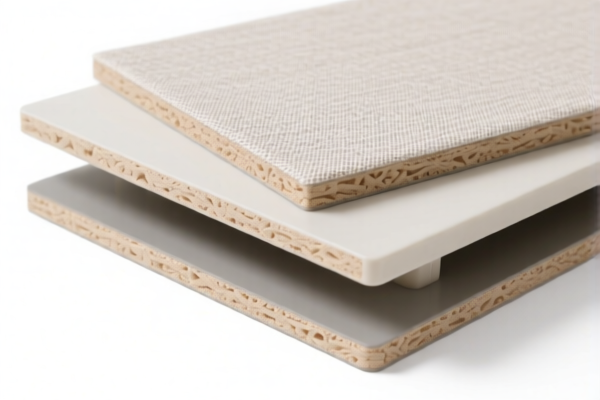
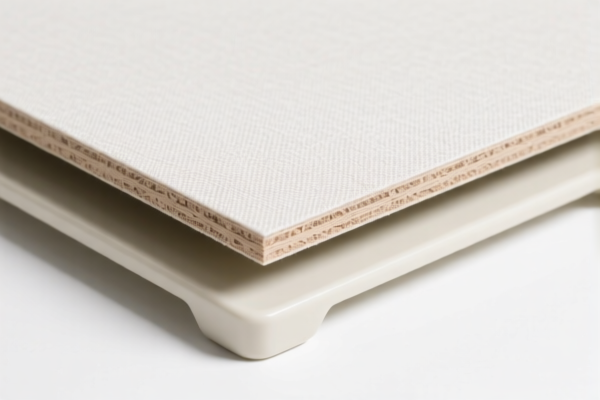
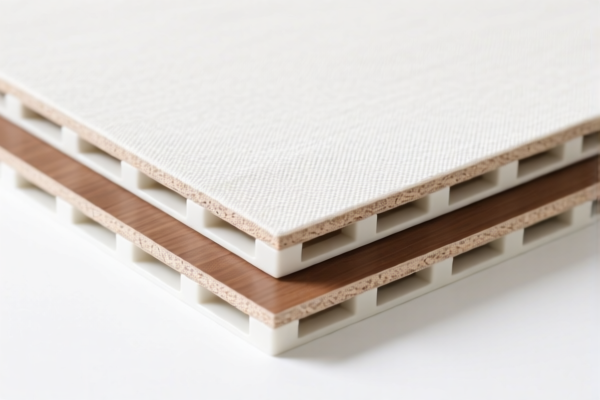
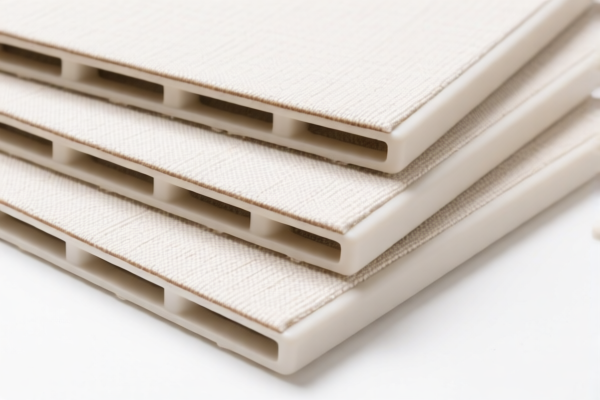
AI Analysis
🪑 Textile Reinforced Plastic (TRP) Furniture Board | Advanced Composite Cladding
🌐 HS Code Classification & Customs Clearance Guide | 2024/2025 Tariff Analysis | Expert Strategy for US Imports
📌 One, Product Definition & Classification Logic: What is a "Textile Reinforced Plastic Board"?
Textile Reinforced Plastic (TRP) furniture boards are high-performance composite materials made by embedding textile fibers (such as glass, carbon, or aramid fabrics) within a plastic polymer matrix (often epoxy, vinyl ester, or polyester). In the furniture industry, these are primarily used for: * Decorative Veneers: High-wear surfaces for countertops, tables, and cabinets. * Structural Panels: Lightweight, high-strength cores for modular furniture or industrial fixtures.
In international trade, the critical classification challenge lies in determining whether the product is viewed as a "Plastic Sheet/Board" (Chapter 39) or a "Manufactured Article of Stone/Mineral or Other Material" (Chapter 68), depending on the dominant material property and manufacturing process.
⚠️ Key Distinction:
- If the board is predominantly a plastic sheet with textile reinforcement acting as a minor additive or structural variant → It likely falls under Chapter 39 (Plastics).
- If the board is considered a composite construction material where the textile/mineral fiber defines its primary identity as a "building or decorative article" rather than a simple plastic sheet → It may fall under Chapter 68 (Articles of Stone, Plaster, Cement, Asbestos, Mica, or Similar Mineral Substances).
📦 Two, HS Code Classification Details (Based on Provided Data)
Below is the detailed breakdown of the four potential HS Codes derived from the analysis of "Textile Reinforced Plastic Furniture Board." Note that Haiti/US Section 301 and IEEPA tariffs apply to all Chinese-origin goods listed below.
| HS Code | Product Description & Logic | Applicable Scenario | Primary Material Characteristic |
|---|---|---|---|
6815.19.00.00 |
Articles of Stone, Plaster, Cement, Asbestos, Mica, or Similar Mineral Substances: Other Articles. Specifically classified here as Carbon Fiber or Similar Fiber-Reinforced Composite Articles. | High-end decorative panels where the "composite/mineral-like" structural integrity is emphasized over simple plastic molding. | Composite/Mineral-like: Treated as a fiber-reinforced composite article similar to stone/mineral derivatives due to high rigidity and heat resistance. |
3921.90.40.10 |
Other Plates, Sheets, Film, Foil and Strip, of Plastics: Other, Other. Classified as a Plastic Board Variant where textile reinforcement is considered a minor variation. | Standard decorative furniture boards where the plastic matrix dominates, and textile is just a surface layer or minor reinforcement. | Plastic-Dominant: Viewed as a standard plastic sheet with a "textile enhancement" feature. |
3921.90.50.10 |
Other Plates, Sheets, Film, Foil and Strip, of Plastics: Other, Other. Specifically linked to High-Pressure Paper-Enhanced Decorative Laminates. | Boards with a dense, high-pressure layered structure (like HPL - High Pressure Laminate) where textile acts as the "paper" reinforcement layer. | Layered Composite: Matches the logic of HPL (Formica-style), where textile replaces traditional paper as the reinforcement substrate. |
3921.90.25.10 |
Other Plates, Sheets, Film, Foil and Strip, of Plastics: Other, Other. Classified as High-Strength Plastic Boards. | Industrial-grade furniture boards where high strength and dominant plastic content are the key selling points. | High-Strength Plastic: Emphasizes the mechanical strength provided by the combination, with plastic being the bulk material. |
🔍 Critical Note:
- All Classifications below assume Origin: China.
- The choice between Chapter 39 and Chapter 68 often depends on Customs Rulings and the specific ratio of plastic to reinforcing fiber.
-6815.19.00.00has a 0% Base Duty but is subject to significant Section 301/IEEPA tariffs.
- Chapter 39 codes have 4.2%–6.5% Base Duties plus the same Section 301/IEEPA tariffs.
💰 Three, 2024/2025 Tariff Rate Detailed Breakdown (US Imports from China)
✅ Applicable Country: United States (US)
✅ Country of Origin: China (CN)
✅ Effective Time: Tariffs are currently active under Section 301 and IEEPA.
🎯 1. 6815.19.00.00 — Composite Articles (Fiber-Reinforced)
| Item | Content |
|---|---|
| Base Duty | 0.0% |
| Section 301 Additional Duty | +25.0% |
| IEEPA (Section 122) Additional Duty | +10.0% |
| Total Effective Tax Rate | 35.0% |
| Tax Calculation | CIF Value × 35% |
| De Minimis Exemption | ❌ NOT Applicable (Value > $800 threshold or specific exclusions apply) |
| Legal Basis Path | USITC:6815.19.00.00 → Section 301: Footnote 9903.88.01 → IEEPA: Executive Order 14017 |
📌 Explanation:
- Although the base duty is 0%, the 35% total burden is significant.
- This code is often preferred if the product is deemed a "composite construction material" rather than a simple plastic sheet.
- Risk: Customs may challenge this if the plastic content exceeds a certain threshold, pushing it to Chapter 39.
🎯 2. 3921.90.40.10 — Plastic Boards (Textile Reinforced Variant)
| Item | Content |
|---|---|
| Base Duty | 4.2% |
| Section 301 Additional Duty | +25.0% |
| IEEPA (Section 122) Additional Duty | +10.0% |
| Total Effective Tax Rate | 39.2% |
| Tax Calculation | CIF Value × 39.2% |
| De Minimis Exemption | ❌ NOT Applicable |
| Legal Basis Path | USITC:3921.90.40.10 → Section 301: Footnote 9903.88.01 → IEEPA: Executive Order 14017 |
📌 Explanation:
- This is the most common classification for "Decorative Plastic Boards."
- The 4.2% base makes it slightly more expensive than6815in raw duty, but the 25% + 10% penalties are identical.
- Advantage: Easier to justify under Chapter 39 if the plastic is >50% by weight.
🎯 3. 3921.90.50.10 — Plastic Boards (HPL/Laminate Equivalent)
| Item | Content |
|---|---|
| Base Duty | 4.8% |
| Section 301 Additional Duty | +25.0% |
| IEEPA (Section 122) Additional Duty | +10.0% |
| Total Effective Tax Rate | 39.8% |
| Tax Calculation | CIF Value × 39.8% |
| De Minimis Exemption | ❌ NOT Applicable |
| Legal Basis Path | USITC:3921.90.50.10 → Section 301: Footnote 9903.88.01 → IEEPA: Executive Order 14017 |
📌 Explanation:
- Applies if the board is specifically High-Pressure Laminate (HPL) style.
- Slightly higher base duty (4.8%) compared to3921.90.40.10.
- Use this if your product is technically a "decorative laminated sheet."
🎯 4. 3921.90.25.10 — High-Strength Plastic Boards
| Item | Content |
|---|---|
| Base Duty | 6.5% |
| Section 301 Additional Duty | +25.0% |
| IEEPA (Section 122) Additional Duty | +10.0% |
| Total Effective Tax Rate | 41.5% |
| Tax Calculation | CIF Value × 41.5% |
| De Minimis Exemption | ❌ NOT Applicable |
| Legal Basis Path | USITC:3921.90.25.10 → Section 301: Footnote 9903.88.01 → IEEPA: Executive Order 14017 |
📌 Explanation:
- This code is for industrial/high-strength applications.
- Highest total tax (41.5%) among the plastic options.
- Avoid this unless the product is explicitly marketed as "High-Strength Structural Plastic."
🛠️ Four, Customs Clearance Practical Advice (Real-World Pitfall Guide)
✅ 1. Documentation Checklist (Non-Negotiable)
| Document | Required | Notes |
|---|---|---|
| ✅ Product Specification Sheet | ✔️ | Must detail: % Plastic, % Fiber Type, Layup Structure, Curing Process. |
| ✅ Material Safety Data Sheet (MSDS) | ✔️ | Required for chemical compliance (epoxy/resin content). |
| ✅ Commercial Invoice | ✔️ | Must explicitly state: "Textile Reinforced Plastic Board, Not Furniture." |
| ✅ Packing List | ✔️ | Detail dimensions, weight, and unit count. |
| ✅ Certificate of Origin (CO) | ✔️ | Essential for proving Chinese origin (to apply correct tariffs). |
| ✅ Prior Ruling Copy (if available) | ✔️ | If you have a CBP ruling, attach it to prevent re-classification. |
✅ 2. Declaration Strategy (Key Mantras)
🔥 “Describe the Matrix, Not Just the Use!”
| Scenario | Correct Declaration | Incorrect Declaration | Risk |
|---|---|---|---|
| Decorative Panel | "TRP Decorative Board, Plastic Matrix" | "Furniture Part" | Misclassification → Higher duty + Seizure risk. |
| Industrial Plate | "High-Strength Plastic Plate" | "Fiber Reinforced Concrete" | Wrong Chapter (39 vs 68) → Delay. |
| Laminate Sheet | "HPL-Style Decorative Laminate" | "Plastic Sheet" | Ambiguity → Customs may pick the highest duty. |
✅ 3. Special Handling Tips
| Situation | Advice |
|---|---|
| OEM Custom Parts | Provide design drawings. If the shape is unique, argue for "Composite Article" (6815) if possible. |
| Mixed Shipments | Do NOT mix TRP boards with plain plastic sheets in one HS Code line. Declare separately. |
| Value Declaration | Ensure CIF Value includes insurance and freight. Tariffs are calculated on CIF. |
| Origin Labeling | Clearly mark "Made in China" on all packaging to avoid anti-dumping scrutiny. |
🌍 Five, Global Market Comparison (2024/2025 Snapshot)
| Market | Recommended HS Code | Est. Total Duty (CN Origin) | Key Certification | Notes |
|---|---|---|---|---|
| 🇺🇸 USA | 3921.90.40.10 or 6815.19.00.00 |
35% – 39.2% | FCC (if electronic), CARB TSCA Title VI | Highest Tariffs. IEEPA 10% + Sec 301 25%. |
| 🇨🇳 China | 3921.90.40.10 |
~4.2% | CCC (if applicable) | Low duty, but domestic competition is fierce. |
| 🇪🇺 EU | 3921.90.90 |
~4.5% + VAT | CE, REACH, RoHS | No Section 301 tariffs. VAT varies by country. |
| 🇨🇦 Canada | 3921.90.40.10 |
~6.5% + GST | CARB TSCA Title VI | CUSMA may apply if processed in US/Mexico. |
| 🇲🇽 Mexico | 3921.90.90.99 |
~5.0% + IVA | NOM Standards | Potential USMCA benefits if sufficient transformation occurs. |
📌 Conclusion:
- The US market is the most costly due to叠加 tariffs (Section 301 + IEEPA).
- EU and Canada are more favorable, focusing on environmental certifications (REACH, CARB) rather than punitive tariffs.
📌 Six, Common Errors & Pitfalls (Lessons Learned)
❌ Error 1: Declaring as "Furniture" (9403)
👉 Consequence: TRP boards are components, not finished furniture. Misclassification leads to penalties and re-classification to 39/68.
❌ Error 2: Ignoring the "IEEPA 10%"
👉 Consequence: Many brokers only account for Section 301 (25%). Forgetting the additional 10% leads to underpayment and audits.
❌ Error 3: Using vague descriptions like "Plastic Board"
👉 Consequence: Customs lacks clarity on whether it's 3921.90.25 (6.5% base) or 3921.90.40 (4.2% base). Always specify "Textile Reinforced" or "Composite."
✅ Correct Declaration Example:
"Textile Reinforced Plastic Decorative Board, Composite Material, Plastic Matrix >50%, For Furniture Use, Model TRP-2024, Made in China"
🎯 Seven, Conclusion: Professional Clearance, Cost Optimization
🎯 Remember:
🔹 "TRP Boards = Composite, Not Furniture."
🔹 "US Tariffs = Base + 25% Sec301 + 10% IEEPA."
🔹 "Chapter 68 has 0% base, but hard to justify. Chapter 39 is safer but higher base."
📌 Pro Tip:
If your supplier can shift final processing to Vietnam, India, or Mexico, you MIGHT qualify for lower Section 301 rates. However, substantial transformation rules are strict. Always consult a customs broker for Advance Rulings before shipping large volumes to the US.
📣 Immediate Action:
📞 Contact a Licensed Customs Broker
📄 Prepare MSDS and Material Composition Reports
📉 Calculate Landed Cost Including 35-41.5% Duty
🚀 Ensure Smooth Clearance and Maximize Profit Margins!
✨ Precision in Classification Saves Thousands!
💼 Your Supply Chain Depends on Accurate HS Codes!
Customer Reviews
About HS Code Classification
The Harmonized System (HS) is an internationally standardized nomenclature developed by the World Customs Organization (WCO) to classify traded products. Over 200 countries use the HS system as the basis for customs tariffs, trade statistics, and import/export regulations.
Each HS code follows a hierarchical structure:
- Chapter (2 digits) — Broad category of goods (e.g., Chapter 84: Machinery and Mechanical Appliances)
- Heading (4 digits) — More specific grouping within the chapter
- Subheading (6 digits) — Internationally standardized breakdown, used by all WCO member countries
- National subdivisions (8-10 digits) — Country-specific extensions for further classification, such as US HTSUS 10-digit codes
Correct HS code classification is essential for smooth customs clearance, accurate duty payment, and compliance with trade regulations. Misclassification can lead to customs delays, overpayment of duties, or penalties.
When importing from CN to US, the applicable tariff rates may include:
- Most-Favored-Nation (MFN) rate — The standard duty rate applied to WTO members
- General rate — Applied to countries without trade agreements
- Trade remedy duties — Additional tariffs such as Section 301 (anti-dumping), Section 232 (national security), or countervailing duties
The information provided on this page is for reference purposes only. For official classification, please consult with your local customs authority or a licensed customs broker.