Textile Reinforced Plastic Industrial Board
CN → US| HS Code | Tariff Rate | Origin | Destination | Doc |
|---|---|---|---|---|
| 3921904010 | 39.2% | CN | US | Official Doc |
| 3921905010 | 39.8% | CN | US | Official Doc |
| 6815190000 | 35.0% | CN | US | Official Doc |
| 5903102090 | 35.0% | CN | US | Official Doc |
| 3921904010 | 39.2% | CN | US | Official Doc |
Product Images
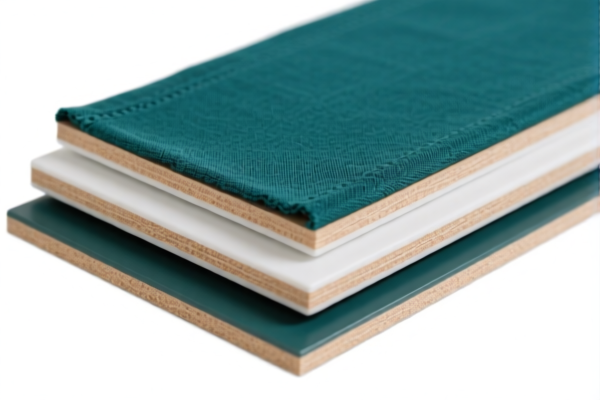
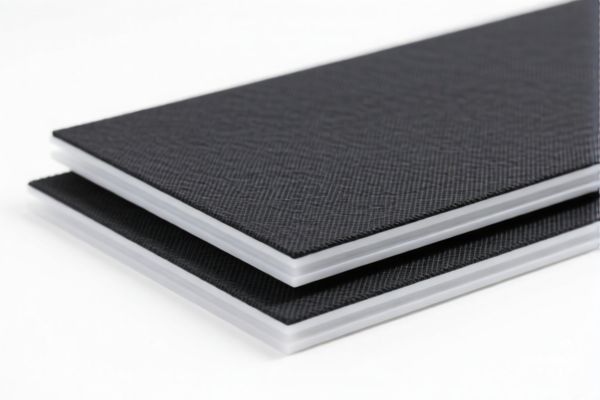
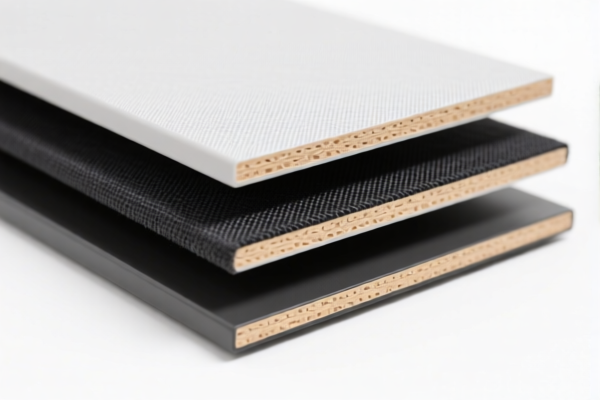

AI Analysis
🏭 Textile Reinforced Plastic Industrial Board (TRPIB)
🌐 HS Code Reference & Clearance Guide | 2026 Latest Tariff Analysis | Professional Customs Strategy
📌 I. Product Definition & Classification: What Exactly is "Textile Reinforced Plastic"?
The Textile Reinforced Plastic Industrial Board is a composite material sheet used in industrial applications, construction, and automotive sectors. It consists of a plastic matrix reinforced with textile fibers (such as fiberglass, carbon fiber, or polyester). In international trade, the classification hinges on whether the "plastic" is the primary characteristic or the "textile/carbon" is the defining feature.
⚠️ Key Classification Logic:
- If the plastic resin forms the matrix and the textile is merely an reinforcing layer within a sheet/board form → Classified under Chapter 39 (Plastics).
- If the product is inferred as a carbon fiber or mineral composite where the reinforcement material defines the nature → Classified under Chapter 68 (Articles of Stone, Plaster, Cement, Asbestos, Mica, or Similar Materials).
- If the product is viewed as a textile fabric impregnated with plastic (where the textile is the base) → Classified under Chapter 59 (Impregnated, Coated, Covered, or Laminated Textile Fabrics).
📦 II. HS Code Classification Details (2026 Latest Tariff Authority Comparison)
| HS Code | Product Description | Applicability Scenario | Classification Logic |
|---|---|---|---|
3921.90.40.10 |
Plastic plates, sheets, film, foil, and strip (Other) | Decorative Boards: Textile reinforcement is treated as a variant of plastic board manufacturing. | ✅ Plastic-dominant |
3921.90.50.10 |
Plastic plates, sheets, film, foil, and strip (Other) | Industrial/Decorative: Plastic material matches the board form; textile is the reinforcing layer in a laminated structure. | ✅ Plastic-dominant |
6815.19.00.00 |
Articles of stone or of other mineral substances (n.e.s.) | Composite Boards: Inferred as Carbon Fiber or Mineral Composite; form is board-like. | ✅ Mineral/Carbon-dominant |
5903.10.20.90 |
Textiles impregnated with plastics (PVC, etc.) | Fabric-Based: Viewed as an extension of textile processing; plastic enhancement dominates the textile base. | ✅ Textile-dominant |
🔍 Critical Distinction:
- If the board is primarily defined by its plastic content and sheet form, it falls under 3921.
- If the board is primarily defined by high-performance fiber reinforcement (like carbon/minerals) acting as a structural mineral-like composite, it may fall under 6815.
- If the textile base is clearly the primary material, impregnated with plastic, it falls under 5903.
💰 III. 2026 Latest Tariff Rate Breakdown (Including Additional Duties & Policy Add-ons)
✅ Applicable Country: USA (US)
✅ Origin: China (CN)
✅ Effective Date: From November 10, 2025 (including subsequent imports)
🎯 1. 3921.90.40.10 & 3921.90.50.10 —— Plastic Plates/Sheets (Plastic-Dominant)
These two codes cover most standard plastic-reinforced boards where plastic is the binder.
| Item | Content |
|---|---|
| Base Tariff | 4.2% (3921.90.40.10) / 4.8% (3921.90.50.10) (Ad valorem) |
| Section 301 Additional Tariff | +25.0% (From USITC Footnote 9903.88.01) |
| IEEPA Additional Tariff | +10.0% (Targeting China/HK products, effective Nov 10, 2025) |
| Total Effective Rate | 39.2% (3921.90.40.10) / 39.8% (3921.90.50.10) |
| Tax Calculation | CIF Value × Total Rate |
| De Minimis Exemption | ❌ NOT Available (deny_de_minimis) |
| Legal Authority Path | IEEPA:9903.01.25 → IEEPA:9903.01.24 → USITC:3921.90.40.10/50.10 → FOOTNOTE:9903.88.01 |
📌 Explanation:
- The 25% Section 301 duty applies to virtually all plastic articles from China.
- The 10% IEEPA duty is a new layer targeting Chinese imports starting late 2025.
- Total tax burden is nearly 40%, making cost control critical.
🎯 2. 6815.19.00.00 —— Articles of Stone/Mineral Materials (Composite/Carbon Board)
This code applies if the product is classified as a mineral-based composite (e.g., Carbon Fiber Reinforced Polymer treated as a mineral-like article).
| Item | Content |
|---|---|
| Base Tariff | 0.0% (Ad valorem) |
| Section 301 Additional Tariff | +25.0% |
| IEEPA Additional Tariff | +10.0% |
| Total Effective Rate | 35.0% |
| Tax Calculation | CIF Value × 35.0% |
| De Minimis Exemption | ❌ NOT Available (deny_de_minimis) |
| Legal Authority Path | IEEPA:9903.01.25 → IEEPA:9903.01.24 → USITC:6815.19.00.00 → FOOTNOTE:9903.88.01 |
📌 Note:
- Although the base tariff is 0%, the additional duties bring it to 35%.
- This is 0.3% to 4.8% cheaper than the plastic-dominated codes (3921), offering slight savings if the composite nature can be legally argued as mineral/stone-like.
🎯 3. 5903.10.20.90 —— Textiles Impregnated with Plastics (Textile-Dominant)
This code applies if the product is deemed primarily a textile fabric that has been plastic-impregnated.
| Item | Content |
|---|---|
| Base Tariff | 0.0% (Ad valorem) |
| Section 301 Additional Tariff | +25.0% |
| IEEPA Additional Tariff | +10.0% |
| Total Effective Rate | 35.0% |
| Tax Calculation | CIF Value × 35.0% |
| De Minimis Exemption | ❌ NOT Available (deny_de_minimis) |
| Legal Authority Path | IEEPA:9903.01.25 → IEEPA:9903.01.24 → USITC:5903.10.20.90 → FOOTNOTE:9903.88.01 |
📌 Note:
- Same effective rate as6815.19.00.00(35%).
- Suitable for products where the textile base is clearly visible and dominant (e.g., thick fiberglass mesh coated with plastic).
🛠️ IV. Customs Clearance Practical Advice (Battle-Tested Pitfall Guide)
✅ 1. Required Documentation Checklist (Non-Negotiable)
| Document | Mandatory | Explanation |
|---|---|---|
| ✅ Product Specification Sheet | ✔️ | Must detail material composition (% Plastic vs. % Textile/Carbon), dimensions, and density. |
| ✅ Material Safety Data Sheet (MSDS) | ✔️ | Proves chemical composition, crucial for distinguishing between plastic vs. mineral composites. |
| ✅ Product Photos (Clear & Detailed) | ✔️ | Must show texture, layer structure, and any markings. Helps customs distinguish between "plastic sheet" and "textile fabric." |
| ✅ Commercial Invoice | ✔️ | Clearly state "Textile Reinforced Plastic Board" and indicate country of origin (China). |
| ✅ Packing List | ✔️ | Itemize weight, quantity, and packaging type. Avoid vague terms like "Plastic Material." |
| ✅ Certificate of Origin (CO) | ✔️ | Required for origin verification to apply/add additional tariffs correctly. |
| ✅ Third-Party Test Report | ✔️ | ISO/ASTM tests confirming whether the product is a composite (Chapter 68) or plastic article (Chapter 39). |
✅ 2. Declaration Strategies (Key Mantras)
🔥 "Know Your Base: Plastic = 3921, Textile = 5903, Mineral/Carbon = 6815"
| Scenario | Correct Declaration | Incorrect Action |
|---|---|---|
| Standard Fiberglass Board (Plastic matrix dominates) | 3921.90.40.10 or 3921.90.50.10 |
Misdeclaring as 6815 → Risk of audit & penalties. |
| Carbon Fiber Composite Panel (High stiffness, mineral-like) | 6815.19.00.00 |
Misdeclaring as 3921 → Pay higher base tax (4.2-4.8% vs 0%). |
| Plastic-Coated Fabric Roll (Textile base visible) | 5903.10.20.90 |
Misdeclaring as 3921 → May trigger questions on textile content. |
| Mixed/Undefined Composite | Apply for Advance Ruling | Guessing → High risk of reclassification & back taxes. |
✅ 3. Special Case Handling
| Situation | Handling Advice |
|---|---|
| OEM Custom Boards | Provide client orders + design specs. If custom-shaped, ensure it doesn't look like a "finished article" (e.g., a car part), which might change classification. |
| High Carbon Content | If carbon fiber >50%, argue for 6815.19.00.00 to save on base tariff, but be prepared to justify "mineral-like" properties. |
| Mixed Shipments | Do not mix 3921 and 5903 in one line item. Separate by material dominance. |
| De Minimis (Section 321) | ❌ DO NOT USE. All listed HS Codes are explicitly denied de minimis exemption for Chinese origin. |
🌍 V. Global Market Clearance Comparison (2026 Latest)
| Country/Region | Recommended HS Code | Effective Tariff (China Origin) | Certification Requirements | Notes |
|---|---|---|---|---|
| 🇺🇸 USA | 3921.90.40.10 / 6815.19.00.00 |
39.2% (Plastic) / 35.0% (Mineral/Textile) | No specific CBP license, but MSDS required. | High tariff due to Section 301 + IEEPA. |
| 🇨🇳 China | 3921.90.40.10 |
~4.2% (Import) | CCC (if applicable for end-use) | Low import tariff, but check export controls. |
| 🇪🇺 EU | 3921.90.99 |
0% - 6.5% (Varies) | REACH Compliance | No Section 301 equivalent; lower barrier. |
| 🇬🇧 UK | 3921.90.99 |
0% - 6.5% | UKCA Mark (if applicable) | Post-Brexit tariff schedules similar to EU. |
📌 Conclusion:
- The USA is the most challenging market due to the cumulative 35-40% tariff.
- Savings Opportunity: If your product can be legally classified as a mineral composite (6815) or textile-impregnated (5903), you save 0.3% to 4.8% on the base tariff, resulting in a total rate of 35% instead of 39.2-39.8%.
📌 VI. Common Errors & Pitfall Guide (Lessons from Experience)
❌ Error 1: Declaring as "Plastic Board" without specifying reinforcement
👉 Consequence: Customs may reject or audit, delaying clearance.
✅ Fix: Always specify "Textile Reinforced" and provide MSDS.
❌ Error 2: Using "Plastic Plate" for a product that is mostly Carbon Fiber
👉 Consequence: Overpaying base duty (4.2% vs 0%).
✅ Fix: Argue for 6815.19.00.00 if carbon/mineral content is high.
❌ Error 3: Assuming De Minimis ($800) applies
👉 Consequence: Shipment seized, fines, and blacklisting.
✅ Fix: All these HS Codes are denied de minimis for Chinese origin. Full formal entry required.
❌ Error 4: Ignoring the IEEPA 10% Add-on
👉 Consequence: Underpayment of duties, leading to penalties and interest.
✅ Fix: Ensure broker includes IEEPA:9903.01.25 in calculation.
🎯 VII. Conclusion: Precision Classification, Profit Protection!
🎯 Remember the Mantra:
🔹 "Plastic Matrix = 3921 (High Base); Carbon/Mineral = 6815 (Low Base); Textile Base = 5903 (Low Base)."
🔹 "Total Tax = Base + 25% (301) + 10% (IEEPA). No De Minimis!"
🔹 "Save up to 4.8% by choosing the right composite category!"
📌 Pro Tip:
If your board contains high-value carbon fiber, consider arguing for 6815.19.00.00 to minimize the base duty impact.
Request an Advance Ruling (CPB Ruling) from US Customs before shipping large volumes to lock in your classification and avoid unexpected costs.
📣 Immediate Action:
📞 Engage a licensed customs broker + Provide MSDS + File for Pre-Classification
🚀 Ensure your Textile Reinforced Plastic Board clears smoothly, costs optimally, and reaches your customers on time!
✨ Professional Clearance Starts with Accurate Classification!
💼 Every percentage point saved is pure profit!
Customer Reviews
About HS Code Classification
The Harmonized System (HS) is an internationally standardized nomenclature developed by the World Customs Organization (WCO) to classify traded products. Over 200 countries use the HS system as the basis for customs tariffs, trade statistics, and import/export regulations.
Each HS code follows a hierarchical structure:
- Chapter (2 digits) — Broad category of goods (e.g., Chapter 84: Machinery and Mechanical Appliances)
- Heading (4 digits) — More specific grouping within the chapter
- Subheading (6 digits) — Internationally standardized breakdown, used by all WCO member countries
- National subdivisions (8-10 digits) — Country-specific extensions for further classification, such as US HTSUS 10-digit codes
Correct HS code classification is essential for smooth customs clearance, accurate duty payment, and compliance with trade regulations. Misclassification can lead to customs delays, overpayment of duties, or penalties.
When importing from CN to US, the applicable tariff rates may include:
- Most-Favored-Nation (MFN) rate — The standard duty rate applied to WTO members
- General rate — Applied to countries without trade agreements
- Trade remedy duties — Additional tariffs such as Section 301 (anti-dumping), Section 232 (national security), or countervailing duties
The information provided on this page is for reference purposes only. For official classification, please consult with your local customs authority or a licensed customs broker.