Textile Reinforced Plastic Sculpture Board
CN → US| HS Code | Tariff Rate | Origin | Destination | Doc |
|---|---|---|---|---|
| 5903102090 | 35.0% | CN | US | Official Doc |
| 9703900000 | 17.5% | CN | US | Official Doc |
| 3921904010 | 39.2% | CN | US | Official Doc |
| 6815190000 | 35.0% | CN | US | Official Doc |
Product Images
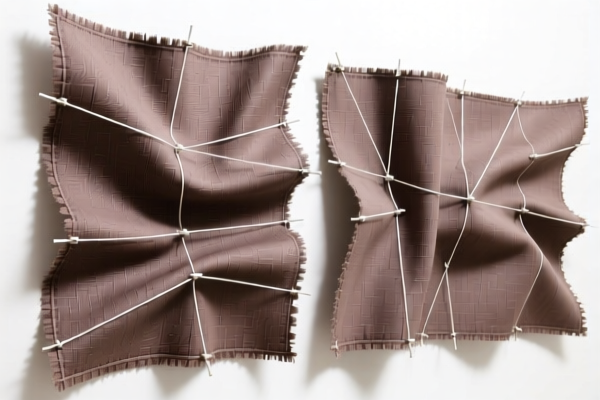
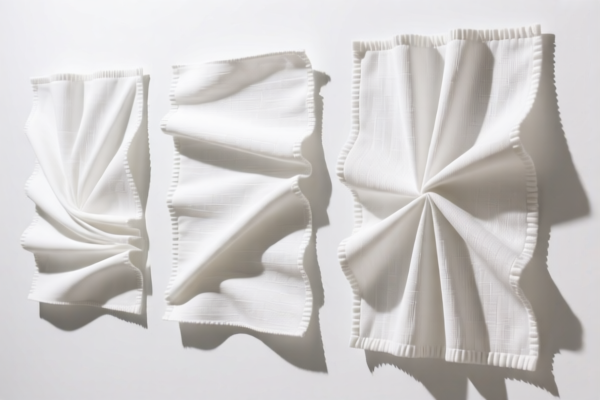
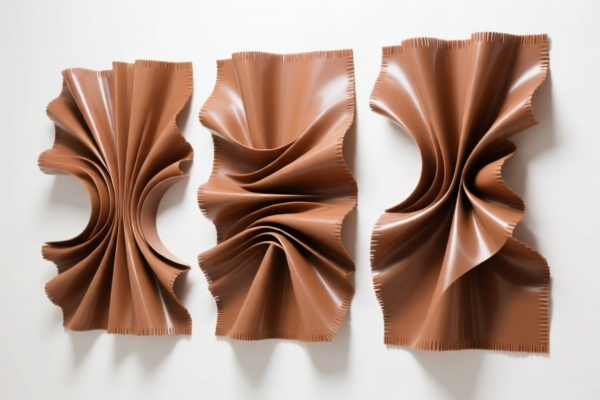
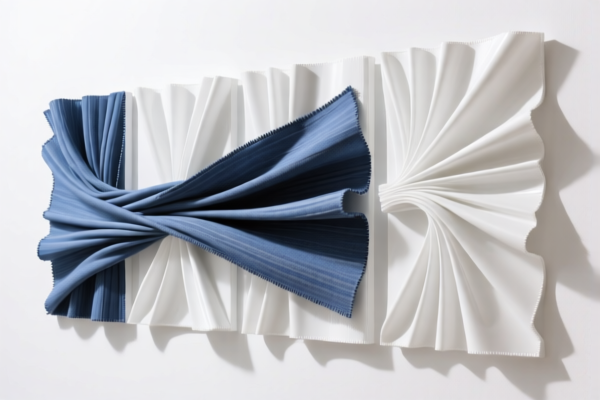
AI Analysis
🎨 Textile Reinforced Plastic Sculpture Board
🌐 HS Code Reference & Customs Clearance Guide | 2026 Latest Tariff Analysis | Professional-Level Clearance Strategy 📌 I. Product Definition & Classification: What Exactly Is It?
The "Textile Reinforced Plastic Sculpture Board" is a composite material sheet used primarily for artistic, architectural, or decorative purposes. It combines the structural integrity of textiles with the moldability and durability of plastics. In international trade, its classification is tricky because it straddles the line between "Textile Products," "Plastic Articles," and "Works of Art."
⚠️ Critical Distinction:
- If classified as a textile processing extension → High tariff due to trade disputes (Section 301 + 122).
- If classified as a sculpture/artwork → Lower tariff, benefiting from lower "base" rates.
- If classified as a generic plastic board → Base duty applies + trade disputes.
📦 II. HS Code Classification Details (2026 Latest Tariff Authority Comparison)
Based on the provided data, there are 4 potential HS Code classifications. Each has a significantly different tax burden.
| HS Code | Product Description | Key Classification Logic | Total Tax Rate |
|---|---|---|---|
5903.10.20.90 |
Plastic-impregnated textile boards, shaped as sheets | Textile fabric processed/extended with plastic; considered a textile product variant. | 35.0% |
9703.90.00.00 |
Sculpture, other than original sculptures and statuary | Name includes "Sculpture"; plastic material falls under "other materials" category for art works. | 17.5% |
3921.90.40.10 |
Textile-reinforced plastic decorative panels | Plastic sheet/board form; textile reinforcement is a variation of plastic boards, no material exclusion. | 39.2% |
6815.19.00.00 |
Articles of other materials of graphite or other carbon | Contains textile reinforcement; classified as non-electrical carbon-fiber-like fiber-reinforced composite products. | 35.0% |
🔍 Key Takeaway:
- Lowest Tax:9703.90.00.00(17.5%) – But requires proving it is a "Sculpture/Artwork."
- Highest Tax:3921.90.40.10(39.2%) – Generic plastic board with high base duty + trade tariffs.
- Middle Ground:5903.10.20.90and6815.19.00.00(35.0%) – Composite products treated as textiles or advanced composites.
💰 III. 2026 Latest Tariff Rate Breakdown (Including Additional Taxes & Policies)
✅ Applicable Country: United States (US)
✅ Origin: China (CN)
✅ Effective Time: 2025-11-10 onwards (including subsequent imports)
🎯 1. 5903.10.20.90 – Plastic-impregnated Textile Boards (Shaped)
| Item | Details |
|---|---|
| Base Duty | 0.0% |
| USITC Additional Duty (Section 301) | +25.0% |
| IEEPA Additional Duty (Section 122) | +10.0% |
| Total Tax Rate | 35.0% |
| Tax Calculation | CIF Value × 35% |
| De Minimis Exemption | ❌ Not Eligible (deny_de_minimis) |
| Legal Basis Path | USITC:5903.10.20.90 → FOOTNOTE:301 → IEEPA:122 |
📌 Explanation:
- Classified as a textile-derived product.
- Subject to both the 25% Section 301 tariff and 10% Section 122 tariff.
- High risk for customs audits if not clearly defined as a textile product.
🎯 2. 9703.90.00.00 – Sculptures (Other than Original)
| Item | Details |
|---|---|
| Base Duty | 0.0% |
| USITC Additional Duty (Section 301) | +7.5% |
| IEEPA Additional Duty (Section 122) | +10.0% |
| Total Tax Rate | 17.5% |
| Tax Calculation | CIF Value × 17.5% |
| De Minimis Exemption | ❌ Not Eligible (deny_de_minimis) |
| Legal Basis Path | USITC:9703.90.00.00 → FOOTNOTE:301 → IEEPA:122 |
📌 Explanation:
- This is the most cost-effective classification.
- Condition: The product must be explicitly marketed, invoiced, and described as a "Sculpture" or "Art Piece."
- The "plastic material" is accepted under the broad "other materials" clause for sculptures.
- Crucial: If Customs views it as a "raw material" or "decorative panel," this classification will be rejected.
🎯 **3. 3921.90.40.10 – Textile-Reinforced Plastic Decorative Panels
| Item | Details |
|---|---|
| Base Duty | 4.2% |
| USITC Additional Duty (Section 301) | +25.0% |
| IEEPA Additional Duty (Section 122) | +10.0% |
| Total Tax Rate | 39.2% |
| Tax Calculation | CIF Value × 39.2% |
| De Minimis Exemption | ❌ Not Eligible (deny_de_minimis) |
| Legal Basis Path | USITC:3921.90.40.10 → FOOTNOTE:301 → IEEPA:122 |
📌 Explanation:
- Classified as a plastic sheet/board.
- Has the highest base duty (4.2%) of all options.
- Even with trade tariffs, the base duty makes it the most expensive option.
- Only use if the product is unequivocally a decorative panel and cannot be argued as sculpture or textile.
🎯 **4. 6815.19.00.00 – Non-Electrical Carbon-Fiber-Like Composites
| Item | Details |
|---|---|
| Base Duty | 0.0% |
| USITC Additional Duty (Section 301) | +25.0% |
| IEEPA Additional Duty (Section 122) | +10.0% |
| Total Tax Rate | 35.0% |
| Tax Calculation | CIF Value × 35% |
| De Minimis Exemption | ❌ Not Eligible (deny_de_minimis) |
| Legal Basis Path | USITC:6815.19.00.00 → FOOTNOTE:301 → IEEPA:122 |
📌 Explanation:
- Classified as an advanced composite material.
- Tax rate is identical to5903.10.20.90(35%).
- Requires proving the product has properties similar to carbon-fiber-reinforced polymers.
- Risky if the textile reinforcement is not "fiber-like" in nature.
🛠️ IV. Customs Clearance Practical Advice (Avoiding Pitfalls)
✅ 1. Required Documentation Checklist (Mandatory)
| Document | Must Provide | Notes |
|---|---|---|
| ✅ Product Specification Sheet | ✔️ | Include dimensions, weight, layer composition (textile vs. plastic ratio). |
| ✅ Product Photos | ✔️ | Show texture, finish, and any artistic features. |
| ✅ Commercial Invoice | ✔️ | CRITICAL: Use the term "Sculpture" if aiming for 9703.90.00.00. Avoid "Raw Material" or "Panel" if possible. |
| ✅ Packing List | ✔️ | Clearly describe items as "Sculpture Boards" or "Artistic Panels." |
| ✅ Certificate of Origin (CO) | ✔️ | Required for origin verification (China). |
| ✅ Third-Party Test Report | ✔️ | If claiming composite/carbon-fiber-like properties (6815.19.00.00). |
✅ 2. Declaration Strategy (Key Mnemonic)
🔥 "Art Name Wins, Plastic Name Loses, Textile Name Suffers, Composite Name is Complex!"
| Scenario | Recommended HS Code | Risk Level | Reason |
|---|---|---|---|
| Product is explicitly an Art Piece/Sculpture | 9703.90.00.00 |
⭐⭐⭐⭐ (Lowest Tax) | Must prove artistic intent. Use "Sculpture" in all docs. |
| Product is a Decorative Wall Panel | 3921.90.40.10 |
⭐⭐⭐⭐⭐ (Highest Tax) | High base duty + trade tariffs. Avoid if possible. |
| Product is a Textile Composite Sheet | 5903.10.20.90 |
⭐⭐⭐⭐ (High Tax) | Standard textile processing classification. |
| Product is a High-Performance Composite | 6815.19.00.00 |
⭐⭐⭐⭐ (High Tax) | Requires technical proof of carbon-fiber-like properties. |
✅ 3. Special Cases & Handling
| Case | Handling Advice |
|---|---|
| OEM Custom Art Boards | Provide customer design briefs, artist statements, or project intent to support 9703.90.00.00. |
| Standard Decorative Sheets (Bulk) | If not artistic, do not force 9703.90.00.00. Customs will audit. Use 5903.10.20.90 or 3921.90.40.10. |
| Mixed Shipments | Clearly separate "Sculptures" from "Raw Panels" in the invoice. Do not bundle. |
| Origin: China | No De Minimis Exemption. All shipments are subject to full duty calculation. |
🌍 V. Global Market Comparison (2026 Latest)
| Country/Region | Recommended HS Code | Tax Rate (China Origin) | Certification Required | Notes |
|---|---|---|---|---|
| 🇺🇸 USA | 9703.90.00.00 |
17.5% | None Specific | Lowest tax. Best for Art/Sculpture. |
| 🇺🇸 USA | 3921.90.40.10 |
39.2% | None Specific | Highest tax. Avoid unless necessary. |
| 🇨🇳 China | Varies | 5%-15% | CCC (if applicable) | No Section 301/122 tariffs. |
| 🇪🇺 EU | 3921 / 5903 | 4%-12% | CE (if applicable) | No trade dispute tariffs. |
| 🇬🇧 UK | 3921 / 5903 | 4%-12% | UKCA | Post-Brexit standards apply. |
📌 Conclusion:
- The US market is the most punitive due to Section 301 and Section 122 tariffs.
- Strategic Move: If the product has artistic value, always classify as9703.90.00.00to save 17.5%-21.7% in duties.
- Documentation is Key: The word "Sculpture" must appear in the Commercial Invoice and Packing List.
📌 VI. Common Errors & Pitfalls (Blood & Tears Lessons)
❌ Mistake 1: Calling a "Sculpture" a "Plastic Board" or "Decorative Panel"
👉 Consequence: Rejected for 9703.90.00.00, forced into 3921.90.40.10 → Paying 39.2% instead of 17.5%!
❌ Mistake 2: Claiming "Sculpture" for generic raw material sheets
👉 Consequence: Customs audit, penalty, back taxes, and potential seizure for misdeclaration.
❌ Mistake 3: Ignoring the "122 Clause"
👉 Consequence: Forgetting the +10% IEEPA tariff. Total tax calculated incorrectly, leading to underpayment and fines.
❌ Mistake 4: Using "De Minimis" ($800 exemption)
👉 Consequence: Deny De Minimis. All shipments from China are subject to full duty. Do not split shipments to avoid taxes; it’s illegal and risky.
✅ Correct Approach:
"Sculpture Board, Hand-Finished, Artistic Design, Plastic-Textile Composite, Model XYZ, for Gallery Display"
🎯 VII. Conclusion: Precision Classification Saves Money!
🎯 Remember the Mnemonic:
🔹 "Art is 17.5%, Plastic is 39.2%, Textile is 35%."
🔹 "Name it Art, and you save half the tax. Name it Panel, and you pay the premium."
📌 Pro Tip:
If your product is not truly artistic, do not force the 9703.90.00.00 classification. Instead, consider applying for a Binding Ruling (Pre-Ruling) from US Customs and Border Protection (CBP) to get a definitive, legally binding classification. This avoids post-import audits and penalties.
📣 Immediate Action:
📞 Contact a Customs Broker + Provide Product Photos + Apply for CBP Pre-Ruling
🚀 Clear Customs Smoothly, Reduce Costs, and Boost Profit Margins!
✨ Professional Clearance Starts with Accurate Classification!
💼 Every Percent of Tax Saved is Profit Earned!
Customer Reviews
About HS Code Classification
The Harmonized System (HS) is an internationally standardized nomenclature developed by the World Customs Organization (WCO) to classify traded products. Over 200 countries use the HS system as the basis for customs tariffs, trade statistics, and import/export regulations.
Each HS code follows a hierarchical structure:
- Chapter (2 digits) — Broad category of goods (e.g., Chapter 84: Machinery and Mechanical Appliances)
- Heading (4 digits) — More specific grouping within the chapter
- Subheading (6 digits) — Internationally standardized breakdown, used by all WCO member countries
- National subdivisions (8-10 digits) — Country-specific extensions for further classification, such as US HTSUS 10-digit codes
Correct HS code classification is essential for smooth customs clearance, accurate duty payment, and compliance with trade regulations. Misclassification can lead to customs delays, overpayment of duties, or penalties.
When importing from CN to US, the applicable tariff rates may include:
- Most-Favored-Nation (MFN) rate — The standard duty rate applied to WTO members
- General rate — Applied to countries without trade agreements
- Trade remedy duties — Additional tariffs such as Section 301 (anti-dumping), Section 232 (national security), or countervailing duties
The information provided on this page is for reference purposes only. For official classification, please consult with your local customs authority or a licensed customs broker.