Textile Reinforced Plastic Strip
CN → US| HS Code | Tariff Rate | Origin | Destination | Doc |
|---|---|---|---|---|
| 3919102010 | 40.8% | CN | US | Official Doc |
| 5603110070 | 35.0% | CN | US | Official Doc |
| 5603120070 | 35.0% | CN | US | Official Doc |
| 3919905020 | 40.8% | CN | US | Official Doc |
| 3926905500 | 40.1% | CN | US | Official Doc |
Product Images
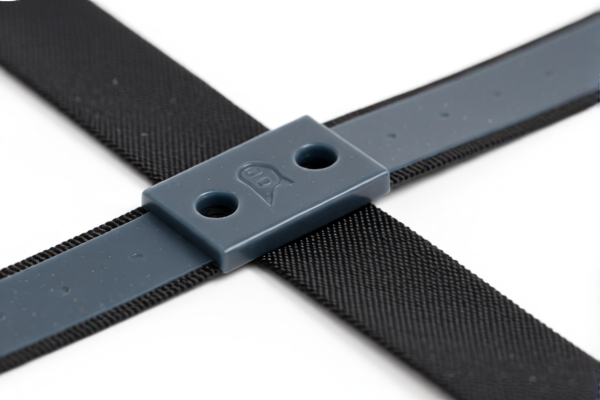
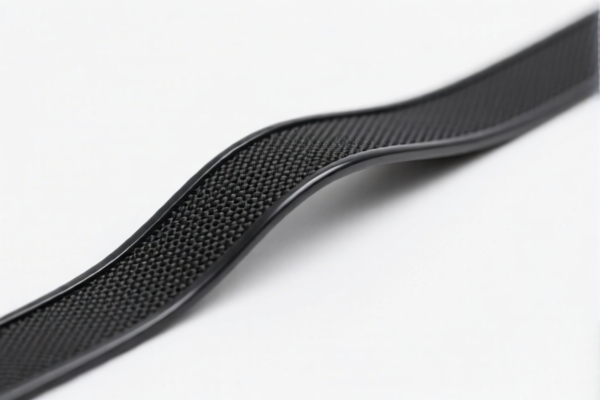
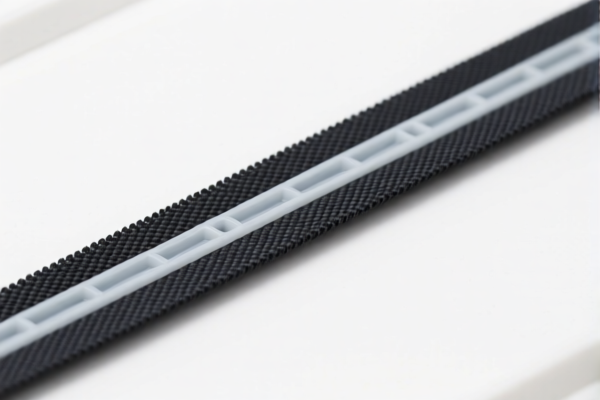

AI Analysis
🧵 Textile Reinforced Plastic Strip (TRPS)
🌐 HS Code Reference & Customs Clearance Guide | 2026 Latest Tariff Analysis | Professional Clearance Strategy
📌 I. Product Definition & Classification: Do You Really Understand “Textile Reinforced Plastic Strip”?
Textile Reinforced Plastic Strips (TRPS) are composite materials consisting of textile fibers (such as glass, carbon, or synthetic fibers) embedded in a plastic matrix. In international trade, they are primarily used for structural reinforcement, bonding, or sealing. Their classification depends heavily on material composition (fiber type vs. plastic ratio) and form (roll, self-adhesive, non-woven).
⚠️ Key Distinction Points:
- If the product is primarily a plastic tape reinforced with fibers →归入 Chapter 39 (Plastics)
- If the product is primarily a textile/non-woven fabric coated with plastic →归入 Chapter 56 (Textile Articles)
- If the product is an adhesive tape made of plastic with textile reinforcement →归入 3919 or 3926
📦 II. HS Code Classification Details (2026 Latest Tariff Authority Comparison)
| HS Code | Product Description | Applicable Scenario | Material/Form Characteristics |
|---|---|---|---|
3919.10.20.10 |
Self-adhesive plates, sheets, film, foil, tape, strip and other flat shapes, of plastics, whether or not in rolls, reinforced with fibers | Fiber-reinforced adhesive tape, roll form | ✅ Plastic matrix + Fiber reinforcement + Self-adhesive |
5603.11.00.70 |
Implied material: Artificial filaments / Synthetic fibers, form conforms to non-woven / fiber-like articles | Synthetic fiber non-woven fabrics, possibly coated | ✅ Synthetic/Artificial filaments, non-woven structure |
5603.12.00.70 |
Based on product name inference: Material is filaments or fiber-like, conforms to non-woven fabric characteristics | General non-woven fabrics, fiber-based | ✅ Filaments/Fibers, Non-woven |
3919.90.50.20 |
Product name and classification explanation fully match; material and form comply with requirements | Plastic tapes/strips, self-adhesive, other types | ✅ Plastic, Self-adhesive, Other (not reinforced in 3919.10) |
3926.90.55.00 |
Material contains textile fibers, form is tape, conforms to other category inference logic | Composite tapes with textile elements, not primarily plastic/adhesive | ✅ Contains textile fibers, Tape form, Other plastic articles |
🔍 Key Reminder:
- 3919.10.20.10 is the most precise fit for "Textile Reinforced" + "Plastic Strip" + "Self-Adhesive" + "Roll Form".
- 3919.90.50.20 applies if the adhesive tape is plastic but not specifically classified under 3919.10 (e.g., no specific fiber reinforcement claim or different adhesive type).
- 5603 series applies if the primary identity is textile/non-woven with plastic coating (not plastic tape with fiber reinforcement).
- 3926.90.55.00 is a fallback for other plastic articles containing textile fibers, used when classification under 3919 or 5603 is ambiguous.
💰 III. 2026 Latest Tariff Rate Details (Including Additional Taxes, Policy Add-ons)
✅ Applicable Country: United States (US)
✅ Origin: China (CN)
✅ Effective Date: November 10, 2025 (including subsequent imports)
🎯 1. 3919.10.20.10 —— Fiber-Reinforced Self-Adhesive Plastic Tape (Roll Form)
| Item | Content |
|---|---|
| Basic Tariff Rate | 5.8% (ad valorem) |
| USITC Additional Tax | +25% (from USITC Footnote 9903.88.01) |
| IEEPA Additional Tax | +10% (for China/HK products, from Nov 10, 2025) |
| Total Tariff Rate | 40.8% |
| Tax Calculation | CIF Value × 40.8% |
| De Minimis Exemption Eligibility | ❌ Not Eligible (deny_de_minimis) |
| Legal Basis Path | IEEPA:9903.01.25 → IEEPA:9903.01.24 → USITC:3919.10.20.10 → FOOTNOTE:9903.88.01 |
📌 Explanation:
- “USITC Additional Tax 25%” comes from the Section 301 additional tariffs under the US Trade Act;
- “IEEPA 10%” is the additional tariff on Chinese products under the International Emergency Economic Powers Act;
- Total 40.8% is a high tariff rate, must be predicted in advance!
🎯 2. 5603.11.00.70 & 5603.12.00.70 —— Synthetic/Artificial Filament Non-Woven Fabrics
| Item | Content |
|---|---|
| Basic Tariff Rate | 0.0% |
| USITC Additional Tax | +25% |
| IEEPA Additional Tax | +10% |
| Total Tariff Rate | 35.0% |
| Tax Calculation | CIF Value × 35.0% |
| De Minimis Exemption Eligibility | ❌ Not Eligible (deny_de_minimis) |
| Legal Basis Path | IEEPA:9901.25 → IEEPA:9903.01.24 → USITC:5603.xx.xx.xx → FOOTNOTE:9903.88.01 |
📌 Note:
- Both HS codes have the same tariff structure;
- Even if the product is “coated non-woven fabric,” if the primary identity is textile/non-woven, it falls under Chapter 56;
- Total 35.0% is lower than 3919, but only if the product is correctly classified as non-woven fabric.
🎯 3. 3919.90.50.20 —— Other Self-Adhesive Plastic Tapes (Roll Form)
| Item | Content |
|---|---|
| Basic Tariff Rate | 5.8% |
| USITC Additional Tax | +25% |
| IEEPA Additional Tax | +10% |
| Total Tariff Rate | 40.8% |
| Tax Calculation | CIF Value × 40.8% |
| De Minimis Exemption Eligibility | ❌ Not Eligible (deny_de_minimis) |
| Legal Basis Path | IEEPA:9903.01.25 → IEEPA:9903.01.24 → USITC:3919.90.50.20 → FOOTNOTE:9903.88.01 |
📌 Explanation:
- If the product is a plastic tape but not specifically fiber-reinforced under 3919.10, it falls under 3919.90;
- Same high tariff as 3919.10.20.10.
🎯 4. 3926.90.55.00 —— Other Plastic Articles Containing Textile Fibers
| Item | Content |
|---|---|
| Basic Tariff Rate | 5.1% |
| USITC Additional Tax | +25% |
| IEEPA Additional Tax | +10% |
| Total Tariff Rate | 40.1% |
| Tax Calculation | CIF Value × 40.1% |
| De Minimis Exemption Eligibility | ❌ Not Eligible (deny_de_minimis) |
| Legal Basis Path | IEEPA:9901.25 → IEEPA:9903.01.24 → USITC:3926.90.55.00 → FOOTNOTE:9903.88.01 |
📌 Explanation:
- This is a fallback category for plastic articles that contain textile fibers but do not fit into 3919 or 5603;
- Slightly lower total rate (40.1%) due to lower base tariff (5.1% vs 5.8%).
🛠️ IV. Customs Clearance Practical Advice (Battle-Tested Pitfall Avoidance Guide)
✅ 1. Preparation Checklist (All Required)
| Document | Required | Description |
|---|---|---|
| ✅ Product Specification Sheet | ✔️ | Dimensions, material composition (fiber type, plastic type), adhesive type, roll width/length |
| ✅ Structure Diagram / Photos | ✔️ | Clear photos showing cross-section (fiber + plastic matrix), self-adhesive side |
| ✅ Third-Party Test Report | ✔️ | Material composition analysis, tensile strength, adhesive performance |
| ✅ Commercial Invoice | ✔️ | Clearly state “Textile Reinforced Plastic Strip, Self-Adhesive, Roll Form” |
| ✅ Packing List | ✔️ | Show units, weight, dimensions, roll quantities |
| ✅ Certificate of Origin (CO) | ✔️ | If non-China origin, apply for preferential rates |
✅ 2. Declaration Tips (Key Mantras)
🔥 “Material Defines Chapter, Form Defines Heading, Adhesive Defines Subheading!”
| Scenario | Correct Declaration | Incorrect Practice |
|---|---|---|
| Plastic tape reinforced with glass/carbon fiber, self-adhesive, roll form | 3919.10.20.10 |
Misdeclare as “non-woven fabric” → 35% |
| Synthetic fiber non-woven fabric coated with plastic | 5603.11.00.70 or 5603.12.00.70 |
Misdeclare as “plastic tape” → 40.8% |
| Plastic tape with textile fibers but not self-adhesive or not reinforced in 3919.10 sense | 3926.90.55.00 |
Misdeclare as 3919 → Classification error |
| Generic plastic tape, no fiber reinforcement | 3919.90.50.20 |
Misdeclare as 3919.10 → Over-declaration |
✅ 3. Special Case Handling
| Scenario | Handling Advice |
|---|---|
| OEM Custom TRPS | Provide customer order + design specs, avoid “non-standard” classification |
| TRPS with Multiple Layers | Declare as single composite product, not split |
| TRPS Used in Medical Devices | If for medical use, may apply for “special purpose” declaration, but requires proof |
| TRPS for Military/Aerospace | May apply for “dual-use” or “special application” declaration, potential tariff reduction |
🌍 V. Global Market Clearance Comparison (2026 Latest)
| Country/Region | Recommended HS Code | Tariff | Certification Requirements | Notes |
|---|---|---|---|---|
| 🇺🇸 US | 3919.10.20.10 |
40.8% (China origin) | No special cert | High tariff due to Section 301 + IEEPA |
| 🇨🇳 China | 3919.10.20.10 |
5.8% | No additional tax | Base rate only |
| 🇪🇺 EU | 3919.10.20.10 |
0–6.5% | CE (if applicable) | No additional tariffs |
| 🇦🇺 Australia | 3919.10.20.10 |
5% | RCM (if electrical) | No additional tariffs |
| 🇯🇵 Japan | 3919.10.20.10 |
0–6% | PSE (if electrical) | No additional tariffs |
📌 Conclusion:
- US is the only market with high additional tariffs on TRPS;
- China-origin TRPS faces high clearance costs in the US, consider supply chain adjustment or pre-clearance rulings.
📌 VI. Common Mistakes & Pitfall Avoidance (Blood-Teaching Lessons)
❌ Mistake 1: Declaring “Textile Reinforced Plastic Strip” as “Non-Woven Fabric”
👉 Consequence: If it is primarily plastic tape with reinforcement, misclassification → 40.8% vs 35%, still high, but wrong declaration leads to penalties.
❌ Mistake 2: Declaring “Plastic Tape” as “3926” when it fits “3919”
👉 Consequence: Base tariff 5.1% vs 5.8% → Minor difference, but if audited, classification error → Fines + Delays.
❌ Mistake 3: Not providing material composition details
👉 Consequence: Customs cannot determine if it’s 3919 (plastic) or 5603 (textile) → Hold for Inspection.
❌ Mistake 4: Using generic terms like “Composite Tape” without specifying reinforcement
👉 Consequence: Ambiguity → Higher Duty Assessment or Rejection.
✅ Correct Practice:
“Self-Adhesive Plastic Tape, Reinforced with Glass Fibers, Roll Form, Width: 50mm, Thickness: 0.5mm, Adhesive: Acrylic, HS Code: 3919.10.20.10”
🎯 VII. Conclusion: Professional Declaration, Save Time, Reduce Costs!
🎯 Remember the Mantra:
🔹 “Plastic Matrix + Fiber Reinforcement + Self-Adhesive = 3919.10.20.10”
🔹 “Textile Non-Woven + Plastic Coating = 5603.1x.00.70”
🔹 “US Tariff = 40.8%, Always Budget for It!”
📌 Tip:
If your TRPS originates from Vietnam, Mexico, Thailand, or Malaysia, you may apply for IEEPA Exemption, reducing tariffs to 0–5%;
Recommend Advance Ruling for HS Code classification to avoid clearance risks.
📣 Immediate Action:
📞 Contact a Professional Customs Broker + Provide Product Photos + Apply for HS Code Advance Ruling
🚀 Let your TRPS clear smoothly, export efficiently, and double profits!
✨ Professional Clearance Starts with Accurate Classification!
💼 Every Cent of Your Cost Deserves Precise Calculation!
Customer Reviews
About HS Code Classification
The Harmonized System (HS) is an internationally standardized nomenclature developed by the World Customs Organization (WCO) to classify traded products. Over 200 countries use the HS system as the basis for customs tariffs, trade statistics, and import/export regulations.
Each HS code follows a hierarchical structure:
- Chapter (2 digits) — Broad category of goods (e.g., Chapter 84: Machinery and Mechanical Appliances)
- Heading (4 digits) — More specific grouping within the chapter
- Subheading (6 digits) — Internationally standardized breakdown, used by all WCO member countries
- National subdivisions (8-10 digits) — Country-specific extensions for further classification, such as US HTSUS 10-digit codes
Correct HS code classification is essential for smooth customs clearance, accurate duty payment, and compliance with trade regulations. Misclassification can lead to customs delays, overpayment of duties, or penalties.
When importing from CN to US, the applicable tariff rates may include:
- Most-Favored-Nation (MFN) rate — The standard duty rate applied to WTO members
- General rate — Applied to countries without trade agreements
- Trade remedy duties — Additional tariffs such as Section 301 (anti-dumping), Section 232 (national security), or countervailing duties
The information provided on this page is for reference purposes only. For official classification, please consult with your local customs authority or a licensed customs broker.