Textile Reinforced Synchronous Belts
CN → US| HS Code | Tariff Rate | Origin | Destination | Doc |
|---|---|---|---|---|
| 4010354500 | 41.4% | CN | US | Official Doc |
| 5910001020 | 39.0% | CN | US | Official Doc |
| 4010364500 | 41.4% | CN | US | Official Doc |
| 5910009000 | 37.6% | CN | US | Official Doc |
| 5910001070 | 39.0% | CN | US | Official Doc |
Product Images
AI Analysis
🏭 Textile Reinforced Synchronous Belts (Industrial Power Transmission Components)
🌐 HS Code Reference & Customs Clearance Guide | 2026 Latest Tariff Analysis | Professional Strategy for US Imports
📌 I. Product Definition & Classification: What Are "Textile Reinforced Synchronous Belts"?
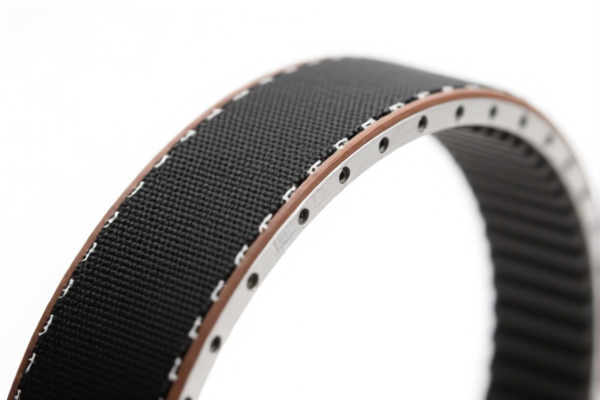
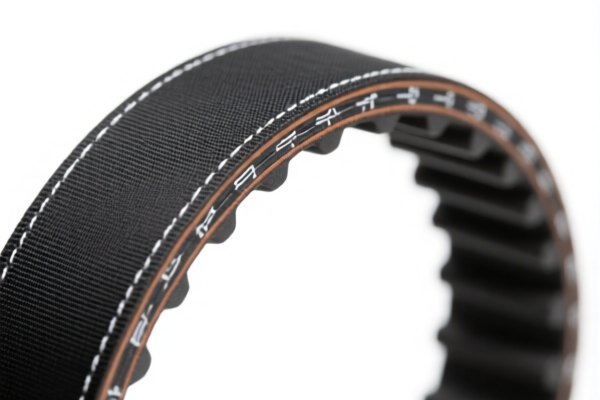
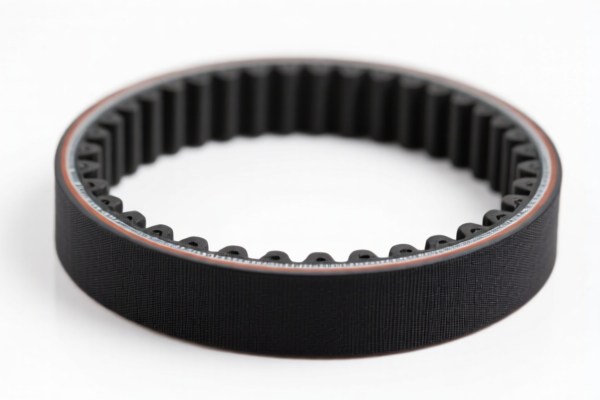
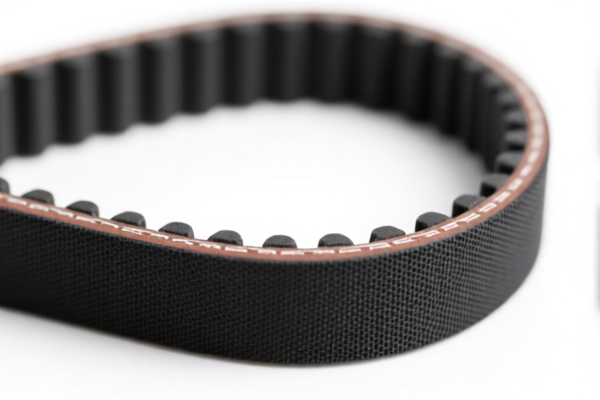
Textile Reinforced Synchronous Belts are precision mechanical components used for power transmission in industrial machinery, automotive engines, and automated manufacturing systems. They are characterized by: 1. Synchronous Design: Teeth on the inner surface to engage with pulleys, ensuring zero slip and precise timing. 2. Textile Reinforcement: High-strength synthetic fibers (e.g., polyester, aramid, or nylon cords) embedded within the belt body to withstand tensile stress and prevent elongation. 3. Composite Structure: Typically consisting of a rubber/urethane tooth and backbone, reinforced by textile cords, and often a protective cover.
In international trade, the critical classification depends on whether the primary material is interpreted as Rubber (Chapter 40) or Textile/Artificial Fibers (Chapter 59). This distinction drastically affects the Base Duty Rate, though Additional Tariffs (Section 301 & IEEPA) remain similar across all categories.
⚠️ Key Classification Divergence:
- Rubber-Based (Ch. 40): If the rubber component constitutes the bulk of the belt’s volume or functional integrity, it is classified under 4010.
- Textile-Based (Ch. 59): If the textile reinforcement is deemed the essential character (e.g., fabric-wrapped belts or specific artificial fiber belts), it is classified under 5910.
📦 II. HS Code Classification Details (2026 Authoritative Comparison)
Based on the provided data, there are two main pathways for classification, each with sub-variations based on specific product forms (Synchronous vs. Conveyor).
| HS Code | Product Description | Key Characteristics | Primary Material Inference |
|---|---|---|---|
4010.35.45.00 |
Textile Reinforced Synchronous Belt | Matches endless synchronous form; textile features combined. | Vulcanized Rubber (Main body inferred as rubber) |
4010.36.45.00 |
Textile Reinforced Synchronous Belt | Consistent shape with textile integration. | Vulcanized Rubber (Industry commonality) |
5910.00.10.20 |
Textile Reinforced Synchronous Belt | Explicitly synchronous use + textile material. | Artificial Fibers (Fits definition of artificial fiber belts) |
5910.00.90.00 |
Textile Reinforced Conveyor Belt | Corresponds to textile material category; meets conveyor requirements. | Textile Materials (Conveyor variant) |
5910.00.10.70 |
Textile Reinforced Conveyor Belt | Form and use match; material inferred as artificial fiber/textile. | Artificial Fibers/Textiles (Other category) |
🔍 Critical Note:
- HS 4010 codes (4010.35.45.00,4010.36.45.00) carry a Higher Base Duty (6.4%) compared to HS 5910 codes.
- HS 5910 codes (5910.00.10.20,5910.00.10.70,5910.00.90.00) carry Lower Base Duties (2.6% - 4.0%).
- All listed codes are subject to Additional Tariffs (Section 301 + IEEPA), leading to total effective tax rates between 37.6% and 41.4%.
💰 III. 2026 Latest Tariff Rate Breakdown (Including Surcharge & Policy Surcharges)
✅ Applicable Country: United States (US)
✅ Origin: China (CN)
✅ Effective Date: Includes imports post-2025/2026 (Standard Trade War Rates)
🎯 1. Rubber-Based Synchronous Belts (4010.35.45.00 & 4010.36.45.00)
| Item | Detail |
|---|---|
| Base Duty (MFN) | 6.4% (Ad Valorem) |
| Section 301 Surcharge | +25.0% (Trade Enhancement Act) |
| IEEPA Surcharge | +10.0% (Section 122/China-specific) |
| Total Effective Tax Rate | 41.4% |
| Tax Calculation | CIF Value × 41.4% |
| De Minimis Exemption | ❌ Not Applicable (High risk of penalty) |
| Legal Basis Path | HTSUS:4010.35.45.00 → USITC:Footnote 301 → IEEPA:Section 122 |
📌 Explanation:
- The 6.4% base is the standard MFN rate for rubber transmission belts.
- The 25% and 10% surcharges are additive, not compound (generally), resulting in a 41.4% total duty burden.
- This category assumes the belt is primarily rubber, with textile serving as reinforcement.
🎯 2. Textile/Artificial Fiber-Based Belts (5910.00.10.20 & 5910.00.10.70)
| Item | Detail |
|---|---|
| Base Duty (MFN) | 4.0% (Ad Valorem) |
| Section 301 Surcharge | +25.0% (Trade Enhancement Act) |
| IEEPA Surcharge | +10.0% (Section 122/China-specific) |
| Total Effective Tax Rate | 39.0% |
| Tax Calculation | CIF Value × 39.0% |
| De Minimis Exemption | ❌ Not Applicable |
| Legal Basis Path | HTSUS:5910.00.10.20 → USITC:Footnote 301 → IEEPA:Section 122 |
📌 Explanation:
- These codes classify the product under Chapter 59 (Textile impregnated with rubber/plastics).
- The 4.0% base is lower than the rubber chapter, saving 2.4% on the base duty.
- Total rate: 39.0%. This is a 2.4% saving compared to the rubber-based classification.
🎯 3. Textile Reinforced Conveyor Belts (5910.00.90.00)
| Item | Detail |
|---|---|
| Base Duty (MFN) | 2.6% (Ad Valorem) |
| Section 301 Surcharge | +25.0% (Trade Enhancement Act) |
| IEEPA Surcharge | +10.0% (Section 122/China-specific) |
| Total Effective Tax Rate | 37.6% |
| Tax Calculation | CIF Value × 37.6% |
| De Minimis Exemption | ❌ Not Applicable |
| Legal Basis Path | HTSUS:5910.00.90.00 → USITC:Footnote 301 → IEEPA:Section 122 |
📌 Explanation:
- If the product can be argued as a Conveyor Belt rather than a Synchronous Belt, and classified under 5910.90.90, the base duty drops to 2.6%.
- Total rate: 37.6%. This is the lowest tax option among all listed codes.
- ⚠️ Caution: Misclassifying a Synchronous Belt (timing belt) as a Conveyor Belt is a common customs violation. Ensure the product’s primary function aligns with conveyor applications.
🛠️ IV. Customs Clearance Practical Advice (Operational Pitfall Guide)
✅ 1. Essential Documentation Checklist (Non-Negotiable)
| Document | Required? | Purpose |
|---|---|---|
| ✅ Product Specification Sheet | ✔️ | Must detail: Material composition (% Rubber vs. % Textile), tensile strength, tooth profile, and dimensions. |
| ✅ Cross-Section Diagram | ✔️ | Critical for proving whether Rubber or Textile is the "Essential Character." |
| ✅ Product Photos (Clear) | ✔️ | Show the teeth, the back, and the reinforcement cords if visible. |
| ✅ Commercial Invoice | ✔️ | Must accurately state: "Textile Reinforced Synchronous Belt" or "Fabric Reinforced Conveyor Belt" per HS code. |
| ✅ Origin Certificate | ✔️ | If not China-made, apply for preferential rates (though unlikely for this HS). |
| ✅ Declaration of Composition | ✔️ | Explicitly state: "Made of Vulcanized Rubber with Polyester Cord Reinforcement" OR "Fabric impregnated with Rubber." |
✅ 2. Classification Strategy (Key Mantra)
🔥 "Material Defines Code, Function Dictates Chapter, Misclassification Costs 2.4% + Penalties!"
| Scenario | Recommended HS Code | Reason |
|---|---|---|
| Synchronous Belt (Timing Belt) | 4010.35.45.00 / 4010.36.45.00 OR 5910.00.10.20 |
If rubber is dominant: 4010. If textile is essential character: 5910. |
| Conveyor Belt | 5910.00.90.00 |
Lower base duty (2.6%). Only if used for material transport, not power transmission. |
| Mixed/Unknown | Avoid | Do not guess. Provide specs. Customs will use "Essential Character" test. |
⚠️ Warning:
- Synchronous Belts are NOT Conveyor Belts. They transmit power; conveyors move material.
- Using5910.00.90.00for a synchronous belt is high-risk and likely to result in reclassification, back-taxes, and fines.
- Use5910.00.10.20if you can prove the textile component is essential.
✅ 3. Special Situations & Mitigation
| Situation | Strategy |
|---|---|
| OEM Custom Belts | Provide original design drawings. Specify "Textile Reinforcement" clearly in invoice. |
| High-Value Industrial Belts | Consider Advance Ruling from CBP to lock in classification (e.g., 5910.00.10.20) before shipment. |
| Partially Rubber, Partially Textile | Argue for 5910 if textile provides the structural integrity (saves 2.4% base duty). |
| Small Sample Shipments | De Minimis does not apply due to surcharges. Pay taxes immediately to avoid delays. |
🌍 V. Global Market Comparison (2026 Latest)
| Market | Recommended HS Code | Base Duty | Additional Tariffs (China) | Total Effective Rate | Certification |
|---|---|---|---|---|---|
| 🇺🇸 USA | 4010.35.45.00 / 5910.00.10.20 |
6.4% / 4.0% | +35% (25% + 10%) | 37.6% - 41.4% | None specific (Industrial) |
| 🇨🇳 China | 4010 / 5910 |
6.4% / 4.0% | 0% | 6.4% / 4.0% | CCC (if applicable) |
| 🇪🇺 EU | 4010 / 5910 |
0% - 4% | 0% | 0% - 4% | CE, REACH |
| 🇦🇺 Australia | 4010 / 5910 |
5% - 8% | 0% | 5% - 8% | RCM |
📌 Conclusion:
- USA is the most expensive market due to the 35% cumulative surcharge.
- Cost Saving Opportunity: Correctly classifying as5910.00.10.20saves 2.4% on base duty compared to4010.
- Compliance Priority: Never misclassify a Synchronous Belt as a Conveyor Belt (5910.00.90.00) unless functionally justified.
📌 VI. Common Errors & Pitfall Guide (Lessons Learned)
❌ Error 1: Classifying Synchronous Belts as 5910.00.90.00 (Conveyor) | Result: CBP reclassification → Back taxes + Penalty + Delay.
❌ Error 2: Ignoring IEEPA 10% Surcharge | Result: Underpayment by 10% of CIF value.
❌ Error 3: Assuming De Minimis Applies | Result: Small shipments are NOT exempt from Section 301/IEEPA tariffs.
❌ Error 4: Vague Invoice Description ("Rubber Belt") | Result: Customs holds shipment for detailed info request.
✅ Correct Practice:
"Synchronous Timing Belt, Textile Reinforced, Vulcanized Rubber Body, Polyester Cord, Model XYZ, For Industrial Machinery, HS 5910.00.10.20"
🎯 VII. Conclusion: Precision Classification Saves Money!
🎯 Remember the Mantra:
🔹 "Rubber = 4010 (6.4% Base). Textile = 5910 (4.0% Base). Both = +35% Surcharge."
🔹 "Synchronous ≠ Conveyor. Misclassification = 2.4% Savings Lost + Penalties."
🔹 "Total Tax = 37.6% to 41.4%. Plan Accordingly."
📌 Pro Tip:
If your product is manufactured in Vietnam, Mexico, or Thailand, you may qualify for exemptions from Section 301/IEEPA tariffs, reducing the total rate to ~4% - 6%.
Action Item:
📞 Consult a Customs Broker for an Advance Ruling.
📄 Ensure your Specification Sheet highlights the Textile Reinforcement to support a5910classification if possible.
🚀 Optimize Your Supply Chain: Consider third-country manufacturing to mitigate high US tariffs.
✨ Professional Customs Clearance Starts with Accurate Classification!
💼 Every 2.4% Saved is Pure Profit!
Customer Reviews
About HS Code Classification
The Harmonized System (HS) is an internationally standardized nomenclature developed by the World Customs Organization (WCO) to classify traded products. Over 200 countries use the HS system as the basis for customs tariffs, trade statistics, and import/export regulations.
Each HS code follows a hierarchical structure:
- Chapter (2 digits) — Broad category of goods (e.g., Chapter 84: Machinery and Mechanical Appliances)
- Heading (4 digits) — More specific grouping within the chapter
- Subheading (6 digits) — Internationally standardized breakdown, used by all WCO member countries
- National subdivisions (8-10 digits) — Country-specific extensions for further classification, such as US HTSUS 10-digit codes
Correct HS code classification is essential for smooth customs clearance, accurate duty payment, and compliance with trade regulations. Misclassification can lead to customs delays, overpayment of duties, or penalties.
When importing from CN to US, the applicable tariff rates may include:
- Most-Favored-Nation (MFN) rate — The standard duty rate applied to WTO members
- General rate — Applied to countries without trade agreements
- Trade remedy duties — Additional tariffs such as Section 301 (anti-dumping), Section 232 (national security), or countervailing duties
The information provided on this page is for reference purposes only. For official classification, please consult with your local customs authority or a licensed customs broker.