Textile Shoulder Bag
CN → US| HS Code | Tariff Rate | Origin | Destination | Doc |
|---|---|---|---|---|
| 4202224030 | 42.4% | CN | US | Official Doc |
| 4202228980 | 52.6% | CN | US | Official Doc |
Product Images
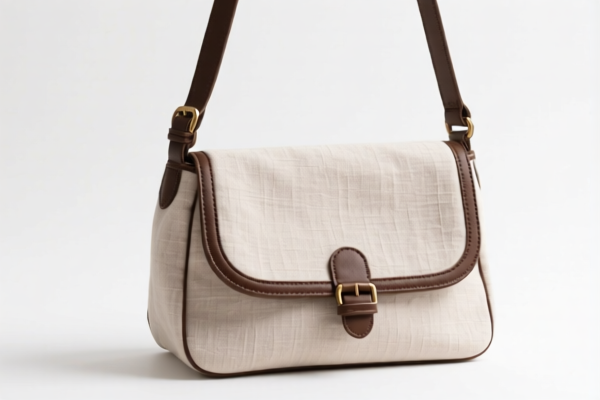
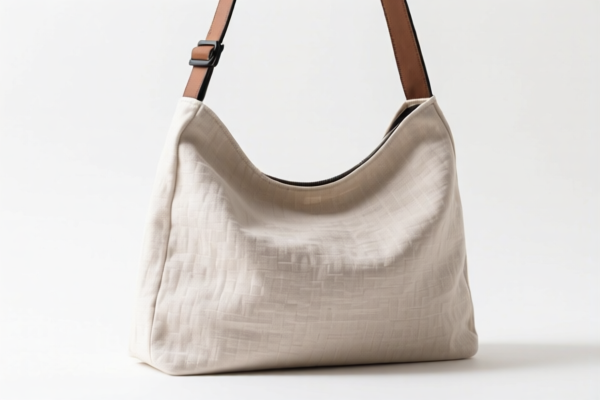
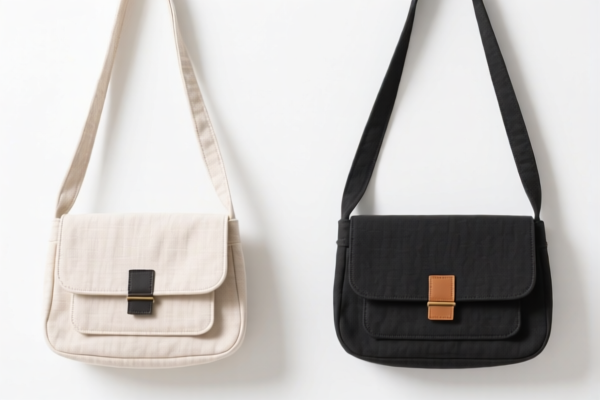
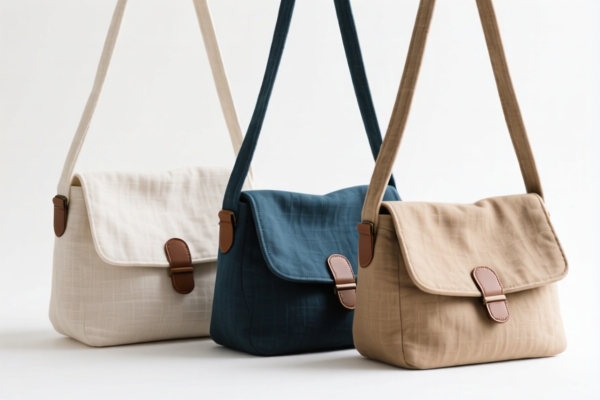
AI Analysis
👜 Textile Shoulder Bag (Handbags of Textile Materials)
🌐 HS Code Reference & Customs Clearance Guide | 2026 Latest Tariff Full Analysis | Professional Clearance Strategy
📌 I. Product Definition & Classification: Do You Really Understand "Textile Shoulder Bags"?
A Textile Shoulder Bag falls under the broad category of leather goods and similar containers. Specifically, it is classified as a Handbag (whether or not with a shoulder strap) with an outer surface made of textile materials.
In international trade, the classification hinges on two critical factors: 1. Material Composition: The outer surface must be primarily textile (fabric, woven material, etc.), not leather or plastics. 2. Construction Details: Specifically, whether it is made of braid or other textile constructions.
⚠️ Key Distinction:
- If the bag is made of braid (woven strips) → Go to 4202.22.40.30
- If the bag is made of other textile materials (woven, knitted, non-woven, etc., but not braid) → Go to 4202.22.89.80
📦 II. HS Code Classification Details (2026 Latest Tariff Authority Comparison)
| HS Code | Product Description | Applicable Scenario | Key Feature |
|---|---|---|---|
4202.22.40.30 |
Handbags of textile materials: Wholly or in part of braid: Of man-made fibers | Fashion bags made from woven braid strips (e.g., raffia-style, woven plastic strips, braided fabric) | ✅ Braid Construction |
4202.22.89.80 |
Handbags of textile materials: Other: Other: Other | Standard textile handbags (canvas, nylon, polyester, cotton, etc.) that are not classified as braid | ✅ Non-Braid Textile |
🔍 Important Reminder:
- Both HS Codes fall under 4202.22 (Handbags with outer surface of sheeting of plastics or textile materials → With outer surface of textile materials). - The distinction between "Braid" and "Other" is structural. If the fabric is woven into a braid-like structure, it may qualify for the first code. Standard woven or knitted fabrics fall under the second. - Both codes currently enjoy 0% Total Tax Rate.
💰 III. 2026 Latest Tariff Rate Detailed Explanation
✅ Applicable Country: United States (US)
✅ Origin: China (CN) (Note: Tax rates are generally origin-neutral for these specific codes, but US-China trade tensions should be monitored)
✅ Effective Time: Current as of 2025/2026
🎯 1. 4202.22.40.30 — Handbags of Braid (Man-made Fibers)
| Item | Content |
|---|---|
| Base Tariff | 0.0% |
| Additional Tariff (Section 301 / IEEPA) | 0.0% |
| Total Tax Rate | 0.0% |
| Tax Calculation | CIF Value × 0% = $0 |
| De Minimis Eligibility | ✅ Yes (For shipments under $800, no duty owed) |
| Legal Basis | HTSUS 4202.22.40.30 |
📌 Explanation:
- This category enjoys a zero tariff rate. - Unlike electronics or steel, textile handbags are NOT subject to the high additional tariffs (25% or 10%) often applied to Chinese imports. - This makes it a highly competitive category for cost-sensitive fashion exports.
🎯 2. 4202.22.89.80 — Other Handbags of Textile Materials
| Item | Content |
|---|---|
| Base Tariff | 0.0% |
| Additional Tariff (Section 301 / IEEPA) | 0.0% |
| Total Tax Rate | 0.0% |
| Tax Calculation | CIF Value × 0% = $0 |
| De Minimis Eligibility | ✅ Yes (For shipments under $800) |
| Legal Basis | HTSUS 4202.22.89.80 |
📌 Explanation:
- This is the most common code for standard fashion tote bags, nylon backpacks, canvas totes, etc. - Like the braid category, it is exempt from additional punitive tariffs. - No hidden fees or complex footnote surcharges apply.
🛠️ IV. Customs Clearance Practical Advice (Battle-Tested Pitfall Avoidance Guide)
✅ 1. Required Documentation Checklist (No Missing Parts)
| Document | Mandatory | Explanation |
|---|---|---|
| ✅ Product Specification Sheet | ✔️ | Must clearly state "Outer Surface: 100% Polyester/Nylon/Cotton". Mention "Shoulder Strap" if present. |
| ✅ Product Photos | ✔️ | Clear images showing the outer texture. Crucial for customs to distinguish between "Braid" and "Standard Fabric". |
| ✅ Material Composition Label | ✔️ | Internal or external label showing fiber content (e.g., "Shell: 100% Nylon"). |
| ✅ Commercial Invoice | ✔️ | Must specify "Handbag, Textile, Shoulder Strap". Avoid vague terms like "Accessory". |
| ✅ Packing List | ✔️ | Detail quantity, weight, and dimensions. |
| ✅ Country of Origin Certificate | ✔️ | If claimed as Non-China origin, CO is required for any potential FTA benefits (though rate is 0% anyway). |
✅ 2. Declaration Tips (Key Mnemonic)
🔥 “Fabric Check, Braid or Not, Zero Tax is Hot!”
| Scenario | Correct Declaration | Wrong Practice |
|---|---|---|
| Standard Canvas/Nylon Bag | 4202.22.89.80 |
Misdeclare as Leather → Higher scrutiny |
| Braided/Woven Strip Bag | 4202.22.40.30 |
Misdeclare as "Other" → No penalty, but inaccurate |
| Bag with Leather Trim | 4202.22.89.80 |
If textile is main surface, keep Textile code. If leather is main surface → Change to 4202.21.xxxx |
| Small Clutch/Pouch | 4202.92.xxxx |
If it lacks a handle/strap and is too small to be a "handbag", it might be a "pouch", not a handbag |
⚠️ Critical Warning:
- Do NOT declare as "Leather Handbag" if it is textile. Customs will flag it for mismatched material. - If the bag has a significant leather panel covering more than 50% of the outer surface, it may reclassify to 4202.21.25 (Leather). Ensure you are correct!
✅ 3. Special Cases Handling
| Case | Handling Advice |
|---|---|
| OEM Custom Bags | Provide design drawings showing material layers. If "textile" is ambiguous, provide fabric swatch photos. |
| Bags with Plastic Coating | If the textile is coated with plastic to make it waterproof, check if it becomes "Sheathing of Plastics" (still 4202.22, but verify texture). Usually, coated textiles remain in textile category if the fabric structure is visible. |
| De Minimis (Section 321) | For shipments < $800 to individuals, use 4202.22.89.80 or 4202.22.40.30. No duty, no form required. Very fast clearance. |
| Anti-Dumping Check | Unlike steel/aluminum, textile bags generally do not face anti-dumping duties in the US. |
🌍 V. Global Main Market Clearance Comparison (2026 Latest)
| Country/Region | Recommended HS Code | Tariff | Certification | Remarks |
|---|---|---|---|---|
| 🇺🇸 United States | 4202.22.89.80 |
0% | None | Most favorable market for textile bags |
| 🇨🇳 China | 4202.22.89.80 |
Varies (0-10%) | None | Import tax applies, but low |
| 🇪🇺 European Union | 4202.22.89 |
0-12% | CE (if safety gear) | VAT applies. Tariff depends on exact fiber |
| 🇬🇧 United Kingdom | 4202.22.89 |
0-12% | UKCA | Post-Brexit rules apply |
| 🇨🇦 Canada | 4202.22.89 |
0-12% | None | CUSMA benefits may apply if Canadian-made |
📌 Conclusion:
- The US is the best market for Chinese-made textile shoulder bags due to the 0% tariff and no additional penalties. - European Union rates can vary based on specific fiber content (e.g., cotton vs. synthetic). Check local HTS for exact EU tariff lines.
📌 VI. Common Errors & Pitfall Guide (Lessons Learned)
❌ Error 1: Misdeclaring a Textile Bag as a Plastic Bag
👉 Consequence: Wrong HS Code (4202.32 vs 4202.22). While tax might be similar, it triggers incorrect regulatory checks and delays.
❌ Error 2: Ignoring the "Main Surface" Rule
👉 Consequence: If a bag is 60% leather and 40% textile, declaring it as textile (4202.22) is illegal. It must be declared as leather (4202.21). Result: Back taxes + fines.
❌ Error 3: Vague Description "Fashion Bag"
👉 Consequence: Customs cannot determine material. Result: Inspection hold for 2-4 weeks.
❌ Error 4: Confusing "Shoulder Strap" with "Backpack"
👉 Consequence: Backpacks might fall under 4202.92 or 4202.12. Ensure correct sub-category. For standard shoulder bags, 4202.22 is correct.
✅ Correct Practice:
"Women's Shoulder Handbag, Outer Shell: 100% Nylon Weave, Lining: Polyester, with Adjustable Strap, Brand XYZ, Model ABC"
🎯 VII. Conclusion: Precision Classification, Maximum Profit!
🎯 Remember the Mantra:
🔹 "Textile Outer, Zero Tax in US!"
🔹 "Check the Material: Leather? No. Plastic? No. Textile? Yes!"
🔹 "Braid vs. Fabric: Know the difference, stay compliant."
📌 Pro Tip:
- If your product is 100% Textile, ensure your invoice explicitly states "Outer Surface: Textile Material".
- For B2C cross-border e-commerce (e.g., Amazon FBA, Shein, Temu), leverage the $800 De Minimis rule. Ship directly to consumers with HS Code 4202.22.89.80 to avoid all duties.
📣 Immediate Action:
📞 Verify Material Composition with your factory.
📄 Confirm HS Code with your customs broker.
🚀 Ship Smart, clear fast, and enjoy 0% Duty in the US market!
✨ Professional Clearance Starts with Accurate Classification!
💼 Your Profit Margin Depends on Your HS Code!
Customer Reviews
About HS Code Classification
The Harmonized System (HS) is an internationally standardized nomenclature developed by the World Customs Organization (WCO) to classify traded products. Over 200 countries use the HS system as the basis for customs tariffs, trade statistics, and import/export regulations.
Each HS code follows a hierarchical structure:
- Chapter (2 digits) — Broad category of goods (e.g., Chapter 84: Machinery and Mechanical Appliances)
- Heading (4 digits) — More specific grouping within the chapter
- Subheading (6 digits) — Internationally standardized breakdown, used by all WCO member countries
- National subdivisions (8-10 digits) — Country-specific extensions for further classification, such as US HTSUS 10-digit codes
Correct HS code classification is essential for smooth customs clearance, accurate duty payment, and compliance with trade regulations. Misclassification can lead to customs delays, overpayment of duties, or penalties.
When importing from CN to US, the applicable tariff rates may include:
- Most-Favored-Nation (MFN) rate — The standard duty rate applied to WTO members
- General rate — Applied to countries without trade agreements
- Trade remedy duties — Additional tariffs such as Section 301 (anti-dumping), Section 232 (national security), or countervailing duties
The information provided on this page is for reference purposes only. For official classification, please consult with your local customs authority or a licensed customs broker.