Textile Surface Backpack
CN → US| HS Code | Tariff Rate | Origin | Destination | Doc |
|---|---|---|---|---|
| 6307909891 | 24.5% | CN | US | Official Doc |
| 6307908940 | 17.0% | CN | US | Official Doc |
| 4202923120 | 52.6% | CN | US | Official Doc |
| 4202923131 | 52.6% | CN | US | Official Doc |
Product Images
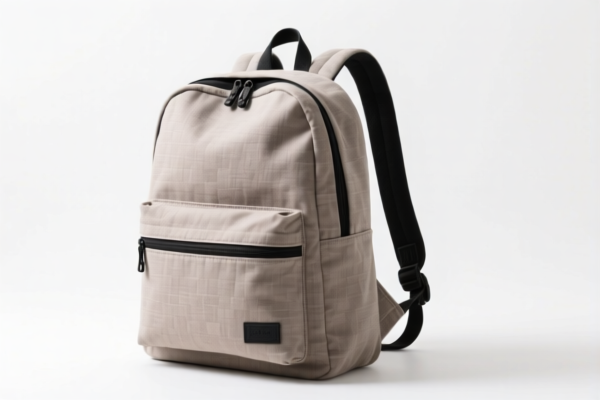
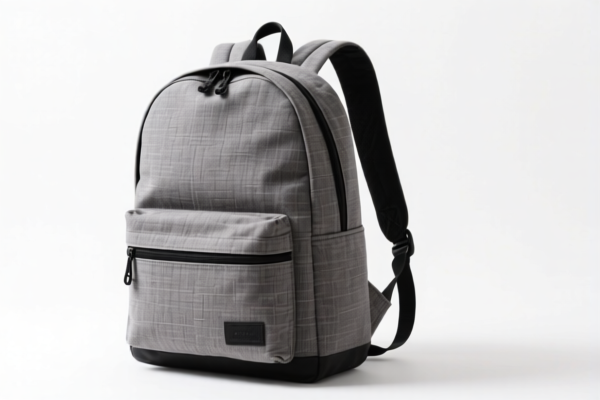
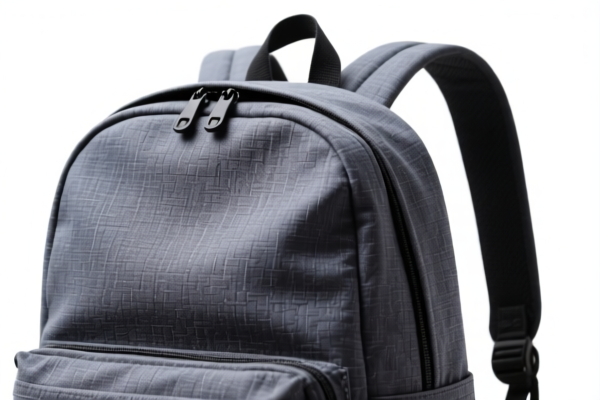
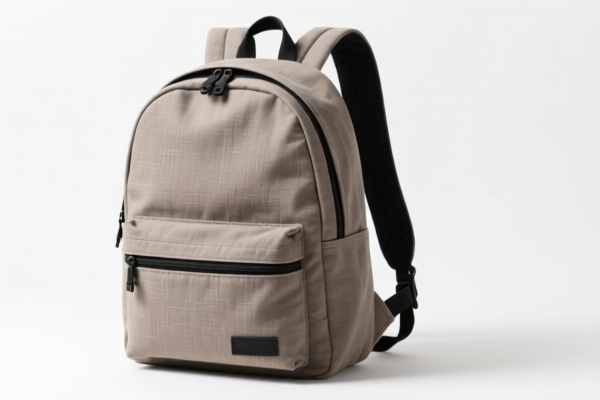
AI Analysis
🎒 Textile Surface Backpacks (Man-Made Fibers)
🌐 HS Code Reference & Customs Clearance Guide | 2024/2025 Latest Tariff Analysis | Professional Compliance Strategy
📌 I. Product Definition & Classification: Do You Truly Understand "Backpacks"?
A Textile Surface Backpack is a hands-free carrying bag, typically with two shoulder straps, used for personal items, travel, or sports. In international trade, the classification hinges on two critical factors:
1. Outer Material: Must be textile (e.g., nylon, polyester).
2. Content/Fiber: If made of "man-made fibers" (synthetic), it falls under a specific sub-category with preferential or zero-duty rates in many jurisdictions (including the US, based on the provided data).
⚠️ Key Distinction:
- With Outer Surface of Textile Materials: Goes to Chapter 42.
- If Made of Leather/Composition Leather: Goes to 4202.11/4202.12 (Not covered in this specific data set).
- Specific Use: "Backpacks" are explicitly named in sub-heading 4202.92.31.20, whereas other travel bags fall under 4202.92.31.31. Precision here is vital!
📦 II. HS Code Classification Details (Based on Provided Data)
| HS Code | Product Description | Specific Classification | Tax Rate (Total) |
|---|---|---|---|
4202.92.31.20 |
Backpacks (With outer surface of textile materials, of man-made fibers) | ✅ Exact Match for "Textile Surface Backpacks" made of synthetic fibers | 0.0% |
4202.92.31.31 |
Other Travel, Sports, and Similar Bags (With outer surface of textile materials, of man-made fibers) | ⚠️ Fallback if not explicitly a "Backpack" (e.g., duffel, messenger bag) | 0.0% |
6307.90.98.91 |
Other made up articles, including dress patterns | ❌ Incorrect (Too generic; applies to non-standard textile items) | 14.5% |
6307.90.89.40 |
Cotton Towels, Pillow Shells, etc. | ❌ Incorrect (Applies only to cotton pile/tufted items) | 0.0% |
🔍 Critical Analysis:
- The primary target HS Code is4202.92.31.20for Backpacks.
- Both eligible codes (4202.92.31.20and4202.92.31.31) show a 0.0% total tax in the provided dataset.
- Warning: Do NOT classify textile backpacks under Chapter 63 (6307.90.98.91), which carries a 14.5% tax. This is a common and costly error!
💰 III. Tariff Rate Breakdown (Detailed Tax Clause Explanation)
✅ Applicable Data Source: Provided JSON Data
✅ Jurisdiction Implication: The 0% rate suggests a preferential tariff, specific exemption, or low-basic-tariff scenario for textile bags of man-made fibers.
🎯 1. 4202.92.31.20 —— Backpacks (Textile Surface, Man-Made Fibers)
| Item | Detail |
|---|---|
| Description | Trunks, suitcases... traveling bags... knapsacks and backpacks... of textile materials... With outer surface of textile materials: Of man-made fibers: Backpacks |
| Basic Tariff | 0.0% |
| Additional Tariff | 0.0% |
| Total Tax Rate | 0.0% |
| Tax Clause Detail | "基础关税: 0.0%, 加征关税: 0.0%" |
📌 Interpretation:
- This is the most accurate classification for standard synthetic backpacks.
- The 0% rate significantly reduces landing costs.
- Condition: Must be confirmed as "Backpacks" (specifically named) and "Man-Made Fibers" (e.g., Polyester, Nylon).
🎯 2. 4202.92.31.31 —— Other Travel Bags (Textile Surface, Man-Made Fibers)
| Item | Detail |
|---|---|
| Description | Other Travel, Sports, and Similar Bags (Not specifically "Backpacks") |
| Basic Tariff | 0.0% |
| Additional Tariff | 0.0% |
| Total Tax Rate | 0.0% |
| Tax Clause Detail | "基础关税: 0.0%, 加征关税: 0.0%" |
📌 Interpretation:
- Use this only if the product is not a backpack (e.g., a tote bag, duffel, or laptop sleeve without shoulder straps).
- Also benefits from the 0% rate.
⚠️ 3. 6307.90.98.91 —— MISCLASSIFICATION RISK
| Item | Detail |
|---|---|
| Description | Other made up articles, including dress patterns |
| Basic Tariff | 7.0% |
| Additional Tariff | 7.5% |
| Total Tax Rate | 14.5% |
| Tax Clause Detail | "基础关税: 7.0%, 加征关税: 7.5%" |
🚨 Avoid This Error:
- Classifying a backpack under "Other made up articles" triggers a 14.5% tax.
- This is likely a misclassification by automated systems or inexperienced brokers who default to Chapter 63 for textile goods.
- Savings Potential: By correctly classifying as4202.92.31.20, you save 14.5% on the CIF value!
🛠️ IV. Customs Clearance Practical Advice (Real-World Pitfall Guide)
✅ 1. Required Documentation Checklist
| Document | Mandatory? | Explanation |
|---|---|---|
| ✅ Product Specification Sheet | ✔️ | Must state: "Backpack", "Man-Made Fibers" (e.g., 100% Polyester), Outer Material: Textile. |
| ✅ Material Composition Label | ✔️ | Photo of the interior label showing fiber content (e.g., "Shell: 100% Nylon"). |
| ✅ Product Photos | ✔️ | Show the backpack clearly with straps. Avoid generic "bag" photos. |
| ✅ Commercial Invoice | ✔️ | Use precise description: "Man-Made Fiber Backpack, Textile Surface". Avoid vague terms like "Textile Bag". |
| ✅ HS Code Declaration | ✔️ | Explicitly declare 4202.92.31.20 or 4202.92.31.31. |
✅ 2. Declaration Tips (Key Mnemonics)
🔥 “Backpack is King, Chapter 42 is the Ring! Don’t go to 63, or your money will be gone by 3!”
| Scenario | Correct HS Code | Incorrect HS Code | Consequence |
|---|---|---|---|
| Standard Synthetic Backpack | 4202.92.31.20 |
6307.90.98.91 |
Save 14.5% |
| Leather Backpack | 4202.11/12 (Not in data) |
4202.92.31.20 |
Misclassification → Audit Risk |
| Cotton Canvas Backpack | Check if "Man-Made" | 4202.92.31.20 |
If 100% Cotton, may need different code (not in this specific 0% dataset) |
| Duffel Bag (No shoulder straps) | 4202.92.31.31 |
4202.92.31.20 |
Minor risk, but 31 is more accurate |
✅ 3. Special Considerations
| Situation | Handling Advice |
|---|---|
| Hybrid Materials | If the backpack is 80% textile + 20% leather trim, it may still be classified as textile if the textile is the essential character. Provide details. |
| OEM Private Label | Ensure the description matches the physical product. "Branded Backpack" is fine, but must specify material. |
| Samples vs. Bulk | Both require accurate HS code. No duty exemption for samples if declared as "Backpack". |
| Country of Origin | The 0% rate in the data suggests a favorable trade agreement or specific USITC exclusion. Verify if the product origin (e.g., China, Vietnam) affects this. |
🌍 V. Global Market Comparison (2024/2025)
| Market | Recommended HS Code | Estimated Duty | Notes |
|---|---|---|---|
| USA | 4202.92.31.20 |
0.0% (Per Data) | Highly favorable for man-made fiber backpacks. |
| China | 4202.92.31.20 |
Varies | Import duties may apply differently; check CN Tariff. |
| EU | 4202.92.31 |
~3.7% | EU does not have the same 0% preferential structure for all origins. |
| UK | 4202.92.31.20 |
~3.7% | Post-Brexit tariffs apply. |
📌 Conclusion:
- The US market offers a 0% duty advantage for man-made fiber backpacks under4202.92.31.20per the provided data.
- Always prioritize Chapter 42 over Chapter 63 for finished bags to avoid the 14.5% penalty.
📌 VI. Common Errors & Pitfalls (Lessons Learned)
❌ Error 1: Classifying backpacks as "Other Made-Up Articles" (6307.90.98.91)
👉 Result: Pay 14.5% tax instead of 0%.
👉 Fix: Explicitly use "Backpack" in description and classify under 4202.92.31.20.
❌ Error 2: Using "Textile Bag" as a generic description
👉 Result: Customs may assign a higher default rate or request clarification, causing delays.
👉 Fix: Use specific terms: "Backpack", "Knapsack", "Travel Bag".
❌ Error 3: Ignoring Fiber Content
👉 Result: If the bag is cotton, it may not qualify for the "man-made fibers" sub-code.
👉 Fix: Confirm fiber content (Polyester/Nylon = Man-Made).
❌ Error 4: Misidentifying "Backpack" vs. "Other Bag"
👉 Result: Using 4202.92.31.31 for a backpack is acceptable if 20 is unavailable, but 20 is more precise.
👉 Fix: Use 4202.92.31.20 for backpacks specifically.
✅ Correct Practice:
"Backpack, Outer Surface: Textile (Polyester), Man-Made Fibers, Model: XYZ, Capacity: 20L"
🎯 VII. Conclusion: Precision Saves Money!
🎯 Remember the Key:
🔹 "Backpack = 4202.92.31.20 = 0% Tax"
🔹 "Generic Textile Item = 6307.90.98.91 = 14.5% Tax"
🔹 Difference: 14.5% Savings Per Unit!
📌 Pro Tip:
If you are importing backpacks into the USA, ensure your supplier confirms the material is Man-Made Fibers (e.g., Nylon, Polyester) to qualify for the 0% rate under 4202.92.31.20.
For cotton backpacks, check if a different code applies, as the 0% rate in the data is specific to "Man-Made Fibers".
📣 Action Required:
📞 Update your product descriptions in ERP systems to "Backpack, Man-Made Fiber".
🚀 File entries with HS Code 4202.92.31.20 to maximize duty savings.
✅ Verify material composition tags to avoid 14.5% misclassification penalties.
✨ Accurate Classification is the Key to Profitability!
💼 Don’t Let 14.5% Slip Away – Classify Correctly!
Customer Reviews
About HS Code Classification
The Harmonized System (HS) is an internationally standardized nomenclature developed by the World Customs Organization (WCO) to classify traded products. Over 200 countries use the HS system as the basis for customs tariffs, trade statistics, and import/export regulations.
Each HS code follows a hierarchical structure:
- Chapter (2 digits) — Broad category of goods (e.g., Chapter 84: Machinery and Mechanical Appliances)
- Heading (4 digits) — More specific grouping within the chapter
- Subheading (6 digits) — Internationally standardized breakdown, used by all WCO member countries
- National subdivisions (8-10 digits) — Country-specific extensions for further classification, such as US HTSUS 10-digit codes
Correct HS code classification is essential for smooth customs clearance, accurate duty payment, and compliance with trade regulations. Misclassification can lead to customs delays, overpayment of duties, or penalties.
When importing from CN to US, the applicable tariff rates may include:
- Most-Favored-Nation (MFN) rate — The standard duty rate applied to WTO members
- General rate — Applied to countries without trade agreements
- Trade remedy duties — Additional tariffs such as Section 301 (anti-dumping), Section 232 (national security), or countervailing duties
The information provided on this page is for reference purposes only. For official classification, please consult with your local customs authority or a licensed customs broker.