Textile Surface Polyurethane Board
CN → US| HS Code | Tariff Rate | Origin | Destination | Doc |
|---|---|---|---|---|
| 3921131950 | 40.3% | CN | US | Official Doc |
| 5903202000 | 35.0% | CN | US | Official Doc |
| 3921131500 | 41.5% | CN | US | Official Doc |
| 5903202500 | 42.5% | CN | US | Official Doc |
| 6810990080 | 35.0% | CN | US | Official Doc |
Product Images
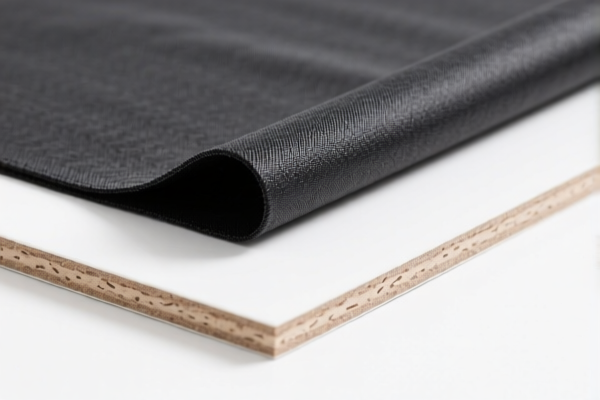
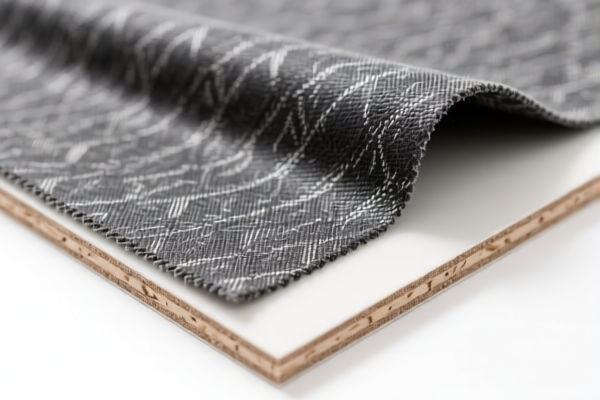
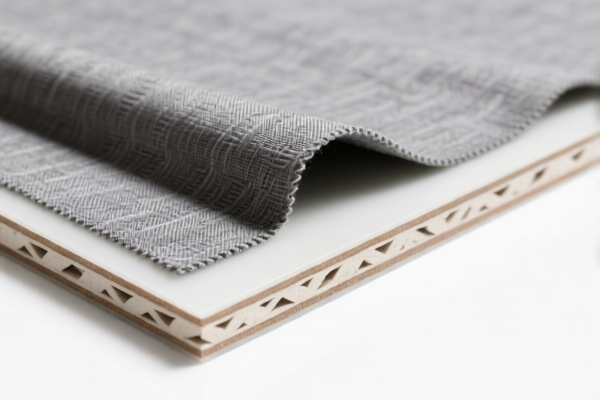

AI Analysis
🧱 Textile Surface Polyurethane Board (Building Insulation & Composite Panels)
🌐 HS Code Reference & Customs Clearance Guide | 2026 Latest Tariff Analysis | Professional Compliance Strategy
📌 I. Product Definition & Classification: What is a "Textile Surface PU Board"?
The "Textile Surface Polyurethane Board" is a composite construction material primarily used for thermal insulation, fireproofing, and structural cladding in building projects. It consists of a core of Polyurethane (PU) foam, sandwiched between or backed by textile/fabric layers (often fiberglass mesh, non-woven fabric, or woven textile) to provide mechanical strength, adhesion, and surface texture.
In international trade, the classification depends heavily on the primary character of the composite good: * Is it primarily a plastic board with textile backing? → Classified under Chapter 39 (Plastics). * Is it primarily a textile fabric impregnated/coated/laminated with plastic? → Classified under Chapter 59 (Impregnated Textiles). * Is it a rigid construction panel where the PU is just a filler for a mineral/concrete base? → Classified under Chapter 68 (Mineral Products) (Less common for pure PU, but possible for PU-concrete hybrids).
⚠️ Key Distinction Point:
- If the PU foam is the structural core and the textile is merely a surface layer for reinforcement → Chapter 39.
- If the textile is the base material and PU is applied as a coating/impregnation for water resistance or fire retardancy → Chapter 59.
- If the product is a rigid board resembling concrete but uses PU for insulation within a mineral matrix → Chapter 68.
📦 II. HS Code Classification Details (2026 Latest Tariff Authoritative Comparison)
| HS Code | Product Description | Application Scenario | Key Classification Logic |
|---|---|---|---|
3921.13.19.50 |
Polyurethane Plates, Sheets, Film, and Other Shapes | Building insulation boards, PU panels with non-woven backing | ✅ Plastic Primary: The core is PU foam; textile is secondary reinforcement. |
5903.20.20.00 |
Textiles Impregnated, Coated, Covered, or Laminated with Polyurethane | PU-treated fabric rolls, textile-based insulation sheets | ✅ Textile Primary: The base is textile; PU is the functional coating/lamination layer. |
3921.13.15.00 |
Composites of Polyurethane and Textiles | Rigid PU boards with specific textile lamination (commercial grade) | ✅ Composite Plastic: Specifically covers PU combined with textile materials for commercial/industrial use. |
5903.20.25.00 |
Artificial Fiber Textiles Treated with Polyurethane | PU-treated synthetic fabric rolls, flexible insulation mats | ✅ Fabric Treatment: Focuses on the treatment of artificial fiber fabrics with PU. |
6810.99.00.80 |
Other Articles of Cement, Concrete or Artificial Stone | PU-composite construction boards (if mineral-based with PU filler) | ⚠️ Inferred: Used if the board is primarily mineral/concrete with PU for insulation, not pure PU foam. |
🔍 Critical Reminder:
-3921.13is generally preferred for rigid PU foam boards used in walls/roofs, even if they have a thin fabric mesh on the surface for paint adhesion. -5903.20is preferred if the product is sold as a flexible sheet/roll of fabric that has been PU-coated for construction use (e.g., waterproof membranes). - Misclassification can lead to significant duty differences due to the Section 301 (25%) and Section 122 (10%) additional tariffs.
💰 III. 2026 Latest Tariff Rate Breakdown (Including Additional Taxes & Policy Surcharges)
✅ Applicable Country: United States (US)
✅ Country of Origin: China (CN)
✅ Effective Date: 2025/2026 (Current Trade Policies)
🎯 1. 3921.13.19.50 – Polyurethane Plates/Sheets (Building Use)
| Item | Content |
|---|---|
| Base Duty Rate | 5.3% |
| USITC Additional Duty (Section 301) | +25.0% |
| Section 122 Duty | +10.0% |
| Total Effective Duty Rate | 40.3% |
| Tax Calculation | CIF Value × 40.3% |
| De Minimis Exemption | ❌ Not Eligible |
| Legal Basis Path | USITC:3921.13.19.50 → FOOTNOTE:301.03.01 (25%) → SECTION 122 (10%) |
📌 Explanation:
- This code captures rigid PU boards. The 5.3% is the standard MFN rate. - The 25% is the standard Section 301 tariff on Chinese plastic articles. - The 10% is the additional duty under Section 122 (often applied to specific construction materials or under certain trade remedies). - Total: 40.3%. This is a high-cost classification for builders.
🎯 2. 5903.20.20.00 – Textiles Impregnated/Coated with PU
| Item | Content |
|---|---|
| Base Duty Rate | 0.0% |
| USITC Additional Duty (Section 301) | +25.0% |
| Section 122 Duty | +10.0% |
| Total Effective Duty Rate | 35.0% |
| Tax Calculation | CIF Value × 35.0% |
| De Minimis Exemption | ❌ Not Eligible |
| Legal Basis Path | USITC:5903.20.20.00 → FOOTNOTE:301.03.01 (25%) → SECTION 122 (10%) |
📌 Note:
- Lower Base Rate: Textiles often have lower base duties (0% here) compared to plastics. - Total: 35.0%. This is 5.3% cheaper than the plastic board classification. - Risk: Customs may reject this if the product is a rigid board, not a flexible textile.
🎯 3. 3921.13.15.00 – Polyurethane & Textile Composites
| Item | Content |
|---|---|
| Base Duty Rate | 6.5% |
| USITC Additional Duty (Section 301) | +25.0% |
| Section 122 Duty | +10.0% |
| Total Effective Duty Rate | 41.5% |
| Tax Calculation | CIF Value × 41.5% |
| De Minimis Exemption | ❌ Not Eligible |
| Legal Basis Path | USITC:3921.13.15.00 → FOOTNOTE:301.03.01 (25%) → SECTION 122 (10%) |
📌 Note:
- Specific for composites. Higher base rate (6.5%) makes it the most expensive option at 41.5%. - Only use if explicitly defined as a "composite of PU and textile" in commercial invoices.
🎯 4. 5903.20.25.00 – PU-Treated Artificial Fiber Textiles
| Item | Content |
|---|---|
| Base Duty Rate | 7.5% |
| USITC Additional Duty (Section 301) | +25.0% |
| Section 122 Duty | +10.0% |
| Total Effective Duty Rate | 42.5% |
| Tax Calculation | CIF Value × 42.5% |
| De Minimis Exemption | ❌ Not Eligible |
| Legal Basis Path | USITC:5903.20.25.00 → FOOTNOTE:301.03.01 (25%) → SECTION 122 (10%) |
📌 Note:
- Highest base rate among textiles (7.5%). - Total 42.5%. Avoid unless the product is strictly flexible fabric rolls.
🎯 5. 6810.99.00.80 – Other Cement/Concrete Articles (Inferred)
| Item | Content |
|---|---|
| Base Duty Rate | 0.0% |
| USITC Additional Duty (Section 301) | +25.0% |
| Section 122 Duty | +10.0% |
| Total Effective Duty Rate | 35.0% |
| Tax Calculation | CIF Value × 35.0% |
| De Minimis Exemption | ❌ Not Eligible |
| Legal Basis Path | USITC:6810.99.00.80 → FOOTNOTE:301.03.01 (25%) → SECTION 122 (10%) |
📌 Note:
- Only applicable if the board is mineral-based (e.g., cement board with PU insulation core). - If it’s pure PU foam, this classification is incorrect and risks penalties.
🛠️ IV. Customs Clearance Practical Advice (Combat Pitfalls)
✅ 1. Preparation Checklist (Mandatory)
| Document | Must Provide | Description |
|---|---|---|
| ✅ Product Specification Sheet | ✔️ | Detail core material (PU density), surface material (textile type), thickness, dimensions. |
| ✅ Technical Drawing | ✔️ | Show cross-section to prove if it’s rigid (board) or flexible (sheet). |
| ✅ Product Photos | ✔️ | Clear images of the board, edges, and surface texture. |
| ✅ Bill of Lading/Invoice | ✔️ | Accurate description: e.g., "Rigid Polyurethane Insulation Board with Fiberglass Facing" vs. "PU-Coated Textile Roll". |
| ✅ Certificate of Origin | ✔️ | To prove Chinese origin (triggers 25% + 10% tariffs). |
| ✅ Third-Party Test Report | ✔️ | Fire resistance, thermal conductivity, tensile strength (supports "Building Material" use). |
✅ 2. Declaration Tips (Key Mantras)
🔥 "Rigid Board = Plastic, Flexible Sheet = Textile. Name Matters, Duty Halved!"
| Scenario | Correct Declaration | Error to Avoid |
|---|---|---|
| Rigid Wall Panel | 3921.13.19.50 or 3921.13.15.00 |
Misclassify as textile → 35% (if accepted) or audit delay |
| Flexible Insulation Roll | 5903.20.20.00 or 5903.20.25.00 |
Misclassify as plastic → 40.3% |
| Mineral Board with PU Core | 6810.99.00.80 |
Misclassify as pure PU → 40.3% |
| Mixed Packaging | Declare as Single Composite Good | Split packaging → Each item taxed separately |
✅ 3. Special Cases Handling
| Case | Handling Advice |
|---|---|
| OEM Custom Panels | Provide customer design specs. If design specifies "rigid board," use 3921. |
| PU + Fiberglass Mesh | Usually 3921.13.19.50 because PU is the structural core. |
| PU-Coated Fabric Rolls | Use 5903.20.20.00. Ensure it’s sold as "flexible material." |
| Mineral Wool + PU Composite | Could be 6810 or 3921 depending on dominant character. Consult Customs Broker. |
🌍 V. Global Market Comparison (2026 Latest)
| Country/Region | Recommended HS Code | Duty Rate (China Origin) | Certification | Notes |
|---|---|---|---|---|
| 🇺🇸 USA | 3921.13.19.50 |
40.3% | FDA/ASTM (if applicable) | Highest risk due to Section 301 + 122. |
| 🇨🇳 China | 3921.13.19.50 |
~6.5% (Import) | CCC (if regulated) | No 301/122 tariffs. |
| 🇪🇺 EU | 3921.13 |
~0-6% | CE/EPD | No additional punitive tariffs. |
| 🇦🇺 Australia | 3921.13 |
~5% | RCM | Standard MFN rates. |
| 🇯🇵 Japan | 3921.13 |
~0-8% | PSE/Building Standards | No punitive tariffs. |
📌 Conclusion:
- USA is the most expensive market due to 35-42.5% effective duties. - Cost Saving Strategy: If possible, optimize supply chain to non-China origin (e.g., Vietnam, Mexico) to avoid Section 301 and 122 tariffs. - Pre-Ruling: Apply for HTS Code Pre-Ruling from CBP to ensure correct classification and avoid post-audit penalties.
📌 VI. Common Errors & Pitfalls (Blood Lessons)
❌ Error 1: Declaring a Rigid PU Board as Textile Roll (5903) to save 5.3%.
👉 Consequence: CBP rejects, demands 3921 + penalties. Risk of seizure.
❌ Error 2: Using 6810 for Pure PU Foam.
👉 Consequence: Misclassification penalty. Pure PU is plastic, not mineral.
❌ Error 3: Ignoring Section 122 (10%).
👉 Consequence: Underpayment of duties. CBP audits will catch missing 10%.
❌ Error 4: Vague Description "PU Board".
👉 Consequence: Customs cannot determine if it’s 3921 or 5903. Delayed clearance.
✅ Correct Practice:
"Rigid Polyurethane Foam Insulation Board, 4-inch Thick, with Fiberglass Facing, For Building Wall Insulation, Model XYZ, ASTM C578 Compliant."
🎯 VII. Conclusion: Professional Declaration, Save Costs, Ensure Smooth Clearance!
🎯 Remember the Mantra:
🔹 "Rigid = Plastic (3921), Flexible = Textile (5903). Name Precisely, Avoid Penalties!"
🔹 "USA Duty is High (40%+), Plan Ahead or Change Origin!"
📌 Pro Tip:
If your PU Board is originally from Vietnam or Mexico, you may qualify for Section 301 Exemption, reducing duties significantly.
Recommendation: Apply for a Customs Ruling before shipment to confirm the correct HS Code and duty rate.
📣 Immediate Action:
📞 Contact a licensed Customs Broker + Provide Product Specs + Request Pre-Ruling
🚀 Let your PU Boards clear smoothly, minimize duties, and maximize profit!
✨ Professional Clearance Starts with Accurate Classification!
💼 Every Dollar Saved is a Dollar Earned!
Customer Reviews
About HS Code Classification
The Harmonized System (HS) is an internationally standardized nomenclature developed by the World Customs Organization (WCO) to classify traded products. Over 200 countries use the HS system as the basis for customs tariffs, trade statistics, and import/export regulations.
Each HS code follows a hierarchical structure:
- Chapter (2 digits) — Broad category of goods (e.g., Chapter 84: Machinery and Mechanical Appliances)
- Heading (4 digits) — More specific grouping within the chapter
- Subheading (6 digits) — Internationally standardized breakdown, used by all WCO member countries
- National subdivisions (8-10 digits) — Country-specific extensions for further classification, such as US HTSUS 10-digit codes
Correct HS code classification is essential for smooth customs clearance, accurate duty payment, and compliance with trade regulations. Misclassification can lead to customs delays, overpayment of duties, or penalties.
When importing from CN to US, the applicable tariff rates may include:
- Most-Favored-Nation (MFN) rate — The standard duty rate applied to WTO members
- General rate — Applied to countries without trade agreements
- Trade remedy duties — Additional tariffs such as Section 301 (anti-dumping), Section 232 (national security), or countervailing duties
The information provided on this page is for reference purposes only. For official classification, please consult with your local customs authority or a licensed customs broker.