Textile Synchronous Belt
CN → US| HS Code | Tariff Rate | Origin | Destination | Doc |
|---|---|---|---|---|
| 8483901050 | 37.8% | CN | US | Official Doc |
| 8483908080 | 37.8% | CN | US | Official Doc |
| 4010359000 | 38.3% | CN | US | Official Doc |
| 4010369000 | 38.3% | CN | US | Official Doc |
| 5910001020 | 39.0% | CN | US | Official Doc |
Product Images
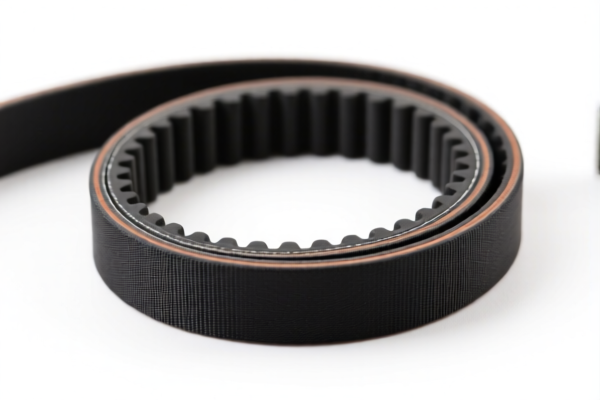
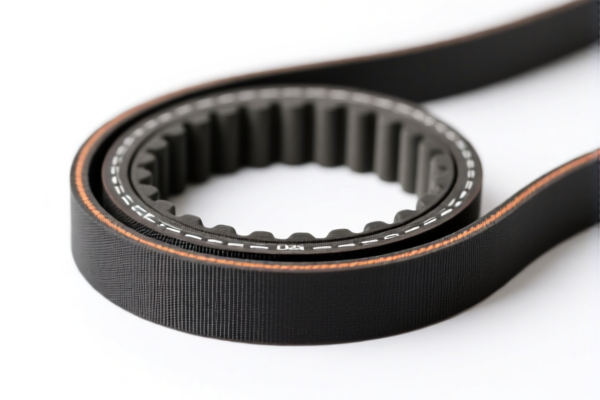
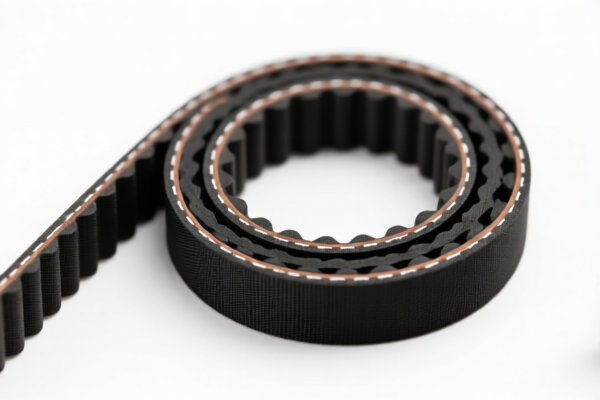

AI Analysis
🎡 Textile Synchronous Belt (Timed Belt)
🌐 HS Code Reference & Customs Clearance Guide | 2026 Tariff Breakdown for China-US Trade | Professional Transit Strategy
📌 I. Product Definition & Classification: What Exactly is a "Textile Synchronous Belt"?
A Synchronous Belt (also known as a Timing Belt) is a positive drive belt that has teeth on the inside surface to engage with grooved pulleys. When we specify "Textile," it implies the belt's core reinforcing member is made of textile materials (such as polyester, nylon, or aramid fibers) rather than steel cables or solid rubber, or the body itself is constructed from textile-reinforced rubber/composite materials.
In international trade, classification depends heavily on the primary material and structural composition:
- Rubber-Base with Textile Reinforcement: The body is rubber, but reinforced with textile cords. Often classified under Chapter 40 (Rubber) or Chapter 84 (Machinery Parts).
- Textile/Fabric-Based: If the belt is primarily composed of woven fabric or artificial fibers with rubber coating. Often classified under Chapter 59 (Impregnated Textiles).
- Mechanical Component: Treated purely as a transmission part of machinery, regardless of minor material nuances. Classified under Chapter 84 (Transmission Parts).
⚠️ Key Classification Distinction:
- If the belt is primarily rubber (even if reinforced with textile) → Likely Chapter 40.
- If the belt is primarily textile/fabric (rubber-coated) → Likely Chapter 59.
- If classified strictly as a machine part regardless of material → Chapter 84.
📦 II. HS Code Classification Matrix (2026 Data Analysis)
Based on the provided dataset, here are the five possible HS Codes and their specific rationales for Textile Synchronous Belts:
| HS Code | Category | Summary / Rationale | Total Tax Rate |
|---|---|---|---|
| 8483.90.10.50 | Transmission Parts | Scope Fit: Belong to "Other Transmission Parts." No conflict with material/shape. Treated as a mechanical component. | 37.8% |
| 8483.90.80.80 | Transmission Parts | Scope Fit: Belong to "Transmission Shafts, Bearings, Gears, etc." No material conflict. Emphasizes function over material. | 37.8% |
| 4010.35.90.00 | Rubber Products | Material Inference: Infers Rubber Material. Shape/Use match perfectly. No "Vulcanized Rubber" conflict. (Common for textile-reinforced rubber belts). | 38.3% |
| 4010.36.90.00 | Rubber Products | Material Inference: Infers Rubber Material. Consistent shape. No category conflicts. (Often used for larger or specific industrial rubber belts). | 38.3% |
| 5910.00.10.20 | Textile Products | Material Inference: Infers Textile/Artificial Fiber Material. Purpose matches exactly. "Textile" in name strongly supports this if the base is fabric. | 39.0% |
🔍 Critical Insight:
- 8483 Series: Best if you argue the belt is a functional machine part (ignoring material details). Lowest base tariff (2.8%).
- 4010 Series: Best if the belt is rubber-based (even with textile cords). Moderate base tariff (3.3%).
- 5910 Series: Best if the belt is fabric/textile-based with rubber coating. Highest base tariff (4.0%).
💰 III. 2026 Tariff Rate Breakdown (USA Import from China)
✅ Applicable Country: United States (US)
✅ Origin: China (CN)
✅ Effective Date: Current rates (including 301/122 Clause additions)
All HS Codes in the dataset carry the same additional tax structure, leading to high total duties.
🎯 1. 8483.90.10.50 & 8483.90.80.80 (Transmission Parts)
| Item | Content |
|---|---|
| Base Tariff | 2.8% (Ad Valorem) |
| Section 301 Additional Tariff | +25.0% |
| Section 122 Clause Tariff | +10.0% |
| Total Tax Rate | 37.8% |
| Tax Calculation | CIF Value × 37.8% |
| De Minimis Exemption | ❌ Not Eligible |
| Legal Path | USITC:8483.90 → 301:Footnote 9903.88.01 → 122 Clause |
📌 Explanation:
- These codes are classified under Chapter 84 (Machinery). While the base rate is low (2.8%), the 301 Clause (25%) and 122 Clause (10%) drastically increase the cost.
- Why choose this? If customs insists on treating it as a "part" rather than a "material product," this may be the most defensible route if you can prove its mechanical function outweighs material composition.
🎯 2. 4010.35.90.00 & 4010.36.90.00 (Rubber Belts)
| Item | Content |
|---|---|
| Base Tariff | 3.3% (Ad Valorem) |
| Section 301 Additional Tariff | +25.0% |
| Section 122 Clause Tariff | +10.0% |
| Total Tax Rate | 38.3% |
| Tax Calculation | CIF Value × 38.3% |
| De Minimis Exemption | ❌ Not Eligible |
| Legal Path | USITC:4010 → 301:Footnote 9903.88.01 → 122 Clause |
📌 Explanation:
- If your "Textile Synchronous Belt" is rubber-dominated (e.g., EPDM or NBR rubber body with polyester cords), it falls here.
- The 0.5% higher total tax compared to Chapter 84 is due to the higher base rate (3.3% vs 2.8%).
🎯 3. 5910.00.10.20 (Textile/Impregnated Belts)
| Item | Content |
|---|---|
| Base Tariff | 4.0% (Ad Valorem) |
| Section 301 Additional Tariff | +25.0% |
| Section 122 Clause Tariff | +10.0% |
| Total Tax Rate | 39.0% |
| Tax Calculation | CIF Value × 39.0% |
| De Minimis Exemption | ❌ Not Eligible |
| Legal Path | USITC:5910 → 301:Footnote 9903.88.01 → 122 Clause |
📌 Explanation:
- This code is the most accurate for belts explicitly described as "Textile" if the fabric component is dominant or impregnated.
- However, it carries the highest total tax (39.0%) due to the highest base rate (4.0%).
- Risk: Customs may challenge this if the rubber content is >50%, pushing it back to Chapter 40.
🛠️ IV. Customs Clearance Practical Advice (Pitfall Avoidance)
✅ 1. Documentation Checklist (Essential for All Codes)
| Document | Required | Purpose |
|---|---|---|
| Product Specification Sheet | ✔️ | Must detail material composition (e.g., "Polyester Cord Core, Rubber Coating"). |
| Material Safety Data Sheet (MSDS) | ✔️ | Confirms rubber/textile content. |
| High-Resolution Photos | ✔️ | Show teeth structure, cross-section (if possible), and any labels. |
| Commercial Invoice | ✔️ | Clearly state: "Synchronous Belt, Material: [Rubber/Textile], Purpose: Power Transmission". |
| Origin Certificate | ✔️ | Proves Chinese origin (triggers 301/122 tariffs). |
✅ 2. Declaration Strategy (Key Tips)
🔥 "Define Material First, Then Function!"
| Scenario | Recommended HS Code | Reasoning |
|---|---|---|
| Rubber Body + Textile Cords | 4010.35.90.00 / 4010.36.90.00 |
Primary material is rubber. Most common for industrial synchronous belts. |
| Fabric Belt with Rubber Coating | 5910.00.10.20 |
Primary material is textile. Use if the fabric is the structural base. |
| Generic Mechanical Part | 8483.90.10.50 / 8483.90.80.80 |
If material is ambiguous or mixed. Argue "Function over Material." |
⚠️ Warning:
- Do NOT mix "Rubber" and "Textile" descriptions ambiguously.
- If you declare Rubber (4010) but customs finds high textile content, they may reclassify to 5910 or 8483, causing delays and penalties.
- Pre-ruling: For high-volume shipments, apply for a Binding Tariff Information (BTI) or US CBP Advance Ruling to lock in the HS Code.
✅ 3. Cost Optimization Tips
| Strategy | Impact |
|---|---|
| Choose 8483 if Defensible | Saves 0.5%–1.2% compared to 4010/5910 due to lower base rate (2.8%). |
| Supply Chain Diversification | Import from Vietnam/Malaysia to avoid Section 301 (25%) tariffs. |
| Section 122 Exclusion | Check if your specific HTS is eligible for any Section 122 exclusion (rare for belts, but verify). |
🌍 V. Global Market Comparison (2026)
| Country | Recommended HS Code | Base Tariff | Additional Tariffs | Total Est. |
|---|---|---|---|---|
| 🇺🇸 USA | 8483.90.10.50 |
2.8% | +35% (301+122) | 37.8% |
| 🇪🇺 EU | 4010.39 |
~1.7% | 0% | 1.7% |
| 🇨🇳 China | 4010.39 |
~8.0% | 0% | 8.0% |
| 🇮🇳 India | 4010.39 |
~7.5% | SWS | ~15% |
📌 Note:
- The US market is the most expensive for Chinese-manufactured synchronous belts due to trade wars.
- EU and China have no punitive tariffs, making them more cost-effective markets for these goods.
📌 VI. Common Errors & Pitfalls
❌ Error 1: Declaring as "Rubber Belt" when it is >50% Textile Fabric
👉 Result: Reclassified to 5910 → Higher Tax + Penalties.
❌ Error 2: Declaring as "Machine Part" (8483) without proof of integration
👉 Result: CBP may reject, arguing it's a "material product" (4010/5910) → Delay.
❌ Error 3: Ignoring Section 122 Clause
👉 Result: Underpaying 10% → Audit Risk.
✅ Best Practice:
"Be Specific: 'Rubber-Synchronous Belt, Polyester Reinforced' for 4010; 'Fabric-Synchronous Belt, Rubber-Coated' for 5910."
🎯 VII. Conclusion: Smart Classification for Max Profit
🎯 Strategic Recommendation:
1. If the belt is standard industrial rubber: Use 4010.35.90.00 or 4010.36.90.00.
2. If the belt is explicitly textile/fabric-based: Use 5910.00.10.20.
3. If you want the lowest base rate: Try 8483.90.10.50 (but be prepared to justify it as a "part").
🚀 Final Tip:
"For US Imports, every 1% base rate counts! 8483 saves you 1.2% over 5910. Document carefully to defend your choice!"
✨ Professional Customs Clearance Starts with Accurate Classification!
💼 Your Margins Are Protected by Precision!
Customer Reviews
About HS Code Classification
The Harmonized System (HS) is an internationally standardized nomenclature developed by the World Customs Organization (WCO) to classify traded products. Over 200 countries use the HS system as the basis for customs tariffs, trade statistics, and import/export regulations.
Each HS code follows a hierarchical structure:
- Chapter (2 digits) — Broad category of goods (e.g., Chapter 84: Machinery and Mechanical Appliances)
- Heading (4 digits) — More specific grouping within the chapter
- Subheading (6 digits) — Internationally standardized breakdown, used by all WCO member countries
- National subdivisions (8-10 digits) — Country-specific extensions for further classification, such as US HTSUS 10-digit codes
Correct HS code classification is essential for smooth customs clearance, accurate duty payment, and compliance with trade regulations. Misclassification can lead to customs delays, overpayment of duties, or penalties.
When importing from CN to US, the applicable tariff rates may include:
- Most-Favored-Nation (MFN) rate — The standard duty rate applied to WTO members
- General rate — Applied to countries without trade agreements
- Trade remedy duties — Additional tariffs such as Section 301 (anti-dumping), Section 232 (national security), or countervailing duties
The information provided on this page is for reference purposes only. For official classification, please consult with your local customs authority or a licensed customs broker.