Textile Wrinkle Resistant Agent
CN → US| HS Code | Tariff Rate | Origin | Destination | Doc |
|---|---|---|---|---|
| 3304910050 | 35.0% | CN | US | Official Doc |
| 3304995000 | 35.0% | CN | US | Official Doc |
| 3402905050 | 38.7% | CN | US | Official Doc |
| 3402905030 | 38.7% | CN | US | Official Doc |
| 3809925000 | 41.0% | CN | US | Official Doc |
Product Images
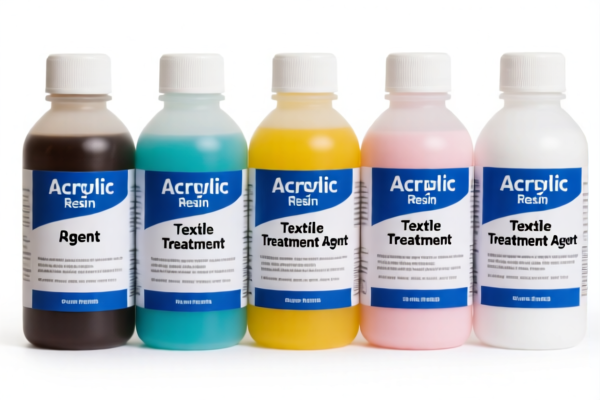
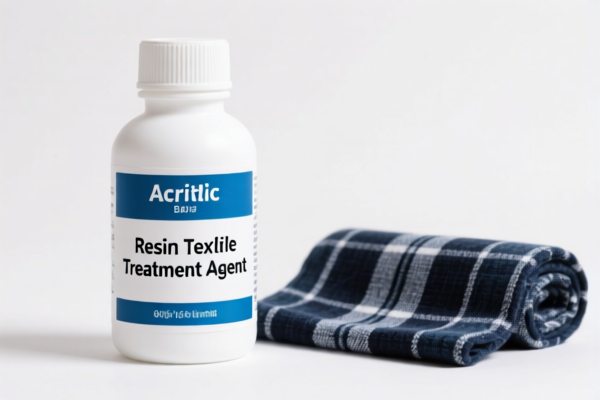

AI Analysis
🧵 Textile Wrinkle Resistant Agent (Finishing Chemicals)
🌐 HS Code Reference & Customs Clearance Guide | 2026 Latest Tariff Analysis | Professional Strategy for Chemical Products
📌 I. Product Definition & Classification: Do You Truly Understand "Textile Wrinkle Resistant Agents"?
Textile wrinkle resistant agents are specialized chemical finishes applied to fabrics (primarily cotton, linen, and blends) to improve dimensional stability, reduce wrinkling, and maintain a "pressed" appearance after laundering.
In international trade, these products are not simply labeled as "cosmetics" or "cleaning agents." Their classification depends heavily on their primary function and chemical composition:
Industrial Finishing Agents: Used in textile manufacturing to treat fabrics. These fall under Chapter 38 (Miscellaneous Chemical Products). Cosmetic/Skincare Products: If marketed for human skin application (e.g., "anti-wrinkle serums" applied directly to skin), they fall under Chapter 33 (Essential Oils and Cosmetics).
⚠️ Critical Distinction:
- If the product is a chemical resin/formaldehyde-free cross-linking agent used in a factory to treat fabrics → Chapter 38 (Industrial/Textile Aid).
- If the product is a beauty serum/cream applied to human skin to reduce skin wrinkles → Chapter 33 (Cosmetic/Skincare).
- Note: The data provided suggests a potential misclassification risk if "wrinkle resistant" is interpreted as skincare rather than textile processing.
📦 II. HS Code Classification Details (2026 Latest Tariff Authority Comparison)
Based on the provided data, the classification splits into two distinct categories: Cosmetic Skincare (3304) and Textile/Industrial Chemicals (3402 & 3809).
| HS Code | Product Description | Applicable Scenario | Is It for Skincare or Textiles? |
|---|---|---|---|
3304.91.00.50 |
Beauty or makeup preparations and preparations for the care of the skin (other than medicated), other than those of heading 3307 | Anti-wrinkle creams, serums, lotions applied directly to human skin | ✅ Skincare/Cosmetic |
3304.99.50.00 |
Other beauty or makeup preparations and preparations for the care of the skin | Other specialized skincare formulations for anti-aging/wrinkle reduction | ✅ Skincare/Cosmetic |
3402.90.50.50 |
Surface-active preparations (non-washing/non-cleaning), other | Chemical auxiliaries for textile processing, emulsifiers, dispersants used in factories | ❌ Industrial/Textile Aid |
3402.90.50.30 |
Surface-active preparations (non-washing/non-cleaning), other | General chemical auxiliaries, non-ionic surfactants for industrial cleaning or processing | ❌ Industrial/Chemical Aid |
3809.92.50.00 |
Finishing preparations, dressings, and other products (textile/leather/paper) | Specific textile finishing agents (e.g., resin finishes, anti-wrinkle resins) used on fabrics | ❌ Textile Finishing Agent |
🔍 Key Reminder:
- "Anti-wrinkle" in cosmetics (Chapter 33) is treated as a personal care product.
- "Wrinkle resistant" in textiles (Chapter 38/34) is treated as an industrial chemical aid.
- Misclassification Risk: Importing a textile finishing agent as a cosmetic (or vice versa) can lead to severe customs penalties, as the regulatory requirements (FDA/EC for cosmetics vs. TSCA/REACH for chemicals) differ significantly.
💰 III. 2026 Latest Tariff Rate Details (Including Surtaxes & Policy Add-ons)
✅ Applicable Country: United States (US)
✅ Origin: China (CN)
✅ Effective Date: November 10, 2025 (and subsequent imports)
🎯 1. 3304.91.00.50 & 3304.99.50.00 —— Cosmetics & Skincare (Anti-Wrinkle)
| Item | Content |
|---|---|
| Base Rate | 0% (ad valorem) |
| USITC Surtax | +25% (under USITC Footnote 9903.88.01 / Section 301) |
| IEEPA Surtax | +10% (China/HK origin, under IEEPA) |
| Total Tax Rate | 35.0% |
| Tax Calculation | CIF Value × 35% |
| De Minimis Exemption? | ❌ NO (Denied for this HS category under current enforcement) |
| Legal Basis Path | IEEPA:9903.01.25 → IEEPA:9903.01.24 → USITC:3304.91.00.50 → FOOTNOTE:9903.88.01 |
📌 Explanation:
- Even though the base tariff is 0%, the Section 301 surtax (25%) and IEEPA surtax (10%) apply heavily.
- Total 35% is applied to the CIF value.
- Crucial Note: If the product is mistakenly declared as a textile chemical but is actually a cosmetic, customs may apply penalties for false declaration.
🎯 2. 3402.90.50.50 & 3402.90.50.30 —— Chemical Auxiliaries (Non-Washing)
| Item | Content |
|---|---|
| Base Rate | 3.7% (ad valorem) |
| USITC Surtax | +25% (Section 301) |
| IEEPA Surtax | +10% (IEEPA) |
| Total Tax Rate | 38.7% |
| Tax Calculation | CIF Value × 38.7% |
| De Minimis Exemption? | ❌ NO |
| Legal Basis Path | IEEPA:9903.01.25 → IEEPA:9903.01.24 → USITC:3402.90.50.50 → FOOTNOTE:9903.88.01 |
📌 Explanation:
- These HS codes cover surface-active preparations not used for washing. This includes emulsifiers, dispersants, and softeners used in textile processing.
- The 3.7% base rate is higher than cosmetics (0%), leading to a higher total tax (38.7%).
- Classification as "chemical aids" rather than "finishing agents" may reflect the specific chemical nature (surfactant-based) of the product.
🎯 3. 3809.92.50.00 —— Finishing Preparations (Textile/Leather/Paper)
| Item | Content |
|---|---|
| Base Rate | 6.0% (ad valorem) |
| USITC Surtax | +25% (Section 301) |
| IEEPA Surtax | +10% (IEEPA) |
| Total Tax Rate | 41.0% |
| Tax Calculation | CIF Value × 41.0% |
| De Minimis Exemption? | ❌ NO |
| Legal Basis Path | IEEPA:9903.01.25 → IEEPA:9903.01.24 → USITC:3809.92.50.00 → FOOTNOTE:9903.88.01 |
📌 Explanation:
- This is the most accurate HS Code for "Textile Wrinkle Resistant Agents."
- Chapter 3809 covers finishing preparations used in textile, leather, or paper industries.
- Highest Tax Rate (41.0%) due to the 6.0% base rate.
- Warning: This category is strictly for industrial use. It cannot be used for personal skincare products.
🛠️ IV. Customs Clearance Practical Advice (Real-World Pitfall Avoidance)
✅ 1. Documentation Checklist (Non-Negotiable)
| Document | Mandatory? | Description |
|---|---|---|
| ✅ Product Specification Sheet | ✔️ | Must clearly state: "For Textile Finishing Use Only" OR "For Cosmetic Skincare Use." |
| ✅ Safety Data Sheet (SDS) | ✔️ | OSHA-compliant SDS is critical for chemical imports. |
| ✅ Formula Disclosure | ✔️ | Customs may require ingredient lists to verify HS classification. |
| ✅ Commercial Invoice | ✔️ | Must specify: "Textile Finishing Chemical" or "Cosmetic Anti-Wrinkle Serum." |
| ✅ TSCA Certification (EPA) | ✔️ | Mandatory for all chemical imports to the US. Provide TSCA Inventory Certification. |
| ✅ FDA Registration (if Cosmetic) | ✔️ | If classified under 3304, facility must be FDA registered. |
✅ 2. Declaration Tips (Key Mnemonics)
🔥 "Nature Determines Code, Don't Mix Uses!"
| Scenario | Correct HS Code | Wrong Declaration | Consequence |
|---|---|---|---|
| Chemical resin for fabric | 3809.92.50.00 |
Declared as "Cosmetic" | 41% vs 35% tax diff + Misdeclaration Penalty |
| Serum for human skin | 3304.91.00.50 |
Declared as "Textile Aid" | 35% vs 41% tax diff + FDA Violation |
| Surfactant additive | 3402.90.50.50 |
Declared as "Finishing Agent" | 38.7% vs 41% tax diff |
📌 Crucial Point:
- "Wrinkle Resistant" for textiles = Chapter 38 (Industrial).
- "Anti-Wrinkle" for skin = Chapter 33 (Cosmetic).
- Do not use ambiguous terms like "Wrinkle Remover" without specifying the substrate (fabric vs. skin).
✅ 3. Special Case Handling
| Situation | Handling Advice |
|---|---|
| Multi-purpose Chemical | If a chemical can be used for both skin and fabric, declare based on primary marketed use. If dual-use, choose the one with lower tax risk or seek Advance Ruling. |
| Sample Shipments | Even samples are subject to full duty. Do not claim "samples not for sale" to avoid tax. |
| TSCA Compliance | Ensure the chemical is on the TSCA Inventory List. If not, a Pre-Manufacture Notice (PMN) is required before import. |
| Formaldehyde Content | Some wrinkle-resistant textile agents contain formaldehyde releasers. US customs may scrutinize for environmental compliance. |
🌍 V. Global Market Comparison (2026 Latest)
| Country/Region | Recommended HS Code | Tariff | Certification Required | Note |
|---|---|---|---|---|
| 🇺🇸 USA | 3809.92.50.00 (Textile) |
41% | TSCA + OSHA SDS | Highest duty due to base + surtaxes |
| 🇪🇺 EU | 3809.92.50.00 (REACH) | 0-6.5% | REACH Registration | No Section 301 tax |
| 🇨🇳 China | 3809.92.50.00 | 6% | None | No surtaxes |
| 🇯🇵 Japan | 3809.92.50.00 | 3-5% | Fertilizer Law (if applicable) | Low duty, strict chemical reporting |
📌 Conclusion:
- The US imposes the highest total duty (41%) on textile finishing agents due to base rates + Section 301 + IEEPA.
- Cosmetic skincare (35%) is slightly cheaper but requires FDA compliance.
- EU/Japan are more favorable for chemical imports regarding tariffs, but REACH compliance is stricter.
📌 VI. Common Mistakes & Pitfalls (Lessons Learned)
❌ Mistake 1: Declaring a textile chemical as "Cosmetic" to save tax
👉 Result: Customs detects mismatch in SDS/Usage → Penalty + 35% tax + potential FDA ban.
❌ Mistake 2: Using "Wrinkle Resistant Agent" without specifying "Textile" or "Skin"
👉 Result: Customs ambiguity → Detention + Request for Clarification + Delay.
❌ Mistake 3: Ignoring TSCA Compliance
👉 Result: Entry refused by US Customs and Border Protection (CBP). Chemicals cannot enter without TSCA certification.
❌ Mistake 4: Assuming "De Minimis" applies
👉 Result: Deny De Minimis for Section 301 goods. All imports are taxed, even small shipments.
✅ Correct Practice:
"Textile Finishing Chemical, Non-Washing Surface Active Agent, For Use in Industrial Textile Processing Only, TSCA Compliant"
🎯 VII. Conclusion: Precise Classification, Cost Efficiency, Smooth Clearance
🎯 Remember the Mantra:
🔹 "Skin = Cosmetic (3304), Fabric = Chemical (3809)."
🔹 "Textile Agent: 41% Total Tax, Cosmetics: 35% Total Tax."
🔹 "Always provide TSCA, Always specify Use."
📌 Pro Tip:
If your product is a textile finishing agent, consider if it can be reformulated or marketed differently to fall under 3402 (38.7%) instead of 3809 (41.0%), as the base rate is lower. However, ensure the chemical nature truly fits 3402 (surfactants/auxiliaries) vs. 3809 (finishing preparations). Consult a customs broker for an Advance Ruling.
📣 Immediate Action:
📞 Contact a Licensed Customs Broker
📋 Provide SDS + Formula + Intended Use
🚀 Get an Advance Ruling from CBP to lock in the correct HS Code and avoid penalties!
✨ Professional Clearance Starts with Accurate Classification!
💼 Your Profit Margin Depends on Precise Tariff Management!
Customer Reviews
About HS Code Classification
The Harmonized System (HS) is an internationally standardized nomenclature developed by the World Customs Organization (WCO) to classify traded products. Over 200 countries use the HS system as the basis for customs tariffs, trade statistics, and import/export regulations.
Each HS code follows a hierarchical structure:
- Chapter (2 digits) — Broad category of goods (e.g., Chapter 84: Machinery and Mechanical Appliances)
- Heading (4 digits) — More specific grouping within the chapter
- Subheading (6 digits) — Internationally standardized breakdown, used by all WCO member countries
- National subdivisions (8-10 digits) — Country-specific extensions for further classification, such as US HTSUS 10-digit codes
Correct HS code classification is essential for smooth customs clearance, accurate duty payment, and compliance with trade regulations. Misclassification can lead to customs delays, overpayment of duties, or penalties.
When importing from CN to US, the applicable tariff rates may include:
- Most-Favored-Nation (MFN) rate — The standard duty rate applied to WTO members
- General rate — Applied to countries without trade agreements
- Trade remedy duties — Additional tariffs such as Section 301 (anti-dumping), Section 232 (national security), or countervailing duties
The information provided on this page is for reference purposes only. For official classification, please consult with your local customs authority or a licensed customs broker.